
An X-ray reveals what happens to an electric car battery after an accident
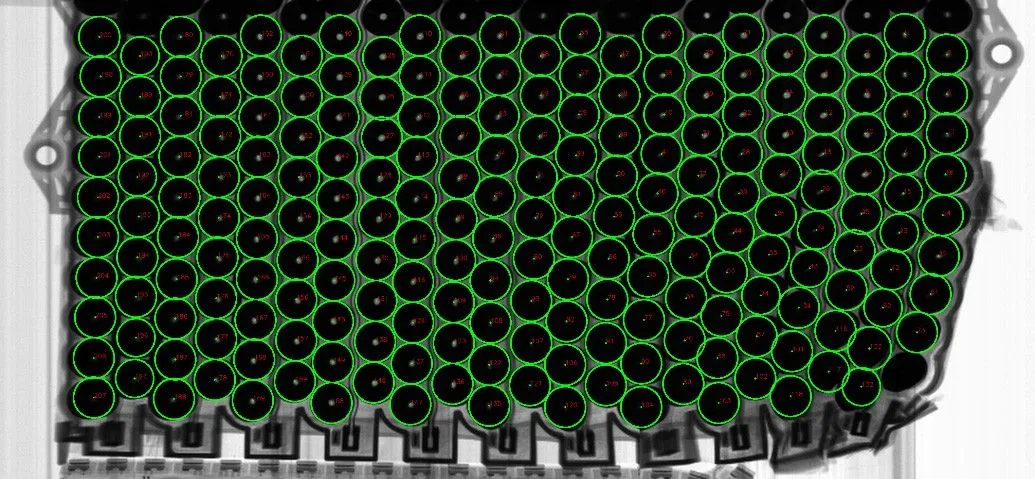
A new system developed by the German Fraunhofer institute allows for analyzing the interior of electric vehicle batteries without the need to disassemble them. The technology has been tested on accident-damaged vehicles, including a Volkswagen ID.3, with results that open up new possibilities for repair and reuse.
One of the major questions that arises when an electric vehicle is involved in an accident is what happened to its battery. Even if it appears unharmed, a severe impact can cause internal deformations that are not visible from the outside. Checking this is not always easy, especially when dealing with large batteries installed under the vehicle floor and protected by a metal casing.
To date, determining whether a damaged battery can still be used required combining various tests and, under certain circumstances, disassembling components to access its interior. But a project developed in Germany could significantly simplify this process by allowing technicians to view the inside of a battery using X-rays and automatically detect potential structural damage.
This technology was developed by the Fraunhofer Institute for Integrated Circuits (IIS), in collaboration with the University of Applied Sciences Munich, as part of the AIR project. Its goal is to provide a tool capable of assessing the mechanical condition of batteries, both from accident-stricken vehicles and from used units that might be repurposed for other purposes.
The system uses two-dimensional radiographs that are then analyzed using a computer program developed specifically for this task. This program is capable of automatically identifying the battery cells, regardless of whether they are cylindrical, prismatic, or pouch-type, and checking for any shifts, deformations, or swelling that may indicate internal damage.
The interesting aspect is that there is no need to open the battery or disassemble its components. Depending on the setup used, the equipment can examine either the battery pack directly or even the entire vehicle by passing it through the X-ray system.
Additionally, the image analysis process can be completed in about five minutes, according to tests conducted by researchers. This refers only to the time needed to evaluate the X-rays of a battery, not the total inspection duration, which depends on the size of the unit and the number of images required.
A crashed Volkswagen ID.3 demonstrates the system’s capabilities
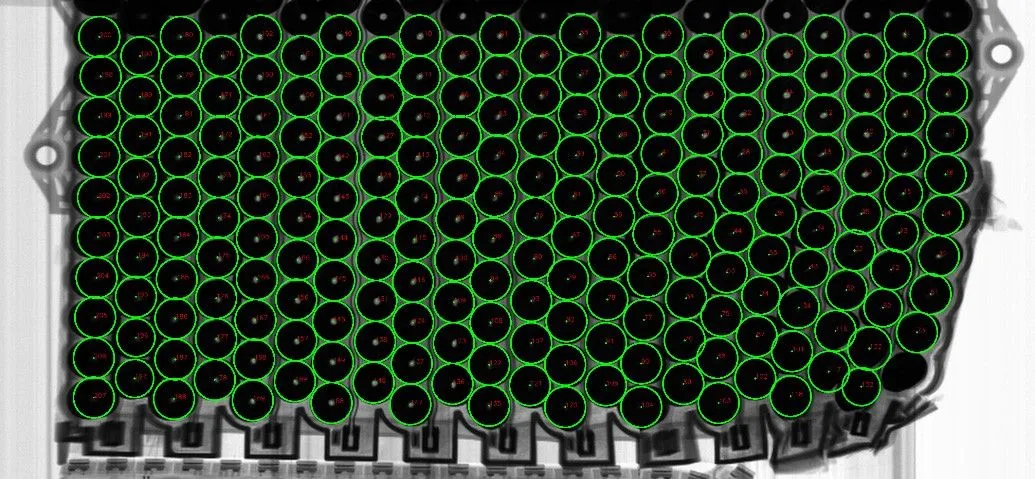
The accident allowed researchers to determine the extent to which the battery, located under the cabin floor, was affected by the impact. And this is where one of the surprises of the study emerged.
Despite the significant visible damage to the body, the X-rays did not reveal any critical structural abnormalities in the battery. Analysis of its nine modules showed that the cells maintained a uniform arrangement, with no significant displacement, bulging, or deformation in the examined images.
The software automatically identified the pouch-type cells used in this battery and compared the curvature of their edges to detect any possible alterations. The results showed no critical deviations indicating internal structural damage.
But the researchers didn’t stop at X-rays. They also analyzed data recorded during the accident, checked information stored in the battery management system, and conducted various electrical tests following DEKRA’s safety procedures.
With all this information, the battery in the Volkswagen ID.3 was classified at the EUCAR 0 risk level, the lowest on this scale, and was given approval to continue being used.
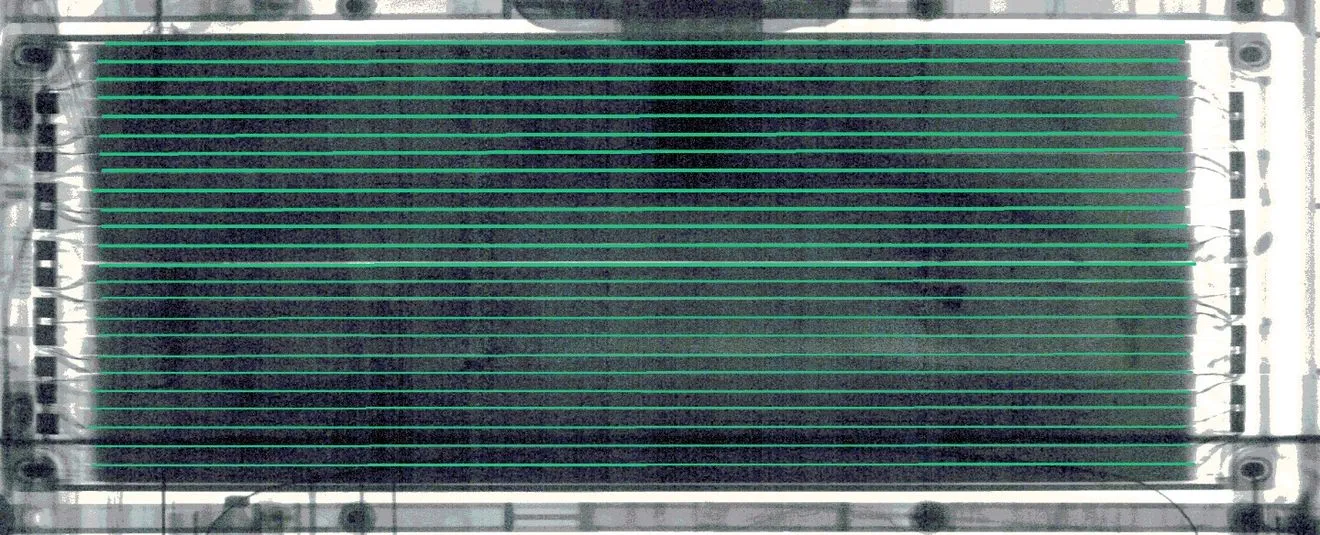
It is important to note that this conclusion applies solely to the unit tested. It does not mean that all batteries in an ID.3 can withstand a similar accident without damage, as the outcome depends on numerous factors such as the direction of impact, structural deformation, or the forces applied to the assembly.
The researchers also tested the system with a battery made up of cylindrical cells that had been in an accident. In this case, X-rays revealed a very different situation.
The program automatically detected the position of the cells and found that part of the assembly had significant deformations. Several cells had shifted from their original positions, which could be identified by comparing the images with a reference.
Although no signs of swelling were found, researchers concluded that the battery should not be reused due to the mechanical damage detected. This shows that it is not sufficient to verify that a battery maintains its capacity or appears to function normally to ensure it can still be used safely.
This technology could also have important applications in the second-hand market and in battery reuse. Currently, one of the main indicators for assessing a battery’s condition is SOH, which allows estimation of its remaining capacity compared to when it was new.
However, this figure does not necessarily indicate any potential physical damage inside. A battery can maintain a high capacity while still having deformations that make it unsuitable for reuse.
The system developed by Fraunhofer would allow electrical testing to be supplemented with an assessment of mechanical integrity. This could facilitate the identification of batteries suitable for a second life as stationary storage systems, whether in homes, industrial facilities, or power grids.
It could also be particularly useful for transportation companies, insurance firms, repair shops, and recycling centers that need to determine what to do with batteries from accidented vehicles. A more accurate evaluation would help decide which can be reused, which require additional testing, and which must be discarded permanently.
The researchers emphasize, however, that X-rays do not replace electrical checks or individual safety assessments. They are a supplementary tool that provides information about the physical condition of internal components.
In the future, Fraunhofer is working to expand these capabilities through the Giant-Eye-CT project, a computed tomography system that would allow for three-dimensional imaging of entire electric vehicles. This advancement could offer an even higher level of detail and facilitate the detection of damages that are difficult to identify with conventional X-rays.
Although it is still a technology in development, its potential applications are numerous. From improving the valuation of damaged electric cars to facilitating the recovery of batteries that still have many years of useful life ahead. And most importantly, preventing a battery from ending up in recycling too early simply because it is too complicated to determine what happened inside it.