
Stellantis CEO Antonio Filosa confirms that starting in 2027, “many, many models” of electric vehicles will be equipped with new batteries.

07/11/2026 23:00
Updated to
07/11/2026 23:00
Selling more and more electric cars while making less money on them is not a good business, and Stellantis is well aware of this. The group of 14 brands that includes Peugeot, FIAT, Citroën, and Opel will replace the ternary lithium (NCM) batteries in many of its European electric vehicles with cheaper lithium iron phosphate (LFP) batteries starting in 2027. This was confirmed by its CEO, Antonio Filosa, during the presentation of third-quarter results.
The accounts explain the urgency. According to the group’s official figures, its sales of electric cars in Europe rose by 65% between July and September, but the European division ended the quarter with adjusted operating losses of 311 million euros, compared to a profit of 157 million euros the previous year. Filosa has not provided a specific figure for the cost savings from cars, though he claims it will be substantial.
A cheaper chemistry without cobalt
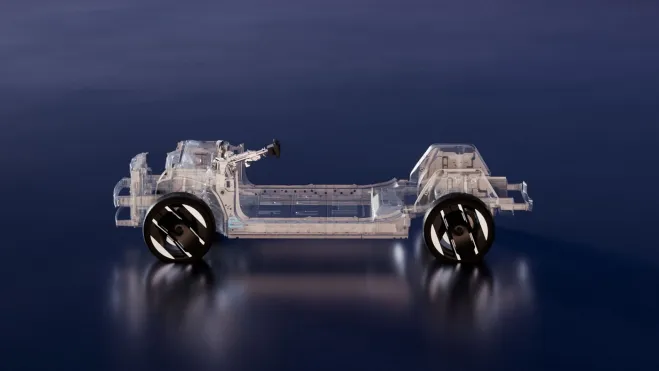
LFP batteries cost less per cell than NCM batteries because they eliminate cobalt, a costly material with highly volatile prices. As a trade-off, they store less energy per kilogram, which is why most manufacturers outside China continue to rely on ternary lithium. In 2025, only 13% of electric vehicles sold in Europe used LFP cells, compared to 81% in China, although this proportion is rising in our continent.
For Filosa, this change will act as a catalyst to leverage the progress of electrification in Europe. It will come alongside STLA One, the group’s new platform for small and compact cars, which will also debut in 2027. Stellantis introduced it in May as the basis for over 30 models by 2035, with the goal of reducing costs by 20%.
The Fiat 500e will pave the way
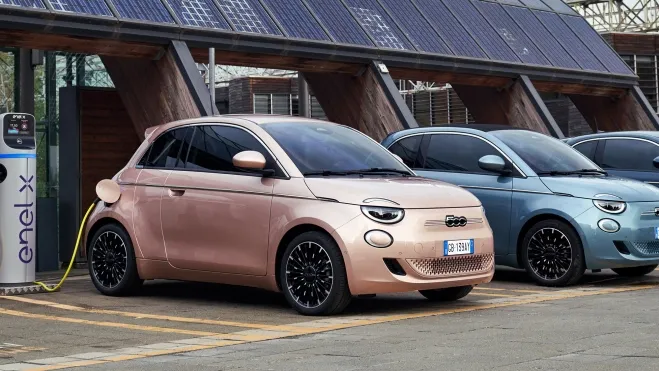
According to Filosa, this measure will affect “many, many models.” Currently, almost all of the group’s electric vehicles use NCM batteries, with the exception of the more affordable models from the Smart Car platform: the Citroën ë-C3, the Opel Frontera, and the Fiat Grande Panda, which use 44 kWh LFP batteries.
The first to make the transition will be the FIAT 500e. The plan is to launch a version with an LFP battery in 2027 at around 20,000 euros, compared to its current price of 25,990 euros in Germany and 23,900 euros in Italy. FIAT has not yet disclosed its battery capacity or range, and that poses a challenge: for a city car barely 3.6 meters long with limited underfloor space, compensating for a less dense battery chemistry is not easy. Other candidates include the Peugeot 208 and compact models like the Peugeot e-3008, though the company has not confirmed this yet.
Zaragoza, a key part of the plan

Some of those batteries could originate from Spain. Stellantis and CATL, the world’s largest battery manufacturer, are building a gigafactory in Figueruelas (Zaragoza) jointly, with each holding a 50% stake. The facility is expected to have a capacity of 50 gigawatt-hours (GWh) and require an investment of up to 4.1 billion euros. Operations are scheduled to begin between late 2026 and early 2027.
However, project documentation approved by the Government of Aragon indicates that in the first year, the plant will only assemble modules, with cell production not starting until 2028. As a result, the first Stellantis vehicles using LFP batteries will need to have their cells imported from elsewhere. Once operating at full capacity, the Aragon factory will be able to supply a million electric cars per year, many of which will be produced just a few meters away at the Figueruelas plant that already manufactures the Peugeot 208 and Opel Corsa, as well as the Leapmotor B10.