
Mazda 6e (2027) Test Drive Review: What the Update Really Brings
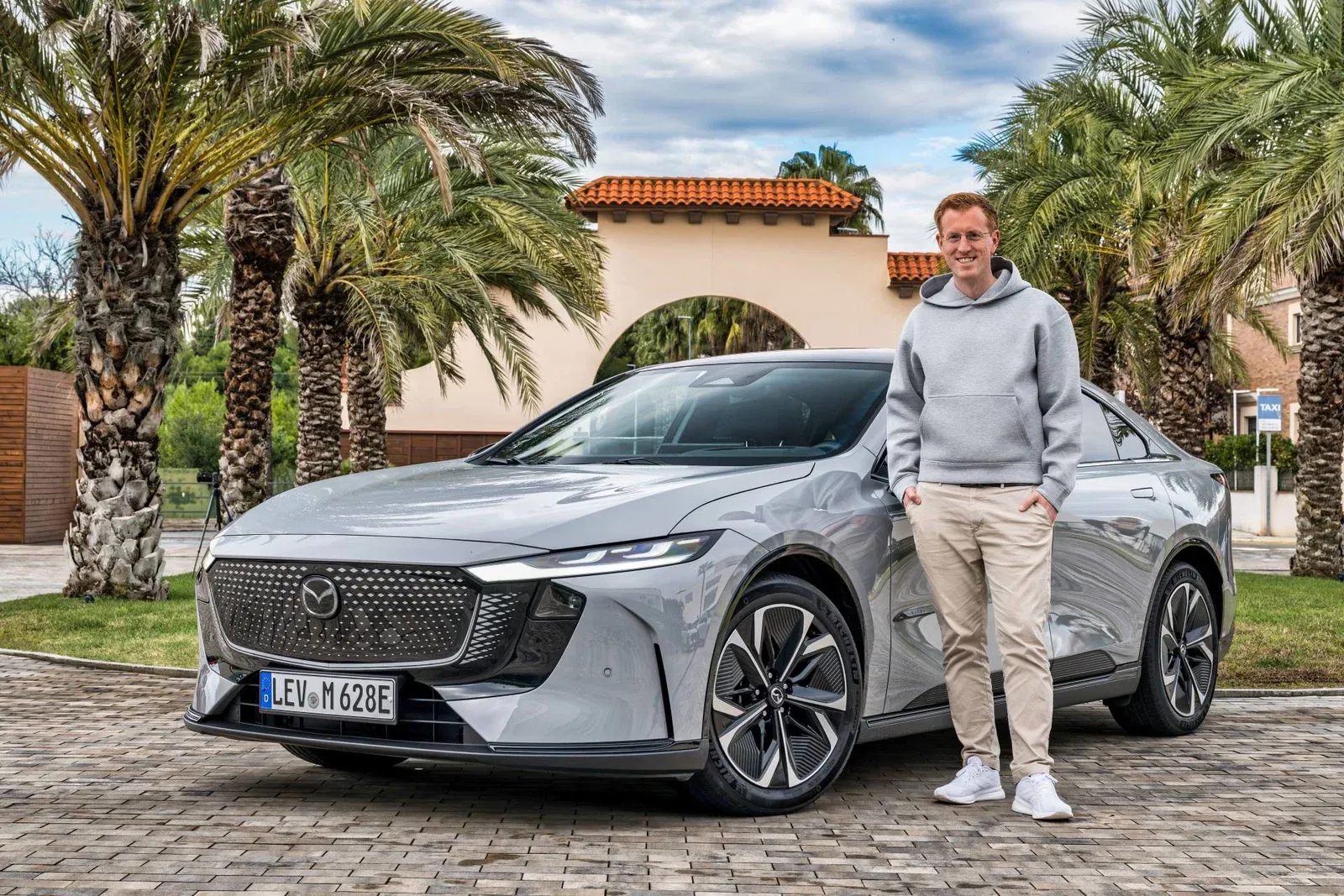
Around El Vendrell, southwest of Barcelona, Mazda unveiled more than just a revised electric vehicle this week. With the European debut of the Mazda 6e for the 2027 model year, the focus was also on how a brand with a 1.6 percent market share in Germany can thrive in an environment it describes as challenging. The answer comes in surprisingly clear figures: For the fiscal year starting April 1, 2026, Mazda aims to sell around 197,000 cars in Europe, representing a 21 percent increase. This growth is expected to be driven primarily by the new CX-5 and the electric sedan, which is now receiving its first major update.
The first half of the fiscal year already sets the direction. From April to September, Mazda sold 84,000 cars in Europe, 16 percent more than in the same period last year. Klaus Hüllen, Senior Manager PR & Events at Mazda Motor Europe, attributed this mainly to the CX-5 and Mazda 6e introduced this year. The growth is notable especially because it follows a weak previous year, during which Mazda sold about six percent fewer cars worldwide.
The electric sedan has contributed significantly to this growth. Since its launch in September 2025, Mazda has sold over 20,000 units across Europe, already exceeding the sales target it had set, according to the company. The car was developed through collaboration among teams in Europe, Japan, and China, and is manufactured at the Changan Mazda joint venture plant in Nanjing, where around 3,000 people are employed. Ahead of the 2027 model year, Mazda’s European development center in Oberursel analyzed feedback from customers, dealers, and the media regarding the first generation of the vehicle to determine the priorities for future updates.
A similar picture emerges in Germany, where Mazda recorded 39,935 new vehicle registrations from January to October 2026, representing a 22.9 percent increase. However, internal combustion engine models still dominate in terms of volume: the CX-30 leads with around 11,200 units, followed by the CX-5 with just under 6,400, the Mazda3 with 5,500, and the CX-60 with nearly 5,500 registrations. For the full year, Felix Gebhart, Director of Sales at Mazda Motors Germany, remains committed to his goal of 50,000 new registrations and a 1.7 percent market share.
Mazda: Somewhere between electric momentum and internal combustion reality
This distribution explains why Mazda formulates its strategy so cautiously. In Germany, according to Mazda, fully electric vehicles accounted for 37 percent of new car registrations in October and 28.2 percent for the whole of the year to date. Mazda’s own electric models saw 3,729 registrations for the Mazda 6e and 2,060 for the CX-6e, which was introduced in September. Together, they represent around 14.5 percent of Mazda’s new car registrations, roughly half of the market share overall.
Gebhart countered with another figure: Just over two thirds of the cars newly registered this year still have an internal combustion engine, often combined with an electric motor. “With our multi-solution powertrain strategy, we are perfectly positioned for this demand situation,” he said. Accordingly, the range of options remains broad, ranging from gasoline and diesel engines to full and plug-in hybrids, as well as pure electric vehicles. The company believes it is difficult to predict where demand and the mix of powertrains will evolve, as energy prices, geopolitical uncertainties, and ongoing debates over European regulations significantly influence purchasing decisions.
The plans show that electric models are still set to gain importance. Mazda Germany expects 4,200 registrations for the Mazda 6e this year, with similar numbers anticipated for 2027. Combined with around 7,000 planned registrations for the CX-6e, the brand projects slightly over 11,000 new fully electric vehicle registrations in the coming year.
The 2027 Mazda 6e Takumi model starts at 47,490 euros, while the Takumi Plus and the new Homura Plus variant each cost 49,490 euros. Although the price list began at 44,900 euros when it launched in the fall of 2025, that version came with a smaller 68.8-kWh battery. By the end of November, a leasing option without a down payment will be available. For private customers, the Takumi model costs 494 euros gross per month over 48 months with 10,000 kilometers per year, while business customers pay 391 euros net with 40,000 kilometers of total mileage. Mazda also provides a six-year new car warranty up to 150,000 kilometers, along with an eight-year or 160,000-kilometer warranty on the high-voltage battery.
A new battery resolves the old dilemma
The most significant technical advancement is found in the underfloor area. Previously, customers had to choose between two batteries, each requiring a compromise. The 68.8-kWh version achieved up to 479 kilometers of WLTP range. The 80-kWh version reached up to 552 kilometers, but charged at less than 100 kW and took about 45 minutes to go from 10% to 80% charge. Now, a 78-kWh battery with lithium-iron-phosphate cell chemistry (LFP) replaces both, allowing up to 560 kilometers of WLTP range according to Mazda, and it can charge at up to 200 kW at fast chargers.
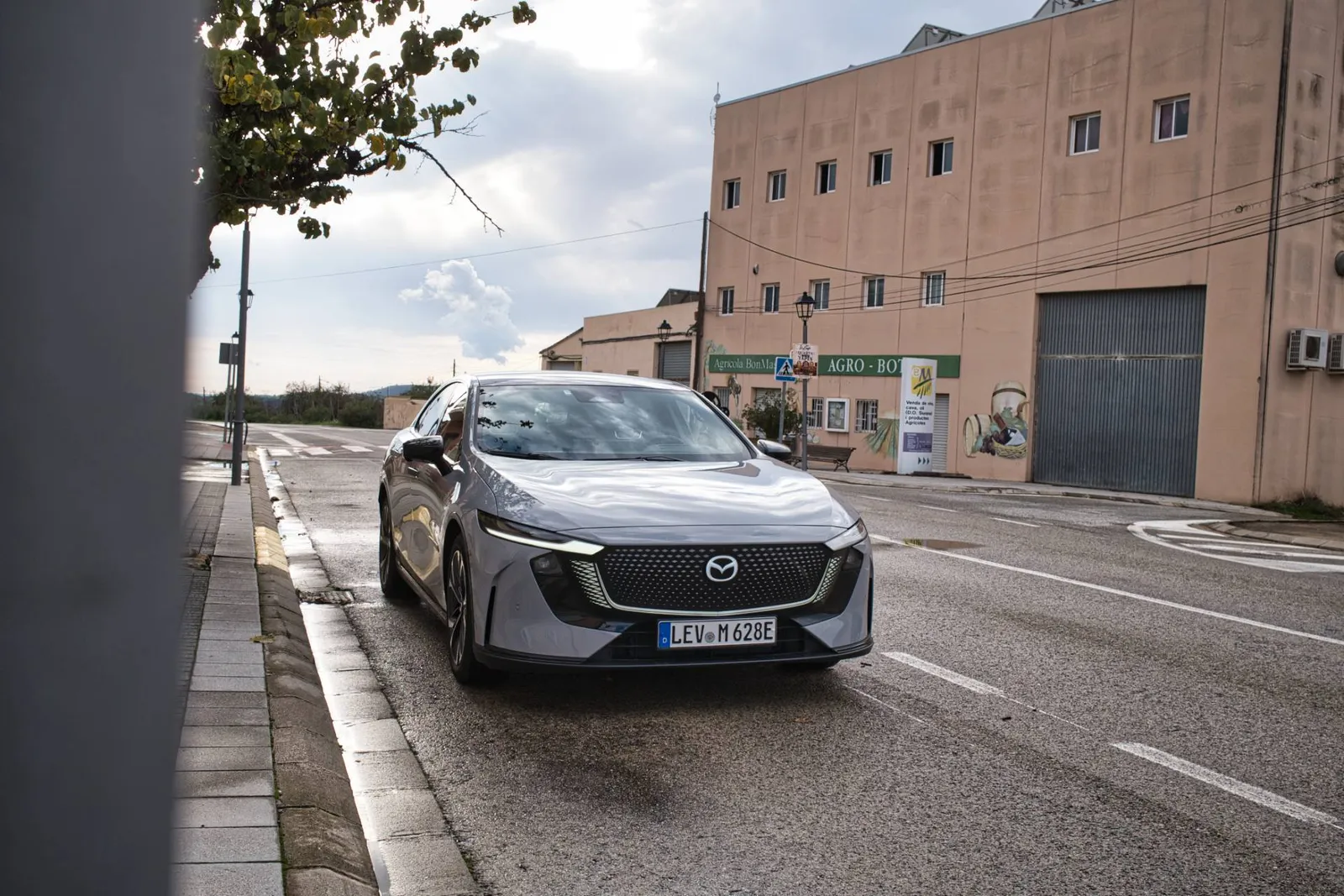
The battery is said to charge from 10 to 80 percent in 24 minutes. Up to 11 kW of power can be delivered via a wall charger. Christoph Völzke, supervisor of product and corporate communications, believes this makes the sedan “now competitive on long distances as well.” Whether the factory specifications hold up in real-world use will require longer testing. With the previous model’s smaller battery, Electromobile-News measured only around 67 kW of charging power over long distances at cooler temperatures in November 2025.
Mazda has also made adjustments to the drivetrain, though less noticeably. The permanently excited synchronous motor at the rear axle still delivers 190 kW (258 hp), but the maximum torque even decreases from 320 to 290 Nm. However, because the gear ratio is 20 percent shorter, wheel torque increases by nine percent, allowing the car to reach 100 km/h in 7.3 seconds instead of 7.6 seconds. Mazda now reports a combined WLTP fuel consumption of 16.1 kWh/100 km, three percent lower than before.
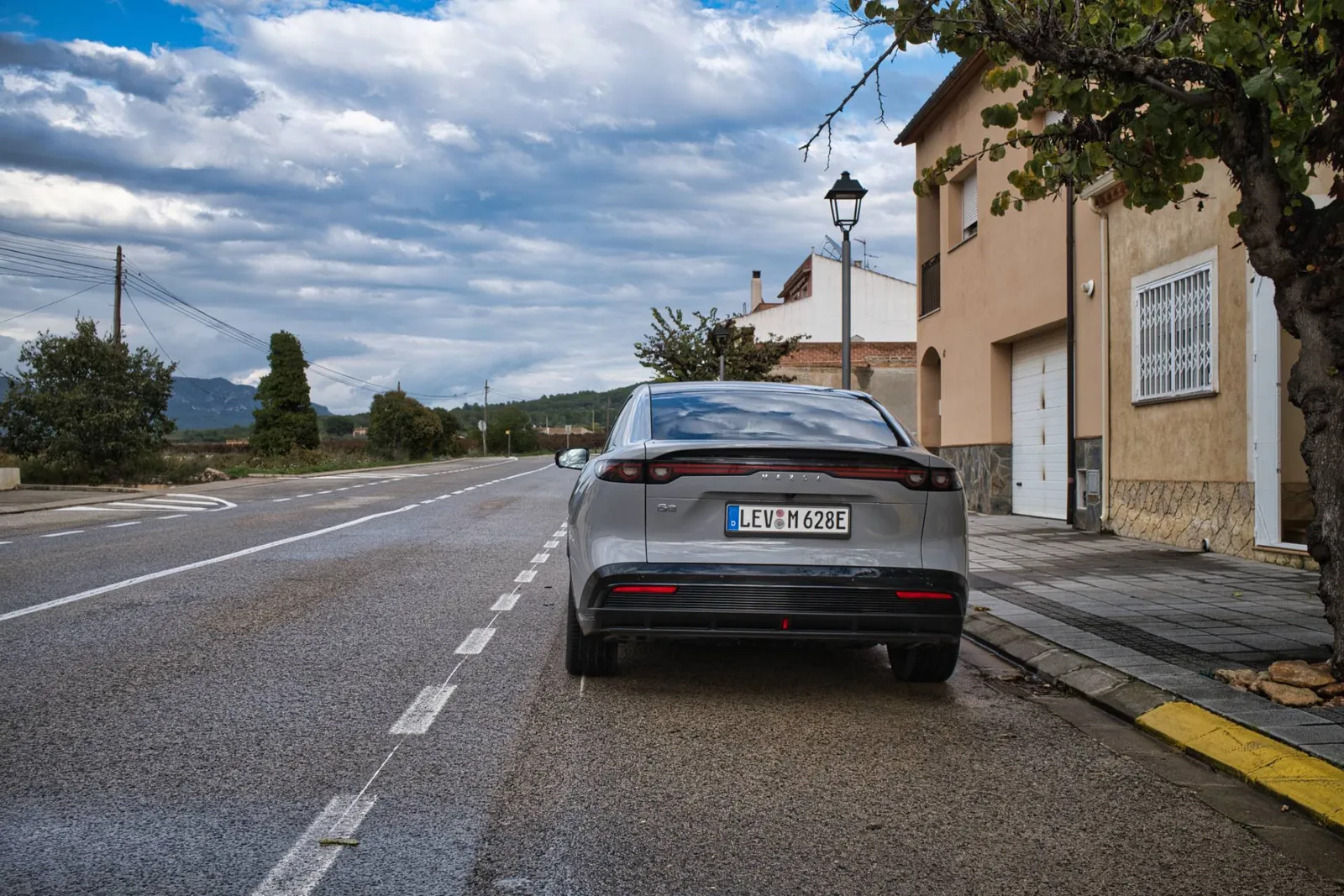
Additional improvements include newly tuned springs, dampers, steering, and throttle pedal, along with enhanced maximum regenerative braking. The assistance systems have also been refined: the advanced steering assist now operates up to 160 km/h, and the lane-keeping assist is designed to intervene more gently. Electric Car News had previously criticized this feature in the predecessor model as being overly intrusive. The translations and voice recognition in the infotainment system have also been updated.
Award-winning design with everyday practicality
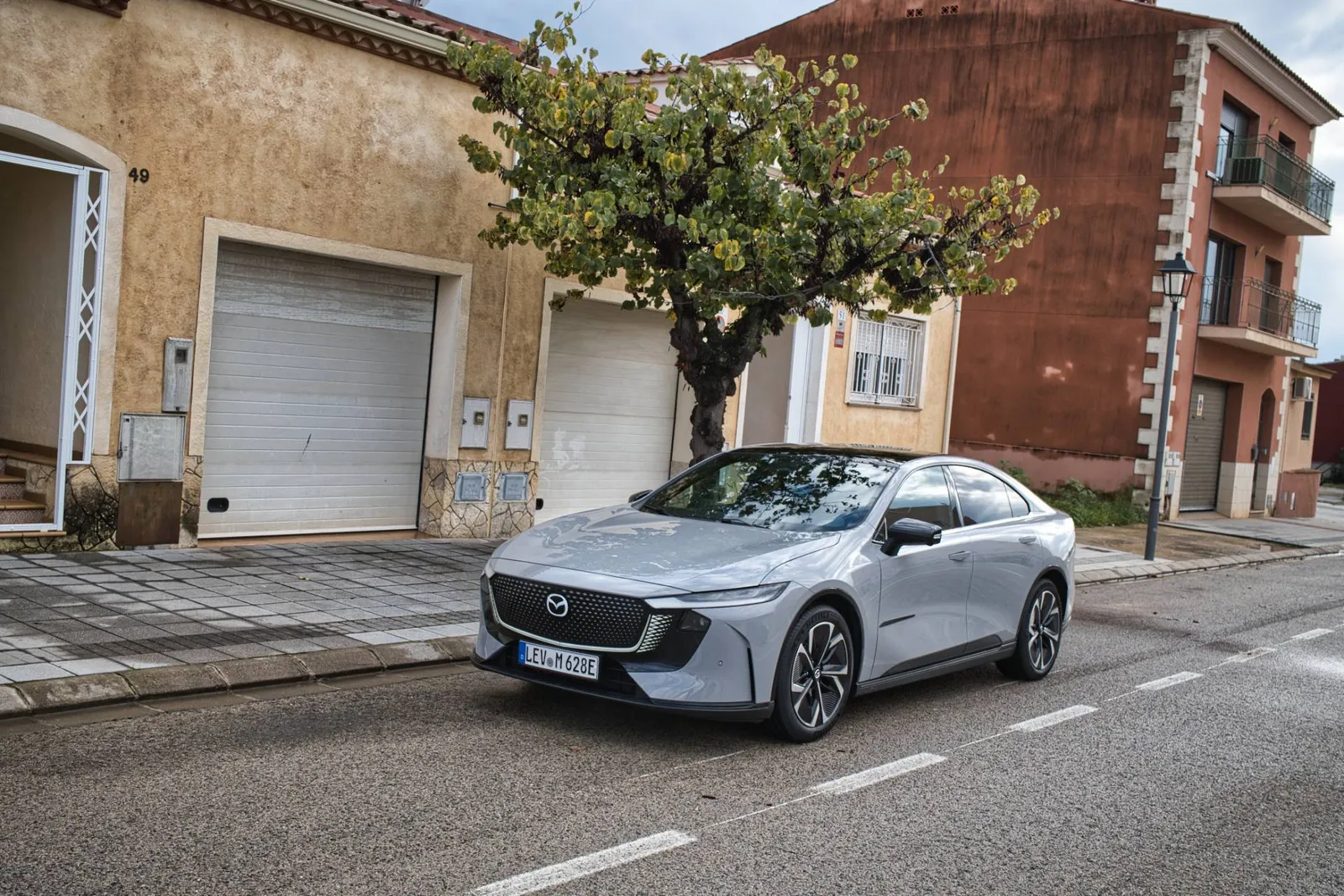
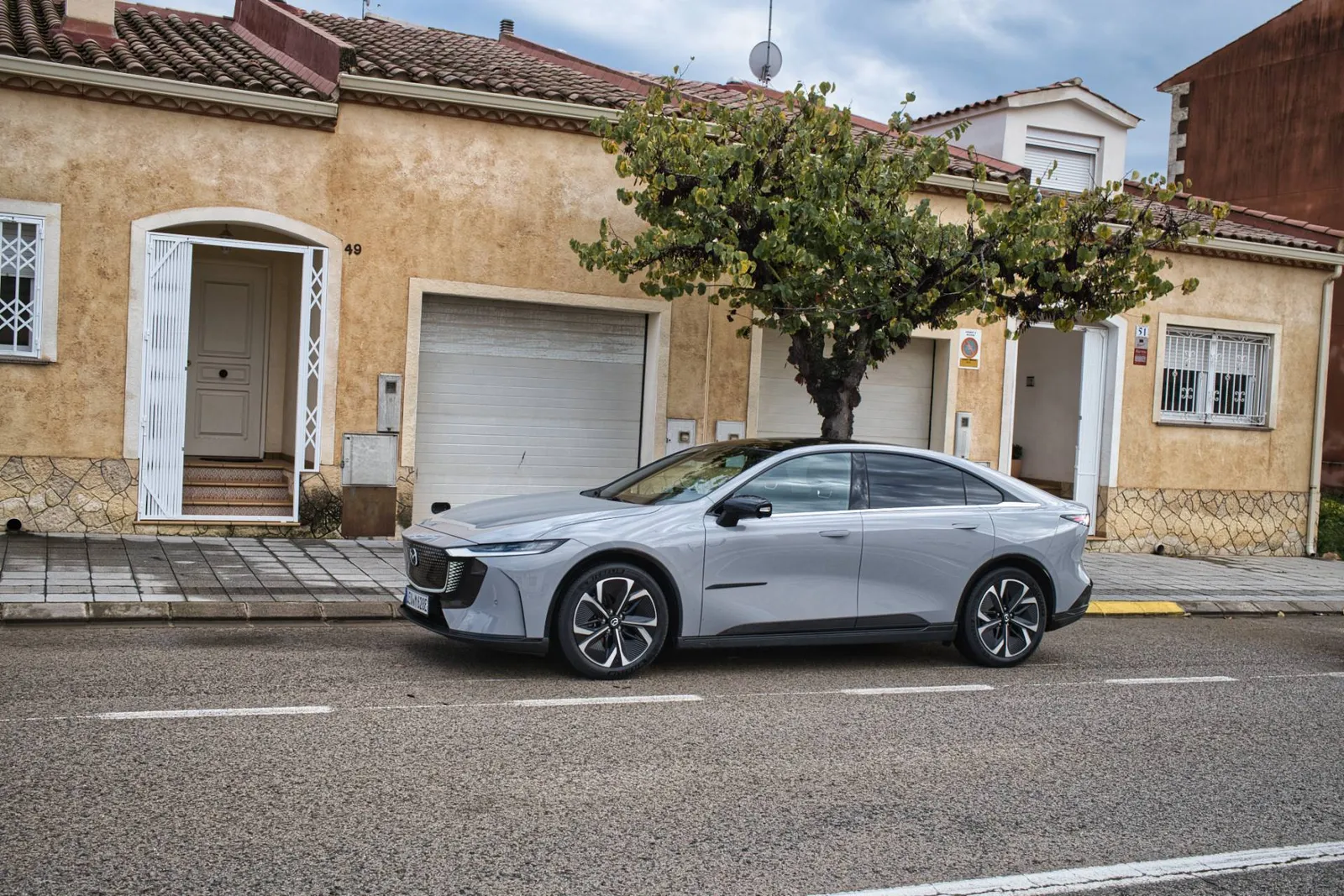
Before hitting the road, it’s worth taking a look at what has distinguished the Mazda 6e from the start. With a length of 4.92 meters, a width of 1.89 meters, and a height of just under 1.49 meters, the sedan has a low and sleek profile, with frameless doors and flush-mounted handles that keep its sides smooth. At the front, the Signature Wing glows, displaying the charging level while charging, while a spoiler extends from the rear at speeds of 90 km/h. For this design, the model received the World Car Design Award in April 2026. Following the MX-5 in 2016 and the Mazda3 in 2020, it is the third such award for the brand within ten years. The new Homura Plus lineup enhances this appearance with high-gloss black accents on the outside and black seats with red trim stitches.
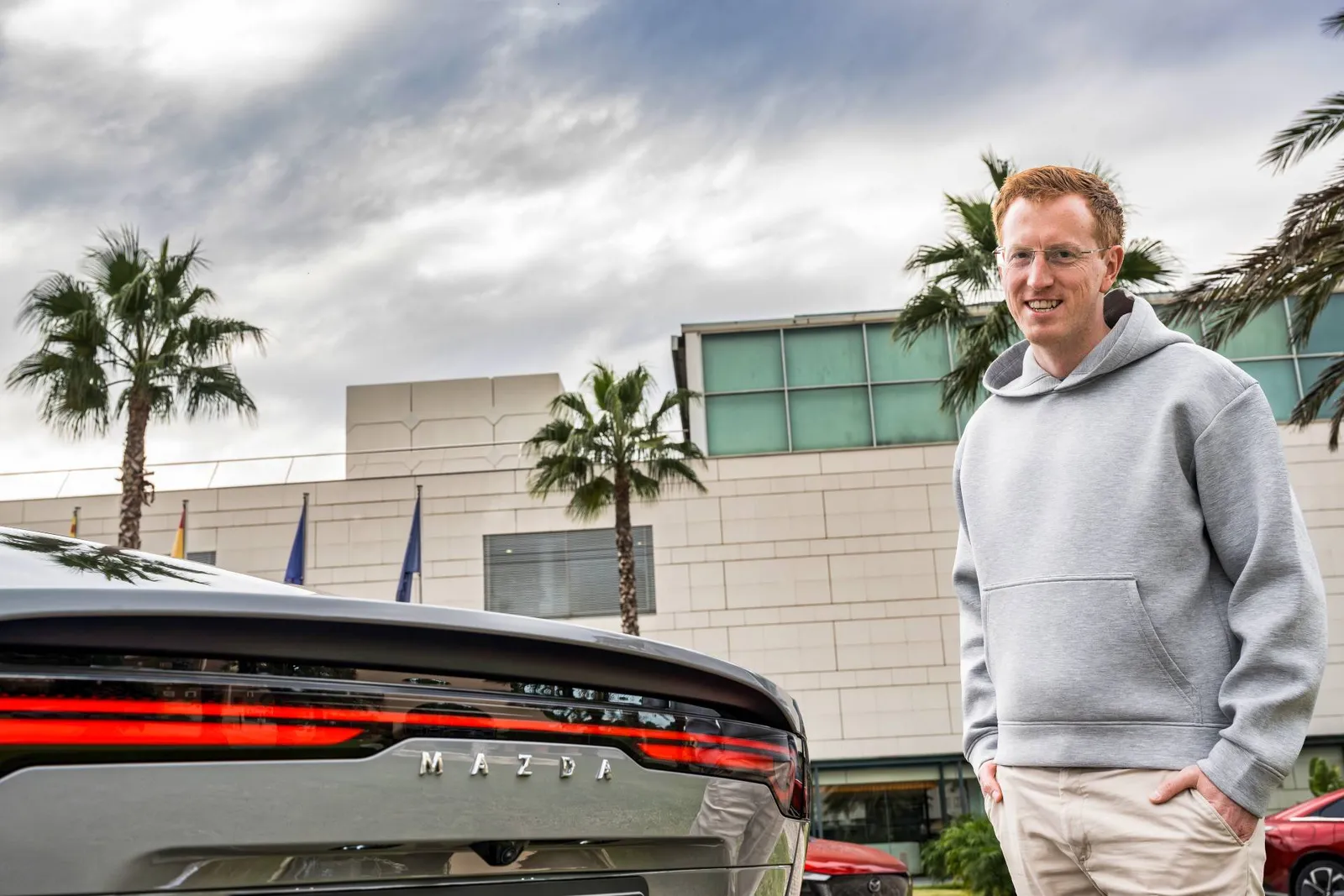
Beneath its coupe-like silhouette lies a practical five-door vehicle, a fact that becomes apparent only when looking at the large trunk lid. The loading area measures 964 by 619 millimeters. The trunk has a capacity of 466 liters, which increases to 1074 liters when the rear seats are folded down, with an additional 72 liters available under the front hood. The wheelbase of just under 2.90 meters provides ample space both in the front and back.
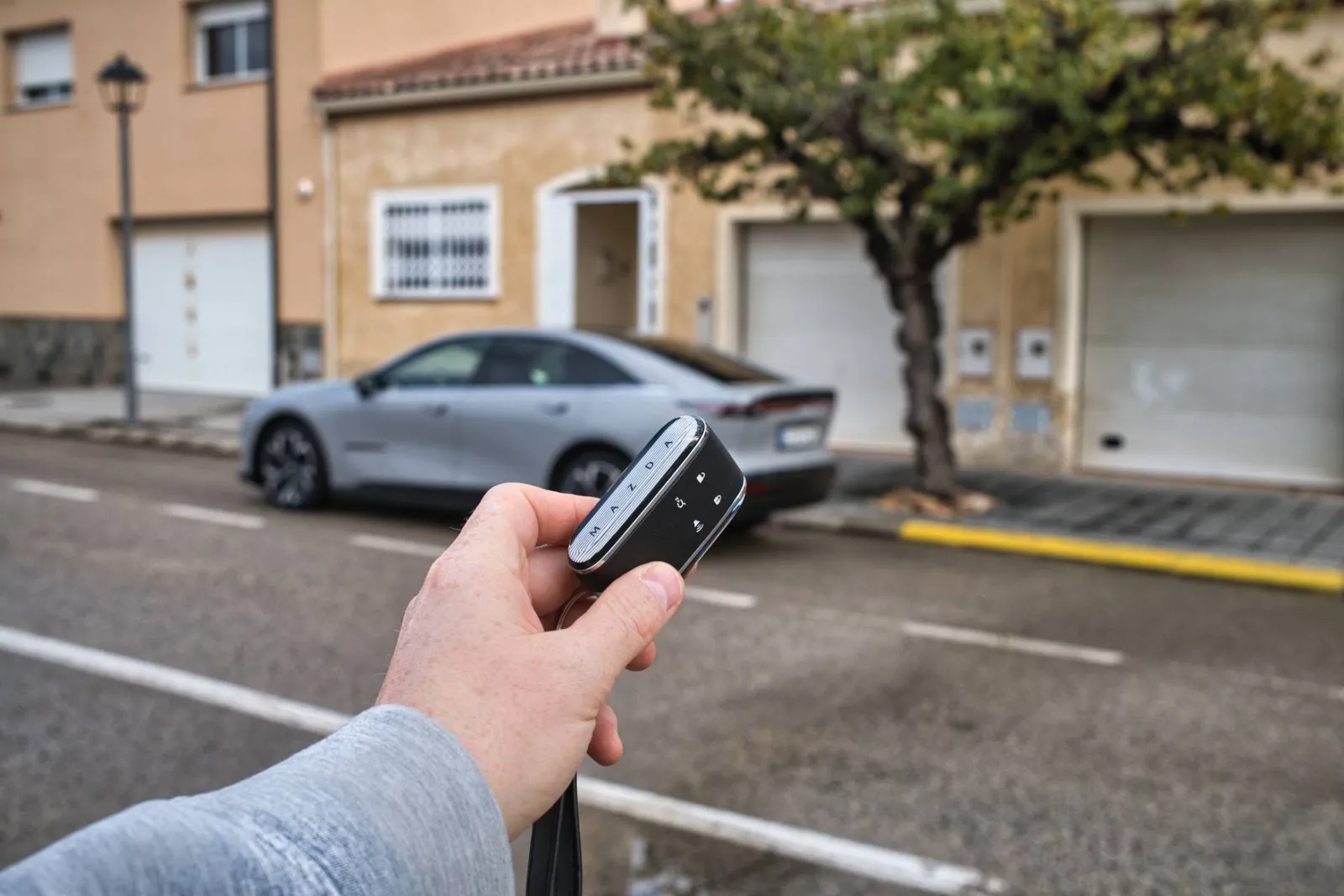
With a braked towing capacity of 1500 kilograms, this sedan can also be used as a tow vehicle. According to Mazda, around 30 percent of customers choose the electrically adjustable tow hitch. Even in the base Takumi version, it comes equipped with a panoramic glass roof, head-up display, a 14.6-inch touchscreen, a Sony sound system with 14 speakers, and a heat pump.
Traveling Between Coast and Interior with the Mazda6e
The driving experience was demonstrated on routes around Barcelona. Mazda had planned these routes via highways, coastal roads, and especially winding country roads leading inland. In the Homura Plus in Aero Grey, the car covered just under 140 km in about 2.5 hours, under temperatures of 13 to 15 degrees Celsius, with weather conditions shifting between rain showers and sunshine. With an average speed of 56.2 km/h, the onboard computer reported an energy consumption of 15.4 kWh/100 km, staying below the WLTP value. The long-term average for the same car was 17.1 kWh/100 km, calculated over 1247 kilometers driven by different drivers under various conditions.
On the curved sections, it becomes clear what the sedan is designed for. Mazda combines rear-wheel drive with MacPherson struts at the front and a multi-link axle at the back, reporting a weight distribution of 47 to 53. The steering responds well to inputs, but in tighter curves, it requires additional steering input. Those who want to control regen braking themselves can find its four levels only in the Individual driving mode; in Normal and Sport modes, it is fixed. In the strongest setting, the sedan brakes significantly, but it deliberately doesn’t come to a complete stop, so true one-pedal driving is not possible. Additionally, both when accelerating and during regen braking, there is a brief delay before the car responds to the foot pressure.
The interior construction gives a good impression. The materials are well-cushioned and pleasant to the touch, with an atmosphere that is both sporty and elegant. The seat heating and cooling can be adjusted in three levels each. The plastic smartphone holder stands out even more, as it appears rather cheap in this context. Acoustically, another issue remains: even at low speeds, audible rolling noises from the wheel wells penetrate inside, and these are even more noticeable on wet roads.
The biggest issue remains the software, which bears the design and usability signature of the partner Changan. The symbols are colorful and playful, but reactions such as zooming out from the map are rather sluggish, and despite the revised terminology, the translation still doesn’t feel consistently accurate. Frequently used features like seat heating or battery pre-conditioning are located in submenus, though at least seat heating can be assigned to the favorite buttons on the steering wheel.
Navigational instructions appear on the head-up display only during built-in navigation; Apple CarPlay and Android Auto are excluded from this feature. Traffic sign recognition also isn’t fully functional yet: it can read signs but doesn’t compare them with map data, resulting in inaccurate speed displays, especially when approaching highway on-ramps.
The charging schedule in the navigation system, which can be filtered by provider, charging speed, and currently available charging stations, has been successfully implemented. It represents an update that addresses multiple aspects simultaneously: the battery and charging performance, steering and suspension, as well as assistance systems and user interface. With this, the Mazda 6e fits into the image Mazda has crafted of itself in El Vendrell: a manufacturer that is growing in Europe, gradually advancing its electric vehicles, while continuing to rely on multiple powertrains.
The new model year has little impact on the 4,200-unit sales target for 2026, as 3,729 units had already been registered by the end of October. Whether the revised sedan will continue to serve as a key driver in sales will become clear only in 2027, when it is expected to contribute to over 11,000 new fully electric vehicle registrations alongside the CX-6e.
Disclaimer: Mazda invited us to Barcelona, Spain, to experience the Mazda6e and interact with the brand, covering the travel expenses. However, this does not affect our honest opinions expressed here.