
It is not a failure, but close to it: the 1.6 billion euros allocated by Spain for alternatives to kerosene are stuck.
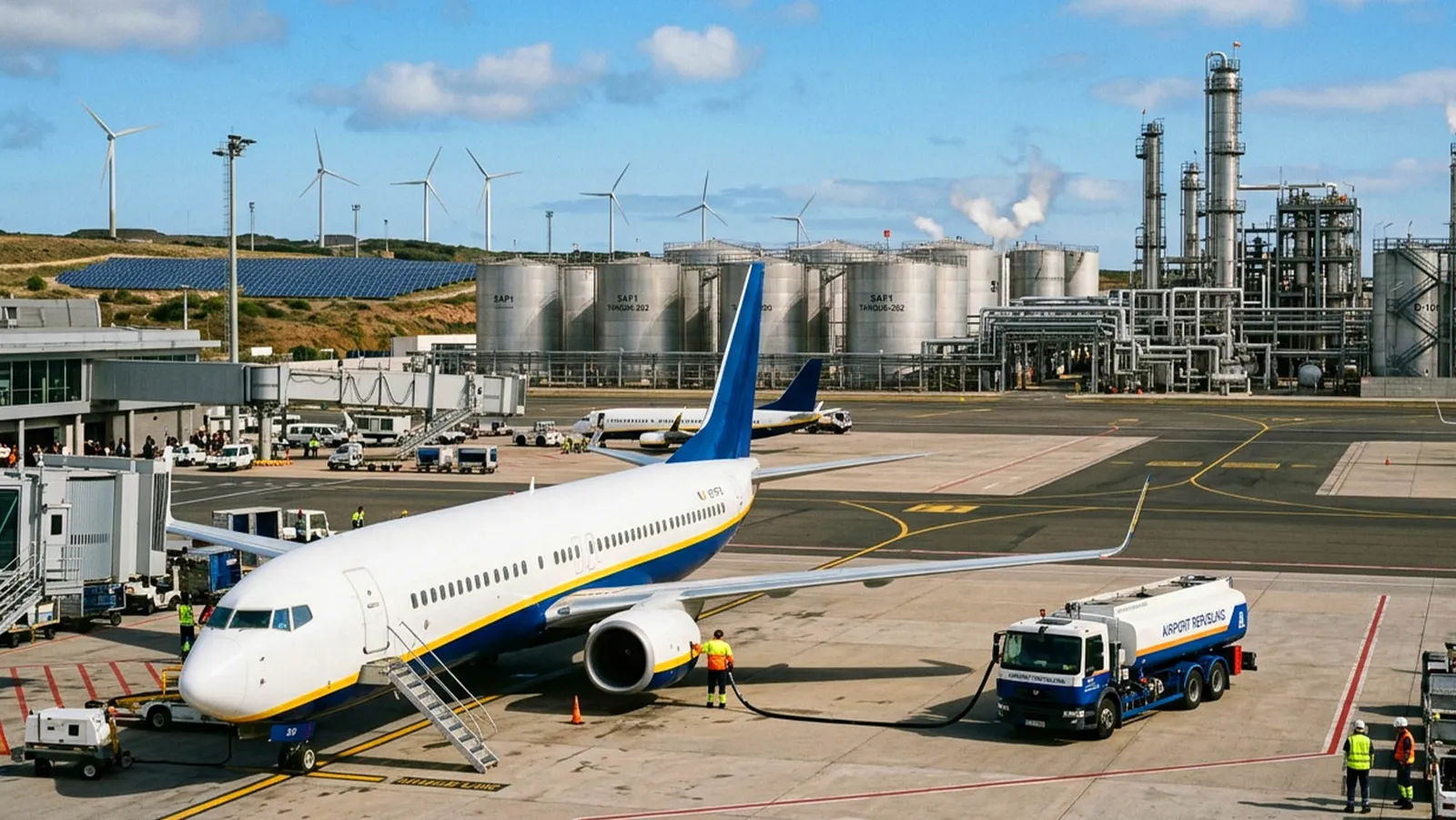
Air transport needs to reduce its reliance on oil to cut harmful emissions, but replacing kerosene with sustainable fuels is proving much more difficult than expected.
Spain has allocated billions of euros in public funding to develop alternatives, although many of the industrial projects have yet to prove their viability.
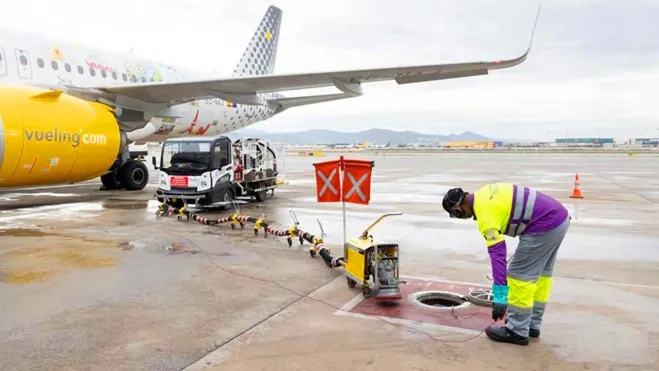
Over 1.6 billion euros and numerous projects stalled
The problem isn’t a lack of technology, but rather a combination of high costs, lack of buyers, supply difficulties, and projects that fail to move from announcements and funding to commercial production.
Between 2021 and 2026, Spain has allocated 1,668.9 million euros in public support to 24 projects for the production of alternative fuels: 20 related to synthetic fuels and four to biofuels. The broader ECODES framework, which also includes support for purchasing sustainable aviation fuel, raises the total amount of support to around 1,766 million euros.
Of the 1,254 million euros allocated to synthetic fuel projects, only two, HyBizkaia and LUXIA, have secured implementation. The other 18 have not yet demonstrated the necessary conditions to ensure implementation.
The main obstacle is economic. In their early stages, synthetic fuels can cost up to seven times more than their fossil fuel equivalents. Without long-term purchase contracts from airlines and shipping companies, it is difficult to justify the investments needed to build new plants.
Added to this are the difficulties in accessing the power grid, obtaining raw materials, and ensuring a supply of renewable energy. The result is a gap between the funds committed and the industrial capacity that actually reaches the market.
Sustainable fuel remains much more expensive
Sustainable aviation fuels, known as SAF, include both biofuels and synthetic fuels. Their main advantage is that they can be used in conventional aircraft, mixed with fossil kerosene within certified limits, without requiring a complete overhaul of the fleets.
However, this compatibility does not address the issue of their cost. According to the EASA market report for 2025, SAF averaged 1,925 euros per ton in the European Union, compared to 640 euros per ton for conventional kerosene.
The price difference increases airlines’ operating costs and makes it difficult for them to voluntarily increase their purchases. European regulations require an increase in the proportion of sustainable fuel, but the challenge lies in ensuring that production grows enough to meet this demand without driving up costs.
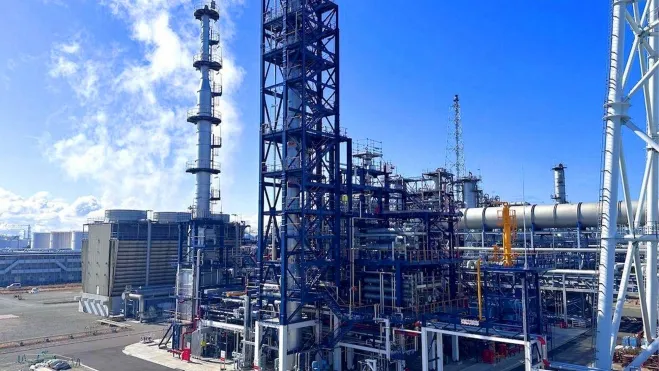
Biofuels also don’t solve all the problems
Biofuels utilize organic raw materials such as used cooking oils and certain types of waste. In Spain, the four identified projects have received 414.9 million euros in public support. Two facilities are currently in operation: those operated by Moeve in Huelva and Repsol in Cartagena.
Its main limitation is the availability of sustainable raw materials on a large scale. The demand for used oils and waste cannot grow indefinitely, and their use in various sectors creates competition for the same resources.
In addition, the European Union remains heavily dependent on external supplies. In 2025, approximately 85% of the raw materials used to produce SAF supplied in the EU were imported. China accounted for 61% of those imports, according to EASA. Therefore, replacing fossil kerosene with biofuels does not guarantee energy independence on its own.
Synthetic fuels represent the key solution yet to be realized
Aircraft synthetic fuels, known as e-SAF, are produced using hydrogen generated from low-emission electricity and captured carbon. If the electricity and processes meet sustainability criteria, they can significantly reduce emissions throughout the entire life cycle.
The challenge lies in turning this technical possibility into a competitive industry. In September 2026, the European Commission reported that the first demonstration plant for aircraft synthetic fuel had already been launched in the EU, while around 50 projects were still awaiting a final investment decision. EASA states that large-scale e-SAF production facilities have not yet reached that stage.
The distinction is important: there are advancements and pilot projects, but that does not mean there is sufficient industrial capacity to supply airlines.
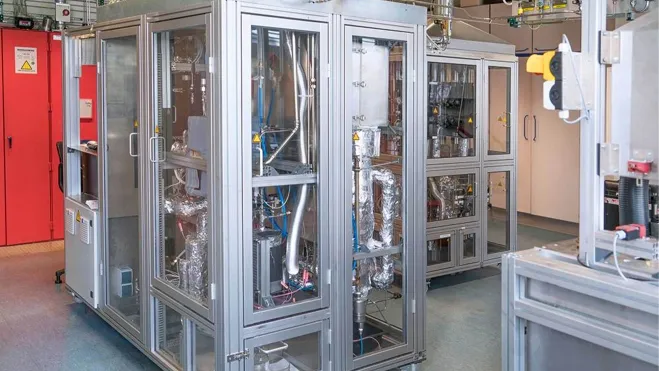
Europe sets ambitious goals, but capacity is lacking
The ReFuelEU Aviation regulation requires that fuel supplied at European airports contain at least 2% SAF starting in 2025. This proportion must reach 6% by 2030 and 70% by 2050. For synthetic fuels, the regulation sets specific targets of 1.2% by 2030 and 35% by 2050.
The first target has already been met: in 2025, SAF accounted for 2.8% of the fuel supplied at EU airports, amounting to 1.1 million tons. But synthetic fuel remains the weakest link in the transition.
Thus, the balance does not prove that alternative fuels are unviable. It shows that financing projects alone is not enough to build a competitive supply chain. Without operational facilities, sustainable raw materials, and contracts that secure buyers, aviation will continue to rely on kerosene for much longer than expected.