
More on the technology of the Tesla Roadster: up to 1,000 kW, a range of 500 km, and jet propulsion
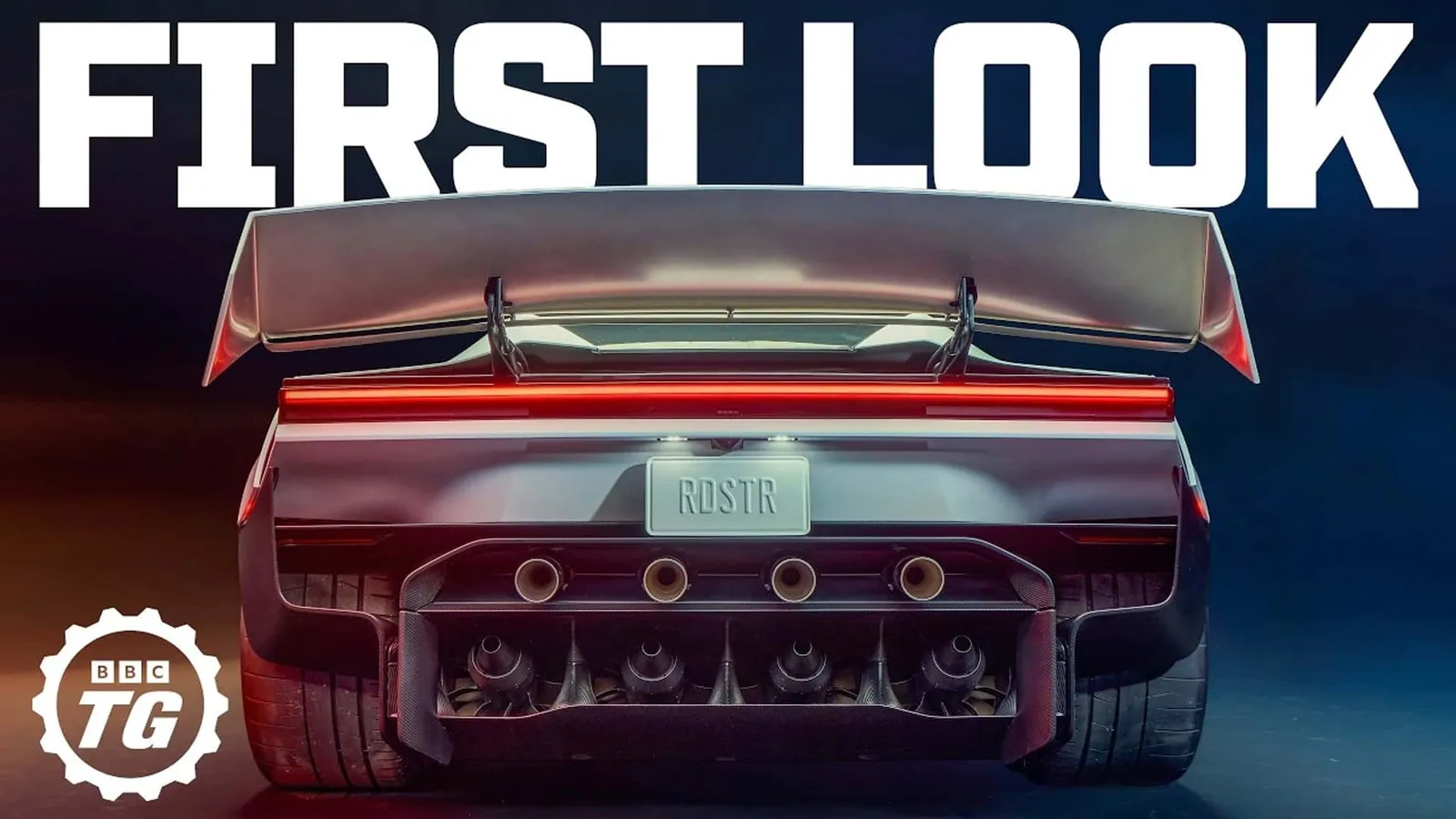
After the unveiling of the Tesla Roadster, many likely thought: The curtain is closed and all questions remain unanswered. There was a lack of information regarding the cold gas engines and their fuel supply, as well as details about the roof structure and standard electric car specifications such as power output, battery capacity, range, and charging capabilities. TopGear was able to clarify a few questions through discussions with Tesla’s chief engineer, Lars Moravia, and chief designer, Franz von Holzhausen.
The exterior bears little resemblance to the version introduced in 2017. Its wedge-shaped design echoes the Lotus Esprit, with the submarine-inspired version of the Esprit from the James Bond film “The Spy Who Loved Me” serving as a source of inspiration. Like that model, its appearance is clean, characterized by smooth surfaces and sharp edges. Holzhausen wanted no heavily modified car loaded with spoilers, but rather an elegant, simple form. The roadster only deploys its features when necessary—extending the rear with a deployable wing or positioning the wing for maximum downforce.
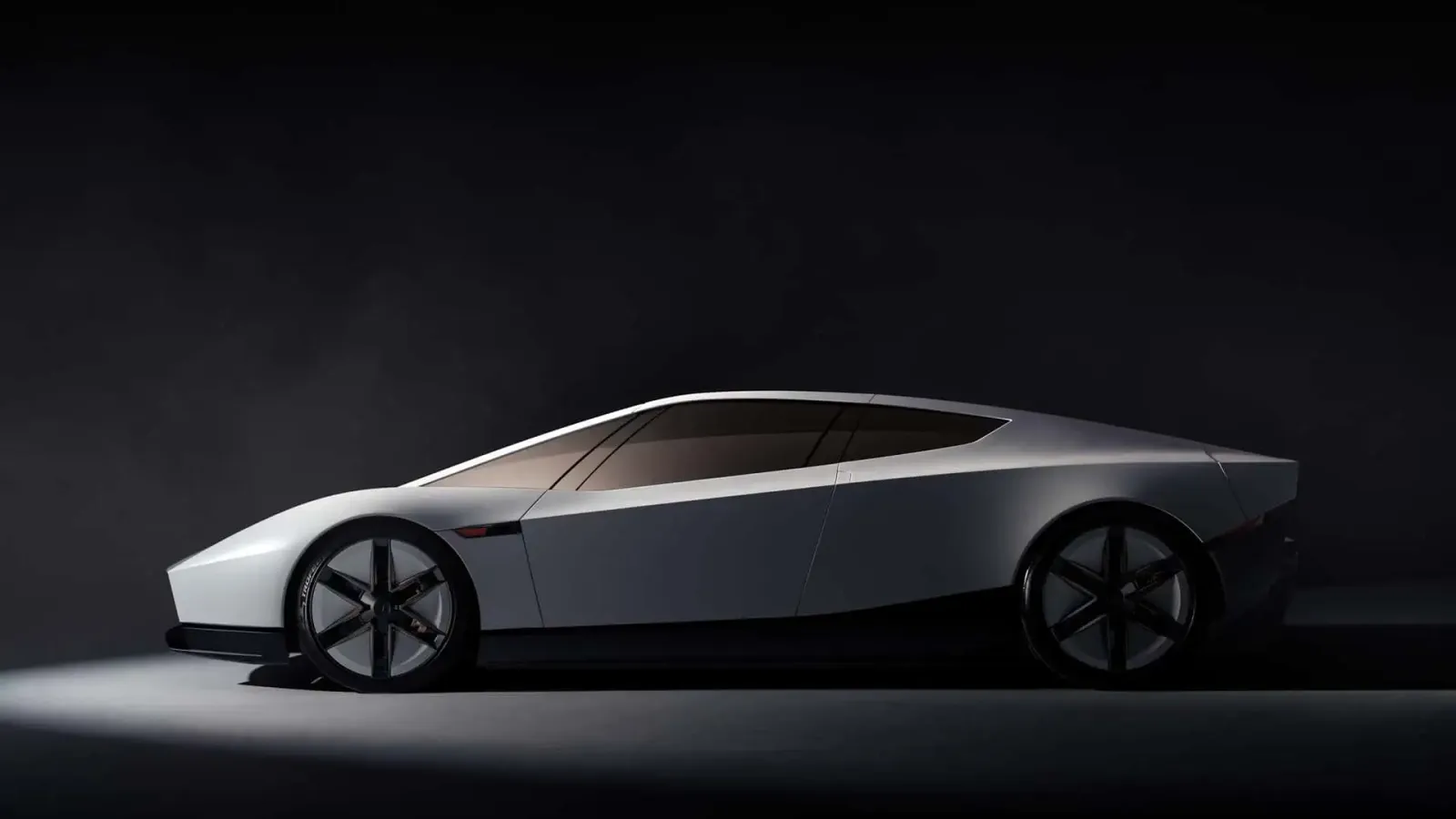
Image by: Tesla
There is still very little information available regarding the dimensions. The wheelbase measures 2,825 mm, as mentioned in the video. Based on the images, the overhangs are short, so the car is likely no longer than 4.50 meters, possibly even shorter.
The car isn’t a true roadster in the traditional sense, but the two roof windows can be removed and stored in the trunk. Thus, it features a T-top roof design similar to that of the Chevrolet Corvette C3 and C4.
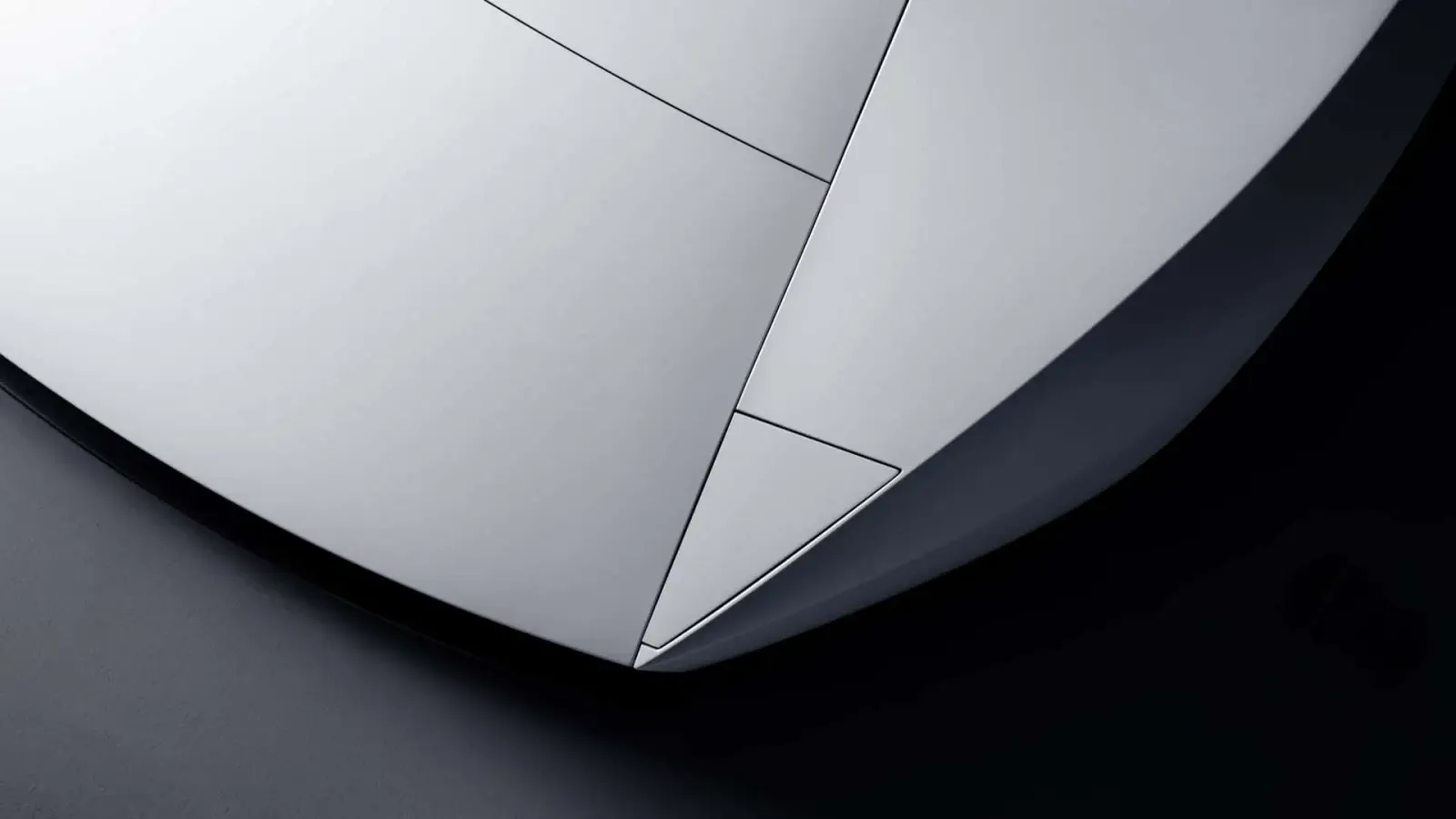
The headlights are hidden under the small triangular area (in the image below)
Image by: Tesla
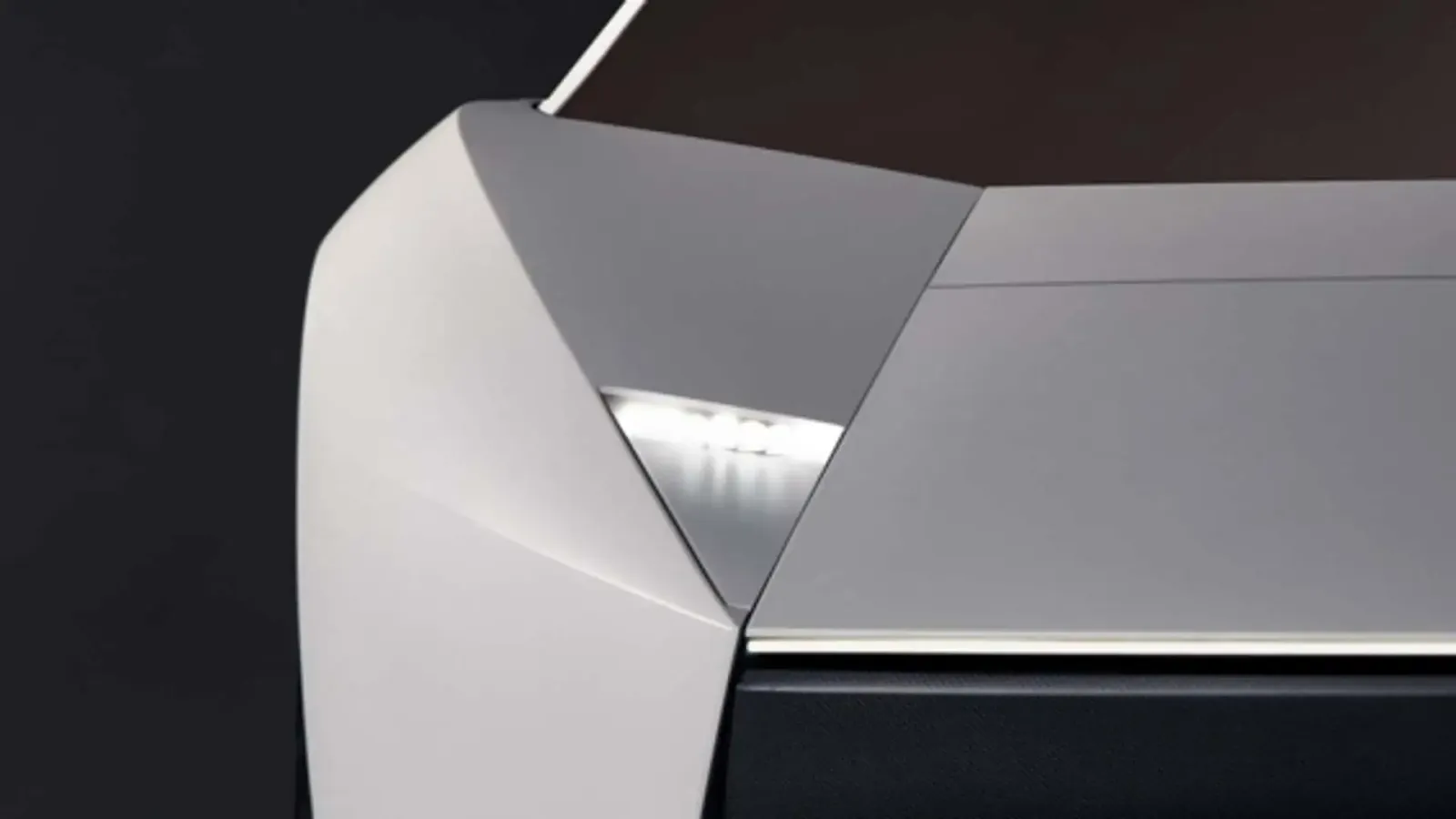
The headlights that are turned on are truly tiny
Image by: Changan
A notable feature are the “Pop Down” headlights: during the day they are retracted and flush with the surface, but at night a flap slides down in front of them. The headlights are said to be less than 20 mm tall, which reminds us of the headlights on the Hyundai Ioniq 3, which aren’t quite as small but are still very compact.
The aerodynamics can be adjusted through various active elements, as shown in the video. There is an air outlet in front of the windshield, air outlets behind the front wheels, and a rear wing that extends backward and upward when needed. The wing is even used for braking. The vehicle’s ground clearance can also be adjusted.
All versions feature a carbon chassis with a long wheelbase, housing a large battery. No specifications are provided regarding storage capacity, but the battery consists of cylindrical cells—likely using the 4680 format. The cells are cooled by S-shaped cooling strips along their length sides. Range is said to range from 500 to 515 kilometers depending on the variant. Charging is possible at up to 500 kW, allowing the battery to go from 15% to 80% charge in less than 15 minutes.
The engine delivers around 1,000 kW, making it significantly more powerful than the Model S Plaid’s 750 kW. While the sedan featured all-wheel drive with two engines at the rear and one at the front, the Roadster is a pure rear-wheel drive vehicle. Two fairly compact engines are mounted on the rear axle, enabling torque vectoring. The lightest version is said to weigh less than 1.7 tons.
Like the McMurtry Spéirling, the Tesla Roadster has a downforce system that pulls the car closer to the road surface, meaning downforce increases and traction improves. At higher speeds, flaps are opened at the front and rear, allowing the air flowing beneath the car to create additional downforce through the Venturi effect.
The Tesla Roadster is set to be offered initially in three versions: Performance, Thrust, and Rocket. However, a base version will also be added, as explained by Holzhausen in the video. TopGear estimates this base version will have around 800 kW of power and approximately 1,200 Nm of torque, enabling a 0-60 mph acceleration in under two seconds. It lacks a forced-air cooling system, relying instead on traditional Venturi aerodynamics. The top speed is expected to be 210 mph (around 338 km/h).
The Performance version is expected to feature 1,000 kW of power output, 1,400 Nm of torque, a forced-air cooling system, and an adaptive suspension. In both the base and Performance models, the trunk can be accessed by folding back the rear part of the body.
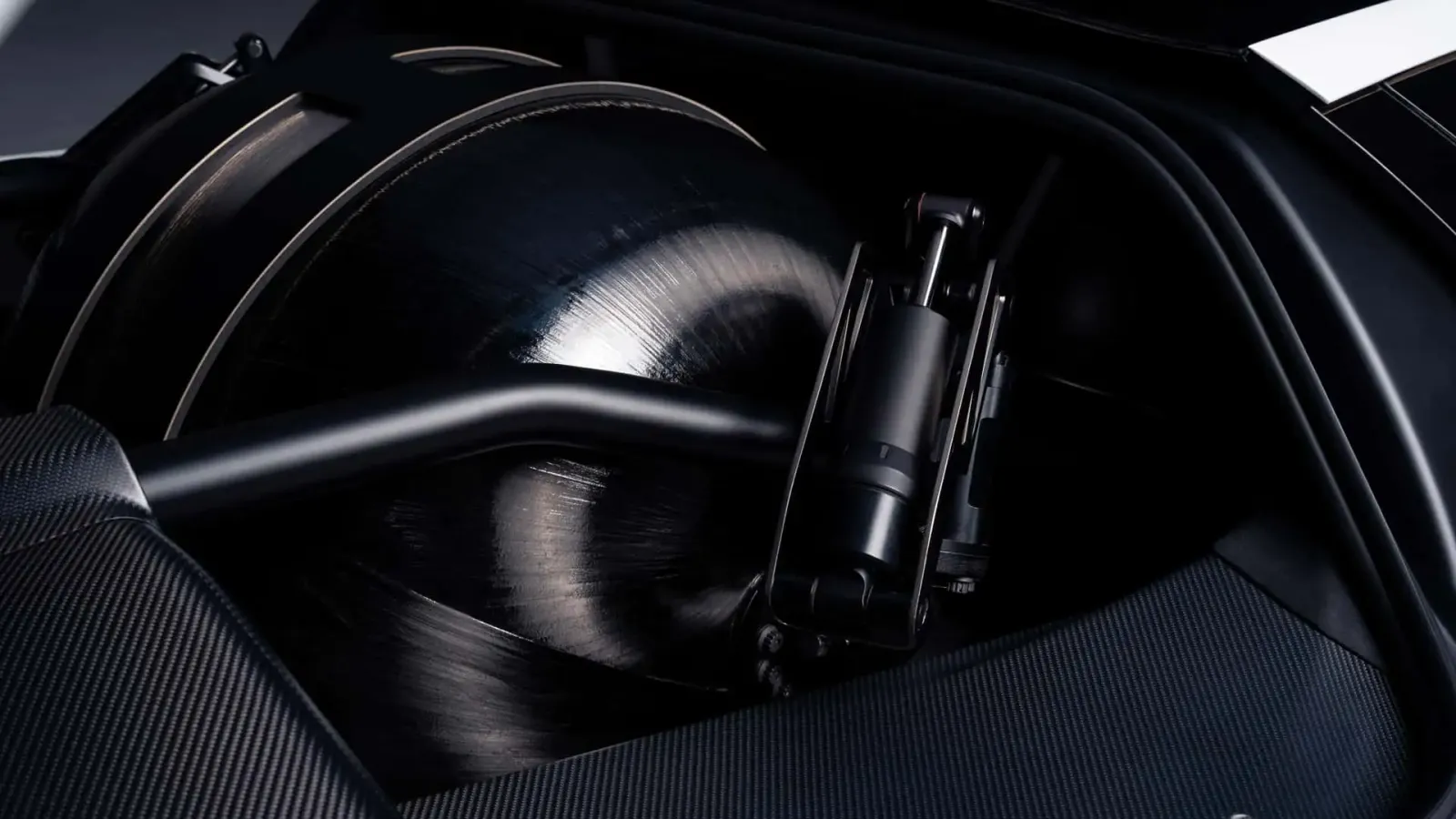
This image shows part of the 200-liter gas tank in the Thrust version
Image by: Tesla
The Thrust version features a 200-liter gas tank instead of a trunk, which apparently contains compressed air or nitrogen. This gas can be expelled through four circular nozzles at the rear, generating significant thrust that is independent of tire grip. This allows for a 0 to 100 km/h acceleration in under a second. However, this is only possible for five or six seconds before the tank is empty and needs to be refilled via a tanking system.
The Rocket version not only lacks a trunk but also a passenger seat. An additional 400-liter fuel tank is installed there. The fuel is expelled through six more nozzles on the front and sides, which assist with braking and steering. These nozzles can also be directed downward to help lift the vehicle off the ground.
All vehicles with 1,000 kW of power are supposed to reach speeds of 370 km/h. However, it appears that further variants are being developed that aim to reach half the speed of sound, approximately 617 km/h.
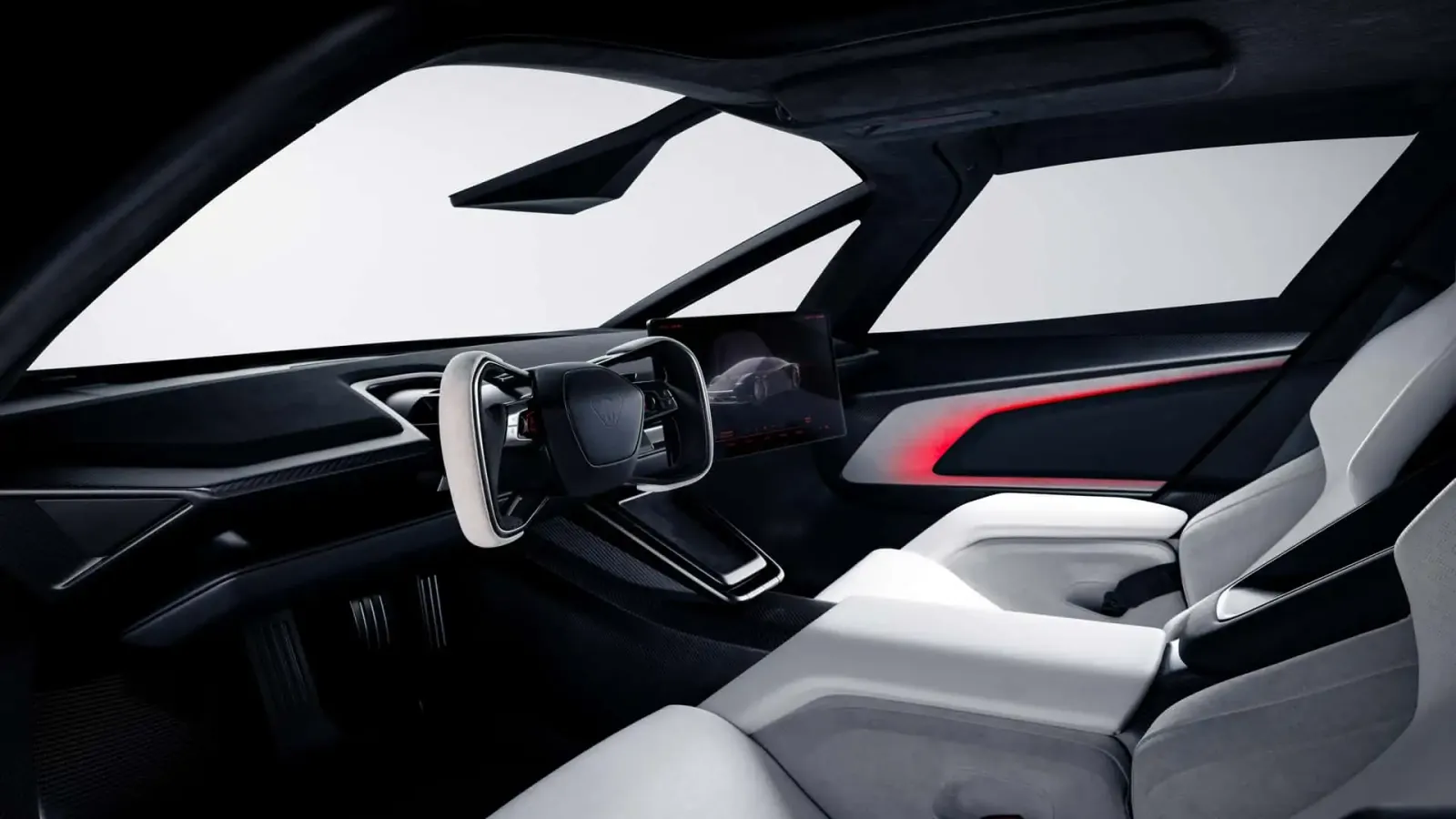
Image by: Tesla
The cockpit features two seats with a low seating position and manually adjustable backrests. The position of the steering column and pedals is variable. Steering is controlled via a joystick and steer-by-wire technology. Braking is also handled through a brake-by-wire system. There is a touchscreen in the center, and another small display is located at the bottom edge of the windshield in front of the driver’s seat, likely used primarily to display speed.
Other electric supercars:
In summary
The Tesla Roadster shows signs that Elon Musk developed it for fun. Or to prove that even seemingly crazy visions can become reality. The car can actually fly or at least hover using its thrusters, allowing it to extend its range when jumping. Of course, none of this matters in everyday driving. But the technology is interesting. That’s why it’s worth watching the long video.
What the regular versions of the Roadster can do, namely the base model with 800 kW and the Performance version with 1,000 kW, isn’t entirely clear yet. The focus here seems to be on driving pleasure rather than range. But most people probably wouldn’t drive it in a sporty manner for more than 500 km anyway.