
Can France experience a blackout if all electric cars plug in at once?
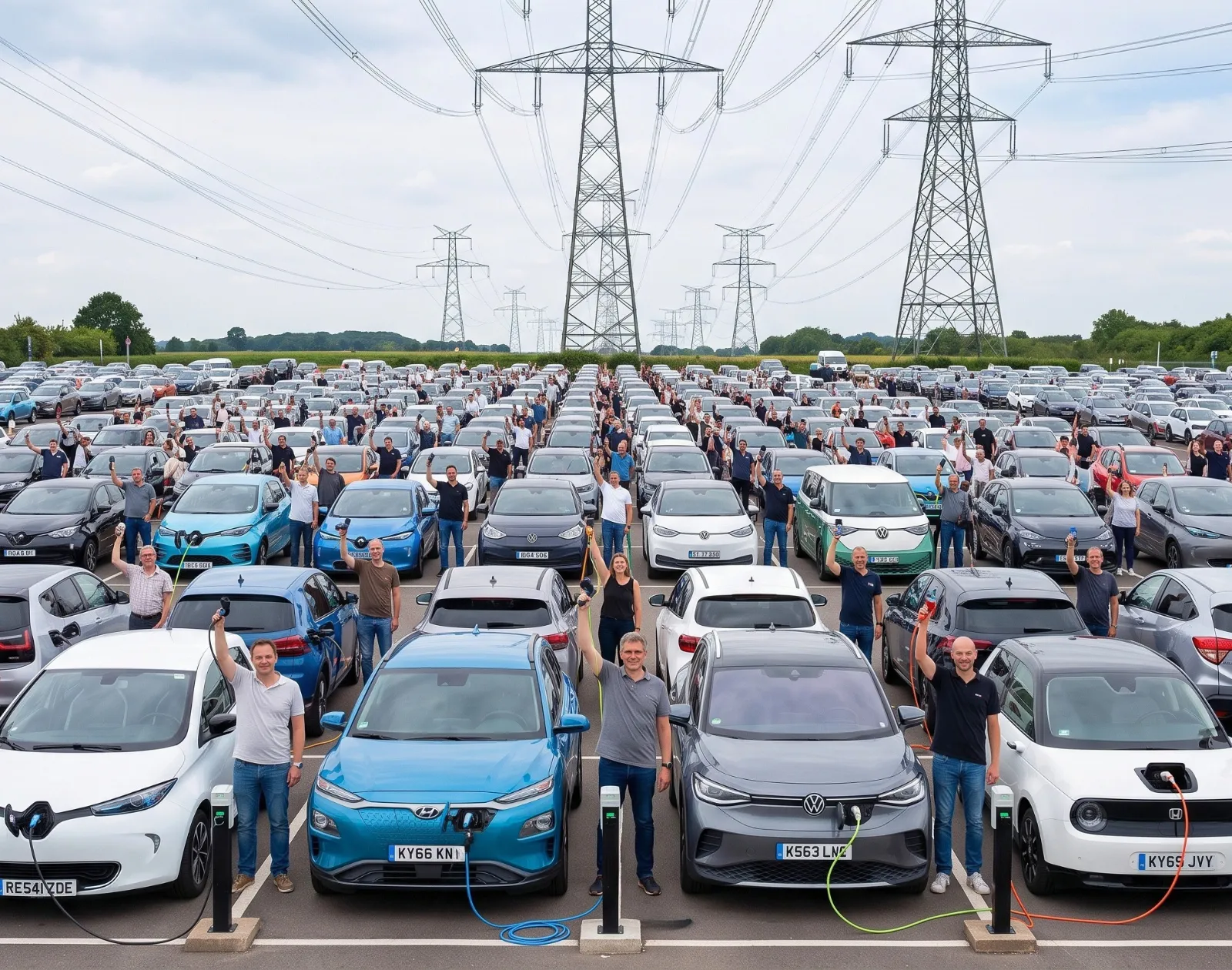
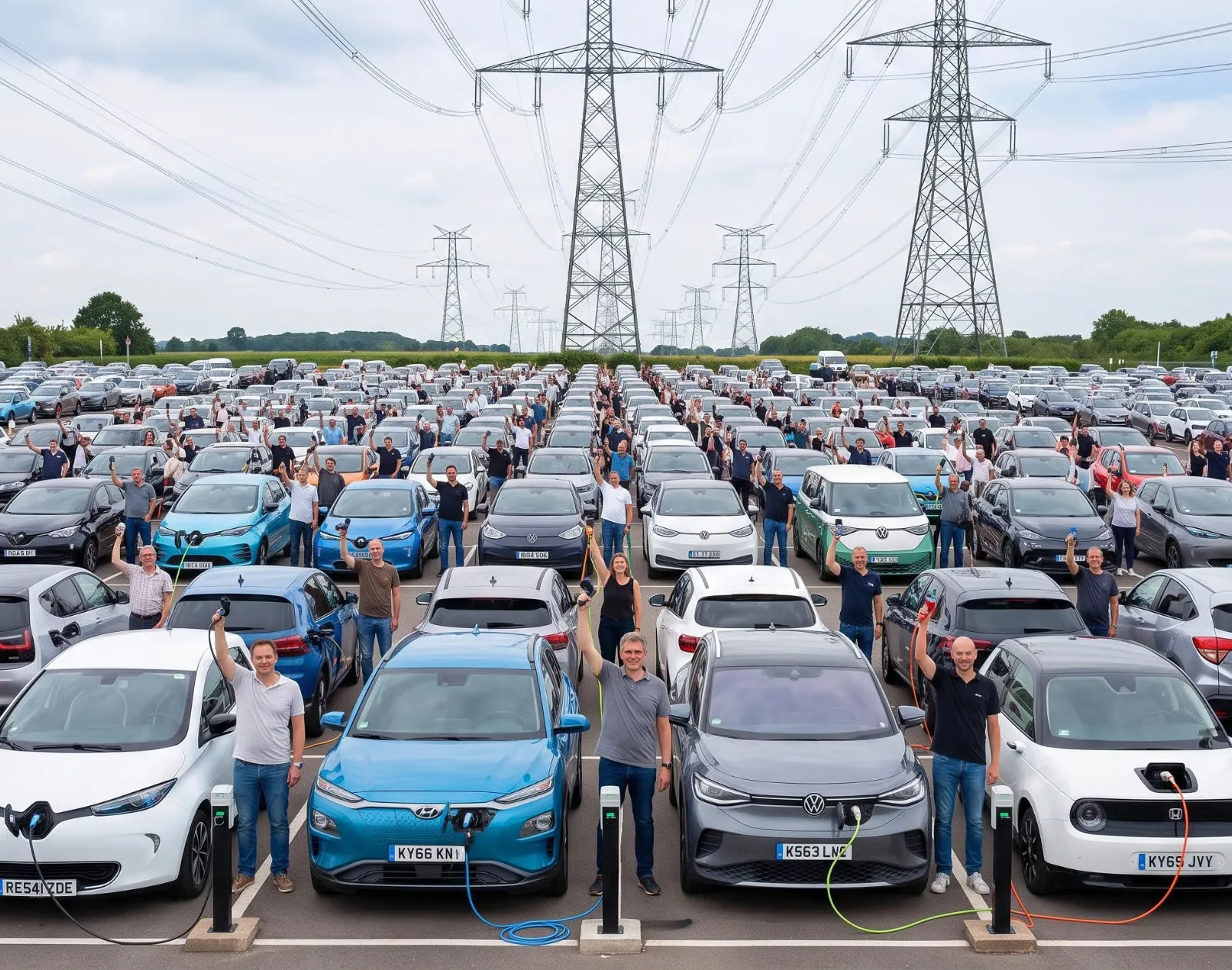
To date, 1.5 million electric vehicles are in use in France. Their charging does not have a significant impact on the national electrical grid, even during peak summer traffic periods. But what would happen if, through some unlikely coincidence or reckless deliberate action, all of France’s electric vehicles connected to the grid at once?
France’s electricity transmission network operator RTE repeats that electric cars currently have no significant impact on the power grids. There are not yet enough of them to cause noticeable consumption spikes, even during severe weather conditions in the summer. According to this public utility, battery-powered vehicles will first affect the country’s oil consumption before having any impact on the electrical grid.
It’s reassuring. A bit too so, actually, since we love science fiction. We then wondered what would happen if all the electric cars in France connected to the grid at the same time. One and a half million vehicles isn’t much when compared to France’s 39.7 million private cars on the road. But one and a half million batteries starting to charge all at once is probably enough to concern the dispatchers, those officials responsible for directing electricity from RTE’s control tower.
Also read
This French megaproject for energy storage will charge thousands of electric cars with incredible power
77% of electric cars charged quietly at home
We must admit that this event is highly unlikely, whether due to chance or intentional action. However, imagine if all electric vehicle users coordinated to start charging at the same time. For this simulation, we drew on Enedis’ study of charging habits. It shows that 77% of electric vehicles are charged at home, either using a wall outlet or a charging station, 16% at public charging stations (about 2% of those being fast chargers), and 8% at work.
We arbitrarily set the average charging power at home at 5 kW, and at public chargers and at work at 10 kW. For all electric vehicles combined, the average charging power thus amounts to 6.15 kW. Multiplied by 1.5 million vehicles, the sudden power demand rises to 9,225,000 kW (or 9.2 GW). Considering losses related to electricity transmission and transformation along the lines, this figure increases to 10 GW.
Also read
Heatwave: Why is the risk of power outages higher in cities?
Does this seem enormous to you? It all depends on the scale. France has 63 GW of installed nuclear capacity, 26 GW from hydroelectric power, 33 GW from solar energy, and 27 GW from wind power, for a total of 164.5 GW in power plants. To this capacity can be added 19 GW from interconnections, which allow electricity to be imported from neighboring countries. Thus, all electric vehicles account for 6% of the country’s total installed capacity.
What if everyone charged at fast chargers?
There are currently about 7,500 fast charging stations in France. If all of them were used at an average rate of 150 kW per station, they would generate a peak consumption of 1.2 GW. This is slightly less than the installed capacity of the Grand’Maison dam in Isère (1.8 GW), which is France’s most powerful hydroelectric facility.
The power grid dislikes surprises
The French electricity grid is accustomed to experiencing significant fluctuations throughout the seasons, due to weather conditions and human behavior. Sudden changes in wind patterns or cloud cover spreading across the country can cause several gigawatts of wind and solar power to disappear or appear abruptly, without causing the grid to falter. On February 8, 2012, during a severe cold wave, France’s electricity system experienced a variation of 20.2 GW. Starting at 81.9 GW in the early morning, consumption peaked at 102.1 GW by 7 p.m., setting an absolute record. However, such fluctuations are anticipated. Grid operators know when they are likely to occur and prepare accordingly by keeping power plants on standby.
This is the major difference from simultaneously charging the entire fleet of electric vehicles, which would cause a sudden and especially unexpected surge in power demand. Such an event would be quickly detected by RTE, which would likely struggle to compensate for it without resorting to load shedding. The control center does have several “reserves” to stabilize the grid in emergencies. First, the “primary reserve” must be able to supply 3 GW within 30 seconds on a European scale (but 0.6 GW in France). Next, the “secondary reserve” can mobilize up to 1 GW within 15 minutes. Finally, the “tertiary reserve” adds up to 1.5 GW within 15 to 30 minutes.
These mechanisms do not occur simultaneously but one after another throughout the incident. Only 3 GW can be activated immediately, which is far insufficient to handle the 10 GW surge caused by the unlikely coordinated charging of electric vehicles. To avoid a blackout, the grid would have no choice but to temporarily disconnect certain areas—at least long enough to activate the power plants needed to meet the sudden increase in demand. However, nothing is guaranteed. On April 28, 2025, in Spain, the abrupt shutdown of solar power plants in a cascade caused a 2.6 GW drop in production within 20 seconds. The grid operator was unable to restore balance, leaving the country in darkness for about a dozen hours.