
Non-Supporter Tests/ Scenic E.Tech: A tech lounge at 5 €/100 km
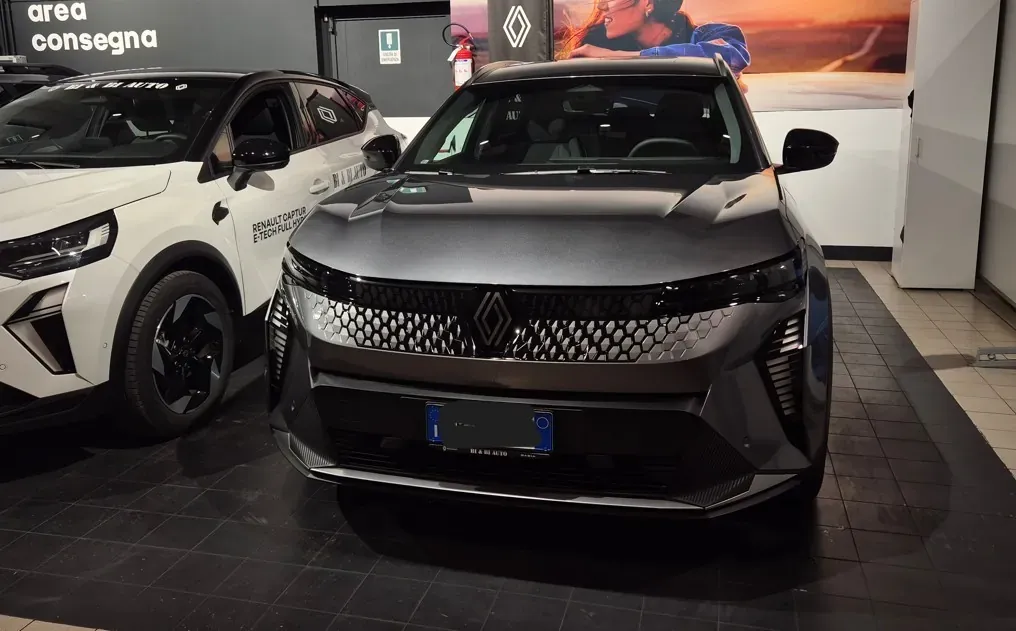
Friend Luca is back with his “Tests of the Non-Fan.” But there’s a new twist: the car that was X-rayed, the Renault Scenic E-Tech, belongs to him (his wife, to be precise). So even the “non-fan” has made the big leap to electric mobility. And he doesn’t seem at all regretful.
By Luca Sebastiani
After 6 months driving my Renault Scenic E-Tech Comfort Range version with a 60 kWh battery purchased from Bi & Bi Auto, I decided to assess its performance. This is a vehicle built entirely on an electric platform and primarily aimed at families. Here’s how it performs in real life, including its advantages and the well-known challenges of Italy’s charging network.
Here are my numbers: expenses have been cut in half
15,000 km traveled in about 6 months
2,528 kWh charged, of which 539 kWh was from public charging and 1,989 kWh was from home charging.
835 euros spent, 513 euros on home charging at 0.25 €/kWh and 322 euros on public charging.
Average cost of 5.5 €/100km
Approximately 80% was charged at home and 20% at public charging stations. The higher expenses occurred during the first months as I was looking for the best deals between charging stations and actual usage. Compared to the car it replaced (a Clio TCe 90 hp gasoline car with current costs of around 12€/100km), the cost per km has been reduced by more than half. Although a comparison with an SUV of similar size would be more accurate, it’s remarkable that a larger and heavier vehicle with double the horsepower can have management costs reduced by more than half; in the case of a vehicle with similar thermal efficiency, the difference would be even greater.
A Technological Lounge: What Convinces Me
My Renault Scenic E-Tech Comfort Range is a technological lounge. What convinces me the most are:
Interior space and comfort: The front and rear interior space is enormous, considering its relatively compact exterior size (under 4.5 meters). The absence of a central tunnel allows for completely relaxed travel. The comfort of the suspension and fabric seats (which I prefer far more than leather) is top-notch; even after many hours of driving, you don’t feel tired.
Trunk space and practical details: The trunk is extremely spacious (545 liters), and I really appreciated the lower storage compartment, which is perfect for storing cables without taking up space in the main trunk. The turning radius at a standstill is excellent, making the car as agile as a hatchback in city driving.
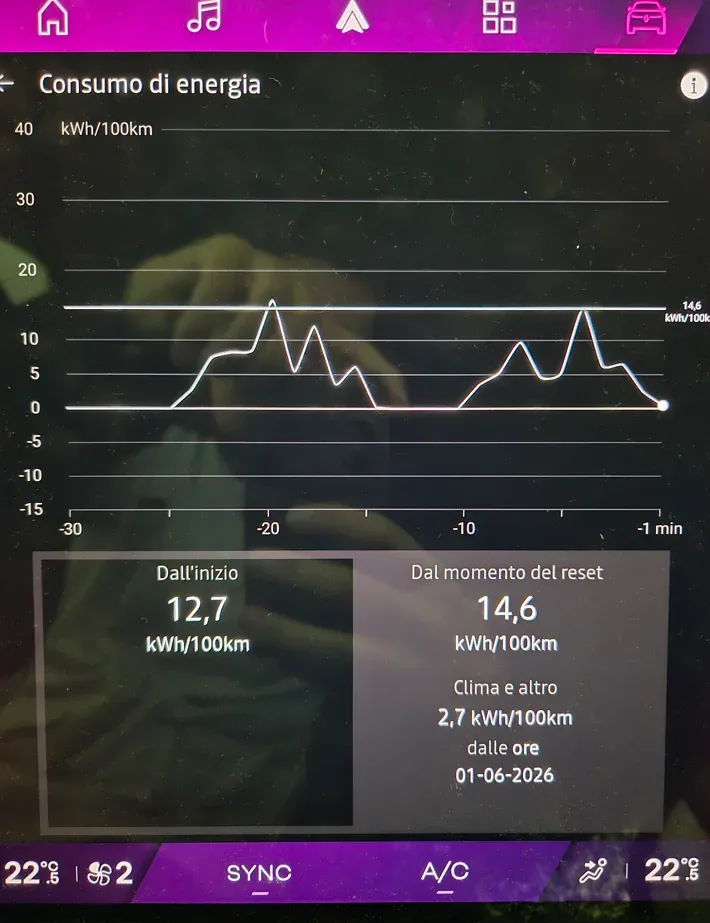
Technology: The navigation system based on Google’s ecosystem is fast and responsive, the voice commands are very intuitive, and the integrated Gemini assistant proves to be advanced at understanding requests. Special mention goes to the cabin climate control, supported by a standard heat pump, which is essential for maintaining efficiency in winter. The fully functional keyless entry system and the presence of physical controls for main functions are also excellent. It’s a smart choice that eliminates distractions (this should be a rule).
Trip planning: With the integrated system, everything is simple. Just set your destination, and you’ll know how many stops to make and what battery level you’ll have upon arrival (it’s very accurate and perhaps overly conservative). You can filter by preferred charging networks and charging power. The plug&charge system (similar to Tesla’s, but with more available networks here) is great for avoiding the need to worry about various charging cards or apps. However, it only works at newer compatible chargers (fast and superfast types). You can always filter for these chargers using the navigation system.
Safety: The ADAS systems are highly calibrated. On the highway, I’ve never experienced a “phantom brake” situation; the lane centering is precise, as are the automatic headlight activation and rain sensor. In terms of comfort, I liked the complete absence of a glass roof (less heat in summer) and the lack of detectable electromagnetic fields inside the cabin (measured multiple times, this is a feature unique to Renault models).
The Multi-Sense button on the steering wheel allows for quick switching between driving modes and onboard experiences (such as Eco, Sport, Comfort, or Custom), which greatly alters the vehicle’s character. In Eco and Comfort modes, the smoothness and reduced steering effort are appreciated, while in Sport mode, the car completely changes its character, allowing for a sporty handling in corners—something unexpected from a family SUV. Additionally, in Custom mode, it’s possible to disable certain ADAS functions as desired.
Fuel Consumption, Charging, and Support
The Scenic’s energy management is one of its strengths, especially for those who know how to navigate the ecosystem. Moreover, its extensive support network is a plus, considering that these days people buy more of a “service” than just a car.
I charge my car mostly at home. But when I travel long distances, I use the Renault Charge Pass, taking advantage of competitive rates negotiated with major providers. I pay 0.49 €/kWh at Free To X charging stations (on highways) and 0.54 €/kWh on the ultra-fast Ionity network. In addition to these charging networks, I use an A2A card that allows me to charge at many stations, with prices ranging from 0.60 to 0.70 €/kWh. I also use Tesla charging stations with a pay-per-use rate (ranging from 0.55 to 0.70 €/kWh for non-Tesla vehicles). Since I need to charge my car outside home only occasionally, my monthly budget for travel stays low. Please note that these costs are based on the time I wrote this review (October 2026).
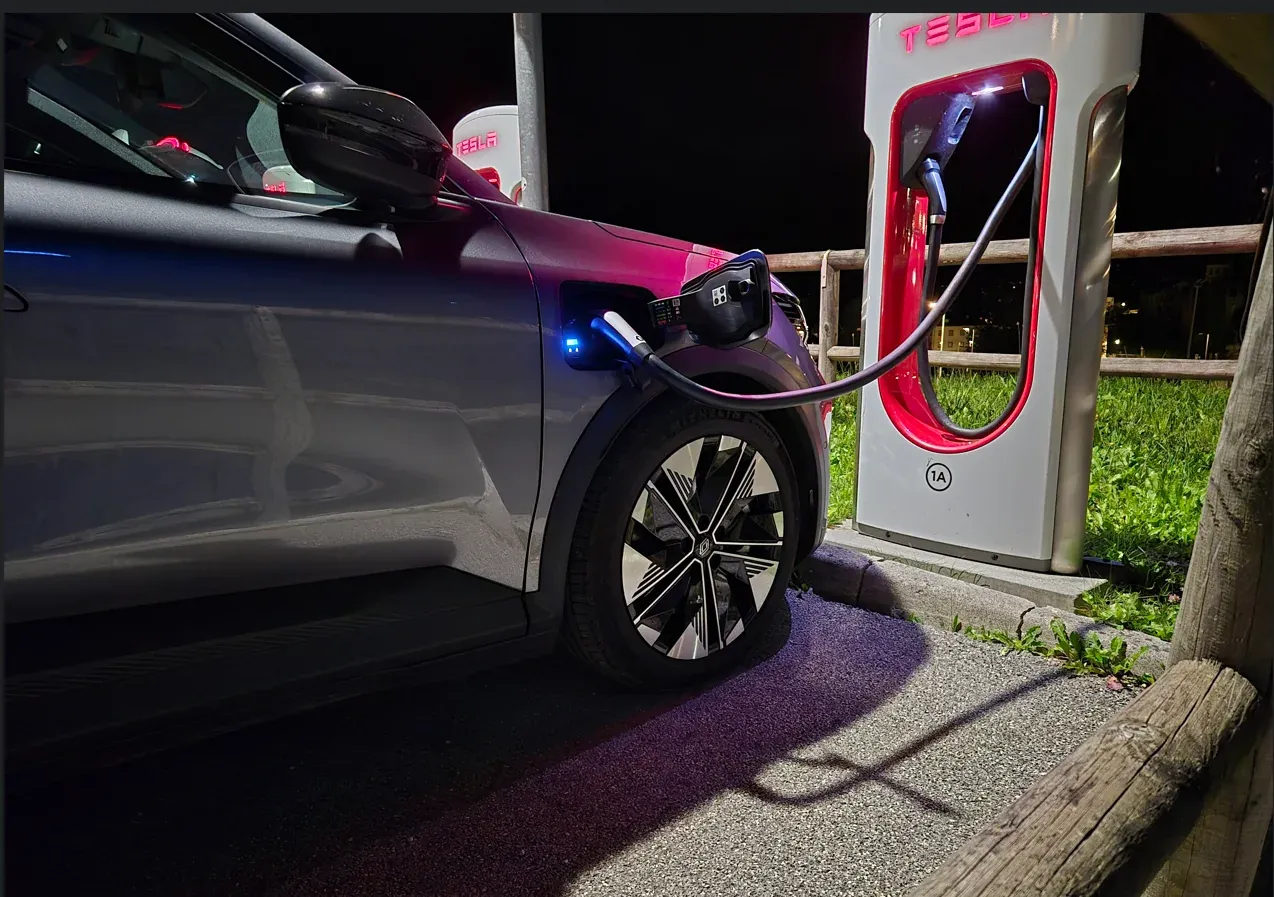
The presence of a 22 kW AC charger (usually reserved for high-end vehicles on request) is a real boon. It allows charging at slow chargers in very little time (about 3 hours to reach 0-100%), whereas almost all competitors are limited to 11 kW.
How the My Renault App Works
The app has received several updates over the months. It is now more stable, and commands are sent to the car faster. Of course, Tesla remains a benchmark in this regard, but I must say that the user experience and integration with the car’s software are very close. A detailed history of charges made each month is available, along with the total amount charged (records are kept for up to 6 months).
The Car’s Small Flaws and the Network’s Major Issues
No car is perfect, and the Scenic is no exception, though I haven’t encountered any “serious” problems so far. The real issue with every electric car, however, is the unreliability of charging stations. In other words, the main drawback when traveling isn’t the car itself but the public charging infrastructure, which is still too often unreliable—with broken stations, ones that are occupied illegally, or those that fail to start charging on the first try.
Turning to the car’s details:
External handles and wireless charging: Wireless charging for smartphones sometimes doesn’t work (the main cause is the protective case) or disconnects the device. The mechanism of the external retractable handles also isn’t intuitive or convenient for some users.
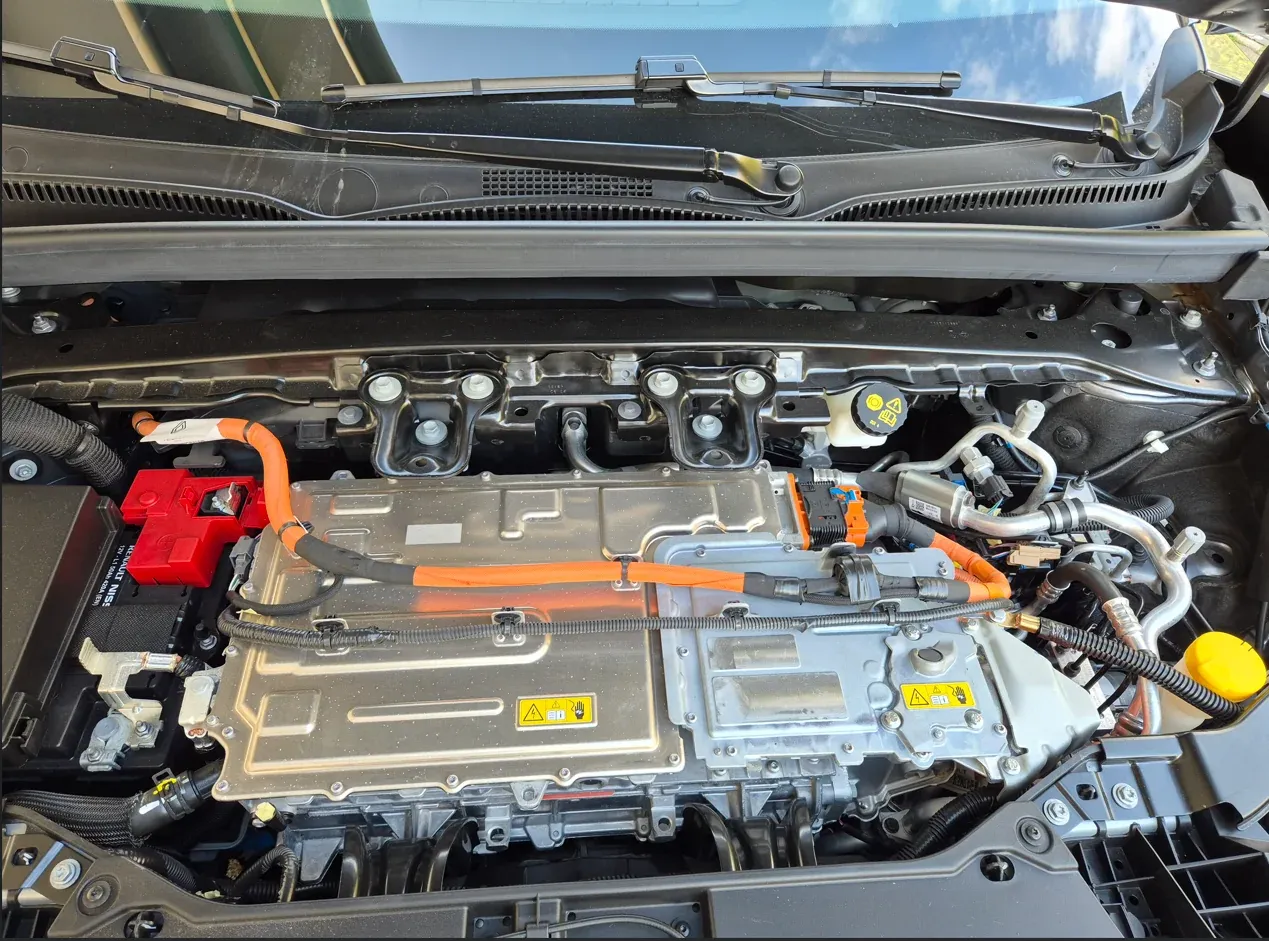
Lack of a front frunk: I would have expected this in an all-electric car. Being able to store charging cables in a separate compartment is always convenient, especially when the trunk is full.
The final verdict
The Renault Scenic E-Tech turns out to be an excellent road car. It has reasonable fuel consumption, plenty of space, and charges quickly at nearby charging stations (thanks to 22 kW AC). If Italy’s public charging infrastructure improved in terms of reliability, driving an electric car with this vehicle would be even more pleasant.
Personally, I’m happy to have chosen a European car, designed and built in Europe, at a fair price (purchased new for 32,900 euros) considering its features and category. If we want European manufacturers to continue producing vehicles, it’s up to us consumers to send a signal: vehicles at the right price and suitable for all needs are starting to become available.
READ ALSO: “Renault Scenic e-Tech. Is it really the best of 2024?” and watch the VIDEO
Previous Article
Automotive: From Paris and Berlin, another blow to the 2035 targets. T&E: “A historic mistake”
Next Article
I’m interested in the Smartina—when will it arrive? And how much will it cost?