
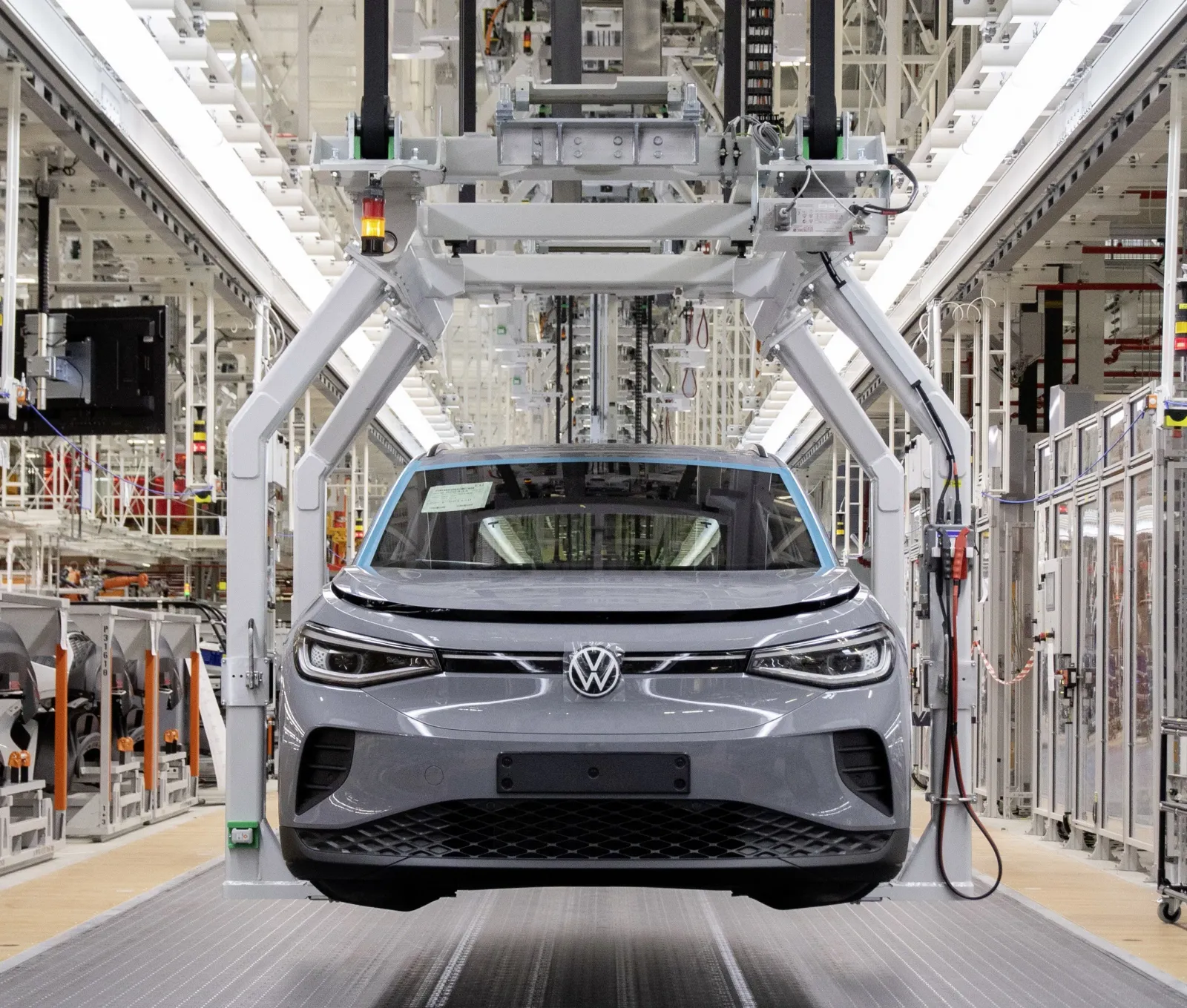
France and Germany want to ease the EU ban on diesel cars. In return, Europe is expected to prioritize “Made in EU” vehicles.
You will learn from the text:
What the Paris-Berlin compromise entails
How the emission targets for 2030 and 2035 might change
What the Industrial Accelerator Act and the “Made in EU” principle are
Poland’s electric vehicle market compared to Europe’s
When final decisions will be made in Brussels
The France-Germany agreement – a compromise between two capitals
The joint position is the result of mutual concessions. Germany has long pushed for softer rules for manufacturers but opposed the “Buy European” requirement. France had opposite priorities. Now Berlin accepts stronger preferences for European production, while Paris supports further flexibility in emission targets. According to Bloomberg, the finalization of the agreement was delayed by Germany’s SPD party, which demanded guarantees to protect domestic jobs and production.
Arithmetic is key in the EU Council. France, along with Sweden, Spain, Denmark, Luxembourg, the Netherlands, and Portugal, formed a minority blocking changes that went beyond the European Commission’s proposal. Paris’s change in stance is likely to secure the majority needed to approve them. This represents a clear shift—just last fall in 2025, France and Spain defended an electric development path for the industry in a joint letter, though they called for greater flexibility.
Emission targets – what the European Commission proposed
Under current law, the average CO₂ emissions of new passenger cars in the EU are set to drop by 55% by 2030 and by 100% by 2035 compared to 2021 levels. In practice, this means an end to the sale of new cars that emit CO₂ from their exhaust pipes.
On December 16, 2025, the European Commission proposed reducing the 2035 target to 90%. The remaining 10% would need to be offset by, among other things, low-emission steel produced in the EU, synthetic fuels, and biofuels. The 2030 target would be measured over a three-year period, with the target for commercial vehicles reduced from 50% to 40%. The package also includes supercredits for small electric vehicles manufactured in the EU and binding national targets for electrifying large companies’ fleets.
The Paris-Berlin proposal: 90% with no offset required
France and Germany want to maintain the 90% emission reduction target by 2035, but without requiring compensation for the remaining 10%. For passenger cars, they propose averaging results from 2030–2031 and allowing the banking of emission credits from 2029 up to a limit of 7 g CO₂/km per manufacturer. For light commercial vehicles, a five-year period for meeting the 2025 target has been set. Details are expected to be published in the coming days.
According to Reuters, the agreement also paves the way for treating the UK as a trusted partner under the “Made in EU” rules. Chancellor Merz said it is a good day for drivers and jobs. However, Transport & Environment has criticized it, warning that weakening the targets will make it harder to limit oil imports and promote affordable electric vehicles.
Industrial Accelerator Act – preferences for production in Europe
The second pillar of the EU’s industrial policy is the Industrial Accelerator Act, presented by the Commission on March 4, 2026. It aims to increase demand for low-emission technologies and products manufactured in Europe, as well as raise the industry’s share of the EU’s GDP to 20% by 2035. Under the Commission’s proposal, an electric vehicle would need to be assembled in the EU and have at least 70% of its component costs (excluding batteries) sourced from the Union to qualify for public procurement and support programs. The plan also includes industrial acceleration zones with simplified permits for factories.
Electric vehicle market – Poland far behind
According to ACEA data, from January to August 2026, fully electric vehicles (BEVs) accounted for 21.7% of new passenger car registrations in the EU, up from 15.8% the previous year. Approximately 1.64 million such vehicles were registered, with BEVs making up over 27% of registrations in August alone. France, Germany, Denmark, and Belgium together accounted for around 64% of EU electric vehicle registrations.
In Poland, BEVs account for about 5.1% of registrations. In the first half of the year, this figure reached 28.2% in France and 24.8% in Germany. Therefore, Poland remains among the countries with the lowest level of electrification among new passenger cars.
PSNM’s Position – Production and Demand Must Go Hand in Hand
According to PSNM, strengthening European production is of fundamental importance, but the rules should translate into investments in Poland, orders for suppliers, and skill development. In future efforts, Poland should push for clear criteria for European added value and predictable conditions for electrification.
“The European automotive industry needs both competitive production and a predictable market for electric vehicles. Preferences for European factories can bring benefits to plants and suppliers in Poland. However, their effectiveness depends on demand. Therefore, the overall impact of emission incentives, multipliers, and fleet-related changes must be assessed in terms of actual BEV sales and the safety of existing investments,” comments Aleksander Rajch, vice president of PSNM and vice president of E-Mobility Europe.
Automotive Package – What’s Next
The Franco-German agreement does not settle the matter. For the new regulations to take effect, both EU Council member states and the European Parliament must approve them. In the Parliament, the transport committee has postponed the key vote on the package originally scheduled for October 5. PSNM plans to analyze the details of the agreement once they are published.
Edited by elektromobilni.pl