
France changes its mind: it will accept the UK as a ‘European manufacturer’ if it joins China’s blockade
17/10/2026 08:00
Updated to
17/10/2026 08:00
France has dropped its opposition to the UK benefiting from future “Made in Europe” industrial rules, a significant shift in negotiations with Germany over the future of European automobiles. The proposal would allow certain British products to be considered part of the European industrial space, but not automatically: London would need to offer reciprocity and align with EU trade measures, including those aimed at protecting against Chinese electric cars. The initiative still needs to pass community-level negotiations and does not yet constitute approved legislation.
The shift is particularly significant because France had advocated just a few weeks ago for a much stricter interpretation: if a country did not belong to the internal market, it should not receive the same treatment as a member state.
Now Paris and Berlin are moving toward a different solution.
United Kingdom could join, but with conditions
The Franco-German proposal envisages that the United Kingdom and other industrially closely integrated European partners, such as Norway, could be included in certain provisions of the future “Made in Europe” system.
The counterpart would be reciprocity. According to published reports, the UK would need to align itself with European trade defense instruments, including measures against Chinese imports and mechanisms to prevent products from third countries from using British territory to circumvent community rules.
That is where one of the main points of friction lies. The EU currently imposes additional tariffs on certain electric cars manufactured in China following its investigation into subsidies, while the UK maintains a different trade policy.
The automotive industry has been operating without such borders for years
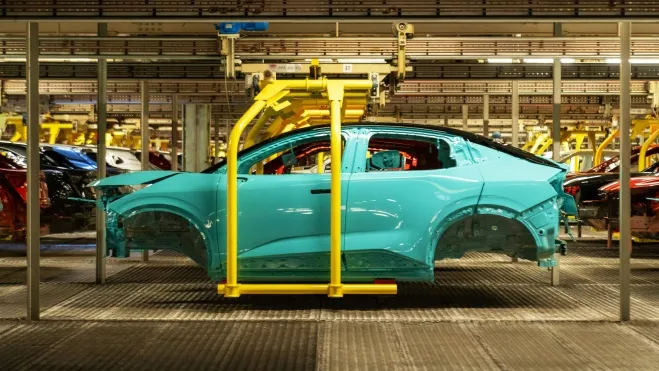
The debate is not merely political. European supply chains constantly cross community borders. A car may include engines manufactured in the UK, batteries assembled in another country, components from Spain or Germany, and have its final assembly take place in a third location.
Manufacturers such as Mercedes-Benz, Stellantis, Renault, and Ford have warned that an overly narrow definition could disrupt already deeply integrated industrial chains. Ola Källenius, ACEA president and head of Mercedes-Benz, even stated that excluding the UK would harm both the British industry and the broader community.
It could also affect Spanish factories
For Spain, this debate has a direct consequence. National manufacturers do not operate in isolation: they receive and send components to factories in the UK, Germany, France, and other European markets. The more restrictive the definition of origin, the greater the need to reorganize suppliers in order to maintain access to subsidies, public procurement, or future industrial advantages.
At the same time, Brussels tries to prevent a too-permissive definition from allowing vehicles or components primarily manufactured outside Europe to receive benefits reserved for local production.
That is the underlying difficulty: Europe wants to protect its industry from China, but it still has to decide exactly where Europe ends when it comes to manufacturing a car.
And the French proposal suggests that this boundary might end up being industrial rather than strictly political.