
These curious submersible bridges from the 1980s are surprising as an alternative solution — and was it a successful one?
10/16/2026 7:00 PM
Updated to
10/16/2026 7:00 PM
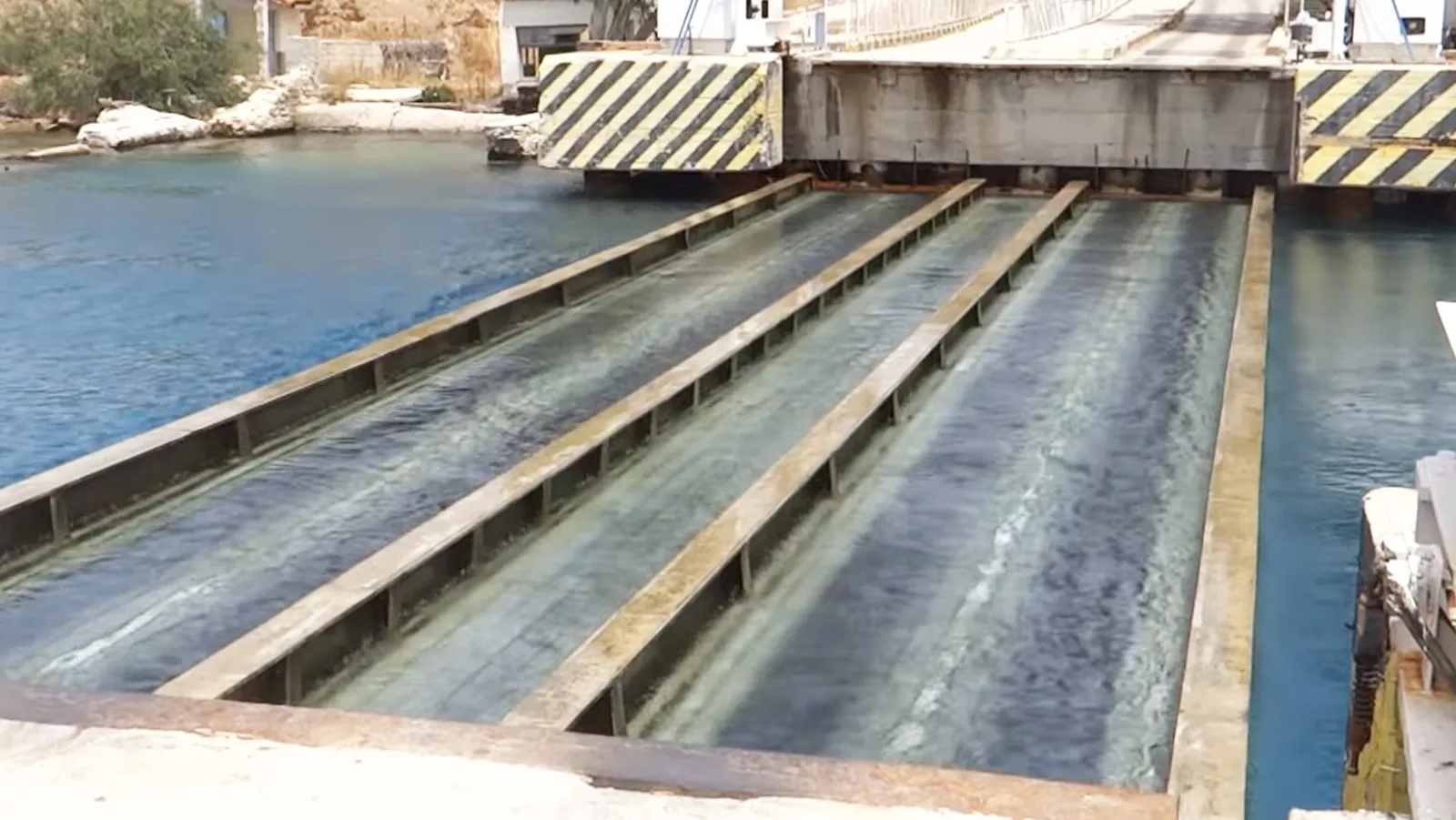
In the Corinth Canal in Greece, traffic from cars and ships is managed in an unusual way: instead of raising a bridge when a vessel approaches, the entire road is submerged underwater. There are two such structures located in Poseidonia and Isthmia, each with platforms 33 meters long and 7 meters wide. When a ship needs to pass through the canal, the road descends about eight meters below the surface before rising again to allow road traffic to proceed. One has been in use since 1985 and the other since 1987.
The scene is hard to associate with a conventional road. A car usually crosses, and just minutes later, the exact same section can be completely submerged so that a ship can pass above it.
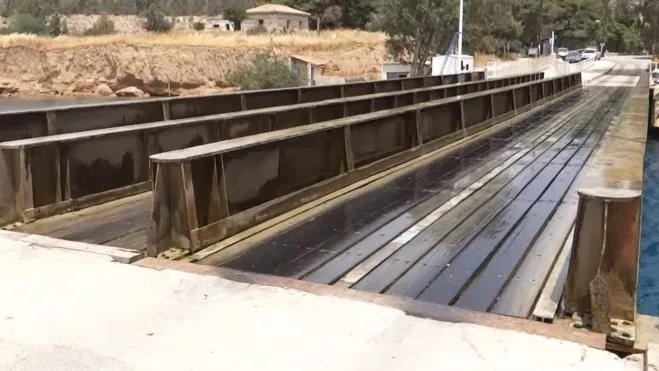
This is the unusual system that has been in use for decades at both ends of the Corinth Canal, the sea route of just over six kilometers that separates mainland Greece from Peloponnese.
A 33-meter road that sinks
The two bridges are located in Poseidonia, at the end of the Corinth Gulf, and Isthmia, near the Saronic Gulf. Both are 33 meters long and seven meters wide, have two lanes, and are designed for private car traffic. The platform usually remains in its upper position and only descends when a vessel needs to pass through.
Its operation is relatively simple to understand, though much more spectacular to watch. An electromechanical system lowers the platform at a speed of about four meters per minute. The entire process of sinking or raising it takes around three and a half minutes.
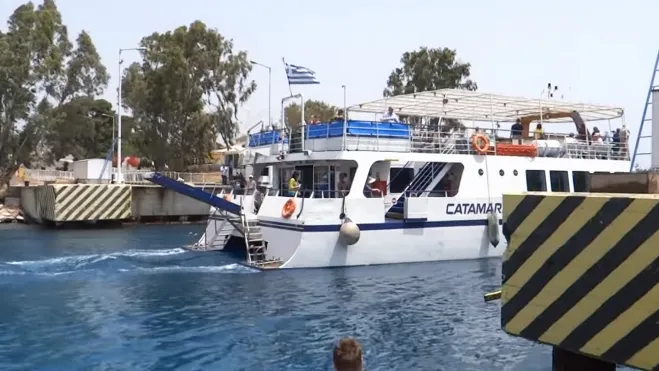
The road then ends up underwater, with the ship passing through where cars were driving just moments before.
It starts sinking 15 minutes before the ship arrives
The problem lies in timing. For safety reasons, the operation begins about 15 minutes before the vessel reaches the bridge, which means traffic can build up while the maneuver is completed and the ship passes through.
This also leads to an inevitable consequence: when the platform rises again, the road surface becomes completely wet, and fish may even be seen trapped on the platform once it is lifted. However, the system has an obvious advantage over certain lift bridges: it does not require movable structures to rise above the channel. The upper space remains completely clear once the road has sunk.
A solution that originated in the 1980s
Poseidonia was the first of the two structures, built in 1985. Isthmia followed in 1987, according to the company currently managing the channel.
Before these bridges existed, there were walkways using floating platforms that transported vehicles and people from one shore to the other. The new systems allowed those crossings to become regular roads most of the time, disappearing only when necessary. Nearly four decades later, they still function effectively.
In an era where major transportation projects seek tunnels, viaducts, and sophisticated movable bridges, Greece maintains a much stranger solution: when cars and ships need to use the exact same space, it is the road that moves by sinking into the sea.