
This prototype has pleased everyone, but Renault CEO Fabrice Cambolive says its production is not a priority.
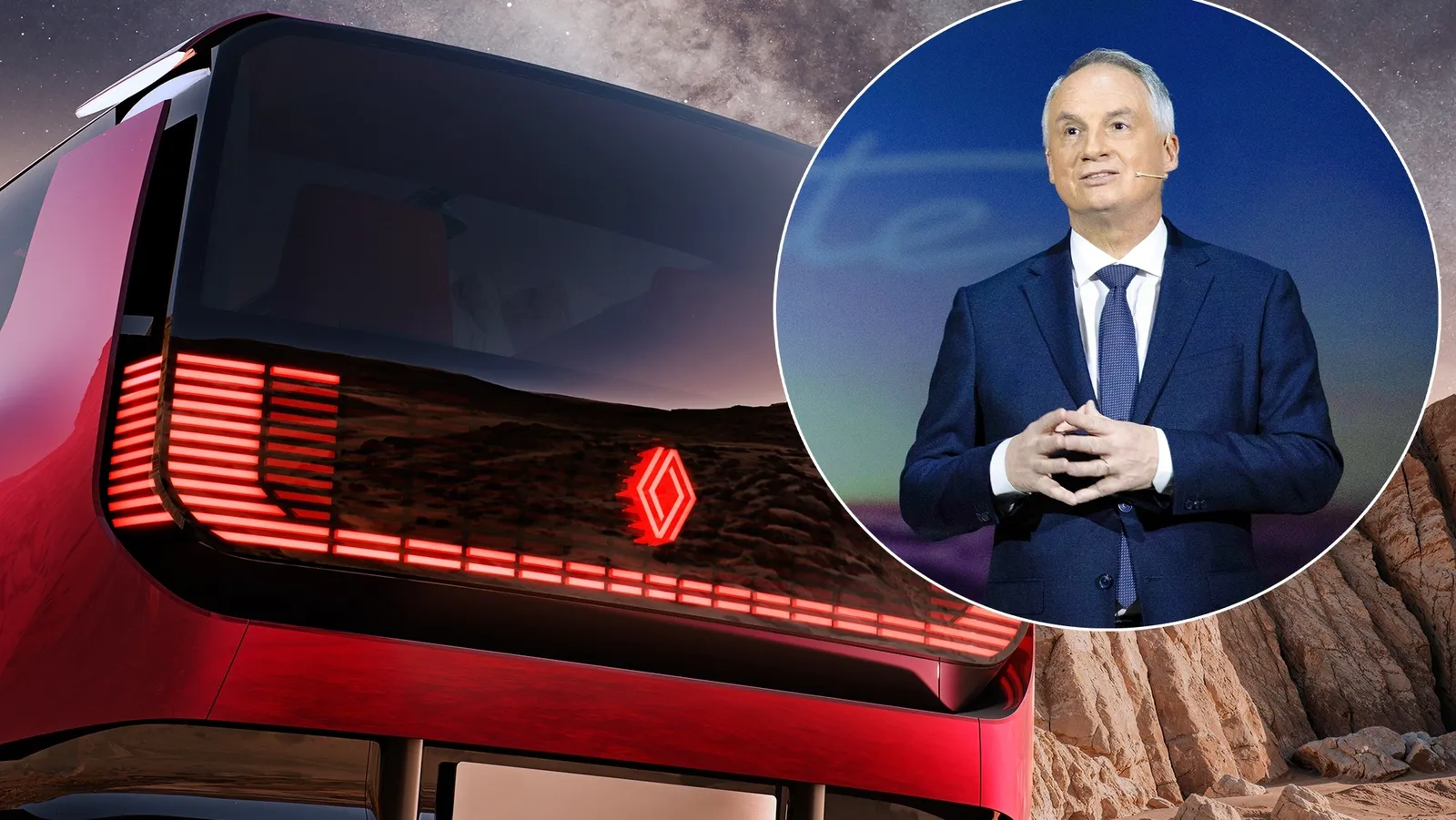
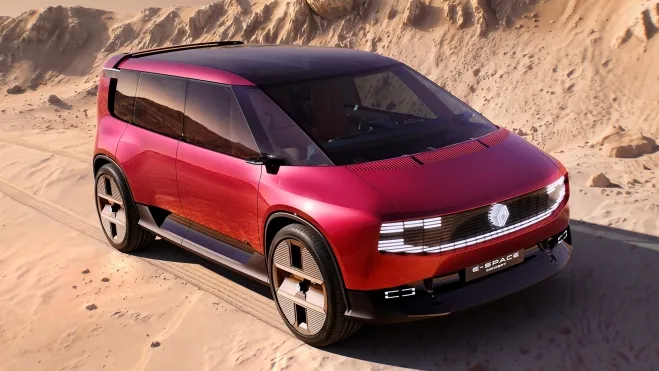
Renault was one of the main highlights at the 2026 Paris Motor Show, where it unveiled several models and prototypes that hint at the company’s future direction. Among them, the new E-Space Concept stands out as a stunning fully electric minivan that revives the philosophy of the original 1984 Renault Espace. Its futuristic design, combined with numerous nods to the past, generated significant interest during the event and opened the door to a possible return of traditional minivans.
However, hopes of seeing this vehicle on the roads may have to wait. Renault CEO Fabrice Cambolive acknowledged in remarks to Autocar that a production version of the E-Space Concept "is not a concrete project at the moment." The French manufacturer does not rule out bringing back this type of body style, but its business strategy remains focused on SUVs and other models it considers priority for the coming years.
Fabrice Cambolive confirms Renault has other priorities
During the Paris Motor Show, Cambolive explained that Renault does not have the capacity to address all of its projects simultaneously. “We are not able to handle everything at once,” admitted the executive, who cited the new electric Trafic E-Tech as one of the company’s priorities for the coming year. This commercial vehicle will also be Renault’s first model developed under the concept of a software-defined vehicle.
Next, it will be time to refresh two key models in the manufacturer’s electric lineup. “The next step will be updating the Scenic and the Rafale, and after that we’ll have to decide which model will become the next Espace,” Cambolive told the British outlet. His remarks leave open the possibility of returning to a monovolume format, though they also confirm that there is no approved project currently to produce the E-Space Concept.
In fact, a Renault official has indicated that the next generation of the Scenic will retain its SUV body style, though it may incorporate some of the interior solutions from the prototype. The company aims to build on its experience in developing spacious interiors, flat floors, and versatile configurations, without necessarily abandoning the vehicle format it currently sells.
Renault revives the spirit of the original Espace
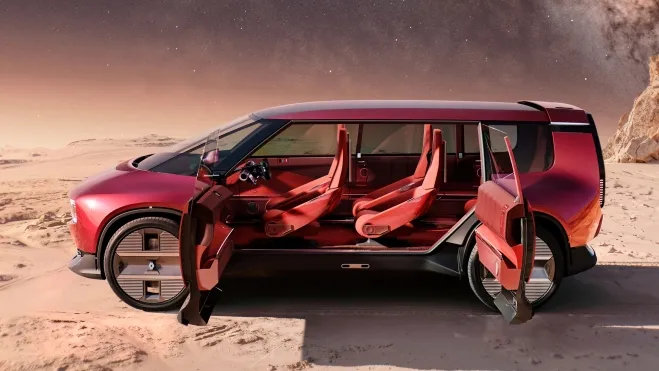
The E-Space Concept is a modern reinterpretation of the model Renault launched in 1984, which helped popularize family minivans in Europe. Unlike the current Renault Espace, which adopted an SUV body style in 2023, this prototype retains the distinctive proportions of vehicles designed to maximize interior space. It measures 4,700 mm in length, 2,020 mm in width, and 1,670 mm in height, featuring enormous 23-inch wheels and a very steep windshield.
Renault developed this vehicle under the guidance of Alexandre Malval, the brand’s design leader, with the aim of exploring an alternative to conventional SUVs. Although the E-Space Concept is fully electric, the company has not disclosed any details regarding its power output, battery capacity, or range. Its primary purpose is to showcase new design solutions, modularity concepts, and technologies that could be integrated into future production models.
Some of its technologies will indeed make it to upcoming Renault models
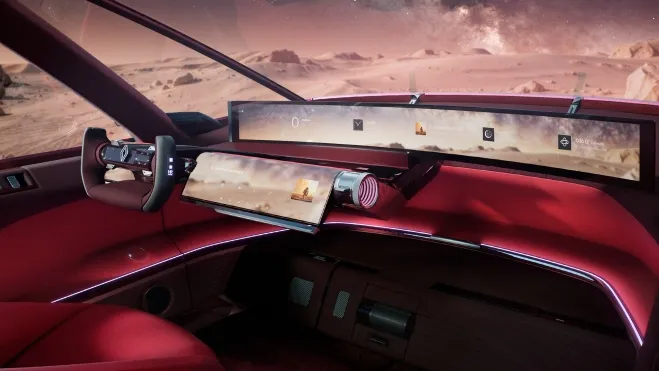
Although the commercial future of the E-Space Concept remains uncertain, some of its innovations already have a clearer destination. This is the case with the OpenR Panorama panoramic screen, which Renault plans to introduce in future generations of the Scenic and Rafale, with launches expected around 2030. This system will allow driving information and other digital functions to be displayed across the dashboard, bringing them closer to the driver’s line of sight.
On the other hand, Renault is developing the RGEV Medium 2.0 platform, an architecture designed for electric vehicles and long-range electric vehicles. Its 800-volt system will enable ultra-fast charging, with the brand targeting ranges of up to around 750 kilometers for electric versions and approximately 1,400 kilometers for long-range models. This platform could serve as a basis for a hypothetical production version of the Espace, although Renault has not confirmed this possibility.