
The new Tesla Roadster is even more aggressive than it seemed: everything we know
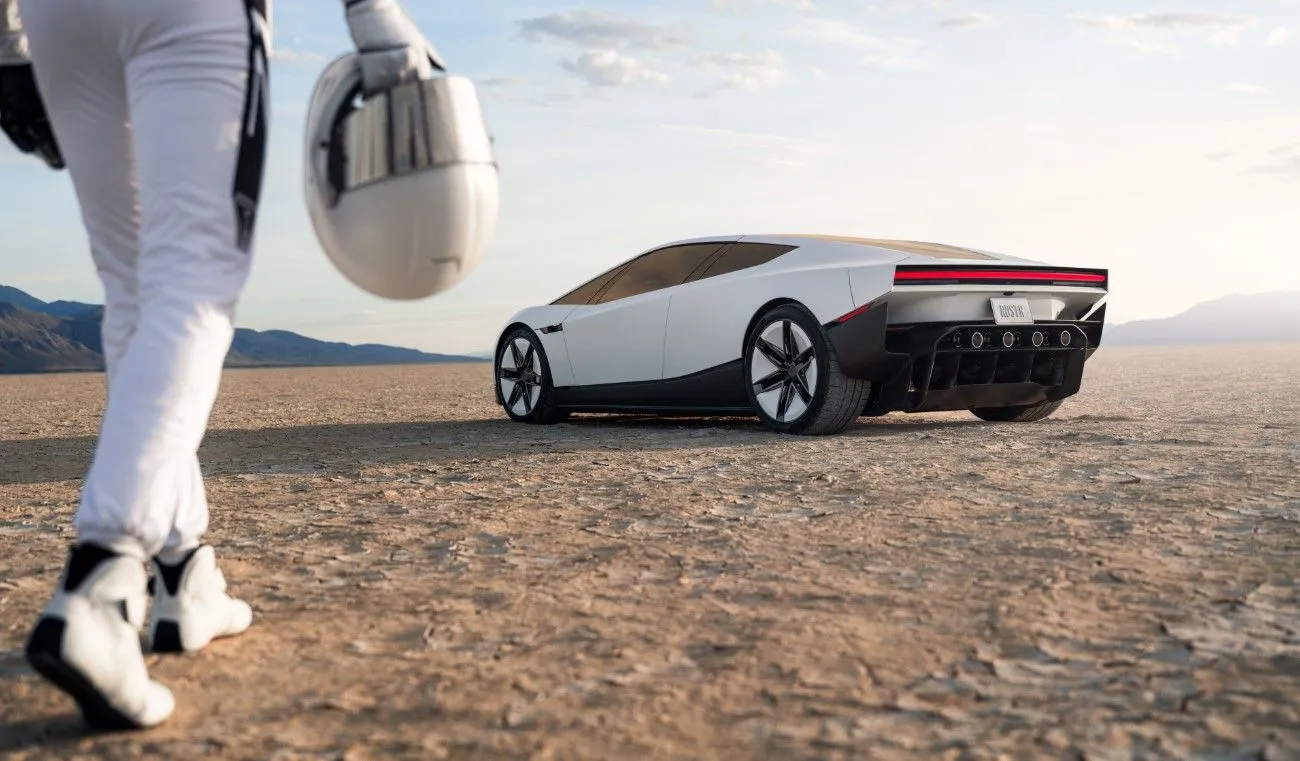
Tesla has once again turned the automotive world upside down, this time almost literally. As we reported this morning, after nine years of waiting, Elon Musk unveiled a new version of the Roadster with an updated design and features that seem straight out of a science fiction movie. In the past few hours, we’ve learned more details about this project.
When Tesla unveiled the second generation of the Roadster in 2017, it promised an electric sports car capable of making even the most exclusive supercars on Earth look primitive. But Elon’s timeline doesn’t follow normal space/time rules, and despite its expected arrival in 2020, years passed without the car reaching production. Now, nearly a decade later, Elon Musk has decided to revive the project with a presentation that left no one indifferent—a true hallmark of the company.
The first demonstration involved driving the Roadster down a massive inverted ramp. To achieve this, the sports car uses a system of fans that creates a strong suction force against the asphalt, allowing it to stay attached to the surface even when its wheels point upward.
According to Lars Moravy, Tesla’s vice president of engineering, this system can generate a force equivalent to 2G, which opens up interesting possibilities for improving cornering performance and speed on tracks. Musk claims that this technology will enable the Roadster to break records, though we still have to wait to see its results in real-world conditions.
But the most impressive part came later. The car left the ramp, completed a full rotation around its longitudinal axis while in mid-air, and landed back on all four wheels. Tesla achieved this maneuver thanks to a system of compressed gas thrusters that allow it to adjust the vehicle’s trajectory without the wheels needing to be in contact with the ground.
The Tesla Roadster promises to accelerate from 0 to 100 km/h in less than a second.
The auxiliary propulsion system is perhaps the biggest innovation of the Roadster. Tesla has developed a set of 10 thrusters that use compressed gas, with a reserve of about 250 kilograms, capable of generating additional thrust for acceleration, improving dynamic performance, and even enabling jumps.
The company claims that the system can recharge its tanks using compressed air, so there is no need to replace them after each use. During another demonstration, the Roadster managed to jump over a row of Tesla vehicles and even complete a full rotation in midair before landing.
Elon Musk once claimed that the car can behave almost like a rocket, performing maneuvers impossible for a conventional automobile. Given the images from the presentation, this statement no longer seems as exaggerated as it did when he first talked about this technology years ago.
Regarding performance, Tesla claims to have achieved a 0 to 96.6 km/h acceleration in just 0.81 seconds. This is an extraordinary figure that, according to Musk, could still be improved in the final production version.
The maximum speed claimed exceeds 370 km/h, though Musk has gone even further by discussing his future goals. Tesla’s executive says he aims to reach half the speed of sound, which would be approximately 617 km/h. For now, this figure should be considered an aspiration rather than a proven capability. But if it can fly, what more could it do?
Another interesting aspect is that Tesla has confirmed three different versions of the Roadster, each with quite distinct capabilities.
The access version will be called Performance and will feature a suction fan system designed primarily to improve grip and performance on circuits. Above that will be the Roadster Thrust, a limited-production variant that will include the thrusters needed to achieve the claimed 0 to 96.6 km/h acceleration in 0.81 seconds.
Finally, the most exclusive version will be the Roadster Rocket, equipped with the ten thrusters that enable the aerial maneuvers demonstrated during the launch. Tesla has stated that this variant will only be available by invitation, meaning access will be reserved for a very small group of buyers.

That said, there is an important detail we cannot overlook. Musk has acknowledged that some of these features might not be legal in certain regions. It seems quite clear that authorities will not allow a sports car to drive on roads using thrusters capable of launching compressed gas at supersonic speeds or jumping over other cars.
Therefore, it remains to be seen which parts of this technology will actually make it into road-legal models and what usage restrictions the authorities will impose.
Essential details are still missing. Tesla has not disclosed the battery capacity, certified range, power of its electric motors, or charging times. We also do not know the final price for any of the three versions.
What we do know is that the company requires a $50,000 deposit for reservations, a refundable amount due within ten days of making the request. This is a substantial sum considering we still don’t know how much the car will cost or exactly when deliveries will begin.

And here we may reach the most delicate aspect of this entire story: the credibility of Tesla’s timelines.
In 2017, when Musk unveiled the first prototype of the Roadster, he promised performance that seemed impossible and announced its arrival for 2020. Since then, we have witnessed successive delays and new promises that never turned into a production car.
Now, Elon Musk claims the new Roadster will finally arrive in 2028. But after nine years of waiting, it seems reasonable to exercise caution before considering that date as final.
There is no doubt that what was shown during the presentation is at least spectacular. The combination of suction fans and compressed gas thrusters opens up possibilities that were previously reserved for experimental prototypes. Turning such a technological demonstration into a car that can be manufactured, certified, and sold to individual customers is a completely different matter.
Tesla has once again achieved something that few manufacturers can do: capture the world’s attention. Now it faces the most challenging part—proving that the Roadster can move from being a spectacle to being a practical vehicle for roads.