
European manufacturers' fears are justified: Chinese brands are doubling their sales in Germany
Europe’s major automakers have reason to worry about the arrival of Chinese manufacturers. Germany, the heart of Europe’s automotive market and home to much of the industry that has dominated the sector for decades, is showing that this competition deserves more than just a casual glance. The prestige of local brands and European trade barriers are not enough to stop new rivals from finding buyers.
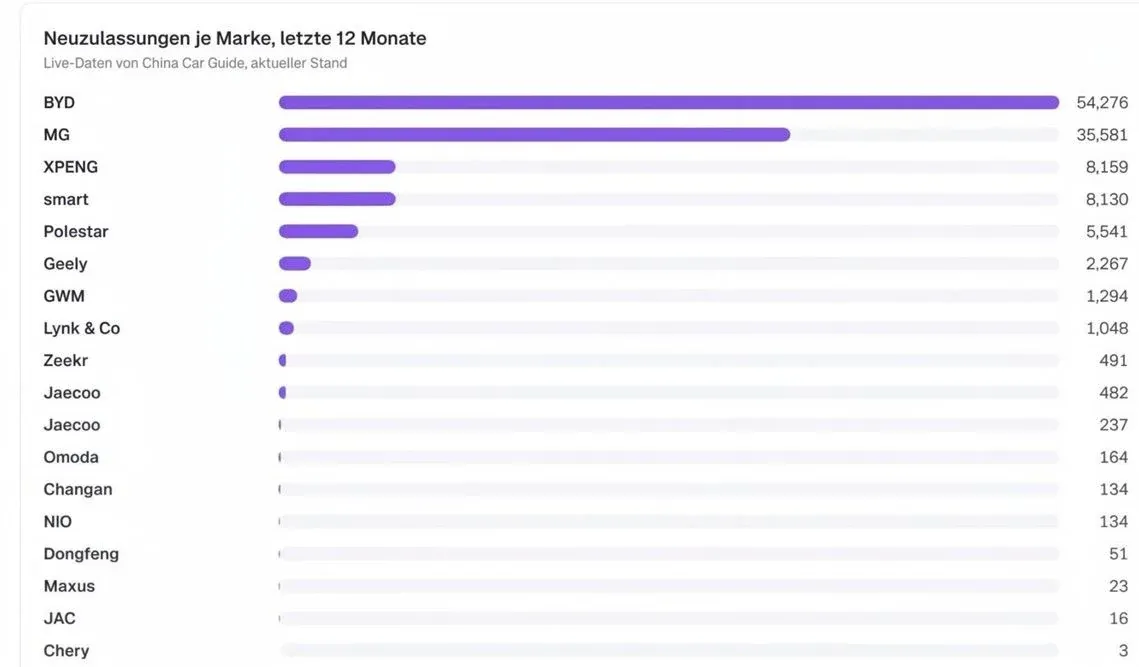
In October, Chinese brands and those affiliated with Chinese groups nearly doubled their registrations in Germany, according to China Car Guide’s compilation of data from KBA. They reached 17,079 units, a 98.8% increase from the previous year, while the overall market grew by only 1.7%. Their market share rose from 3.4% to 6.7%.
The cumulative figures confirm that this is more than just a good month. From January to October, those manufacturers combined to record 126,503 new registrations, compared to 54,671 during the same period last year. Their market share in Germany rose from 2.3% to 5.1%. They are still far from dominating the market, but they are expanding their presence at a pace that warrants concern among their competitors.
Calling Germany a protected market does require a nuance, however. The additional tariffs on electric cars manufactured in China are a measure of the European Union, not a specific German barrier. In fact, the German government voted against approving them in 2024. What’s significant is that these manufacturers are growing within that trade framework in a country where domestic brands maintain a very strong position.
BYD, MG, and XPeng Make Progress Among Their Rivals
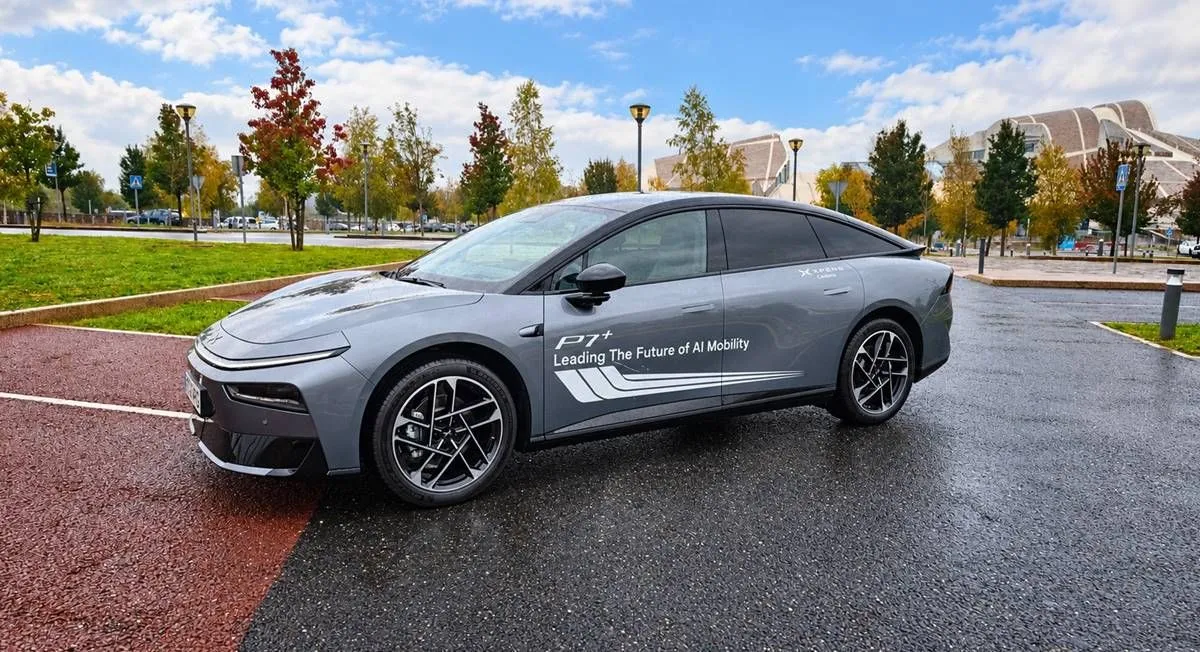
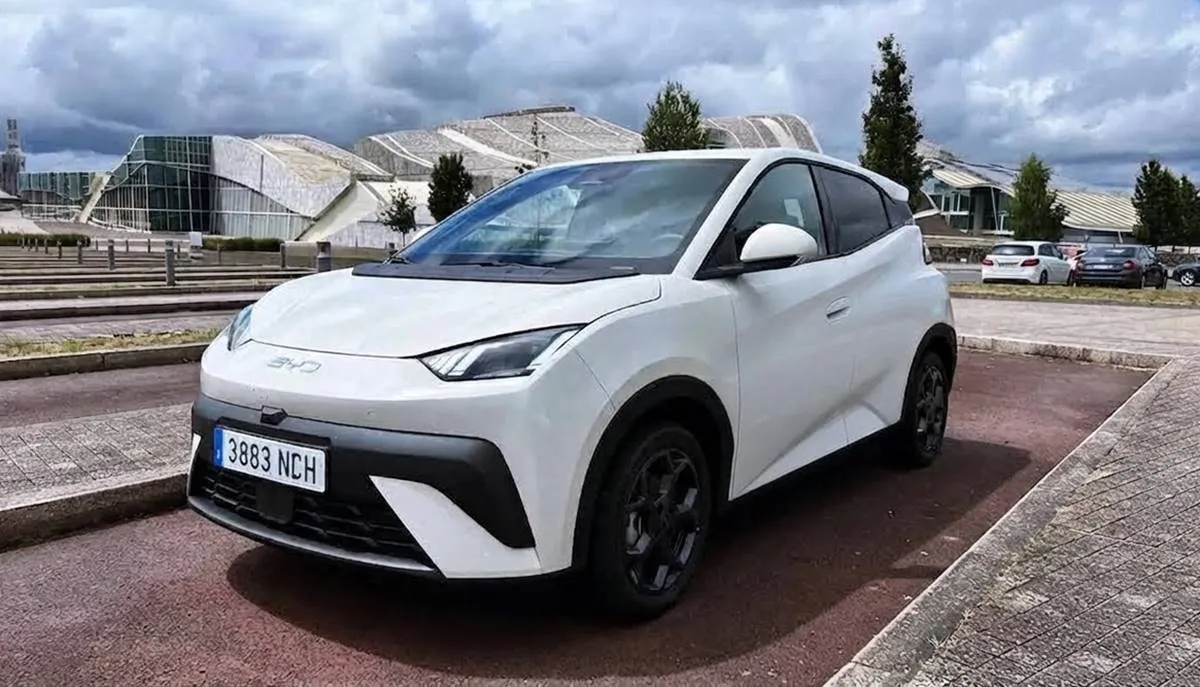
BYD registered 5,173 cars in October, a 54.3% increase, while MG reached 4,140 units, marking a 48.5% rise. XPeng saw even stronger growth, with 1,380 units sold, representing a 284.4% increase from the previous year. This growth comes as the company prepares to expand its lineup with the arrival of the L03 and especially the L05, which is set to launch in 2027 with compelling features.
The contrast with some traditional manufacturers is striking. Volkswagen saw a 4% decline, Audi an 8.4%, Porsche a 5.7%, and Opel a 24.1%. Not all brands followed this trend: Mercedes experienced an 8.5% increase, while BMW barely changed, posting a 0.1% rise.
The overall VDIK data support this interpretation. Germany registered 254,492 new passenger cars in October, of which 111,331 were from international brands. These brands saw a 6% increase and accounted for 43.7% of the market, while German brands in the ranking declined by 3.1%. On an annual basis, international brands grew by 8.5%, compared to 4.9% for the overall market.
The change is particularly evident in electric cars. 94,086 units were registered in October, a 79.5% increase, representing an impressive 37% of all new passenger cars sold. International brands accounted for 47,032 registrations, showing a 107.6% growth rate. In other words, approximately one out of every two electric cars registered that month was from an international brand.
German manufacturers are also significantly increasing their electric vehicle registrations. According to VDIK, they reached 43,876 units in October, a 51.9% increase. The problem for them is that their competitors are advancing faster. In a market growing at this pace, selling more than the previous year does not guarantee maintaining the same position against others.
From January to October, Germany registered 698,230 electric cars, a 60.7% increase representing 28.2% of the total. International brands accounted for 46.7% of this segment. Imelda Labbé, president of VDIK, attributes much of this progress to a wide range of models available, which helps attract buyers amid the growing trend toward electric mobility.
Plug-in hybrids followed a different trajectory during this period: their registrations dropped by 7.9% to 28,499 units, although annual totals still show an 11% increase. Together with electric cars, vehicles capable of external charging made up 48.2% of October’s market. Nearly half of all new registrations were for cars that can be plugged in.
For European manufacturers, the concern thus has a clear commercial basis. Their new rivals are growing in size as the market composition changes, and this is also happening in Germany. The most striking percentages stem from small volumes, which requires putting them in context, but this argument loses strength as registrations accumulate.
Trade barriers may increase entry costs, but they do not guarantee that buyers will continue to choose established brands. The solution must also come from dealerships: competitive cars, attractive prices, and reliable service. Germany shows that Chinese manufacturers still have a long way to go, but they are already finding ways to achieve success.