
Toyota Europe’s CEO rebels against the EU: “These vehicles should have a ZERO label”
17/10/2026 09:00
Updated to
17/10/2026 09:00
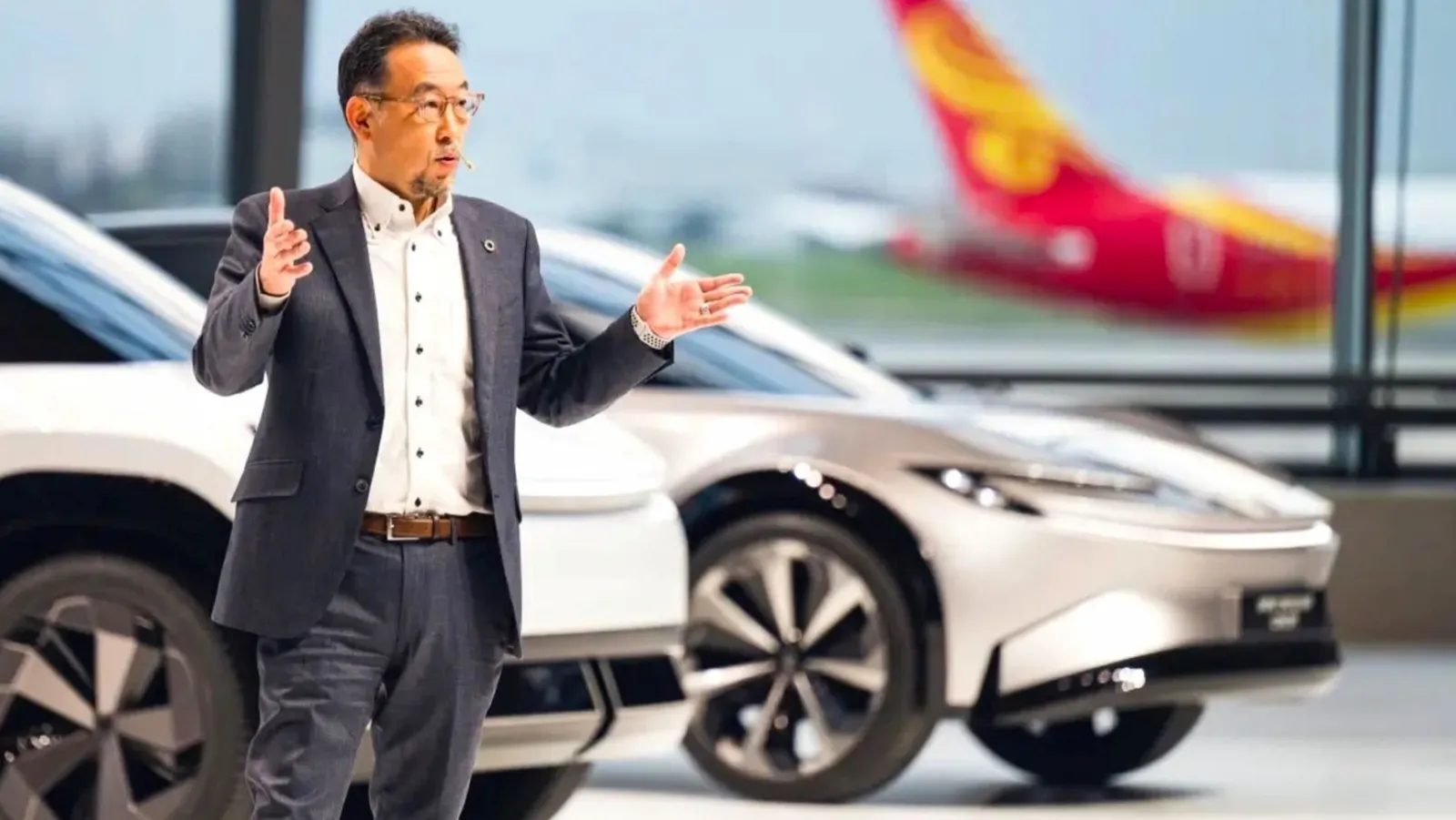
We are not guests in Europe; we are European manufacturers,” Toyota Europe’s CEO, Yoshihiro Nakata, stated emphatically in a statement from the world’s top automaker’s European division. He is right, as Toyota employs 25,000 people directly on the Old Continent.
But that is far from everything the Toyota Europe CEO mentioned. He voiced criticism against the EU’s current emissions policies, calling for greater flexibility and, most importantly, for certain vehicles to be recognized as zero-emission, or in other words, to carry a ZERO label in Spain.

Toyota rebels against EU’s current policy
As EU lawmakers work to shape the Industrial Acceleration Act—aimed at boosting production and value addition in Europe—the CEO of Toyota Europe has issued a stern warning to Brussels. Yoshihiro Nakata believes the EU’s current approach is too restrictive and that Europe should shift from focusing on “Made in Europe” to “Made with Europe.” This is not the first time Toyota has warned the EU about its automotive industry policies, but now its stance is more firm, almost appearing to be a rebellion against current regulations.
This is not the case, as Toyota makes it clear in a statement that it “fully supports Europe’s climate goals,” but at the same time “believes that decisions […] should combine ambition with pragmatism, including regulations that reflect real customer demands and openness to all technologies that reduce CO2 emissions” — in contrast to Brussels’ nearly exclusive focus on electric vehicles and its ZERO label starting in 2035.
Opposing the inward-looking approach proposed by the Industrial Acceleration Act and its vehicle assembly regulations exclusive to the EU, Toyota Europe’s CEO stated that Europe should have “a limited number of trusted partners” with whom it can maintain “free trade agreements and customs unions”; among them the United Kingdom, Turkey — where Hyundai has followed BYD’s successful strategy — and Japan.
More flexibility and a change for certain vehicles: giving them a ZERO label
At the same time, Toyota Europe is calling for greater flexibility in EU emissions regulations, citing as an example that current EU laws require that by 2030, over 55% of new vehicles be electric… whereas it is projected that only around 45% will be electric by that date.
In this way, and as part of several action pillars it supports, Toyota is advocating for a rather striking proposal: giving certain vehicles a ZERO label.
In its statement, Toyota advocates for “recognizing as zero-emission vehicles [or CERO label by transferring the concept to Spain] those that operate exclusively on eligible renewable fuels [VEEF or Vehicles powered exclusively by eligible fuels].”
In other words, it proposes considering as zero-emission vehicles — thereby granting them the CERO label — those with internal combustion engines but using synthetic fuels and e-fuel (both of which have zero CO2 emissions). This is a proposal already under consideration by the EU... and one that Toyota supports as a way to save combustion engines.
Not without reason, in the aforementioned statement, Toyota Europe’s CEO makes it clear that as a “European manufacturer,” “we want the European automotive industry to succeed.”