
China makes history: a giant 210,000-ton ship begins voyages using renewable ammonia
The decarbonization of maritime transport is one of the major challenges in the energy transition. While electric cars are advancing rapidly and heavy transportation is beginning to find solutions driven by the high cost of diesel, large merchant ships still rely heavily on fossil fuels. Their enormous size, long distances traveled, and high energy demands make electrifying them with batteries particularly complicated.
That is why the shipbuilding industry has been searching for years for alternatives that can reduce emissions without compromising the ability to transport goods between continents. Among the options gaining the most attention is green ammonia, a fuel that can be produced using renewable energy and contains no carbon in its composition.
Now, China has just made a significant breakthrough in this race. And it’s not a lab test or a small experimental ship, but rather a commercial operation that links fuel production to its use on one of the largest types of maritime transport vessels.
A 210,000-ton ship crossing the Pacific using green ammonia
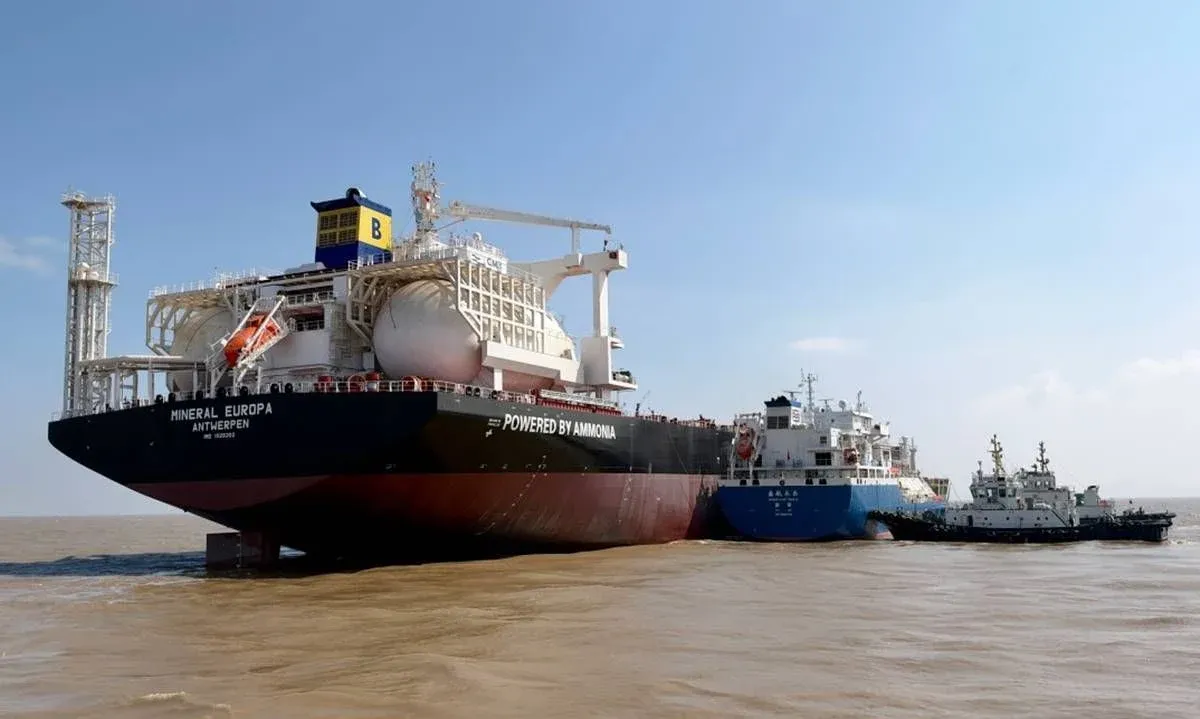
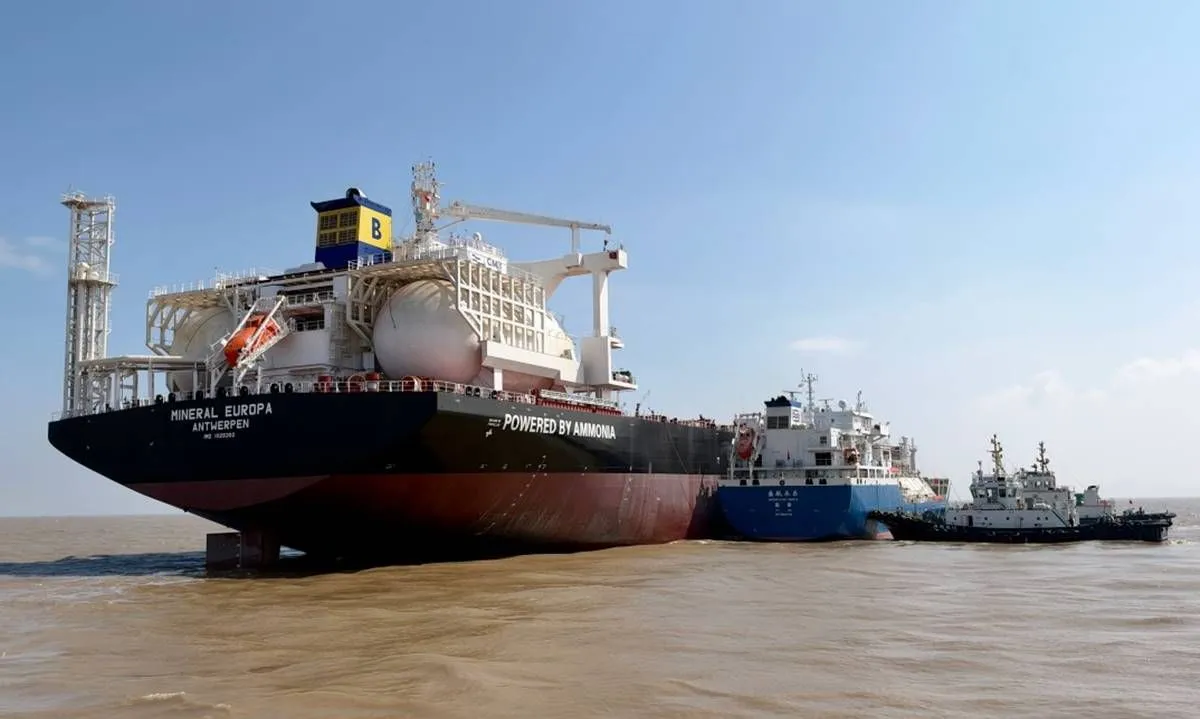
The star of this operation is the Mineral Europa, a massive bulk carrier owned by the Belgian company CMB.TECH, which set sail on a commercial voyage from China’s Zhoushan port to Australia, using green ammonia as fuel.
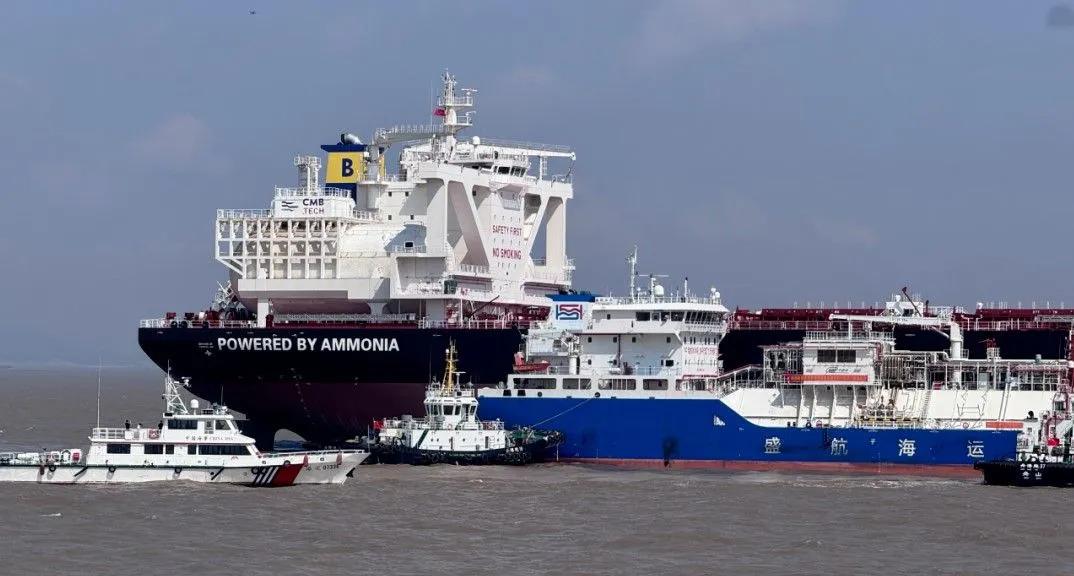
The operation took place on October 13th, when the Mineral Europa received fuel directly from another ship, the Shenghang Yongle, which was specifically modified for this type of refueling. Interestingly, the transfer occurred in a floating area at sea, without relying on fixed port facilities.
According to the participating companies, this is the world’s first commercial ammonia refueling between ships, a particularly significant step as it demonstrates that this fuel can be supplied through infrastructure similar to that currently used by conventional maritime transport.
The Mineral Europa has a deadweight capacity of 210,000 tons, a figure that gives us an idea of the scale of this giant vessel. It has two tanks installed on deck to store the fuel, with a combined capacity of approximately 3,002 cubic meters, where ammonia remains in liquid form at a temperature near -33 degrees Celsius.
But perhaps the most interesting aspect isn’t the ship itself, but everything that happened before it set sail.
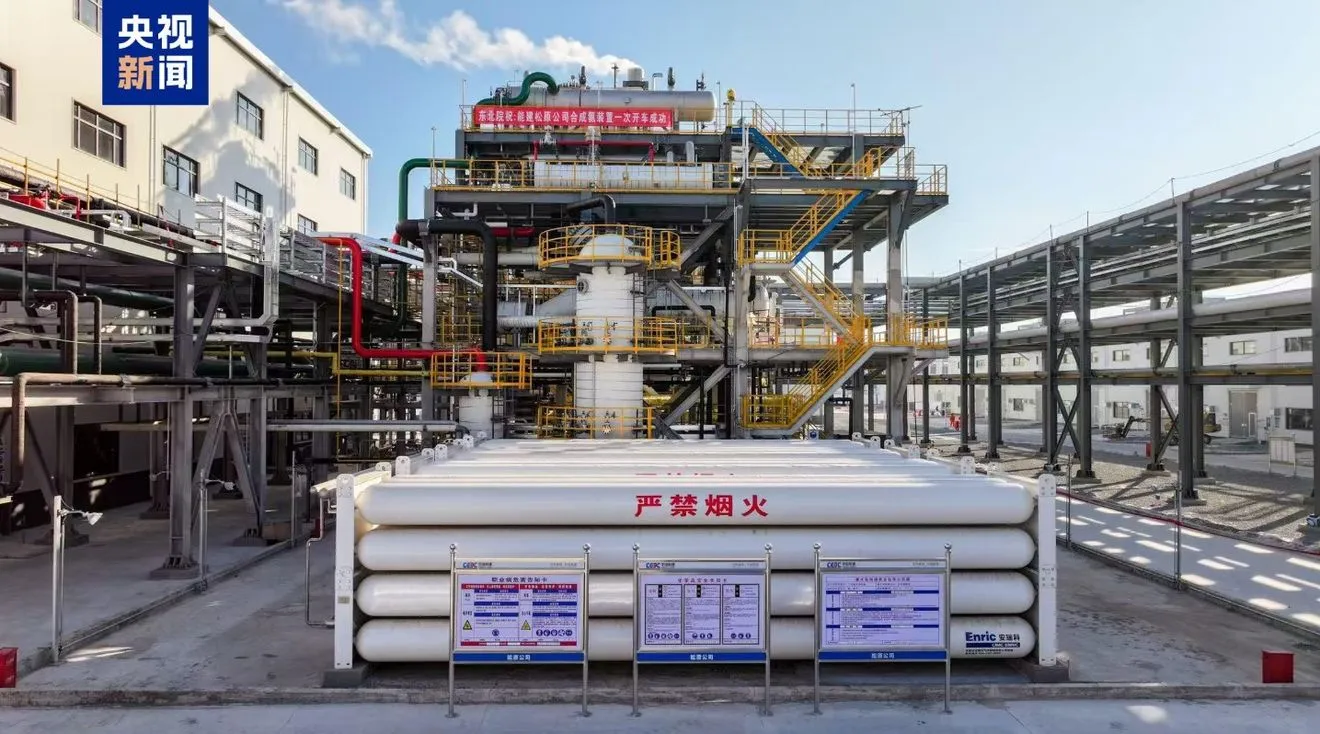
The fuel comes from the Songyuan hydrogen industrial complex, developed by China Energy Engineering Corporation (CEEC). Green ammonia is produced there using hydrogen generated from renewable electricity, which is then combined with nitrogen to create the final product.
From the production facilities, located about 2,000 kilometers from Zhoushan, the fuel was transported by road to the port of Nanjing, where it was loaded onto a specialized ship that completed the journey to the refueling site.
In total, the operation has enabled the movement of around 1,000 tons of green ammonia, linking production facilities, land transportation, maritime distribution, and ultimately the refueling of a commercial ship.
It is precisely this integration that makes this news significant. Up to now, there have already been engines capable of using ammonia, production projects powered by renewable energy, and ships prepared to store it. What was missing was proof that all these elements could function together in a real commercial operation.

Alexander Saverys, CEO of CMB.TECH, described Mineral Europa as the beginning of a revolution in marine propulsion, asserting that it proves large ocean-going vessels can use ammonia as fuel.
The Belgian company does not intend to remain with a single operation. Its plans include adding around 21 ships equipped to use ammonia over the next three years, including 18 bulk carriers, one container ship, and two vessels for transporting chemicals.
The interest in this technology is not limited to China. Norway, the United States, Australia, and several countries in Southern Africa are also developing projects related to the production and distribution of green ammonia, aiming to create an international supply network.
Some projections suggest that ammonia could become one of the main fuels for new ships starting in 2042, accounting for approximately 25% of the fuel used by global maritime transport by 2050.
To achieve this scenario, annual production of green ammonia would need to reach around 120 million tons, a volume that requires massive investments in renewable energy generation as well as industrial facilities and distribution networks.
However, it is important to keep in mind that this technology also has significant drawbacks.
The first is its lower energy density per kilogram. While marine diesel provides approximately 44 MJ/kg, ammonia offers around 18.6 MJ/kg. This means that to obtain the same amount of energy, a ship needs to transport about 2.4 times more fuel by weight, although volume differences depend on storage conditions.
In addition, current marine engines designed to use ammonia still require a small amount of conventional fuel to initiate and maintain combustion. According to published data, about 5% of the propulsion energy comes from marine diesel, while the remaining 95% can be derived from ammonia.
We must also add other challenges that are no less significant. Ammonia is a toxic substance that requires strict safety measures during storage and handling. Its combustion also needs to be carefully controlled to prevent emissions of nitrogen oxides and potential releases of nitrous oxide, a potent greenhouse gas.
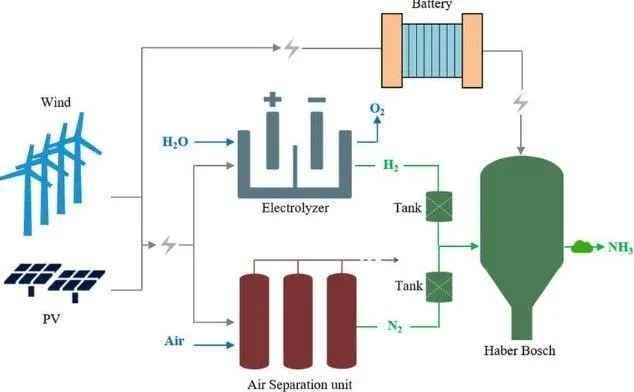
Therefore, although ammonia does not directly produce CO2 when burned, that doesn’t mean a ship using it necessarily has zero climate impact. The outcome depends on how the fuel was produced, the efficiency of the engine, and emission control measures.
There is also the economic aspect. Producing hydrogen using renewable electricity, converting it into ammonia, transporting it, and then reusing it as fuel involves several energy conversions, each with associated losses. From an efficiency standpoint, this is a less favorable solution compared to using electricity directly in batteries.
But in long-distance maritime transport, the priorities are different. The enormous amounts of energy required to cross oceans make current batteries an impractical alternative for all large merchant ships.
And that is where green ammonia can find its role.
The operation carried out in China does not mean that oil’s use in maritime shipping is coming to an end. There are still many technical, economic, and logistical obstacles to overcome. However, it does show that an alternative, which until recently seemed limited to experimental projects, is beginning to take its first commercial steps.
The question now is whether this technology can reduce its costs and expand its infrastructure enough to compete with traditional fuels. After all, demonstrating that a ship can cross the ocean using green ammonia is one thing, but ensuring that thousands of ships can do so profitably is something entirely different.