
Bankruptcy for company that converted Teslas into hybrid cars with 1,000 km range
17/10/2026 10:00
Updated to
17/10/2026 10:00
Obrist, the Austrian company that gained fame by modifying Tesla Model 3s to turn them into extended-range electric vehicles (EREVs) with a gasoline engine, has gone bankrupt. Three companies within the group collectively owe around 31.8 million euros in debt, and two of them will close after informing the court that it is not feasible to continue operating or undergo restructuring. The company had been promoting its HyperHybrid hybrid system as an alternative to battery-electric vehicles (BEVs) for over a decade, but none of its projects eventually resulted in a vehicle being produced on an industrial scale.
The story is particularly noteworthy because Obrist built much of his argument around questioning the necessity of installing large batteries in electric cars.
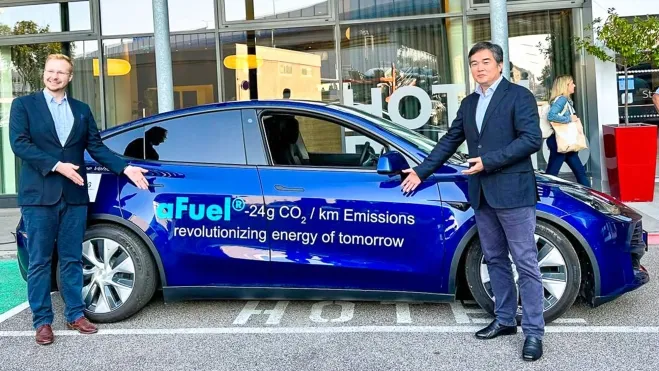
His alternative was what we now call an EREV, or extended-range electric vehicle: the wheels are driven by electric motors, while a small internal combustion engine acts as a generator when the battery needs energy. That’s why some call it hybridization, as it essentially is.
The concept hasn’t disappeared. In fact, it’s growing rapidly in China. What failed was Obrist’s specific business project.
Three companies and nearly 32 million euros in debt
The Regional Court of Feldkirch in Austria initiated insolvency proceedings at the end of September for Obrist Powertrain GmbH and Obrist Technologies GmbH.
Obrist Powertrain GmbH, responsible for the HyperHybrid project, owes approximately 18.85 million euros to 34 creditors and had only nine employees left.
Obrist Technologies, which held patents related to methanol production and CO2 capture, has around 6.08 million euros in debt to ten creditors and no longer had any employees.
Add to this the German company Obrist DE, with another approximately 6.8 million euros in liabilities. The parent company Obrist Engineering, which focuses mainly on heating and thermal management systems, is excluded from these proceedings.
The Tesla that lost almost all of its battery
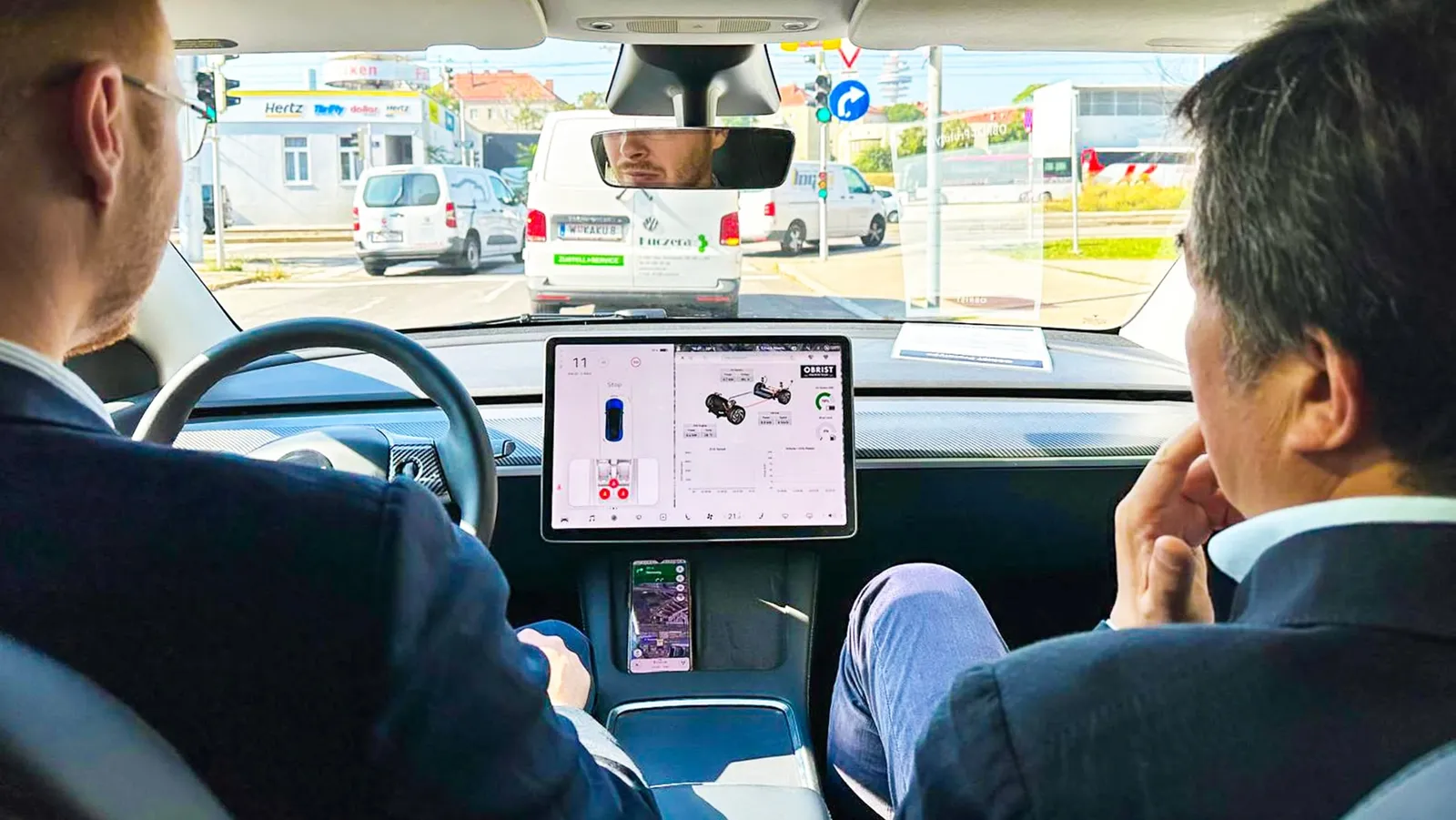
Obrist gained significant attention in 2020 with the so-called Mark II, built from a Tesla Model 3. The company reduced the battery capacity to 17.3 kWh and installed a small 40 kW two-cylinder gasoline engine under the front hood, used exclusively as a generator.
It promised around 1,000 kilometers of total range and claimed the system could cost approximately 4,500 euros once produced on a large scale.
The company also stated at the time that it had licensed the technology to an international partner and anticipated production vehicles by 2023. None of these made it to market.
From gasoline to “climate-friendly” methanol
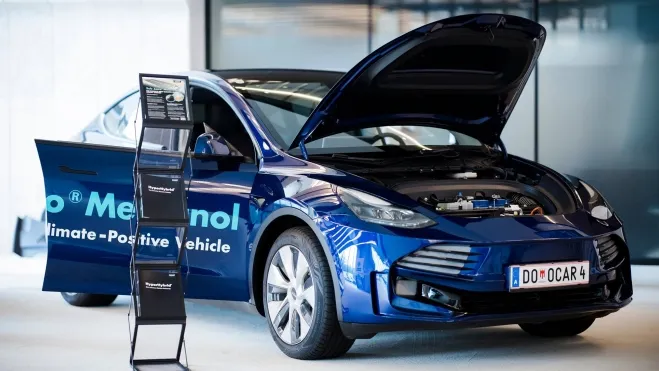
The project evolved over time. In 2022, Obrist also presented a modified Tesla Model Y designed to run on synthetic methanol, while advocating for a system called aFuel that relies on producing fuel using captured CO2.
He later announced plans for methanol plants in Namibia, Egypt, Thailand, and the United States, along with potential investments in the billions.
According to founder Frank Obrist, high development costs, a lack of new investors, and the crisis in Europe’s automotive industry ultimately worsened the financial situation.
The bankruptcy filing mentions another particularly significant factor: European manufacturers’ increasing shift toward fully electric vehicles.
The ultimate paradox is that extended autonomy technology has not died. China shows it can have a market. But Obrist, one of the companies that had been advocating for this idea in Europe for the longest time, failed to turn any of its prototypes into a production car before running out of funding.