
Also from Paris and Berlin, more criticism of the 2035 targets. T&E: “A historic mistake”
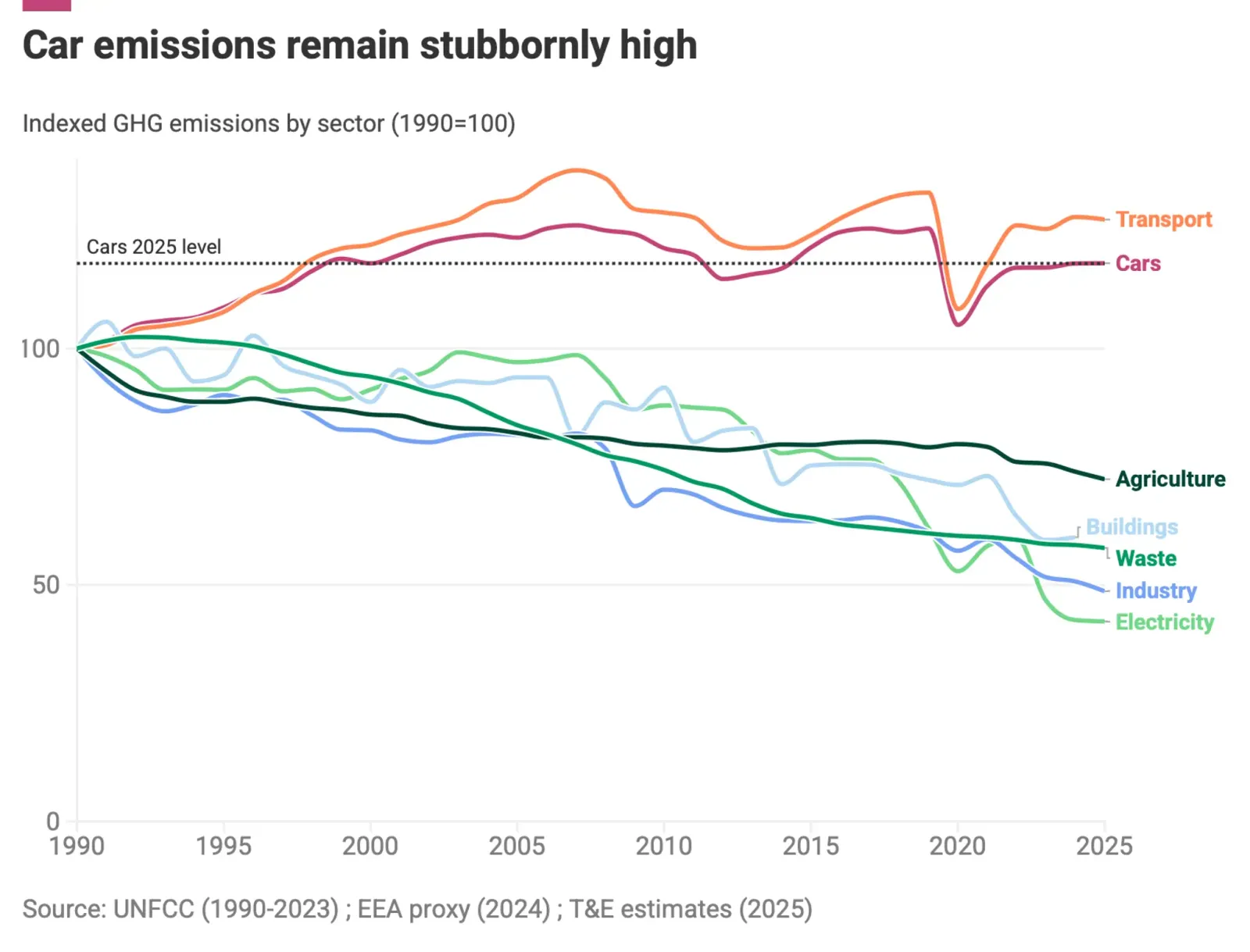
A deal between Paris and Berlin to make Europe’s 2035 vehicle emission rules and targets more flexible. But Transport & Environment (T&E) warns it is a “historic mistake.” The agreement risks weakening Europe’s electric transition and industrial supply chain.
The plan would keep the 90% CO₂ emission reduction target for 2035 but eliminate the offset mechanism required under EU regulations revised just last year. New Made in Europe requirements for batteries and the possible continuation of plug-in hybrids in the regulatory framework are also under criticism, as T&E claims they actually emit six times more in real use than reported in official tests.
CO₂ Targets by 2035: The Deal Dividing Europe
With the revision of European rules announced for late 2025, the target for new cars by 2035 had already been changed, shifting from a 100% reduction in tailpipe emissions to a 90% reduction, with the remaining 10% to be offset through measures such as using recycled or low-emission steel and alternative fuels.
France and Germany now want to maintain the 90% target, but without additional offsets. In other words, the agreement would keep conventional internal combustion engines in use.
The deal, still to be finalized, also aims to strengthen European production and expand the definition of Made in Europe by including the United Kingdom.
The proposal is presented by the two governments as a compromise between industrial competitiveness and climate goals.

Chinese batteries, a threat to European gigafactories
The requirements set by the organization would mean that only 10% of batteries are produced in Europe during 2028-2029, a figure expected to rise to 20% in 2030-2031. T&E emphasizes that by 2025, more than half of the batteries used in electric cars sold in the EU would already have been produced in Europe.
According to the organization’s estimates, modest targets would put at risk the demand needed to sustain gigafactories, with 164 GWh of production capacity at risk by 2027 and 254 GWh by 2030.
“Germany and France are making a historic mistake,” says Andrea Boraschi, director of T&E Italia. Boraschi argues that slowing down the transition to electric vehicles risks exacerbating the difficulties faced by European automakers at a time when competitive pressure from Chinese brands is increasing.
The issue is not only where cars are assembled, but also where cells, cathodes, and other key components are produced. Without a sufficiently stable demand, European investments in batteries risk losing their economic viability.
Plug-in hybrids: actual emissions six times higher than official figures
The comparison also includes plug-in hybrids (PHEVs), a technology that might retain its advantage due to more flexible regulations. However, a T&E report based on data from the European Environment Agency highlights a significant gap between certification and real-world use. PHEVs registered in 2024 would emit about six times more CO₂ on the road than reported in official tests, compared to a five-to-one ratio for those registered in 2023. Actual emissions would be only 14% lower than those of conventional combustion engines and hybrids, whereas tests indicated an 83% reduction.
The European Union is adjusting the so-called utility factor, the parameter that estimates the proportion of electric driving used to calculate official emissions figures. This adjustment has already prompted some manufacturers to increase battery capacity and electric range. T&E calls for keeping the further update scheduled for November 2026, while Germany presses to freeze it as part of the automotive negotiations.
More flexibility or less competitiveness for European cars?
For T&E, weakening both emission standards and industrial requirements simultaneously risks undermining both decarbonization efforts and Europe’s manufacturing capacity. The organization estimates that the proposal would reduce the share of electric vehicles in the market from 57% to 43% by 2030, also limiting the availability of affordable models.
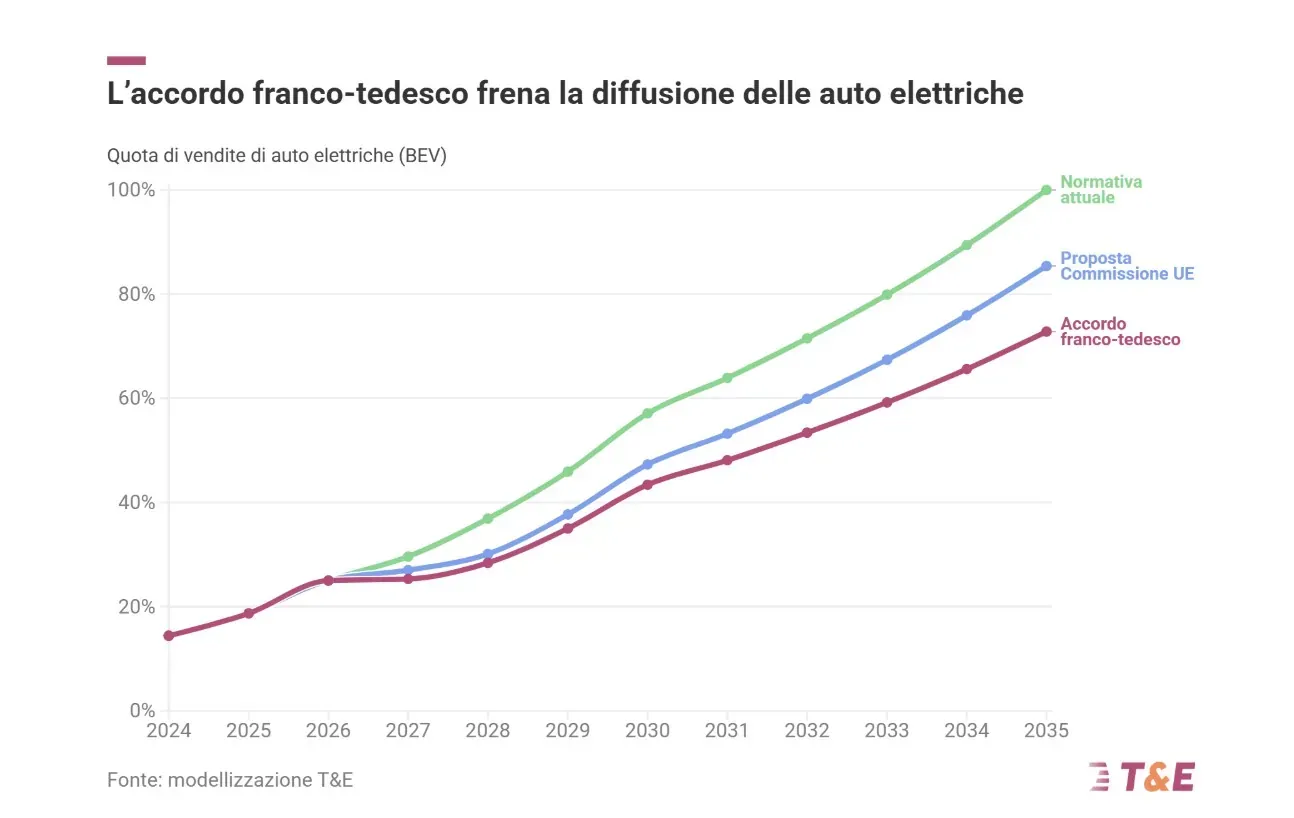
This issue directly affects Italy, where the competitiveness of components and access to new technological supply chains are crucial for the future of the automotive industry. It is not enough to assemble cars in Europe; it is necessary to create industrial value also in batteries and their strategic materials.
The crisis in Europe’s automotive sector is structural. Italian components at risk
Finally, Germany would have managed to replace mandatory targets for electrifying large corporate fleets with non-binding national goals.
The Franco-German agreement now paves the way for a decisive discussion on the timing, incentives, and industrial aspects of the transition. To become European regulations, this compromise will need the support of other governments and the EU Parliament.
READ ALSO: Marchesini (Confindustria): “Europe will become a third power if it solves the energy puzzle” and watch the VIDEO
Previous Article
How much I saved in a year on fuels