
Звіт попереджає, що швидке заряджання електромобілів може досягти рівня 1 фунт/кВт·год у 2027 році через зростання постійних витрат.
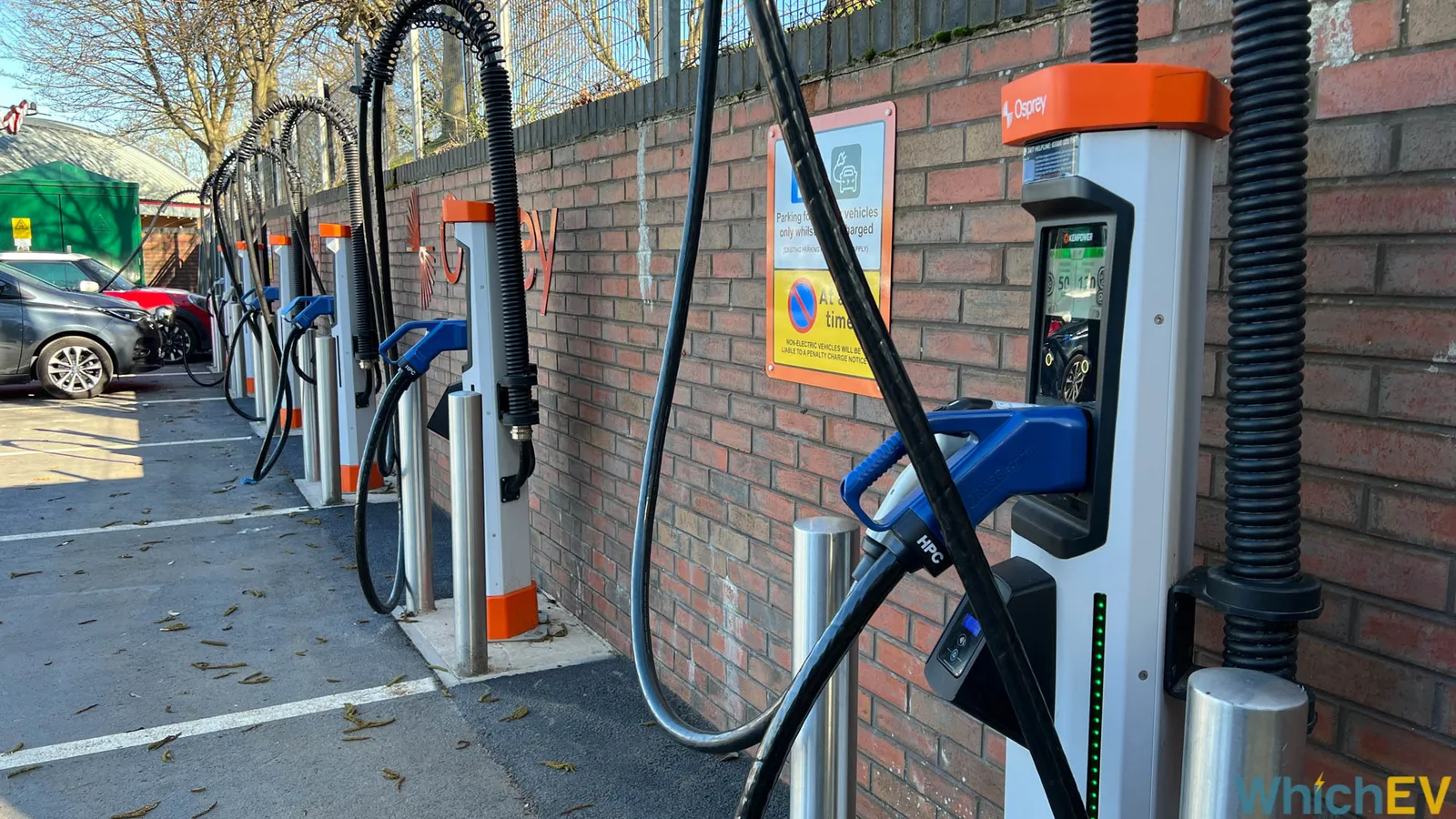
Rapid electric vehicle charging prices could commonly reach £1 per kWh in 2027 as rising fixed electricity charges put pressure on operators, according to a new assessment warning that drivers without home charging face the greatest exposure to higher costs.
The Reverse the Charge report, published on 11 November by EV newsletter The Fast Charge in partnership with charging operator Zest, forecasts a rise from the 79p per kWh average it cites for 2026. It calls for urgent reform of how public charging sites are billed for access to the electricity network.
Its modelling puts the average fixed charge for a standard rapid charger at £440.13 a week in 2026, compared with £61.47 in 2021, an increase of 616%. The calculation includes distribution and transmission charges, alongside fixed policy and supplier costs.
Using tariffs published for 2027, including initial transmission figures, the assessment projects a daily charge of £77.39 for the same modelled charger. These costs are incurred regardless of whether a vehicle plugs in, leaving operators to recover them through charging revenue.
Across the UK, the report estimates that rapid charging operators face £336 million in grid charges in 2026, rising to £413 million in 2027. That £77 million increase assumes no expansion of the charging network, so it represents additional pressure on existing infrastructure.
The price warning is a forecast rather than an announcement of new tariffs by charging networks. The assessment argues that operators facing higher fixed bills will come under pressure either to increase prices or absorb losses at sites where usage remains low.
For EV drivers, the concern is particularly acute among households unable to install a home charger. The report cites the RAC Foundation’s estimate that around a third of UK households lack off-street parking, leaving many more dependent on public infrastructure for their charging needs.
The assessment traces the problem to an Ofgem decision in 2019 that, it says, has allowed businesses to be charged according to their potential electricity demand rather than actual consumption since 2022. Rapid chargers need substantial connection capacity, even when demand is still developing.
According to the report, the Government’s independent Cost of Public Charging Review recognised a severe impact from the rule change. However, it says the £100 million announced in Budget 2026 to reduce charging costs is restricted to local, lower-powered chargers, leaving rapid charging outside that support.
Tom Riley, the report’s author and editor of The Fast Charge, called for action to prevent public charging costs undermining the financial case for switching to an electric car.
He warned that drivers without home charging could miss out on the savings associated with EV ownership. “At present, the UK is allowing a situation where going electric, especially if you don’t have a driveway, could be more expensive than sticking with a banger.”
“The Government’s own review has confirmed what charging networks have been warning about. Ofgem has known about this problem for at least a year. It’s time to fix it,” he said.
Reverse the Charge wants Ofgem to reform capacity-based billing across both local distribution and national transmission charges, with backing from the Treasury. Its argument is that the present structure burdens infrastructure built to meet future demand before enough vehicles are using it.
The report says documents obtained through Freedom of Information requests show that officials were already aware of the difficulty. In a 2025 briefing to the Treasury, Ofgem described high fixed charges as keeping rapid chargers in an “unproductive cycle”, resulting in a “high cost per customer”, it says.
Two industry proposals, DCP 420 and DCP 454, could reduce grid charges for EV charging, according to the assessment. It says they have spent three years in industry working groups and have yet to reach Ofgem for a decision.
Robin Heap, founder and chief executive of Zest, said the charging structure was affecting investment as well as prices.
“The switch to capacity-based network charges was never intended to put the brakes on EV adoption,” he said. “For public charging, however, it has created an egregious cost burden that pushes up prices for drivers and means many otherwise investable charging projects are delayed or shelved.”
The assessment illustrates those pressures with revenue modelling at two actual Zest locations. Both examples use an early-stage benchmark of 50kWh delivered per connector each day, showing the economics of sites where demand has yet to build.
At an urban charging hub in Birmingham, electricity and grid costs account for 48p of the 58p per kWh charged before VAT, leaving 10p to meet other expenses. At an on-street ultra-rapid charger in London, the corresponding figures are 58p out of 64p, leaving 6p.
Those remaining amounts are not profit. They must cover costs including equipment, connections, land, installation, planning, payment systems, customer support and maintenance. Revenue shares payable to landlords or councils, along with other taxes and operating expenses, must also be met from the balance.
The examples underline why utilisation matters: a fixed bill is spread across fewer units of electricity at a lightly used site. That can make the early years of a charging location particularly difficult, even where an operator expects demand to grow over time.
Heap argued that public charging faces an electricity cost problem similar to that recognised for energy-intensive industries. He said reform could bring stalled projects back into consideration and improve access to affordable charging, particularly for drivers unable to charge at home.

The wider analysis models a rapid charger with two 100kW connectors on a 232kVA connection. It averages published tariffs from eight of Great Britain’s 14 electricity distribution areas and adds National Energy System Operator transmission charges. Its 2027 projections use the operator’s initial tariffs for 2027/28.
The report’s 616% increase should be distinguished from the Government review’s estimate that standing charges rose by 83–283% between 2021 and 2026. The latter covers local distribution charges only; Reverse the Charge includes transmission and fixed policy and supplier costs for its defined connection.
The assessment covers rapid charging, excluding AC infrastructure. Its authors describe the figures as conservative because newer ultra-rapid chargers, particularly at locations with multiple devices, can require larger connections. Actual costs will nevertheless depend on the characteristics of each site and the applicable network tariffs.
Zest is based in Leeds and says it operates more than 3,400 charge points. It works in partnership with more than 30 local authorities and public sector organisations, alongside hospitality, retail and destination partners. The company is backed by the government-sponsored Charging Infrastructure Investment Fund, enabling it to invest in infrastructure intended to anticipate future demand. Riley’s independent newsletter, The Fast Charge, covers electric vehicle policy.