
New Tesla Roadster 2028: Thrust engines, extreme speed, and many questions
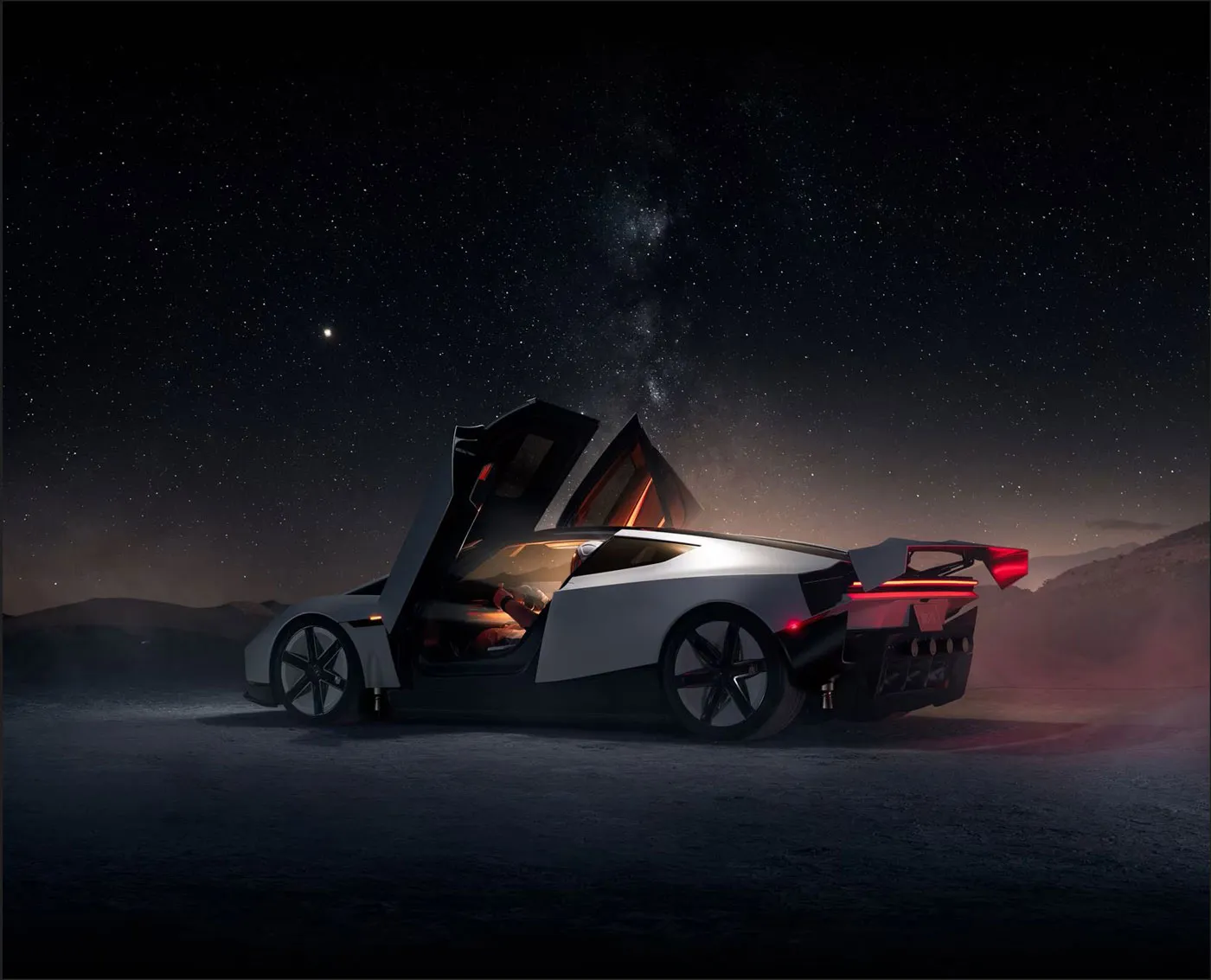
The new Tesla Roadster has finally been unveiled. And Tesla didn’t just present an electric sports car. With thrusters, a acceleration time of less than one second, and even the possibility of short flights, Elon Musk is pushing the boundaries of automotive technology. But when can we actually buy this special Tesla?
A Tesla Roadster that can even drive upside down
On October 15, 2026, Tesla unveiled the new Roadster at SpaceX’s test site in McGregor, Texas. The unveiling focused not only on top speeds and acceleration figures. Tesla mainly demonstrated what happens when aerospace technologies are applied to an electric sports car. The Roadster drove up a sharply curved slope, then continued upside down and even spun in the air before landing back on its wheels. Shortly after, the car jumped over a row of parked Teslas. These are certainly images we won’t forget soon.
It might sound like a stunt meant mainly to attract attention. Yet there is interesting technology behind it. Tesla collaborated on this with SpaceX, Elon Musk’s aerospace company. The Roadster features a combination of powerful fans, active aerodynamics, and small thrusters that emit gas under high pressure. This allows the car to generate forces that don’t need to be transmitted through the tires to the asphalt.
The demonstration mainly shows that Tesla is thinking beyond the usual performance standards of electric sports cars. However, there is an important caveat. The car we saw during the presentation was an experimental prototype controlled remotely. A fully approved production model does not yet exist. It is uncertain whether future owners will be allowed and able to perform the same maneuvers.
Why the new Tesla Roadster is so extremely fast
Electric cars can now accelerate at impressive speeds. This is because electric motors can deliver high torque almost instantly. But even the most powerful electric hypercars face a physical limitation: the tires must still be able to transfer all that power to the road surface.
Tesla is addressing that issue in two ways. First, the Roadster uses a ventilation system that draws air under the car. This creates additional downward force, pressing the tires harder against the asphalt. This results in better traction, even at low speeds when traditional aerodynamic aids are less effective.
In addition, the more expensive models incorporate thrust rockets. These so-called cold-gas thrusters operate using highly compressed gas. By directing that gas outward, they generate thrust that can move the car forward, upward, or in another direction. Unlike traditional rockets, no combustion occurs. During the demonstration, Tesla stated that the system uses ten thrust rockets and a supply of about 600 liters of compressed air.
The result is an acceleration that is hardly imaginable. Tesla achieved a sprint from 0 to 60 mph, or 96.6 km/h, in just 0.81 seconds. For the most extreme Rocket version, a time of less than 0.59 seconds is claimed. These are demonstration results and factory targets, not independently verified measurements using a final production car. Additionally, in Europe we typically measure acceleration from 0 to 100 km/h, so the figures are not directly comparable.
The top speed must also be exceptionally high. Tesla mentions over 230 mph, which is roughly more than 370 km/h. Musk even suggested during the presentation that the Roadster could go significantly faster. For now, we consider this mainly an ambition rather than a confirmed specification.
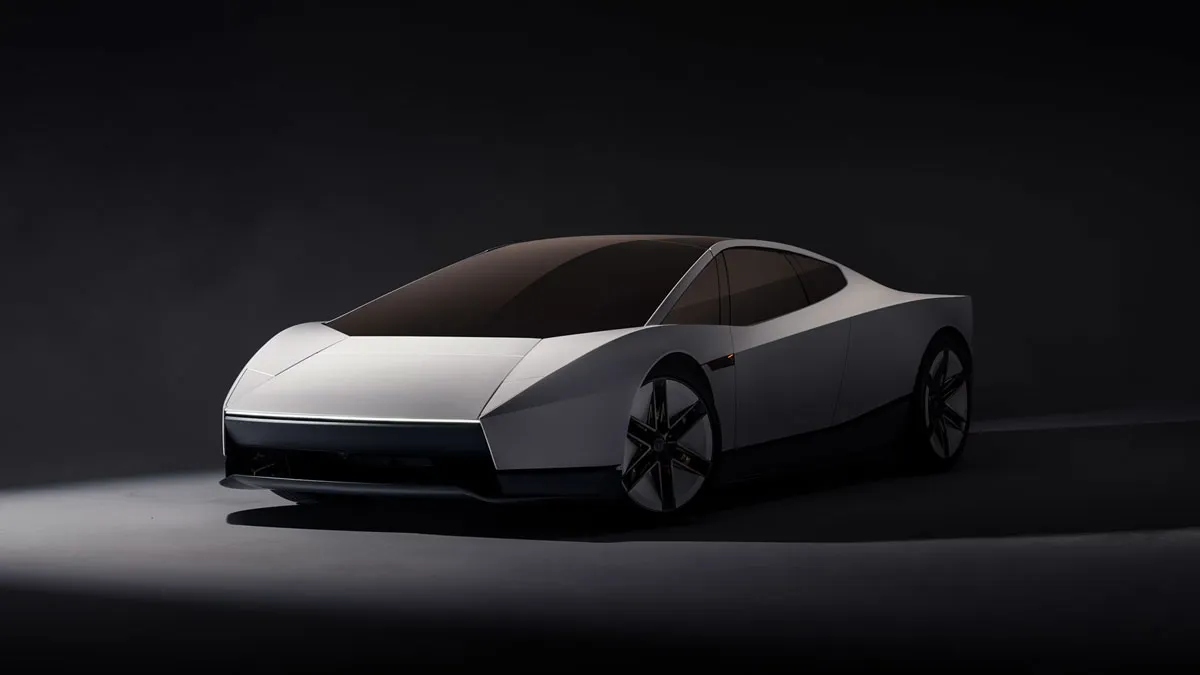
Three versions of the new Tesla Roadster
Tesla offers three variants for the new Roadster. The differences lie not only in performance but mainly in how the car generates grip and thrust.
The Roadster Performance is the entry-level model, as much as such a term applies here. This two-seater features active aerodynamics and a ventilation system for improved grip. According to Tesla, it should be able to accelerate from 0 to 60 mph in less than 1.6 seconds. The brand describes this version as road ready, indicating it is intended for use on public roads.
The Roadster Thrust takes it a step further. This version adds thrusters to the rear, allowing the car to rely not solely on its tires for acceleration. Tesla aims for a 0-to-60 mph time of less than 0.9 seconds. Tesla describes the Thrust as race ready. However, this does not automatically mean the thrusters can be used anywhere on public roads. The manufacturer emphasizes that availability depends on regional regulations.
Then there’s the Roadster Rocket. This is the most extreme variant, featuring just one seat and ten thrusters that also enable vertical movement. This allows the car to briefly lift off the road surface and even spin in midair. The Rocket is offered only by invitation and is clearly not intended as a regular road car.
The distinction is important. Tesla is not presenting a single sports car whose all versions can fly. The special aerial acrobatics are reserved for the Rocket. And even in that case, we need to somewhat relativize the concept of flying. The Roadster can make short jumps and move itself in the air, but it is not a flying car that allows you to hover above traffic for extended periods.
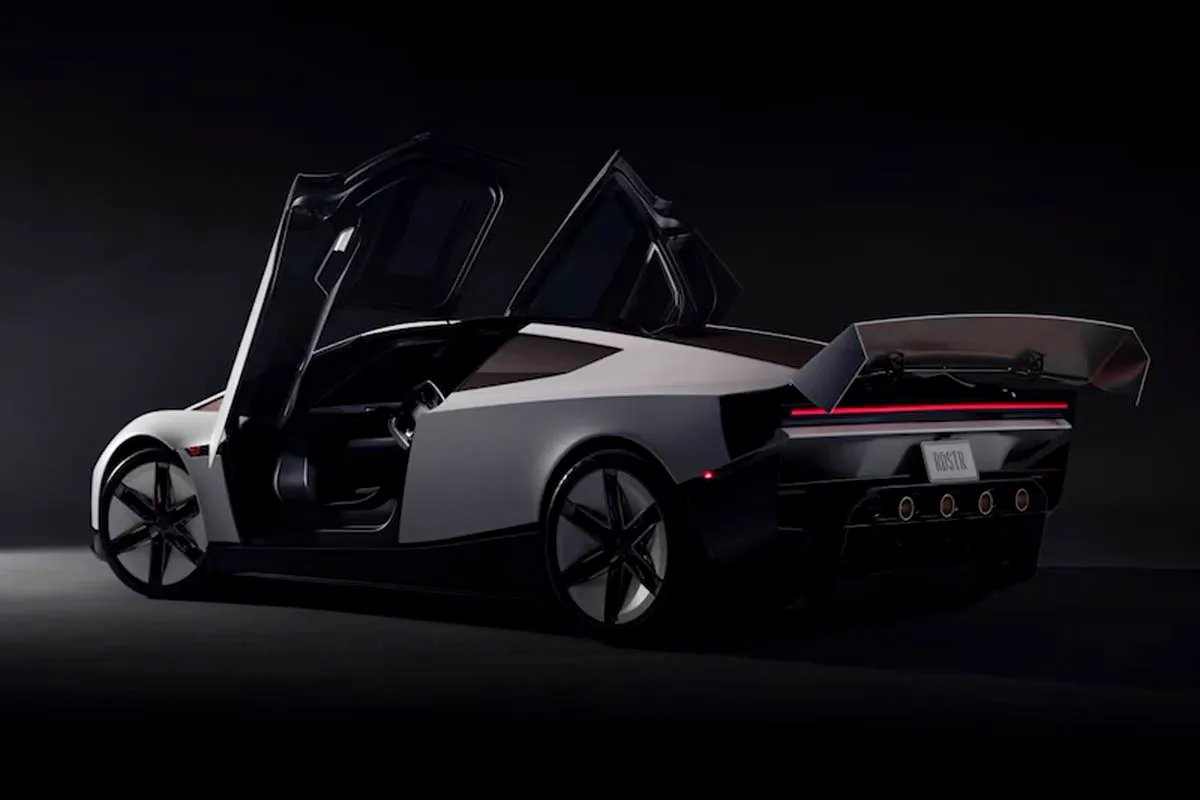
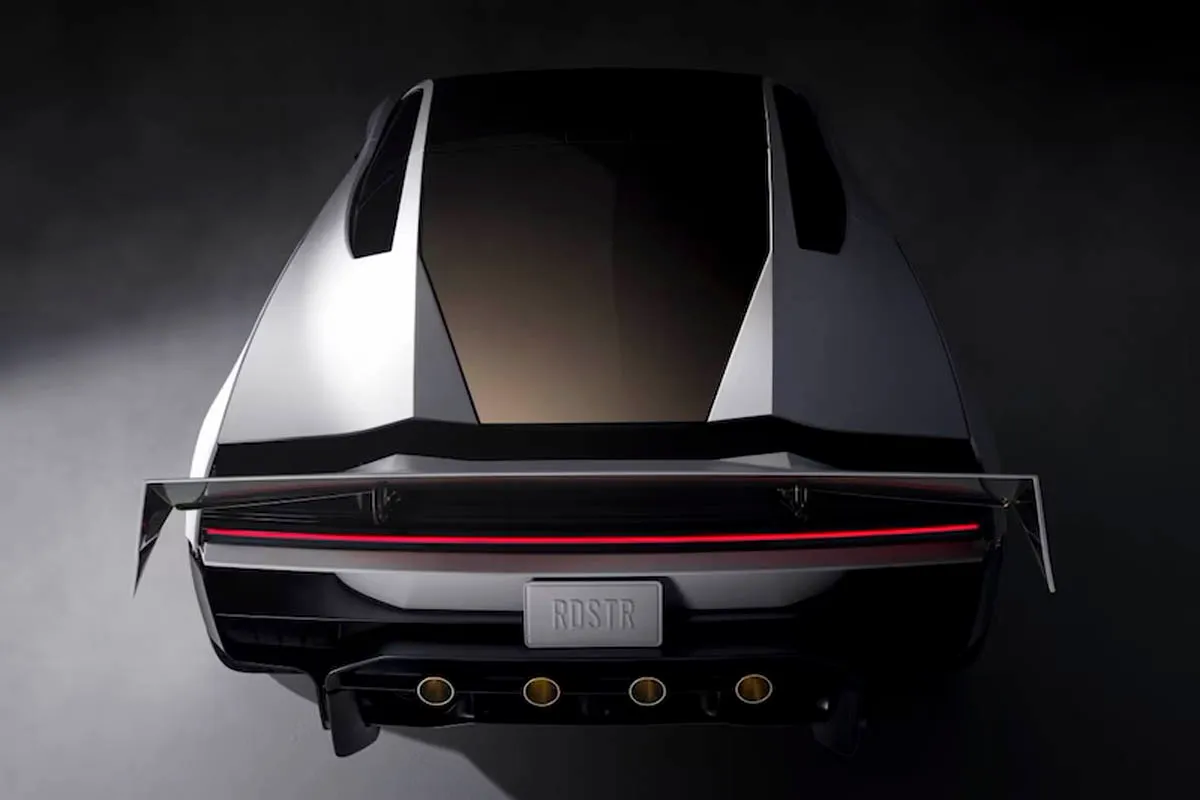


The Tesla Roadster's design has also changed completely
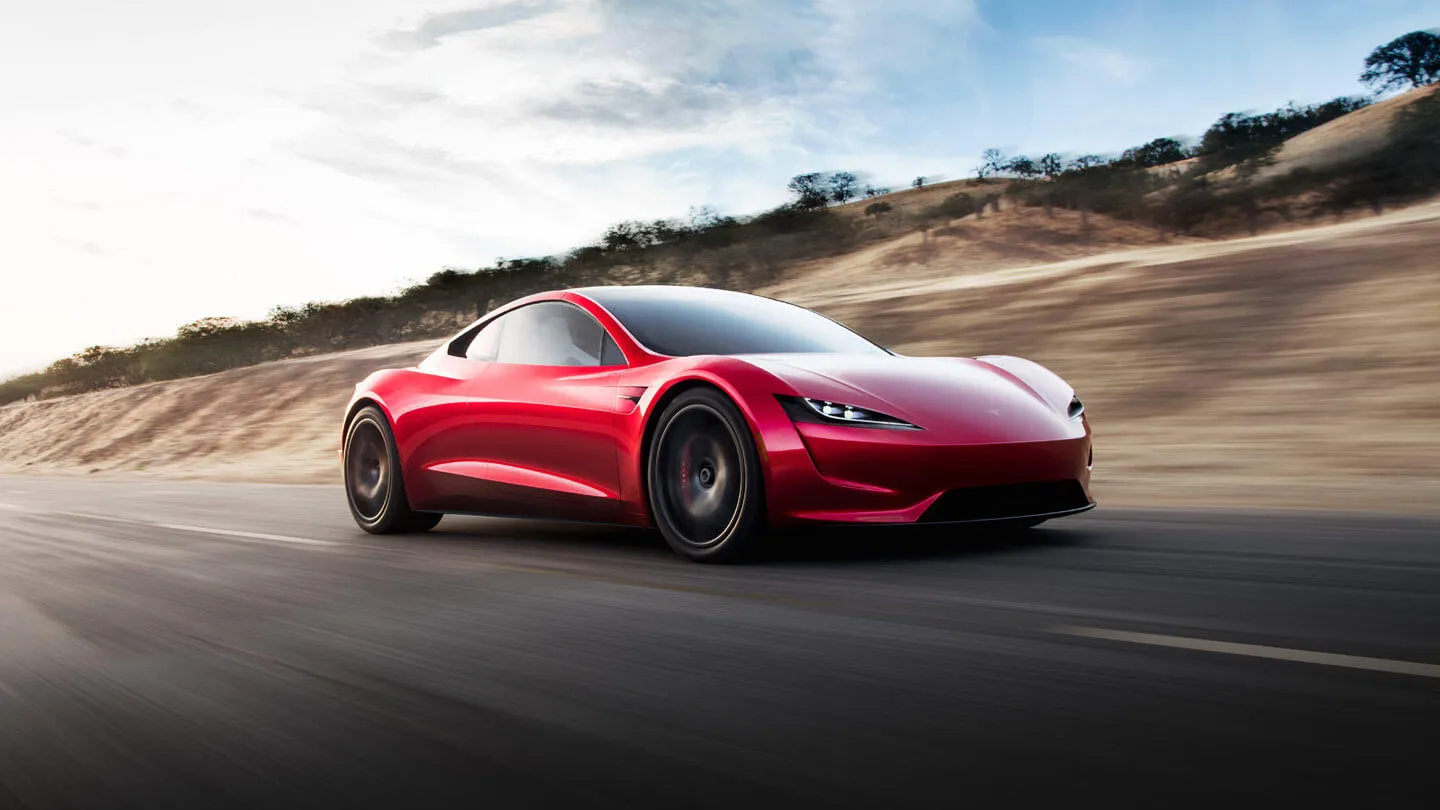
Those who still remember the original Roadster from 2017 can immediately see that Tesla has started over. The rounded shapes of the previous concept model have been replaced by a more streamlined design featuring a low nose, wide body, and remarkably sharp lines. The new Roadster looks quite different from existing Tesla models and has a much stronger resemblance to an exclusive supercar.
The front features a long light strip and headlights concealed behind movable body panels. At the rear, there is a large, extendable spoiler. The doors open at an angle upward, lifting part of the body with them. This gives the Roadster a striking appearance, though it remains to be seen how many of these design details will make it to production.
The interior design is also quite futuristic. The driver looks out at a flat steering wheel, while the dashboard is mostly free of traditional switches. A touchscreen dominates the center console. Notable features include adjustable pedals and a low seating position. The interior is clearly designed around the driver.
The new Roadster is also now a two-seater. The original concept model from 2017 could accommodate four people and featured a removable roof panel. For the completely redesigned Roadster, Tesla seems to have abandoned this feature. The prototype shown has a closed roof, which is notable for a car that still carries the name Roadster. It is unknown whether Tesla will eventually introduce an open version.
Range from 1,000 to about 500 kilometers
Among all the impressive achievements, another detail stands out. Tesla has significantly reduced its original ambitions for range. When the second-generation Roadster was announced in 2017, the brand talked about a battery pack of 200 kWh and a range of around 1,000 kilometers.
Now the expected range is over 300 miles, which is roughly 480 kilometers. That’s still sufficient for a sports car, but it’s about half of the original promise. We should also keep in mind that both figures are factory estimates and not directly comparable to an official European WLTP measurement.
Tesla has not yet disclosed the final capacity of the battery pack, the charging speed, or the energy consumption. It is therefore too early to make any statements about the efficiency of the new Roadster. It is also unclear how much impact intensive use of the fans and thrusters has on energy consumption and practical range.
Interestingly, Tesla is taking a different approach with the Roadster compared to its regular electric sedans. The development of those vehicles focuses increasingly on efficiency, affordability, and daily usability. With the Roadster, almost all attention is given to performance. This is acceptable for an exclusive sports car, but it does not necessarily make it technically advanced in every aspect.
How much will the new Tesla Roadster cost?
Tesla remains silent for now regarding the price. An official starting price in the Netherlands is not known. At the original launch in 2017, the regular Roadster was estimated to cost around $200,000. However, that figure says little about the price of this completely redesigned car.
Reservations are possible through Tesla’s official website. Tesla requires substantial down payments for this. In the United States, the reservation fee for the Performance version is $50,000. For the Thrust version, it’s as high as $250,000. These are clearly not purchase prices. The Rocket is available only by invitation.
Production is set to begin in 2028. This means that the first customers, if Tesla meets this timeline, will be able to receive their Roadster more than a decade after its original unveiling. When the car will become available in the Netherlands and what it will ultimately cost there remain unknown.
After nine years of waiting, Tesla can finally start deliveries
The Roadster’s history makes us cautious. Tesla presented the second generation back in November 2017, promising that production would begin in 2020. That deadline was not met, as were several subsequent announcements. Meanwhile, other electric sports cars entered the market, proving that extremely high performance is possible even without thrusters.
We at e-Drivers.com have also written several times about the upcoming Roadster. In 2021, Tesla stated that production would begin in 2022. And in 2022, reservations were reopened again, with no definite production date provided. This explains why we do not consider the new 2028 commitment to be a certainty outright.
At the same time, it would be unfair to dismiss this reveal as nothing more than a publicity stunt. Tesla has shown a functional demonstration model using technologies we have not seen applied to a passenger car in this manner before. Particularly fascinating is the combination of electric propulsion, active aerodynamics, and thrust rockets. The footage from Texas shows that Tesla’s and SpaceX’s engineers have gone to great lengths to develop something that other automakers have not shown before.
But the questions are at least just as interesting. How reliable is such a complex system? What does it mean for weight, maintenance costs, and safety? How often can the thrusters be used before the air tanks need to be refilled? And perhaps more importantly: how much of this technology can actually be allowed on public roads?
For Tesla, the Roadster is primarily a way to show what its engineers are capable of. It’s a calling card that allows the brand to regain attention at a time when competition in the electric car market is stronger than ever.
With the new Roadster, Tesla is primarily demonstrating its ability to achieve exceptional technical performance. Its design is also striking. With its low nose, sharp lines, and doors that open upward, it even bears some resemblance to a Lamborghini. The demonstration in Texas was truly spectacular, but impressive demos are not yet production cars. Elon Musk has made many promises about the Roadster over the past nine years, while the car kept getting delayed. It’s high time Tesla keeps its word. Because no matter how amazing those thrusters are, the greatest achievement might well be if the Roadster actually rolls off the production line in 2028.
Text: Marc Verweij