
Zero DS, 436 km on a single charge: the record that challenges assumptions about range
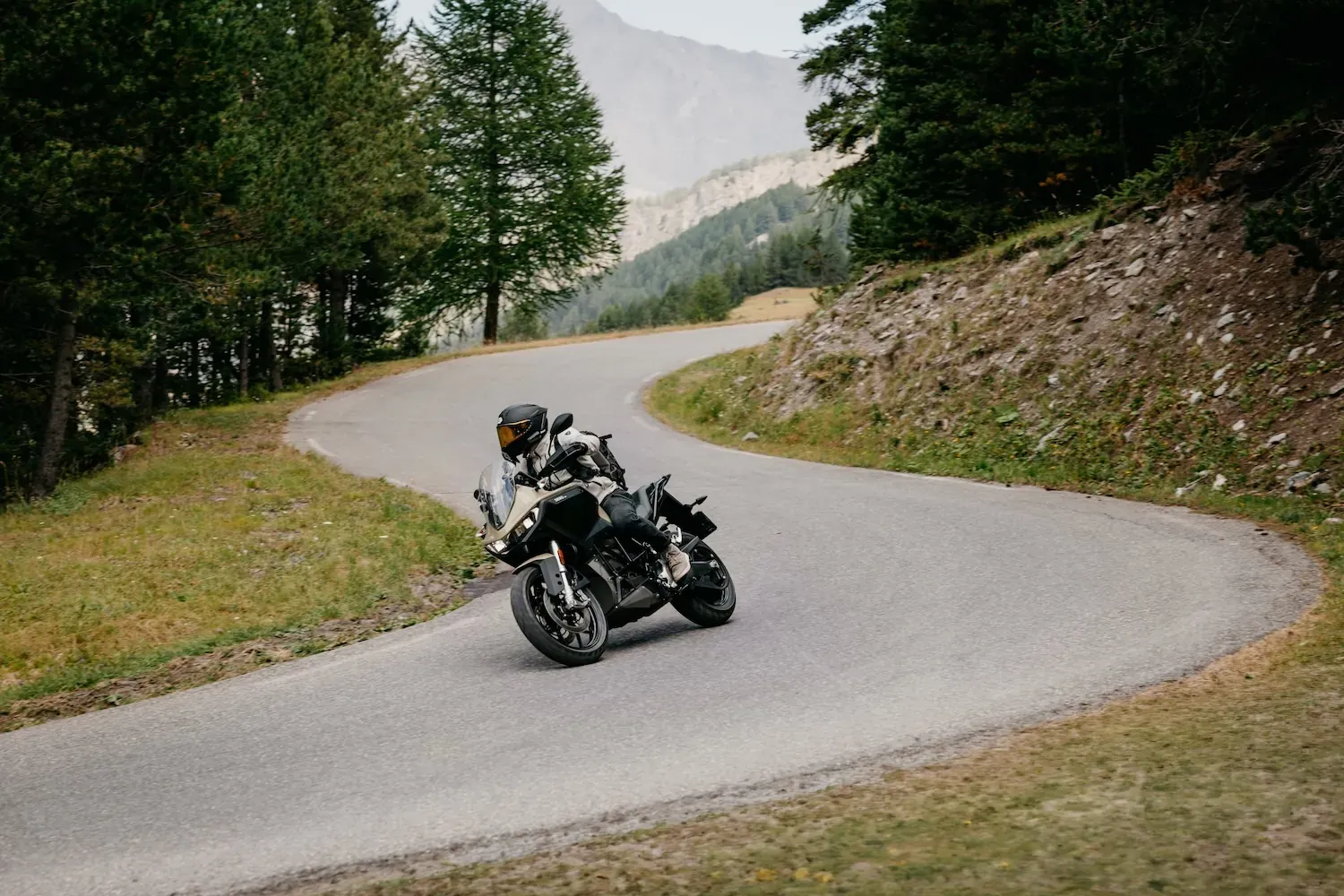
A standard Zero DS, equipped with the optional Power Tank, traveled 436.5 kilometers on a single charge, setting a new Guinness World Record. The route was certainly designed to maximize efficiency, but the experiment still provides interesting insights into the range of electric motorcycles.
Well, 436.5 kilometers on a single charge is truly impressive. It’s a long distance even for some cars, let alone a motorcycle! But this is the distance covered by a Zero DS that set the new Guinness World Record for the longest range achieved by an electric motorcycle on one charge.
Jelle Verstaen was at the wheel, navigating a route from the Alps, on the border between France and Italy, to the Mediterranean coast. The motorcycle was a standard model with no modifications, but equipped with the optional Power Tank. This increased the battery capacity from 15.6 kWh in a standard DS to 19.2 kWh.
The previous record was 310.689 km; the Zero improved this by over 125 km, or about 40%. The route was monitored via GPS, and the result was verified according to Guinness World Records procedures.
436 km, but under conditions designed to minimize consumption
This figure needs to be viewed in context. The 436.5 km do not represent the range a Zero DS owner can expect in everyday use. The manufacturer itself states that the standard DS has an urban range of 249 km.
The route for the record attempt was chosen and planned with the clear goal of maximizing efficiency. No highways, moderate speeds, few restarts, and a path as smooth as possible. Where the roads and conditions allowed, the group maintained a cruising speed of around 52 km/h.
Even the seemingly unfavorable mountain sections enabled the use of regenerative braking on descents. However, in the last 100 kilometers, conditions became considerably less ideal: the group reached the coast under heavy rain.
In short, this is not a test of range in the traditional sense, nor does it aim to be one. It is an attempt at setting a record, hence designed to achieve the greatest possible distance.
Not just one Zero: three motorcycles breaking the previous record
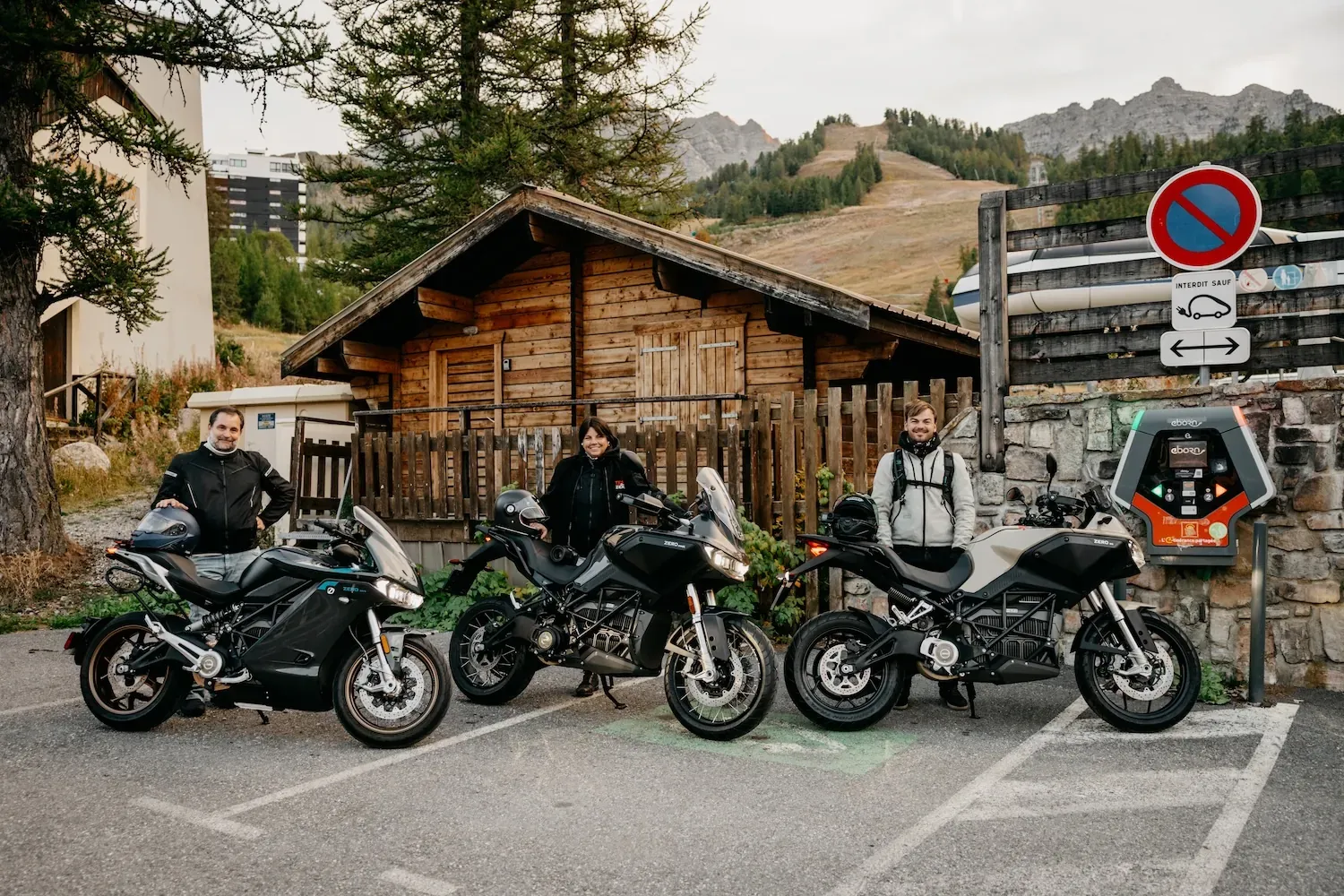
There is however another interesting element. The attempt involved three Zero models, all of which managed to exceed the previous record of 310.689 km.
Louis Renaud, a Zero customer who initially participated as an independent observer, drove his own SR/S and covered 350 km before stopping with still 4% battery left. Jenny Brookes, the company’s Senior Global Brand Manager, reached 384 km with a DSR/X before her battery ran out.
Verstaen’s DS, thanks also to the additional 3.6 kWh from the Power Tank, went the farthest of all: 436.5 km.
The real issue is the “range bias”
The interesting aspect of this initiative is not so much taking the 436 km as a reference for the actual use of the DS, but rather something else.
When it comes to electric vehicles, and perhaps even more so for electric motorcycles, range is often still evaluated using a rather rigid parameter: how many kilometers the vehicle can travel before stopping. This is a understandable criterion, but it can become a bias when it ends up completely obscuring the relationship between range, actual usage, speed, distance traveled, and charging options.
A record like the one set by Zero certainly doesn’t eliminate the limitations still present in electric motorcycles, but it does show how much the range of such vehicles can change depending on usage conditions. More importantly, it shifts the discussion away from the conventional approach that requires an electric motorcycle to be evaluated solely based on its maximum range at constant speed.
From this perspective, beyond the record itself, Zero’s effort represents a solid communication strategy: practical, easy to understand, and based on motorcycles that are readily available for purchase. Perhaps, as we increase the mileage of batteries, there is also a need to change the way we view range.
Previous Article
Nuclear Without Veils (and Ideology): “It’s not essential, but it shouldn’t be ruled out”
Next Article
The Pnrr is closed, but Lombardy has a grant of 110 million for 200 electric buses