
The Xpeng G9L has prices in Poland, starting at 339,900 zł for the seven-seater SUV from Graz.
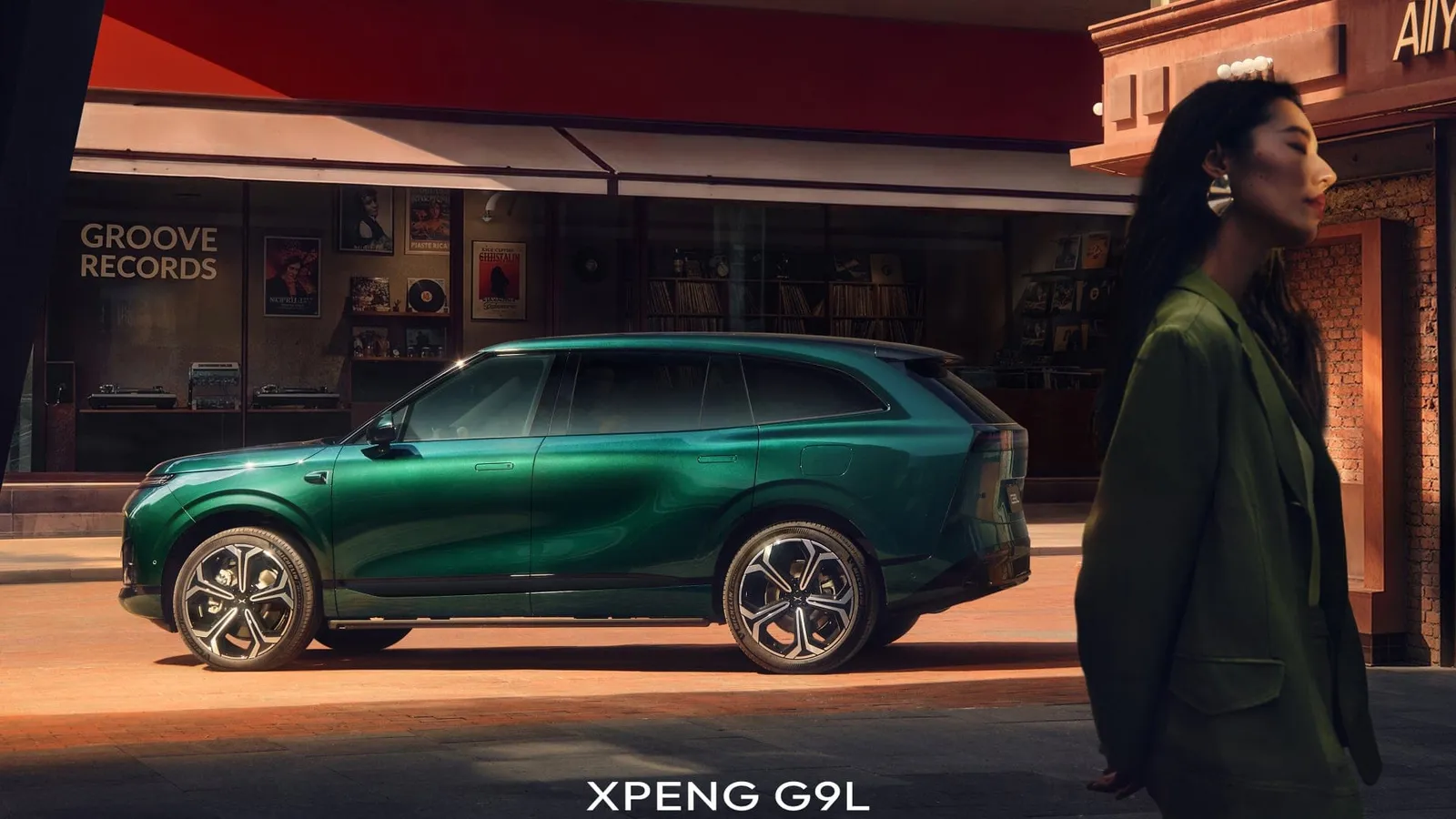
Xpeng Polska released the price list for the G9L on November 24, the brand’s largest SUV in its European lineup. The seven-seater rear-wheel-drive version costs 339,900 zł, while the six-seater all-wheel-drive version costs 389,900 zł. Both versions use the same 106.7 kWh net battery and 800 V charging system. According to the manufacturer, it can charge from 10% to 80% in 12 minutes. In Europe, the G9L will be available only as an electric vehicle, without a plug-in version or range extender.
Table of Contents
Show
Hide
In October, at the Paris auto show, Xpeng priced the G9L at 74,600 euros. At that time, we expected the Polish price list within a few days, but it ultimately took over a month to be released.
Three Versions, All Ultra
Initially, Xpeng is selling only the premium Ultra version in three configurations:
7 seats, Long Range RWD: 339,900 zł
7 seats, AWD: 364,900 zł
6 seats, AWD: 389,900 zł
The all-wheel drive system costs an additional 25,000 zł. Another 25,000 zł separates the seven-seater and six-seater AWD versions, but the six-seater model comes standard with the Premium Cockpit package. In the other versions, this option costs 22,900 zł. So, for the captain’s seats in the second row alone, you’ll actually pay 2,100 zł. The metallic paint and tow hook each cost 5,900 zł, meaning a fully configured G9L ends up at 401,700 zł.
That’s all the options for now. Xpeng also plans a cheaper Pro version, but it hasn’t revealed its price or release date.
LR RWD Ultra
AWD Ultra
Power
270 kW (367 HP)
430 kW (585 HP)
Torque
Not available
695 Nm
0-100 km/h
7.0 s
4.9 s
WLTP range
591 km
553 km
WLTP fuel consumption
21.1 kWh/100 km
22.5 kWh/100 km
Battery
NCM, 110 kWh gross / 106.7 kWh net
NCM, 110 kWh gross / 106.7 kWh net
DC charging
up to 540 kW, 10-80% in 12 minutes
up to 540 kW, 10-80% in 12 minutes
Length / width / height
5120 / 1999 / 1788 mm
5120 / 1999 / 1788 mm
Wheelbase
3100 mm
3100 mm
Trunk (with 6 seats occupied)
367 l + 65 l in the front
367 l + 65 l in the front
There is one inconsistency in the pricing. The fuel consumption for the RWD version is listed as 21.1 kWh/100 km on one page and 22.1 kWh/100 km on another. We will ask the importer which value is correct.
Charging and range outside the catalog
Recharging from 10% to 80% takes about 74.7 kWh. If it takes 12 minutes, the average power is around 373 kW throughout the charging session. This level of performance can only be achieved with a charger that provides over 400 kW; with a weaker charger, the charging time will increase proportionally.
The range on the road is significantly shorter than the listed figure. According to preliminary calculations by elektrowoz.pl, the RWD version can travel about 355 km at 120 km/h and around 272 km at 140 km/h, in both cases until the battery is completely drained. The AWD version can cover approximately 332 km at 120 km/h. Additionally, the maximum WLTP values apply to the smallest certified wheels. The cars in Paris were equipped with 21-inch wheels, and it is unclear whether the certification was done for these or the 20-inch wheels that may be available only in the Pro version.
Equipment and Software
The Ultra comes standard with a two-chamber pneumatic suspension, adaptive DCC shock absorbers, and a responsive rear axle that gives it a turning radius of 11 meters. The ground clearance can be increased to 21.6 cm. Inside, there is a 12.5 liter refrigerator, a 21.4 inch screen that drops down from the ceiling, a sound system with 23 speakers, and Nappa leather seats with ventilation and massage functions in the first two rows.
The software will be available in Polish from the first day of sales. It features a Turing AI chip that, according to Xpeng, will power the NGP VLA 2.0 driving assistant. The company plans to release an update in 2027, subject to approval from local regulators. The Pro version will not receive this update.
The G9L rolls off the production line at Magna Steyr’s plant in Graz. In China, the same model starts at 259,800 yuan and is also available as an EREV version that covered 1,403.8 km on a single charge by the end of August. This version will not be available in Europe.
How the G9L compares to its rivals
The base G9L is more expensive than two Korean seven-seater SUVs. The Hyundai Ioniq 9 Techniq RWD costs 317,600 zł according to the July pricing list (312,600 zł on promotion), features a 110 kWh battery, and offers a WLTP range of 620 km. The Kia EV9 Earth RWD costs 328,200 zł, comes with a 99.8 kWh battery, and provides up to 563 km of WLTP range. The Volvo EX90 Single Motor Core, with 88 kWh of net capacity and an estimated 565 km range, costs 369,900 zł, which is 30,000 zł more than the G9L. This price is based on the April 2026 pricing list. The Mercedes EQS SUV is even more expensive, starting at 538,900 zł.
The equipment in these cars cannot be directly compared. However, the base Xpeng comes with pneumatic suspension and a flexible rear axle, and you pay 22,300 zł less for it than the Ioniq 9.
Is faster charging and better equipment worth about 22,000 zł more than the Ioniq 9 for you?
LovEV Newsletter
Want more content like this?
Sign up — we’ll send you a weekly summary once the newsletter starts.