
Porsche Boxster Electric im Fahrbericht: Ein echter Boxster
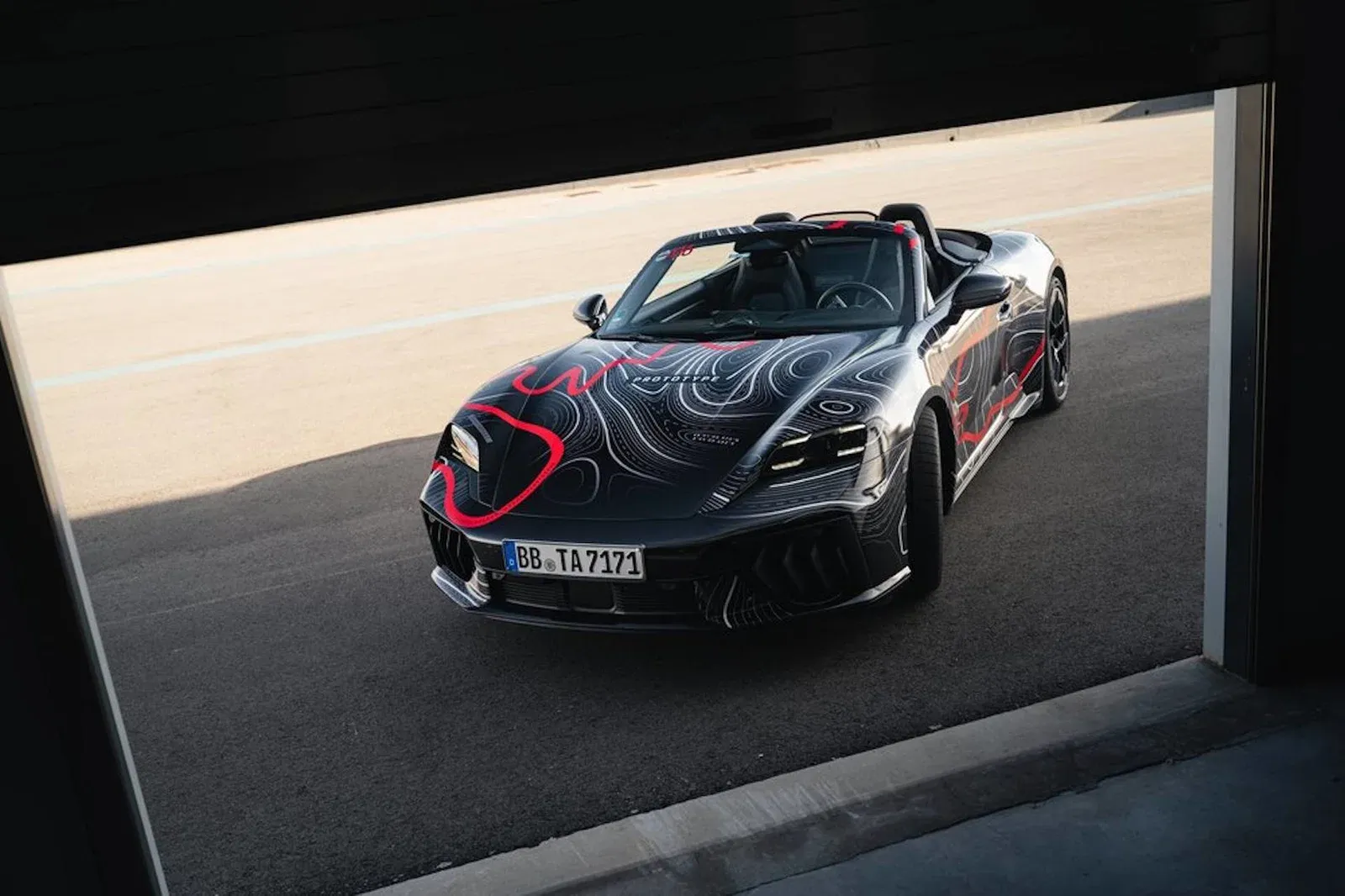
Slowly but surely, the automotive world is shifting toward electric powertrains. Even iconic models like the Porsche Boxster are set to burn electrons instead of gasoline in the future. In Weissach, the nervousness over this dramatic shift was palpable, but the final result wipes away all concerns with a surprisingly confident performance.
Those who feared Porsche would deliver yet another soulless, two-and-a-half-ton monstrosity that only causes stomach upset during traffic lights can breathe a sigh of relief. The electric Boxster delivers tremendous power while thankfully avoiding the excessive, uncontrollable brutality that often makes many modern electric cars seem bleak and ridiculous. Zuffenhausen focuses the vehicle’s performance on precise handling and maximum transparency.
There’s a lot of 911 in there
The developers have not yet revealed the curb weight, but they imply it will be on par with a civilian 911, meaning it is likely around 1.8 tons. This aligns with the perceived engine power of the top model of the upcoming generation we tested: it delivers power similar to the previous four-liter models, likely in the range of just under 500 horsepower, fitting perfectly within the profile of a well-tuned driving machine.
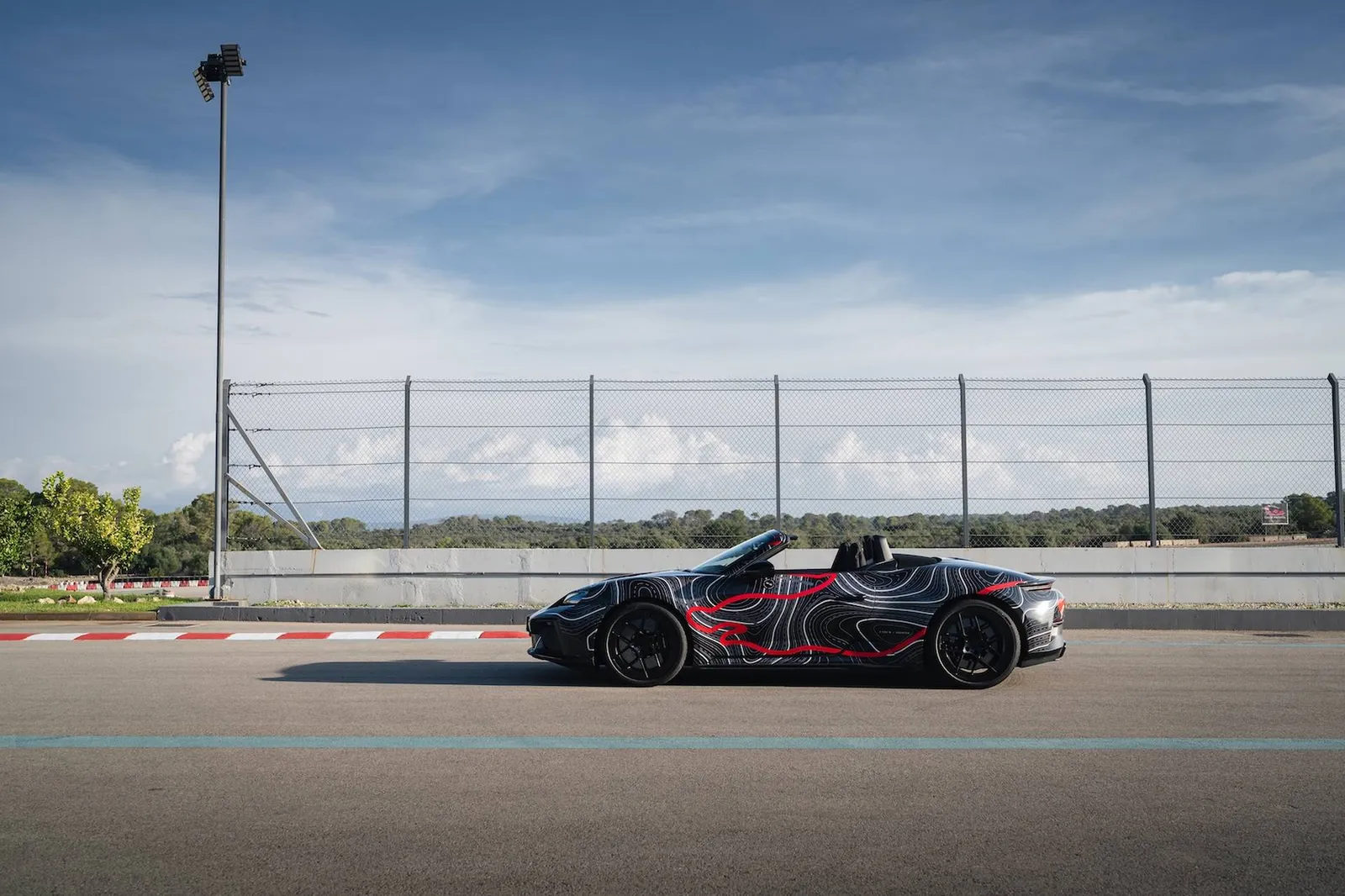
The real genius lies deep beneath the chassis: In the electric Boxster generation, the developers made extensive use of 911 components, providing the open-top sports car not only with its fundamental front and rear axle architecture but also borrowing its steering system and braking setup from the performance-oriented Carrera GTS. Equipped with a rear-wheel steering system installed for the first time in a compact roadster and a battery positioned low in the back, the Boxster becomes an incredibly agile toy on tight curves.
Yet an outstanding suspension is ultimately just a powerless skeleton if its “heart” remains silent. It is here that the great Weissacher Opera reaches its climax: the E-Shift system. This acoustic deception technique does not merely simulate gear shifts; it creates a highly mechanical drama. From the moment it starts, the Boxster enters a slightly uneven idling state, vibrating with subtle nervousness that reaches the floor pan and steering wheel rim. When the steering wheel is turned, the electronics respond with delicate interruptions in steering force, noticeable pulses in the lower back, and a trembling tachometer needle in the cockpit.
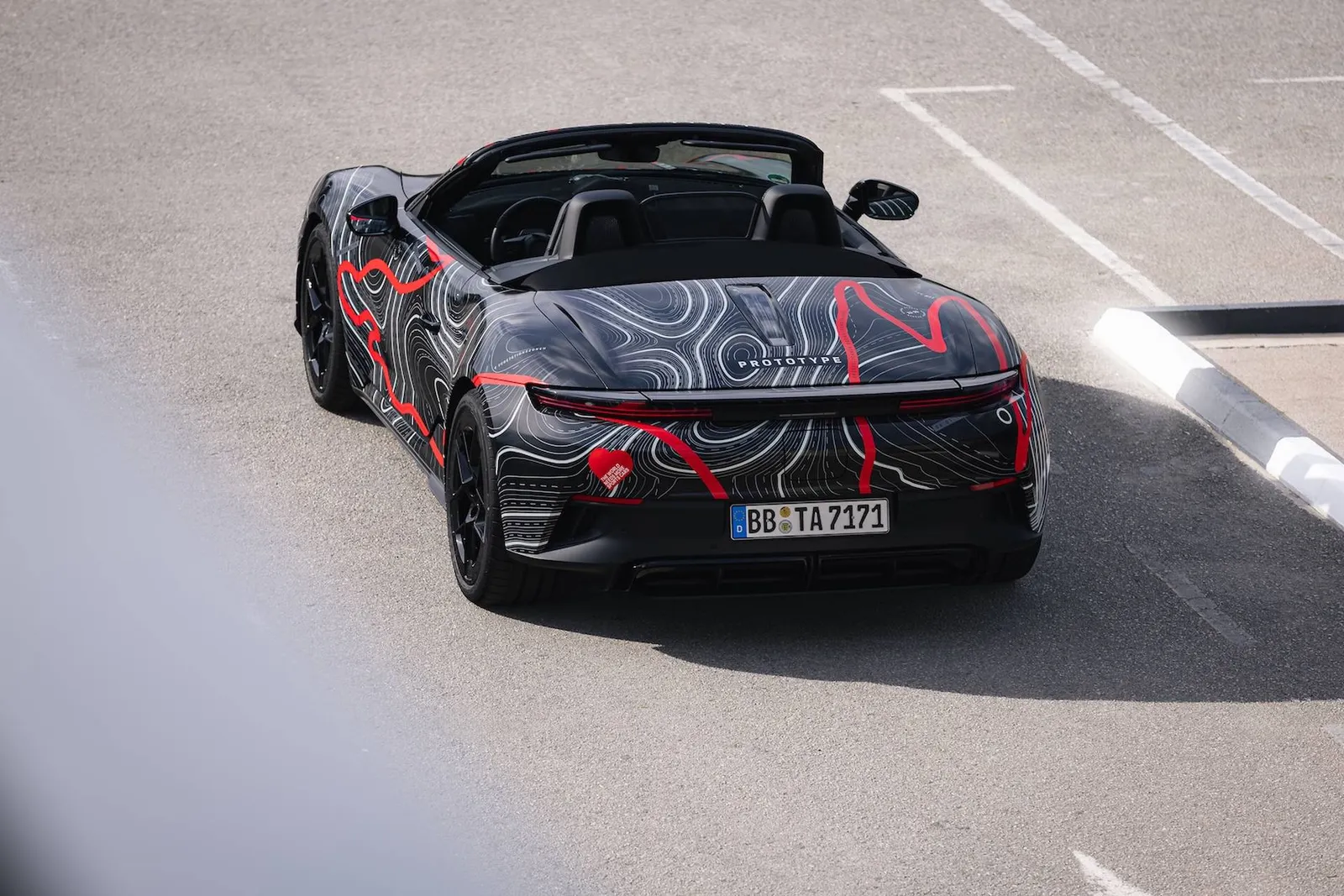
The electric sound is tuned with such precision to match the well-known boxer engine sound of the past that it’s truly astonishing. The 3.4-liter six-cylinder engine from the 981 generation was acoustically analyzed in meticulous detail over weeks to capture every aspect as a GTS model. Every operating condition of this character engine, even without a catalytic converter and with a sports exhaust system, was recorded using countless microphones and converted into bits and bytes, which are then translated by a control unit into the exact operating conditions of the electric Boxster.
The synth sound never plays a pre-recorded track; it calculates each engine load signal anew. As a result, every rev and exhaust noise sounds different. The clever part about this approach is that it works so well that in a blind test, 80 percent of current Boxster drivers would likely not be able to tell at first whether a real Boxer six-cylinder engine is running behind them or an electric motor handling the power. You downshift two gears before a sharp corner, let the fake rev limiter stutter at 8,000 RPM, and eagerly wait for the next gear shift, with the wind blowing away any remaining doubts.
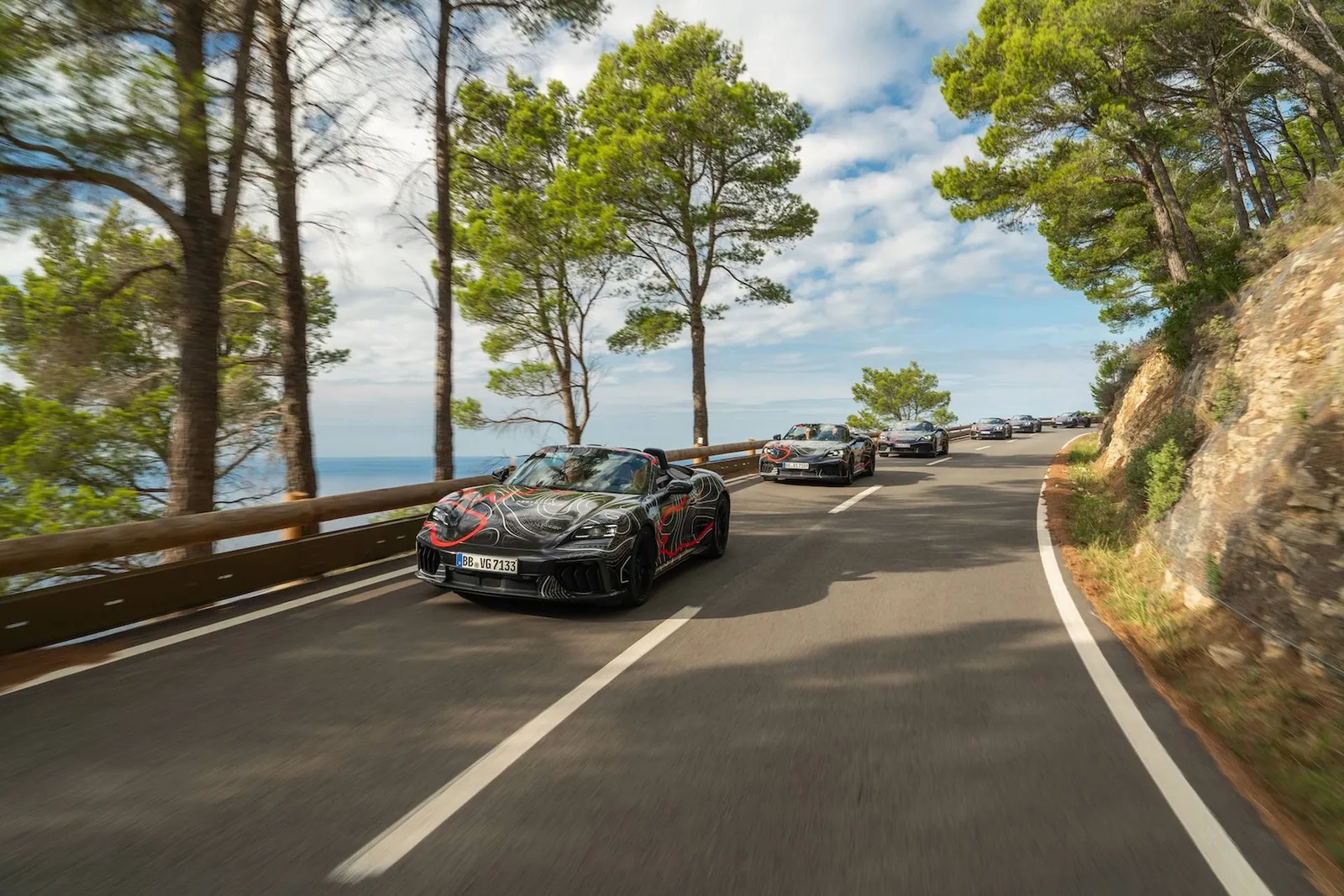
Because that is the truly valuable aspect of the E-Shift system: it turns a perfectly refined electric car back into a vehicle with character. Increasing torque as RPM rises, no unlimited power after pressing the accelerator, subtle vibrations, minor imperfections—the electric Boxster drives like a real Boxster. Some might consider this digital gimmick an affront in an era of synthesizers and algorithms. Yet those who sit behind the wheel of the new Boxster, smell the hot rubber, and navigate curves just above the asphalt completely forget about this digital recipe. The car burns with passion, delivering exactly that emotionally charged fire that was long thought extinct in the otherwise sterilely perfect world of electric vehicles.
Even Walter Röhrl gives his approval
Even Walter Röhrl, a legend of rally racing who has so far refused to offer any praise for electric mobility even for money, has given his approval after extensive test drives: This is how it can be built, and this is how it finally makes sense. Yet there remains this subtle detail: One must have driven the electric roadster themselves to believe in this automotive resurrection. Stories alone are not enough; one must experience it, hear it, feel it.
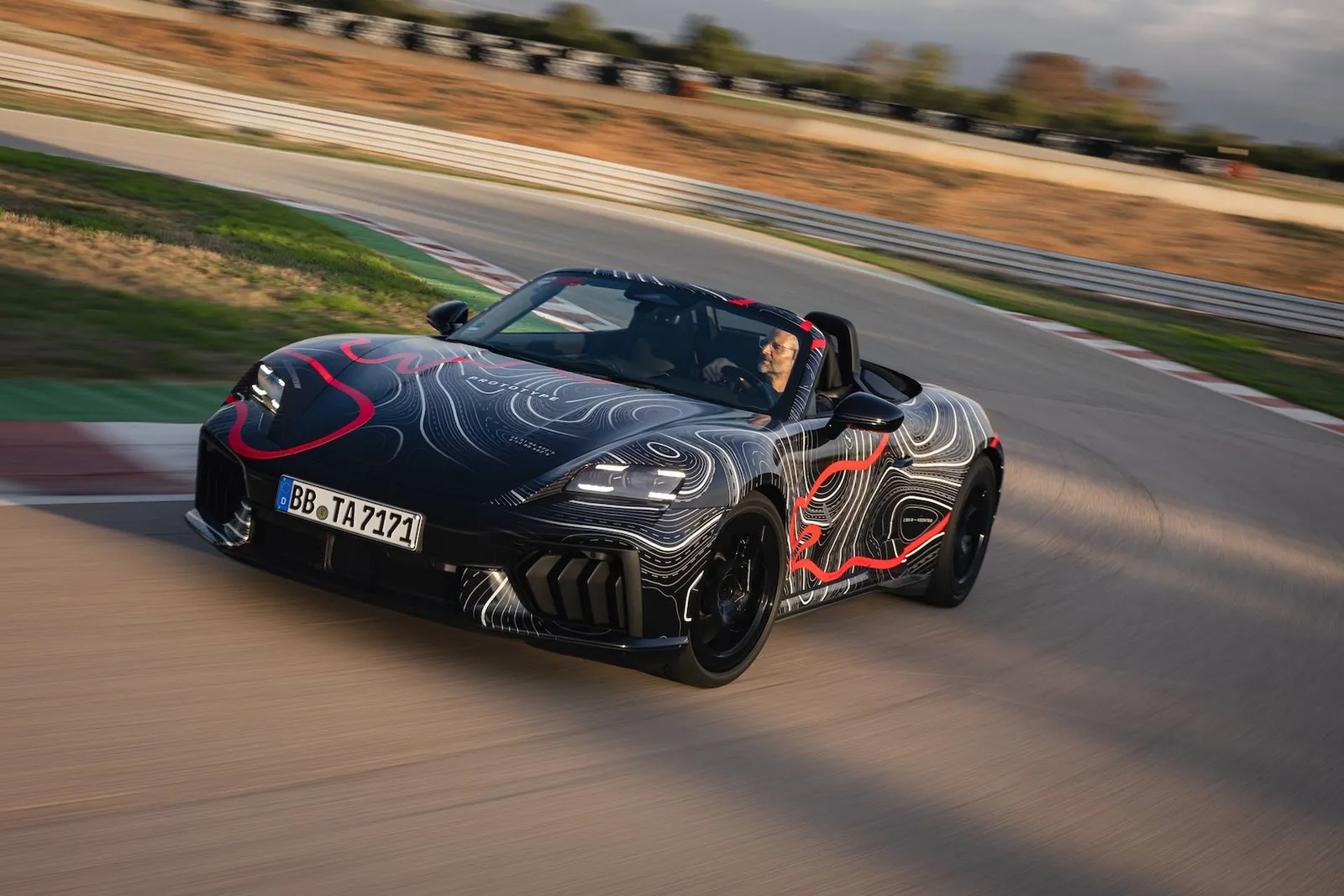
Because the electric Boxster is more of a Boxster and less of an electric car. Naturally, its range will be lower than that of a gasoline version—let’s assume around 350 kilometers if driven in a way that suits its nature. Of course, charging at a station will take longer than refueling with Super Plus before. But a Porsche isn’t meant to be an efficiency tool for hectic daily commutes. It’s about enjoyment, it’s about luxury, it’s about the beauty in life. It’s not the only vehicle in the garage, so it doesn’t need to handle the trivialities of everyday life. It’s meant to evoke emotions.
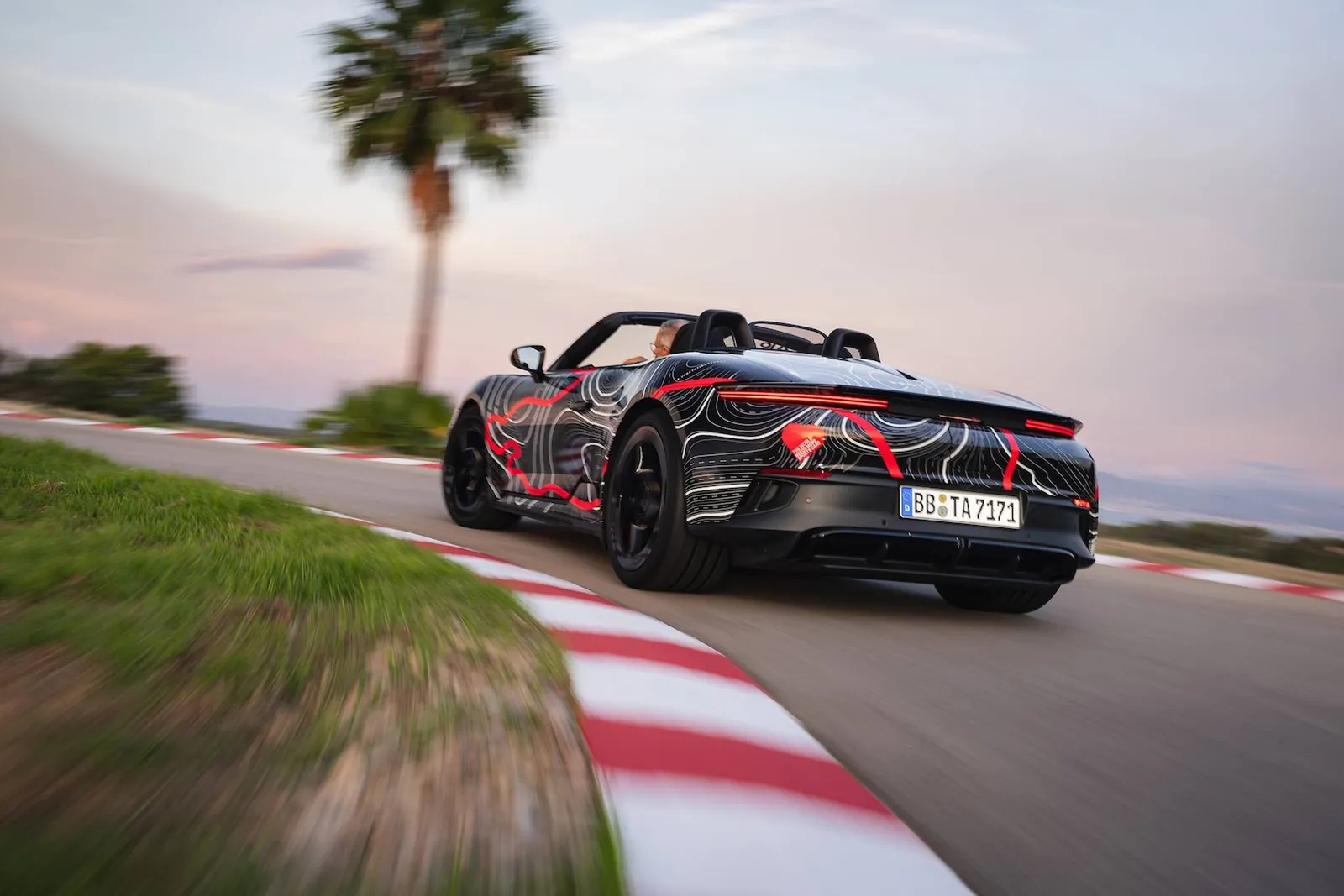
And he does the same as a racer, just as we expect from him. Perhaps even better, since the 911 chassis has really done well for him. Bet that after the first thrilling drive, even the most hardened critics get a romantic feeling when getting out of the car? The fact that all this can be bought for under 100,000 euros must be an additional incentive, as it remains well below the price of its bigger brother model.