
VW prepares battery recall for multiple ID. models in Europe
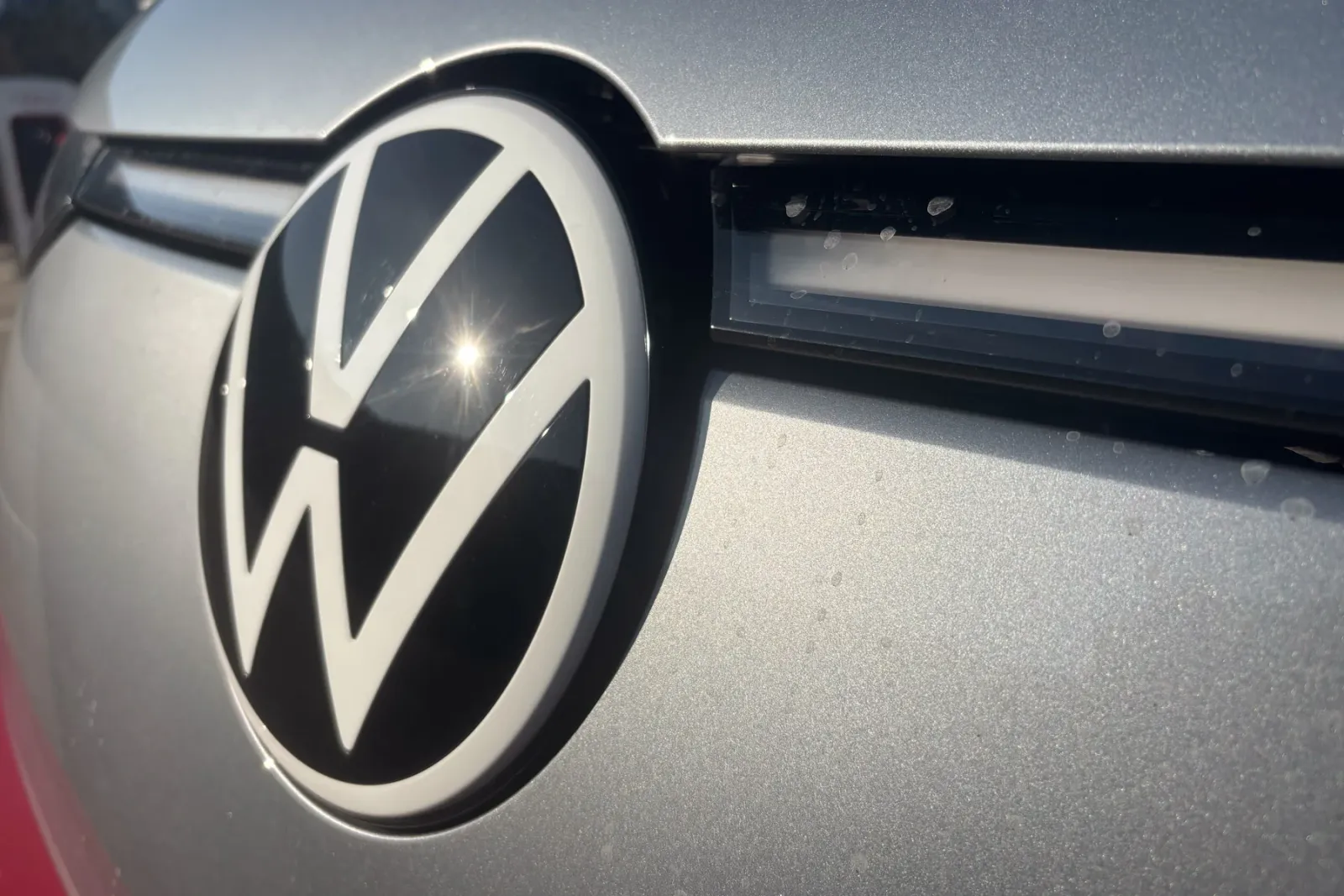
Volkswagen is preparing a recall of several electric series in Germany and other European markets due to potential defects in high-voltage battery cells. As a precaution, they recommend that affected vehicles should only be charged up to 80 per cent.

VW is preparing a recall of several electric series due to possible cell defects.
Image: Sebastian Schaal
Affected vehicles may include those produced between 2023 and 2025, such as the VW ID.3, ID.4, and ID.7, as well as the ID. Buzz and several thousand Cupra Born. According to _Handelsblatt_, Škoda models are not affected. Volkswagen confirmed that recall actions are forthcoming in principle but has not yet disclosed the number of units or specific models affected.
The issue stems from potential production defects in individual high-voltage battery cells. Internal quality checks revealed that cells in certain ID. family vehicles fail to meet quality standards due to manufacturing errors by suppliers, a VW spokesperson told media representatives. In rare cases, affected cells could overheat, and in extreme instances, there may even be a fire risk.
As an immediate safety measure, Volkswagen plans to limit the maximum charge level of affected vehicles to 80 per cent via an over-the-air update. Owners will receive further instructions in the coming days. As of Thursday, no corresponding recall had yet been published by the German Federal Motor Transport Authority.
Recall now underway in the UK
In the UK, Volkswagen has already identified the ID.3, ID.4, ID.7, ID. Buzz, and ID. Buzz Cargo as affected. The action there pertains to high-voltage batteries from a specific supplier produced between 2022 and 2025. Here, too, the charge level will initially be limited to 80 per cent.
The nature of the permanent repair remains unclear. Workshops are to inspect the high-voltage battery or individual cell modules in suspect vehicles. Volkswagen is expected to refine the list of affected vehicles based on production period, battery supplier, and cell batch.
Thus, the previously mentioned scale should be treated with caution. Between 2023 and 2025, approximately 660,000 ID.3, ID.4, ID.7, and ID. Buzz vehicles were newly registered in Europe, including around 210,000 in Germany. However, the actual number of affected vehicles is likely to be significantly smaller.
The 80% limit should be distinguished from Volkswagen’s standard Battery Care Mode. While the latter limits the charge level in daily use to preserve the battery, the current measure is explicitly a safety precaution.
In the US, another battery recall is already underway for 22,524 ID.4 vehicles from model years 2023 to 2026. There, too, Volkswagen recommends charging the vehicles to a maximum of 80 per cent until a permanent solution is available. The manufacturer identifies SK Battery America as the supplier of the affected battery cells. The exact cause remains unclear; according to Volkswagen, certain charging profiles above 80 per cent could promote thermal runaway within the battery.
These should be distinguished from two earlier US recalls from early 2026, covering a total of 44,551 ID.4 vehicles. These affected only vehicles from the Chattanooga plant with battery cells from SK Battery America in Georgia. Causes included misaligned electrodes in individual cells. The European ID.4 models from Zwickau and Emden used different battery cells and were explicitly not affected by these actions.
Whether the cell issue now identified in Europe is technically related to any of the US actions remains unclear. This distinction is crucial for classification, as the same cell supplier may be involved in some cases, but the known error patterns are not identical.