
A new zinc-air battery exceeds 300 hours of operation and aims to be an alternative to lithium.
Zinc-air batteries have been an interesting alternative for years due to their ability to store energy and their use of relatively abundant materials. However, there is a barrier that has limited their development: enabling them to be recharged efficiently and maintaining their performance after numerous cycles remains a challenge for researchers.
A team of chemists from Darmstadt University of Technology in Germany has developed a new material that could help overcome this obstacle. The research focuses on improving the chemical reactions that occur within these batteries, with the goal of achieving more stable and durable operation. Results obtained in the laboratory suggest potential applications in storing renewable energy.
A hybrid catalyst to improve zinc-air batteries
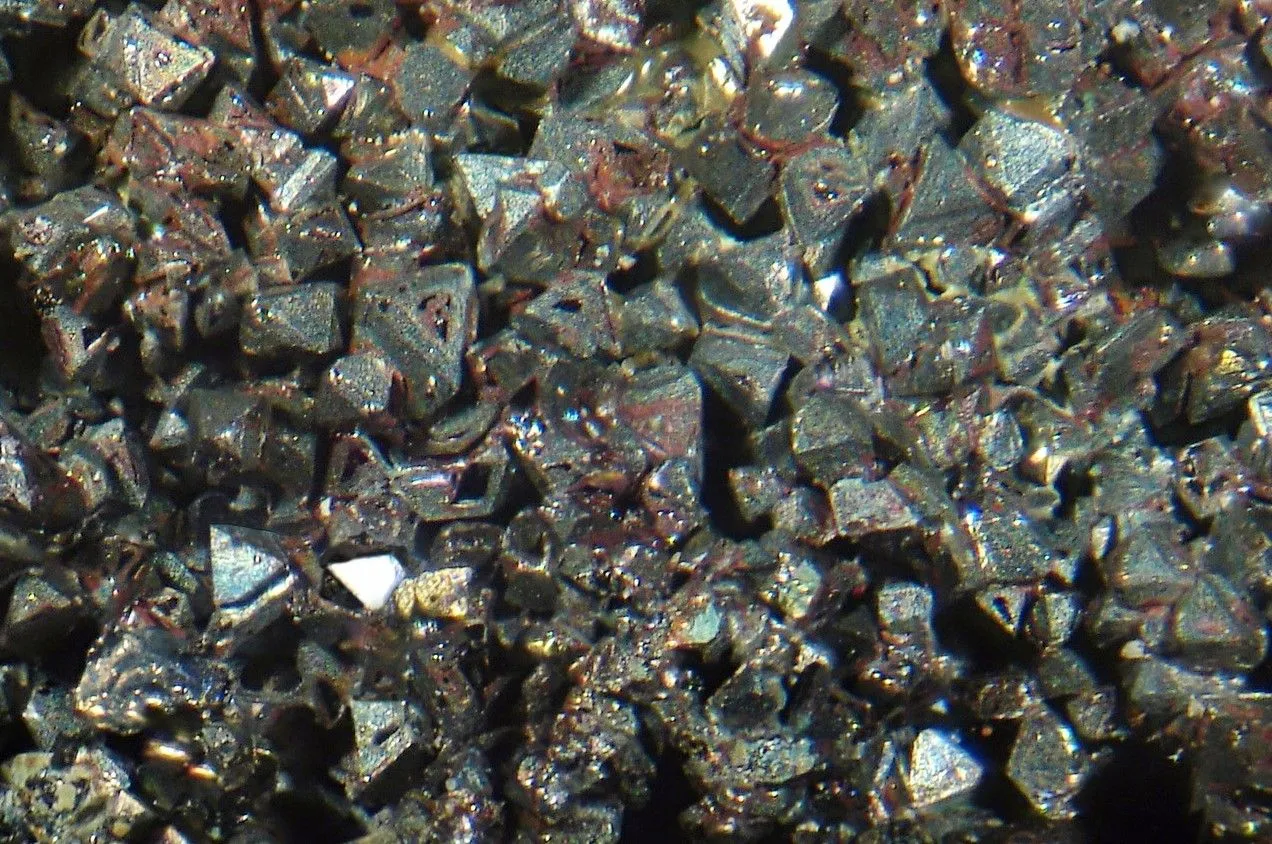
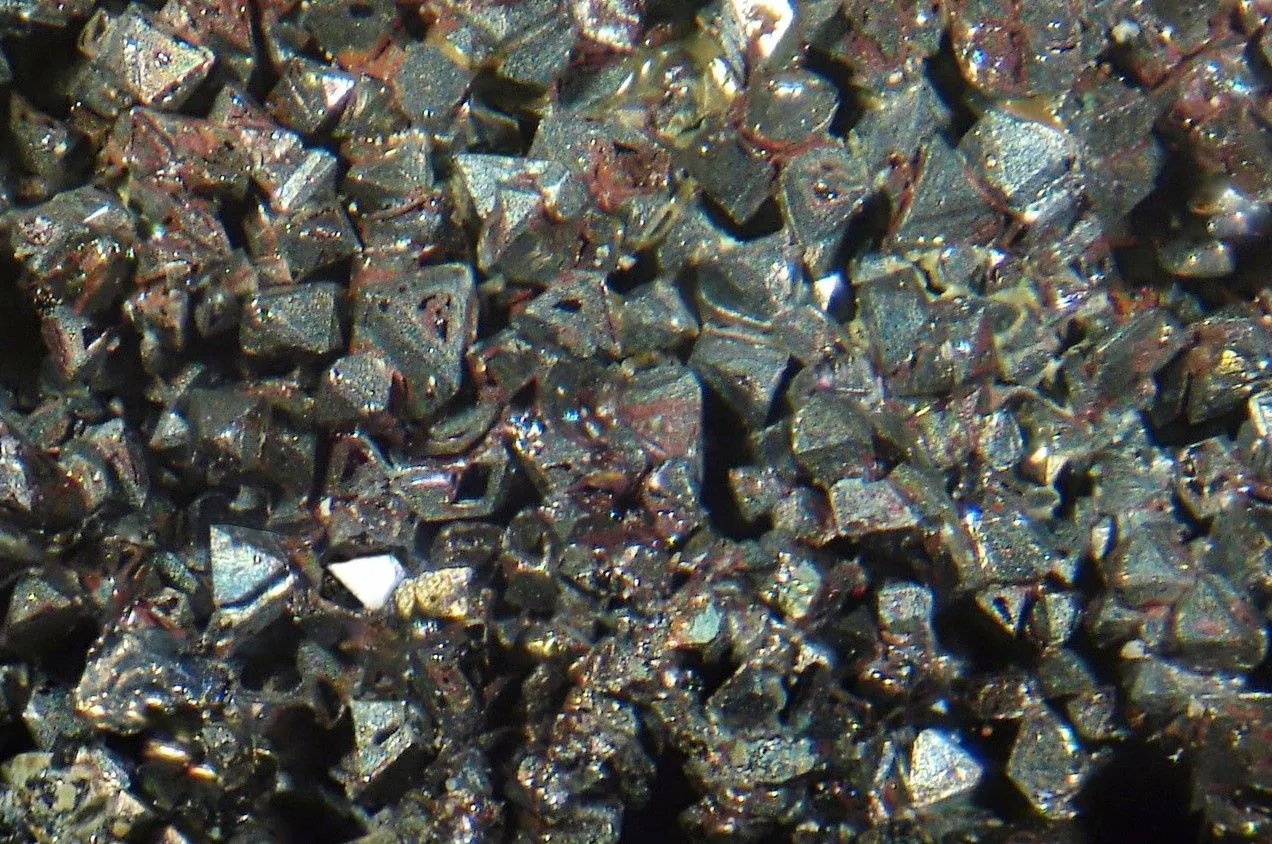
The key to this advancement lies in a catalyst composed of iron, nickel, and carbon. The team led by Professor Jörg J. Schneider combined nanoscale nickel ferrite particles with a carbon structure modified using nitrogen and phosphorus. This configuration enhances the material’s activity while keeping the chemical reactions necessary for charging and discharging the battery under control.
Nickel ferrites had already been studied as catalysts to facilitate oxygen reactions in rechargeable zinc-air batteries. The problem was that these materials had limited chemical activity and could lose stability during operation. To address this, researchers incorporated the small particles into a carbon structure shaped like nanohorns, which helps keep them dispersed and prevents them from aggregating or dissolving too easily.
This carbon coating also facilitates the transport of electrons and substances involved in electrochemical reactions. At the same time, it provides more active sites for these reactions to occur. The result is a hybrid catalyst designed to operate for longer periods without losing efficiency, which is one of the key requirements for zinc-air batteries to become a viable option for energy storage applications.
In the tests conducted, the material achieved a half-wave potential of 0.79 volts and a Tafel slope of 56.5 millivolts per decade, two parameters used to evaluate the behavior of electrochemical catalysts. It also favored a four-electron oxygen reduction pathway, a process important for improving the efficiency of reactions that occur within the battery.
The results were equally promising when the catalyst was integrated into a complete cell. The battery achieved a maximum power density of 54 milliwatts per square centimeter, compared to 28 milliwatts per square centimeter used as a reference for conventional platinum and ruthenium-based catalysts. This comparison indicates a significant improvement under the study’s experimental conditions, though it does not by itself mean the system is ready for commercialization.
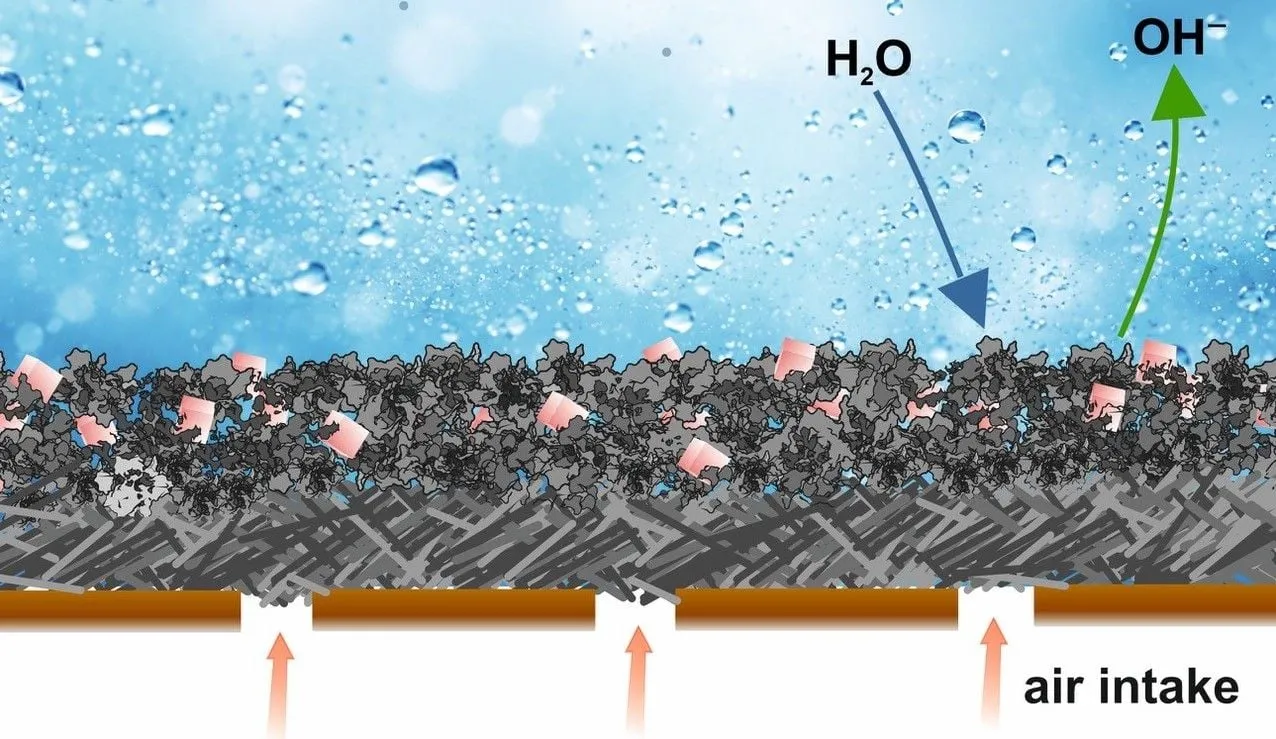
The most striking result came during the charge and discharge tests. The zinc-air battery managed to operate for over 300 hours in laboratory experiments under constant current cycles. According to the researchers, the new catalyst helps stabilize what is known as the triple interface—the area where the solid catalyst, liquid electrolyte, and oxygen from the air meet.
Keeping this interface stable is essential for reactions to proceed in a controlled manner. If the catalyst loses its activity or deteriorates, the battery’s performance can decline and its lifespan may be compromised. The new material is designed precisely to avoid such issues and maintain more consistent operating conditions over extended periods.
A solution for storing renewable energy
Zinc-air batteries offer several potential advantages over lithium-based technologies. Zinc, iron, and carbon are relatively abundant materials, which can facilitate raw material supply and reduce costs. Additionally, these batteries can use non-flammable aqueous electrolytes, a feature that reduces certain risks associated with fires caused by battery overheating.
Their ability to store large amounts of energy relative to their weight also makes them an interesting technology. However, it is important to distinguish between the theoretical possibilities of zinc-air chemistry and the performance of a complete commercial battery. Energy density, available power, charge and discharge efficiency, and actual lifespan depend on the design of each system and operating conditions.
To date, zinc-air batteries have been used mainly in small devices such as headphones, where their storage capacity is useful and frequent recharging is not necessary. Developing rechargeable versions has been much more complicated due to the difficulties in controlling chemical reactions during charge and discharge cycles.
The progress made by Darmstadt Technical University addresses an important aspect of that problem, but there are still issues to resolve before considering large-scale implementation. The most significant ones include long-term durability, overall energy efficiency of the cycle, manufacturing costs, and the ability to maintain performance as cell sizes increase.
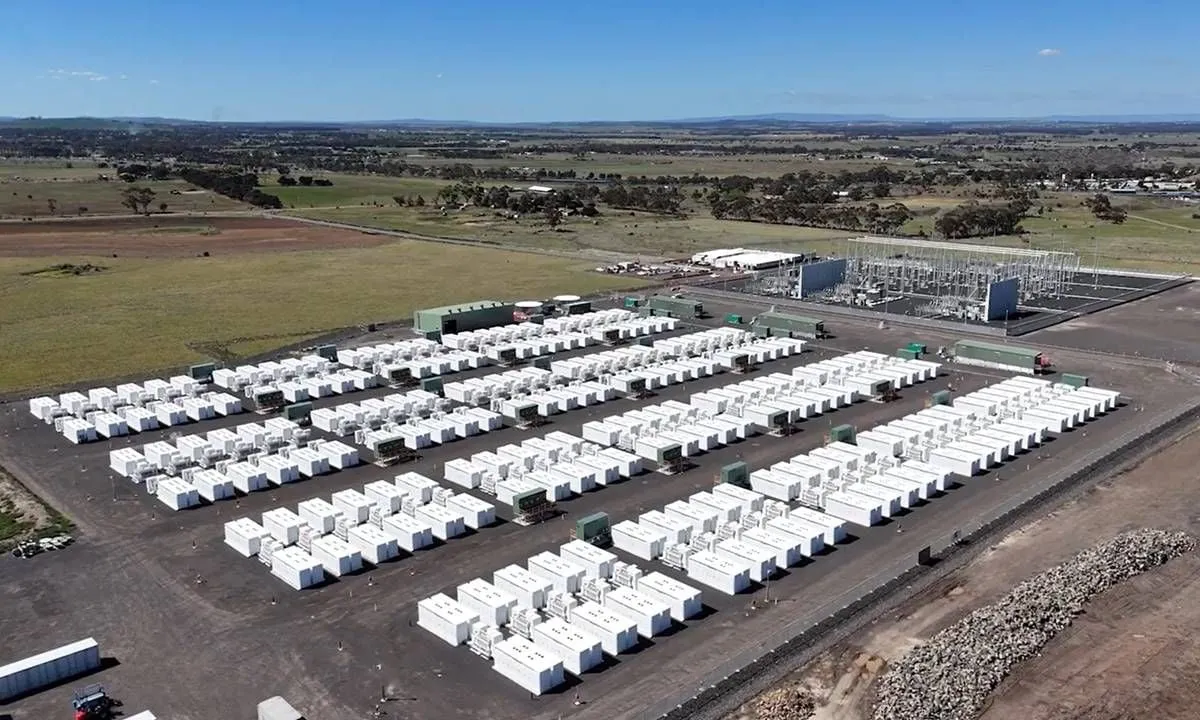
Due to its characteristics, stationary electricity storage is one of the most promising applications for this technology. Zinc-air batteries could help store excess power generated by solar and wind farms for use when generation is insufficient. In this context, material costs and safety can be just as important as the maximum power output provided by the system.
In the long term, their use in heavy transportation and electric vehicles could also be explored. However, the moderate power density and the challenges still associated with charging make it premature to consider them as a direct replacement for current vehicle batteries. To reach that point, it will be necessary to prove that the advantages observed in the laboratory are maintained in full-scale systems under real-world conditions.
Thus, this research represents a promising step toward more durable and easily rechargeable zinc-air batteries. The over 300 hours of operation achieved in tests demonstrate the catalyst’s potential, though the true technological breakthrough will come when it is possible to apply these results to larger-scale installations and prove their economic viability.