
An investigation reveals the darker side of electric car batteries: nickel may come from forests devastated in Indonesia
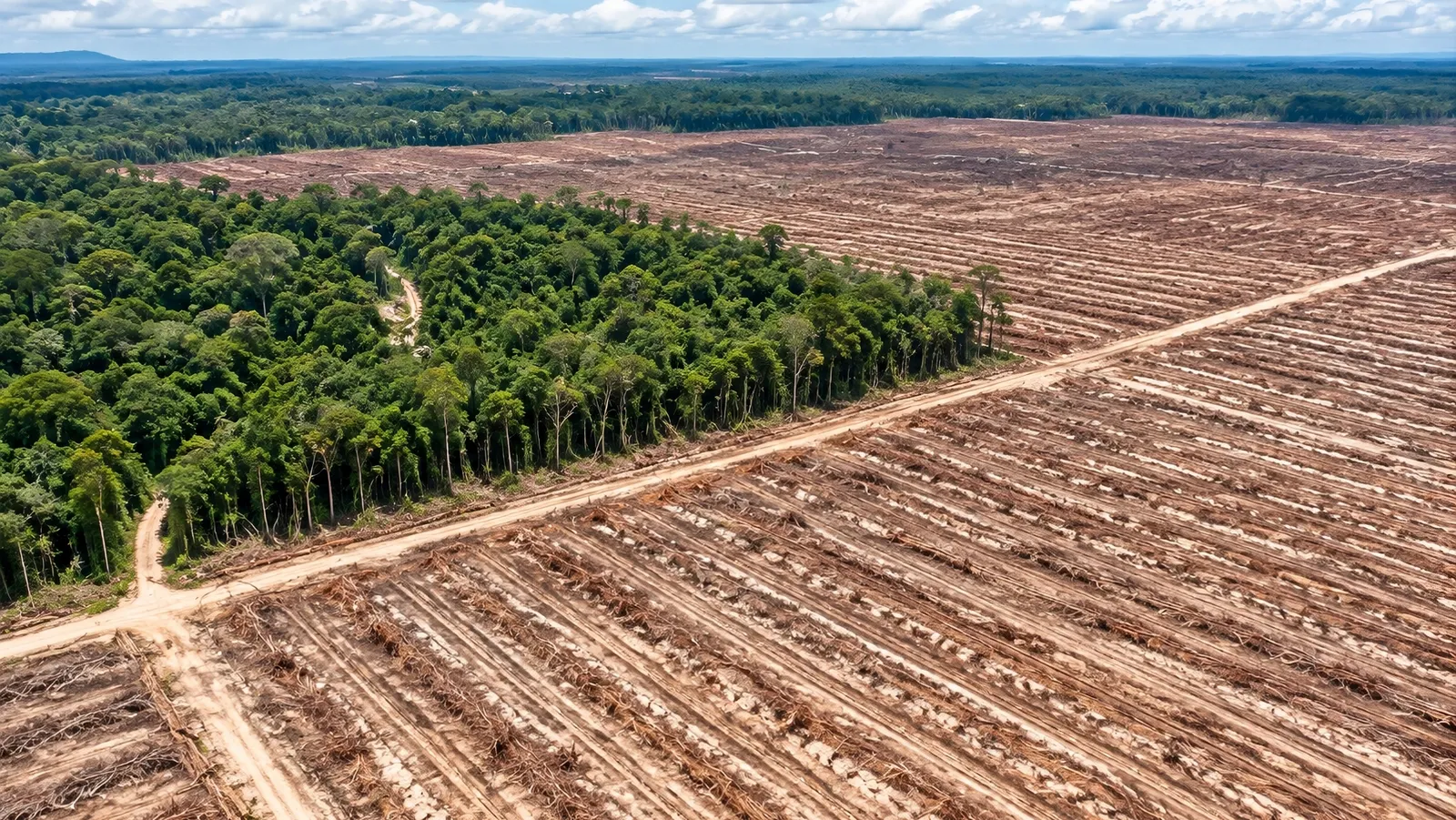
An international investigation has tracked the commercial flow of nickel used in batteries for two years, linking it to mining operations in Indonesia where significant deforestation of primary forests has occurred.
Electric vehicles eliminate exhaust emissions and can greatly reduce their climate impact over their lifetime compared to combustion engines. However, manufacturing their batteries requires enormous amounts of critical minerals, and this is where one of the less visible problems in the energy transition arises: knowing exactly where these materials come from.
A investigation published by The Guardian alongside Voxeurop and other European media has reconstructed part of that supply chain using commercial data, corporate documents, and satellite analysis. The study suggests that nickel from mines located on Indonesia’s island of Sulawesi could end up making up parts of batteries destined for some of the world’s largest automobile manufacturers.
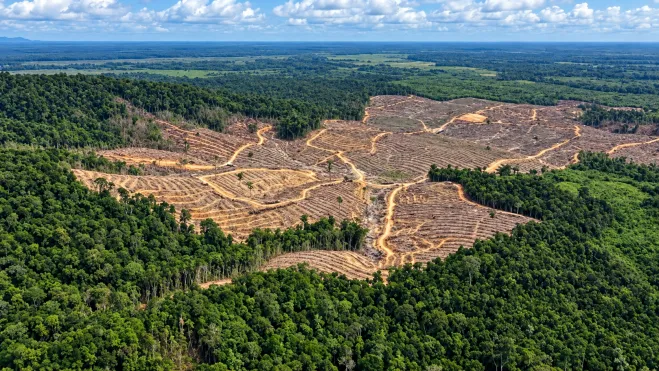
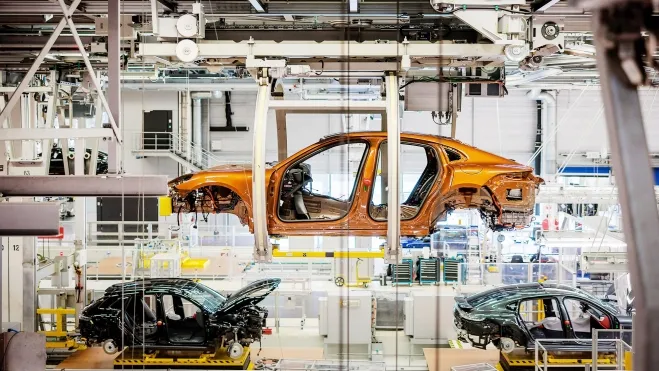
The researchers have been unable to prove that a specific shipment of mineral ended up in the battery of a particular vehicle, as public records do not allow tracking the entire journey with such precision. What they have managed to reconstruct are the connections between mines, refineries, manufacturers of cathode materials, battery producers, and ultimately, automobile plants in Europe and the United States.
From an Indonesian mine to electric car batteries
The starting point is the Cahaya and Hengjaya mines, located in Sulawesi, an island particularly rich in nickel and covered by extensive tropical forests. The mineral extracted from both mines is sent to an industrial complex in Morowali, where a local subsidiary of Zhejiang Huayou Cobalt converts the limonite into mixed hydroxide precipitate, known as MHP, a key raw material for producing certain cathode materials.
From there, it begins a journey of thousands of kilometers. In 2024 alone, the Morowali plant exported MHP to China worth $606 million, while shipments in 2025 reached another $470 million. The processed material is then transported to Huayou’s facilities in Quzhou and Yulin, where it undergoes further processing for use in batteries.

Huayou has also confirmed that it supplies materials to CATL, one of the world’s largest battery manufacturers today, while another of its subsidiaries has admitted to delivering large quantities to the Chinese company. The investigators also identified another business route that connects Huayou with LG through Poland. Both companies supply battery-related products to numerous international automakers.
The difficulty in establishing an absolutely direct link arises in this final stage. Public documents do not specify the volumes or exact dates of each sale from Huayou to CATL, so it is impossible to claim that nickel from a particular shipment originating from Cahaya or Hengjaya ended up in a specific battery. Therefore, the investigation refers to materials that may be present in those supply chains rather than absolute physical traceability to a particular vehicle.
Deforestation is at the origin of the chain
While the commercial pathway is complex, the impact on the land is much more evident. Satellite analyses used in the investigation show significant loss of primary forest within the areas where the mines operate, in territories inhabited by indigenous Tolaki communities.
According to the spatial analysis conducted by the specialist company The TreeMap, nickel mining could be responsible for around two-thirds of the forest loss recorded since 2001 in the area covered by the Cahaya concession. In the case of Hengjaya, it accounts for more than half of all forest loss recorded during the same period.
Indonesian organization Auriga further estimates that Sulawesi Cahaya Mineral, the operator of the Cahaya mine, contributed to the clearing of another 330 hectares of forest in 2024. That same year, the company delivered around 11 million tons of limonite ore to the Huayou complex, accounting for virtually all of its production, while shipments increased to nearly 12.5 million tons in 2025.
The company also received two administrative penalties for illegally cutting down more than 450 hectares of forest outside authorized boundaries. Sulawesi Cahaya Mineral belongs to Merdeka Battery Materials, which is part of a corporate group whose shareholders include Huayou and CATL.
The mines are located on land classified as “production forests,” areas primarily designated for forestry activities. However, according to research, successive Indonesian governments have introduced exceptions that allow mining activities to proceed as global demand for nickel grows.
Global demand for nickel will continue to rise
The problem could become even more significant in the coming years. Nickel is widely used in certain battery chemicals because it allows for increased energy density, thereby enabling greater range without increasing the size of the battery pack.
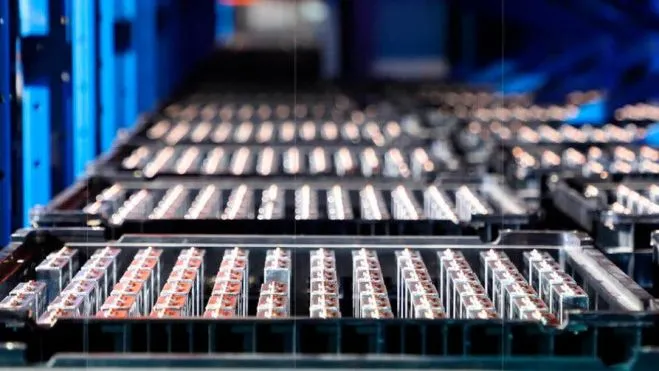
The International Energy Agency estimates that global demand for this metal could nearly double to around 5.5 million tons by 2040. A significant portion is expected to come from Indonesia, while China will continue to play a major role in its industrial processing.
Deforestation can also significantly alter the actual environmental balance of the mineral. The Guardian cites a study published in Nature Communications that concluded that in areas with the highest forest loss, the carbon footprint associated with nickel production could be hundreds of times higher than traditional estimates that do not fully account for this change in land use.
This does not mean that electric cars are globally more polluting than combustion vehicles. The research itself notes that electric cars have a lower environmental impact than those that burn fossil fuels, especially during operation. The challenge lies in reducing the impact of extracting the materials needed to manufacture their batteries as well.
The manufacturers consulted by The Guardian acknowledge the risks associated with the nickel supply chain, although they state that they do not purchase the mineral directly from mines and that they require certain environmental and social standards from their suppliers.
The study does not prove that nickel extracted from these mines necessarily ends up in a specific car, but it does reconstruct a commercial chain that links mines associated with severe deforestation to some of the world’s major battery suppliers, and through them, to the automotive industry. Traceability of raw materials thus once again emerges as one of the major challenges ahead in the transition to electrification.