
Testimonial – After two new Renault Mégane electric cars, here’s why this couple switched to two used Teslas
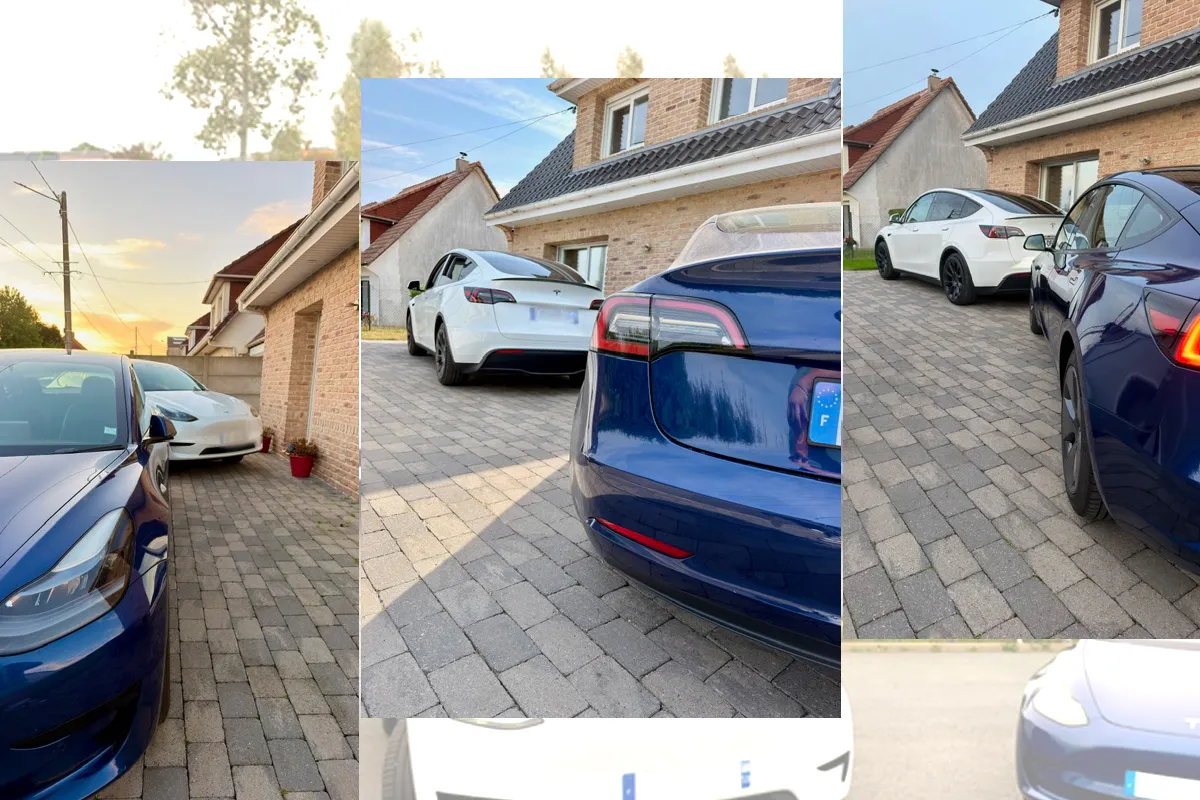
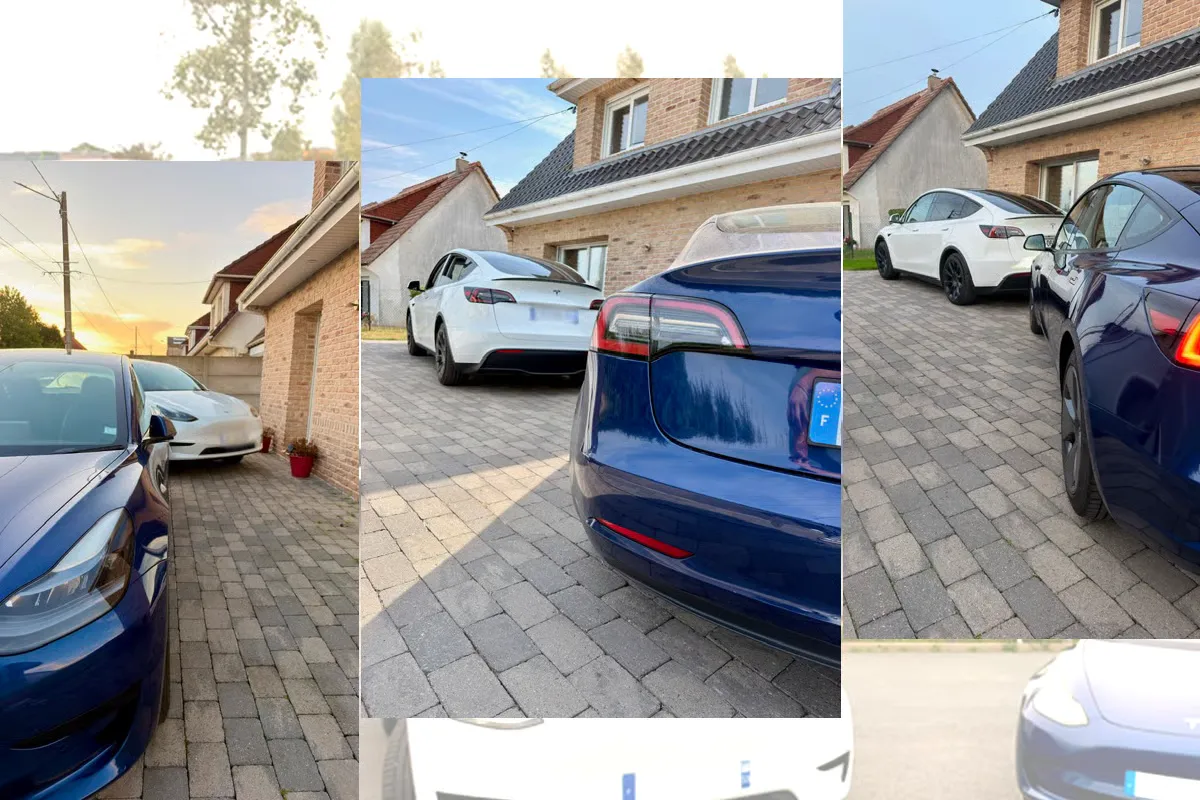
For both personal and professional trips, Benjamin can travel up to 50,000 kilometers per year with his Tesla Model Y. Meanwhile, his spouse drives 25,000 kilometers in a Model 3. This testimony provides an interesting comparison with the Renault Mégane E-Tech, the family’s first electric cars purchased at the same time and which left an overall very good impression... if one overlooks their early-stage issues.
At 37, Benjamin from Calais has grown accustomed to choosing cars that are enjoyable to drive, especially for long trips: “I’ve always liked models with powerful engines. After my Audi RS3 and Golf GTI, I had a 300-horsepower Seat Leon Cupra. When I got a promotion, I was clearly warned that I’d have to drive a lot for work—around 35,000 kilometers per year to get to the office, visit clients, attend trade shows, or go to meetings like ones in Nantes [NDLR: about 600 kilometers away]. Not to mention my personal trips.”
What really made our reader think was this: “In five years, my Seat Leon Cupra had already covered 170,000 kilometers. That was a lot, and I didn’t imagine asking for more from it. Then there was the financial aspect. Running on ethanol, this car averaged 15 liters per 100 kilometers. Wasn’t it time to switch to an electric car? Among our friends, we had those with Renault Zoé and Tesla Model 3 who boasted about driving cheaply. After doing a lot of research, it became obvious to me that it would be a good choice, especially since I’m quite tech-savvy.”
Also read
Testimonial – After 5 electric cars, Olivier found one he considers almost perfect
The first test quickly confirmed everything: “It was a Tesla Model 3 SR+. It accelerated less powerfully than my Seat Leon Cupra, but it still performed very well. The friend who lent it to me assured me that charging its 55 kWh battery cost only 7 euros. That definitely convinced me to switch to electric vehicles. At that time, to qualify for the maximum 7,000 euro subsidy, the price of an electric car had to be under 45,000 euros. So I tried several models that fell within that range.”
Tesla Model 3 ruled out because it became too expensive
Among the other models Benjamin tried included the Hyundai Ioniq 5 and Kona, Kia e-Niro, Volkswagen ID.3, and Renault Megane E-Tech: “I still decided on the Tesla Model 3. But when I tried to order it in June 2022, its price had risen to 50,000 euros, making it ineligible for the subsidy. I even went to the Tesla Center near Lille, where they confirmed that the prices had been updated just three days earlier. In that case, a lease plan covering 30,000 kilometers per year became unaffordable. So I gave up on this model.”
The plan was revised: “My spouse also drives a lot in his Volkswagen Golf 7 TDI, around 25,000 kilometers per year. He really likes creating Excel spreadsheets. He also realized that it would be more cost-effective for him to have an electric car. On my end, I spent 600 euros on fuel, while he spent 300, plus 450 euros in loan repayments. We thought we could use that money for something much better. At the time, we were used to buying cars that we kept for four to five years.”
Model change: “Our second choice was the Renault Megane E-Tech. In terms of overall performance, it was slightly below the Model 3, but we were impressed by its interior design. It really gave us a ‘wow!’ effect. For this decision, we also relied on the satisfaction of friends who drive Zoés. We thought we shouldn’t have any problems with Renault. For both Megane models, we opted for a four-year lease with a total mileage limit of 120,000 km. Shorter terms were too expensive.”
A long trip the very next day
The two Renault Megane cars were not the same color: “Mine, received on August 5, 2026, was gray rafale, while my spouse’s was black, delivered a few weeks later. But both were in the Iconic Super Charge version. Since I drive more, we planned to switch between the two cars when mine had accumulated too many miles. We were promised battery preconditioning at the dealership, that it was standard, and it was actually mentioned in the brochure. Unfortunately, this wasn’t the case at delivery.”
This incident doesn’t erase all the satisfaction I’ve experienced: “On August 6, 2022, the day after receiving my Megane, we were supposed to visit friends in Düsseldorf, Germany, starting from Boulogne-sur-Mer, about 450 kilometers away. Should we take my spouse’s Golf or try a long drive with the Megane right away? We decided to get going as soon as possible and didn’t encounter any problems. I had five or six charging cards with me along with an Ionity subscription. In the planner, I set it to prioritize stations from that network as well as Fastned stations.”
Up to 1,300 kilometers per day
There were some very pleasant surprises regarding charging during this first long trip: “With the Ionity and Fastned apps, it all worked automatically at the stations. Before we left, I watched videos on YouTube to ensure everything would go smoothly. In Düsseldorf, we charged at 22 kW AC chargers in an underground parking lot. Only the ChargePoint card worked, but our account wasn’t charged at all. Yet it was actually expensive, with the cost per kilowatt-hour being 0.60 euros. In the end, we were able to charge there for free for three days.”
In Germany, the Renault Megane electric really caught people’s attention: “It was the first one people had seen. Plus, French drivers coming from northern France in electric cars in 2022 attracted quite a few people to us. Even though we only took 45 minutes longer than with a conventional car, many thought it took us two days to reach Düsseldorf. And the car’s design was very appealing. “In Calais too, where we only saw electric cars from the regional council, we had a lot of interactions.”
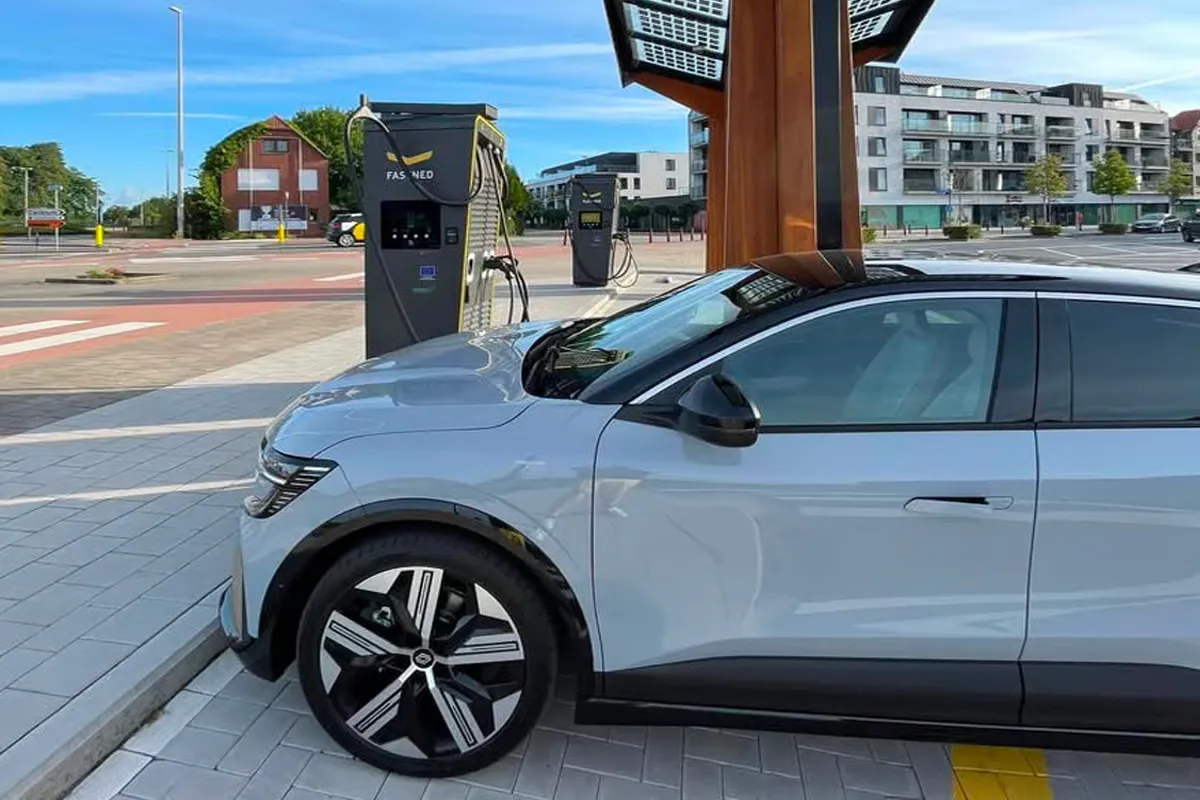
The Megane of our reader and his companion has traveled a lot: “With it, we have gone to Caen, Perpignan, Toulouse, Montpellier, and Nantes in a single day, as well as abroad. In England, for example, we visited London, Birmingham, and Canterbury. We’ve never encountered any issues with charging or waiting times. Ah, once, just five minutes while heading to Montpellier. We really haven’t experienced what is sometimes shown on TV, as we have had to travel for days during major trips.”
One-Year Early End to LOA Contracts
The very first Renault Megane electric vehicles experienced many repairs in their first year: “Mine went in 10 times, and the other one 15. It started after 6,000 kilometers for one and 15,000 kilometers for the other, with problems related to the shock absorbers and their bushings. There were grinding and clunking noises. Renault even issued a recall later. The latch on the charging port broke on both Megane models every time it was cold outside. There were also plenty of software system glitches. It was frustrating and disappointing for such new cars. My car even required its adaptive headlights to be replaced.”
This was not the reason why the LOA contracts for these two cars were terminated a year early, however: “Despite all the visits to the workshop, we were satisfied with our Megane cars. But both of them had already covered over 100,000 kilometers. So we bought them back and then resold them shortly after at a lower price, but that was nothing compared to the thousands of euros saved over time compared to conventional cars. The battery’s SoH status was 94% for one and 93% for the other, even though they had been charged quickly many times.”
In detail: “At 103,000 km, mine was sold for 18,000 euros, after a buyback at the end of the lease agreement for 21,500 euros. My spouse’s car had 101,000 km; it was bought back for 21,800 euros and then resold immediately for 18,500 euros. That’s already much better than the 15,000 euros that Renault dealerships were offering us. The buybacks were straightforward, but it took a bit of time. By February 2026, when we sold these cars, fuel prices were starting to rise. Both electric Megane models were sold in just over three weeks.”
Ready for 350,000 km with the two Teslas
Benjamin briefly explored the new electric models that have entered the market: “I looked at Xpeng, BYD, Skoda, and Volkswagen. But given our mixed experience with the Megane, we decided to stick with our original choice: Tesla. We’ve ended the lease agreement in favor of buying a used car, which won’t have issues with exceeding the mileage limit specified in the contract. I bought a 2024 Model Y Propulsion with 30,070 km on the odometer for 34,000 euros on February 21, 2026. It’s equipped with BYD’s Blade batteries. It has EAP and a tow hitch that allows us to take our bicycles with us. Its odometer now reads 60,000 km.”
The other vehicle is older and has more mileage: “It’s the second car in the household, a 2022 Model 3 Standard with 110,000 km on it when purchased, paid 23,000 euros for in March. Both are certified used Tesla cars. The Megane’s good state of health after over 100,000 km and many fast charges gave us full confidence in electric vehicles. Also, we have people around us who are very satisfied with their highly mileage-driven Teslas. For example, a ride-hailing driver who owns a Model S with already over 500,000 km and a Model X with 350,000 km.”
EVs offer savings not only in terms of energy: “It applies to maintenance too. At Renault, service visits cost 250 euros, which isn’t excessive. But they were required every year or after 30,000 km. It’s more convenient with Tesla: there’s no such maintenance obligation. However, this doesn’t mean the brand’s models don’t need maintenance, contrary to what many think. We’ve decided to keep these two cars for as long as possible, hoping to reach at least 300,000 to 350,000 km.”
More economical than the Megane
The Tesla Model Y is also used quite intensively: “In fifteen days, we traveled 4,000 km despite its small 60 kWh battery, going from Calais to Fréjus, then to Megève, before returning. We’re really very happy with it. It’s a whole level above the Renault. There are no ambient LED lights, sure, but it offers a completely different experience. Everything is controlled through the screen, and everything is easily accessible. With the Megane, we had Apple CarPlay available all the time. That’s not possible with Teslas, but we don’t miss it, because everything is well designed and well managed.”
Benjamin also thinks about the calculator: “It’s extremely accurate, constantly recalculating the remaining range based on actual usage. It was already very good in the Megane models, accurate to within 5%. I had never used any French brands before, and I was truly impressed by what Renault offers today. With Teslas, we’re even happier, especially with regard to efficiency. On long highway trips, we use 18-19 kWh per 100 km, compared to 21 with the Megane. For daily commutes, it’s 16 kWh, whereas it was 18 with the Renault. So the Tesla is more economical.”
Our reviewer also really likes the regular updates: “Some mornings, it feels like we have a different car. For example, we just received the Halloween update — it’s fun! The background features a cemetery with a manor. When locked, the car makes a ghostly sound. And with the sentinel mode, anyone who approaches is greeted by screams. That’s the fun side of these cars. The Model Y is also enjoyable to drive and handles well for a large electric vehicle. My only complaint is the steering range in cities and underground parking lots.”
What’s next?
Today, Benjamin has no idea how he will replace the two Teslas in his family’s fleet: “It certainly won’t be any time soon, definitely not before 2031 or 2032. At that point, I think we’ll stay with Tesla, depending on how the brand evolves. I have a friend who, for work reasons, had to give up his Tesla for a Mercedes GLB that’s under 800 V. He’d like to go back to Tesla because he finds it more fun and has excellent road handling. Sure, the suspension is firm, but it’s not uncomfortable. It’s similar to BMWs and Volkswagens.”
Also read
Testimonial – Never again! Laurent was turned off by electric cars after his Tesla experience
Even back in the days of the Renault Megane, both cars could be charged simultaneously at home: “We have a Green’Up enhanced outlet and a 7 kW single-phase charger. Our annual household electricity consumption is around 35,000 kWh, with 70% used during off-peak hours. Today, for us, the EDF Tempo subscription remains the most attractive option.”
Our reader does, however, have a project that could change things: “I’m hoping for next year. We plan to install rooftop photovoltaic panels with a peak capacity of 9 kW, along with a storage battery. It will be a Tesla Powerwall.”
Automobile Propre and I would like to extend our sincere thanks to Benjamin for his excellent hospitality, great responsiveness, and very valuable insights shared after we asked our readers for their experiences.
For your reference, any offensive comments directed at our interviewees, their lives, choices, and/or ideas will be removed. Thank you for your understanding.
Author’s Note