
Stunning prototype: Tesla Roadster is expected to arrive in 2028
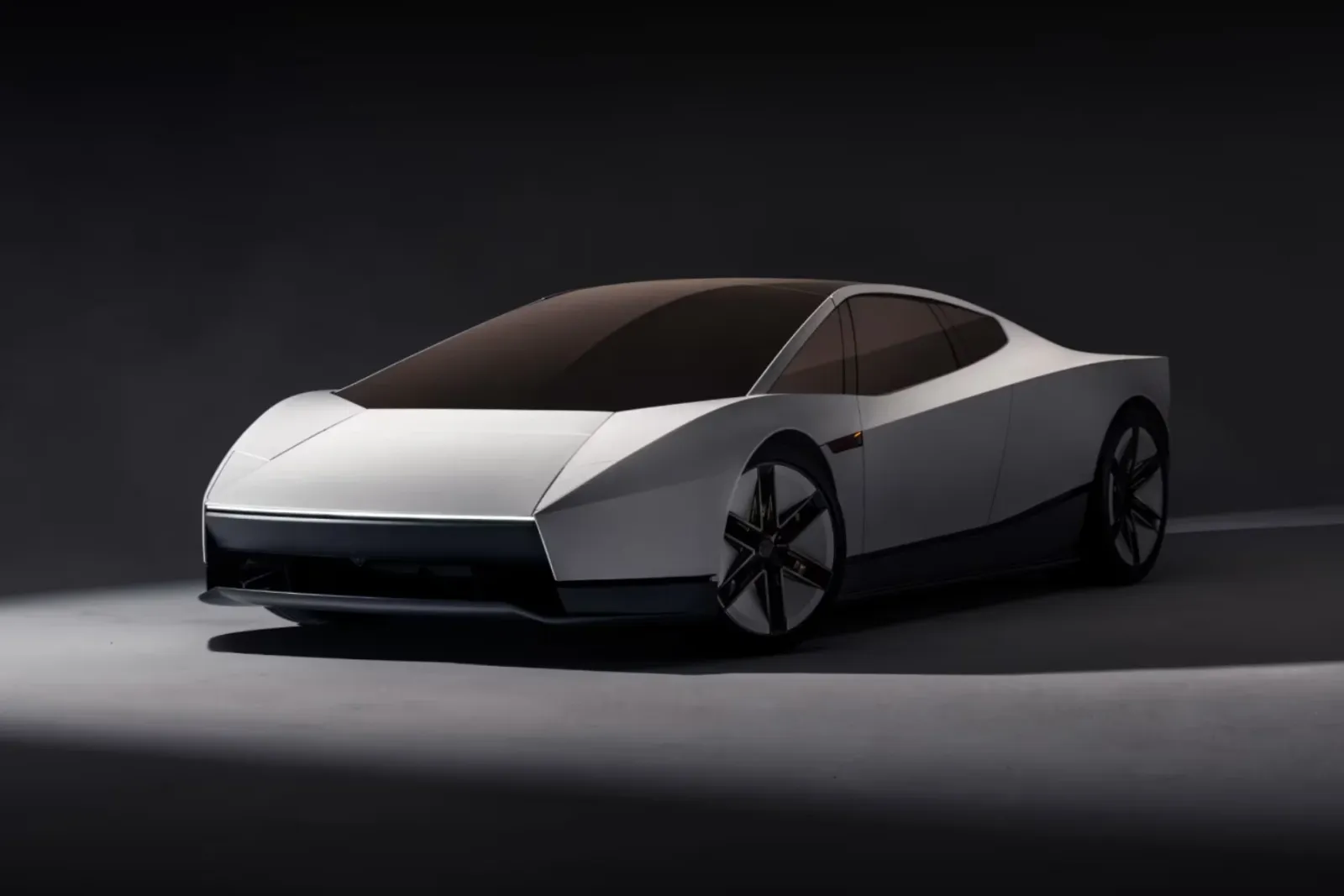
Tesla has organized a grand showcase for the presentation of its new Roadster in October 2026. However, not much remains of the first prototype that Tesla displayed back in 2017—neither in terms of appearance nor technology. Information on the technical details is still scarce. The presentation focused more on the features made possible through a partnership with SpaceX. But this has little to do with a car approved for road use in Germany.
Image: Tesla
Nine years ago, Tesla already introduced a new Roadster as a successor to the legendary first model. Since then, there have been repeated announcements and delays. Even the major showcase event in mid-October 2026, where the latest version of the Roadster model finally made its debut, took place 14 days late.
Yet those who are genuinely interested in a new Tesla model and eager to know the technical details will unfortunately have to wait longer. There is still very little concrete information about the production vehicle as it might appear on German roads in the future.
The reason for this is that the presentation of the next Tesla Roadster focused more on what Elon Musk had envisioned and actually brought to life in collaboration with SpaceX. From a technological standpoint and from the perspective of all die-hard science fiction fans, it was an impressive achievement (more on that later), but from a driver’s point of view, it wasn’t so much.
Spectacular Presentation of the New Tesla Roadster
So what happened outdoors at SpaceX’s test site in McGregor, Texas, on October 15, 2026? After presentations during which, among other things, the start of production was announced for “actually 2028,” the Roadster, designed to be as angular as the Cybertruck, drove up, activated its 10 cold-gas pneumatic thrusters, and lifted off from the ground.
It is capable of rotating around its longitudinal axis in midair, allowing it to land back on the ground controlledly like a SpaceX rocket. The cold gas thrusters use purely electric actuators for fine adjustments that stabilize the vehicle in flight. Control of this flying prototype is handled through a steer-by-wire system with a Yoke steering wheel.
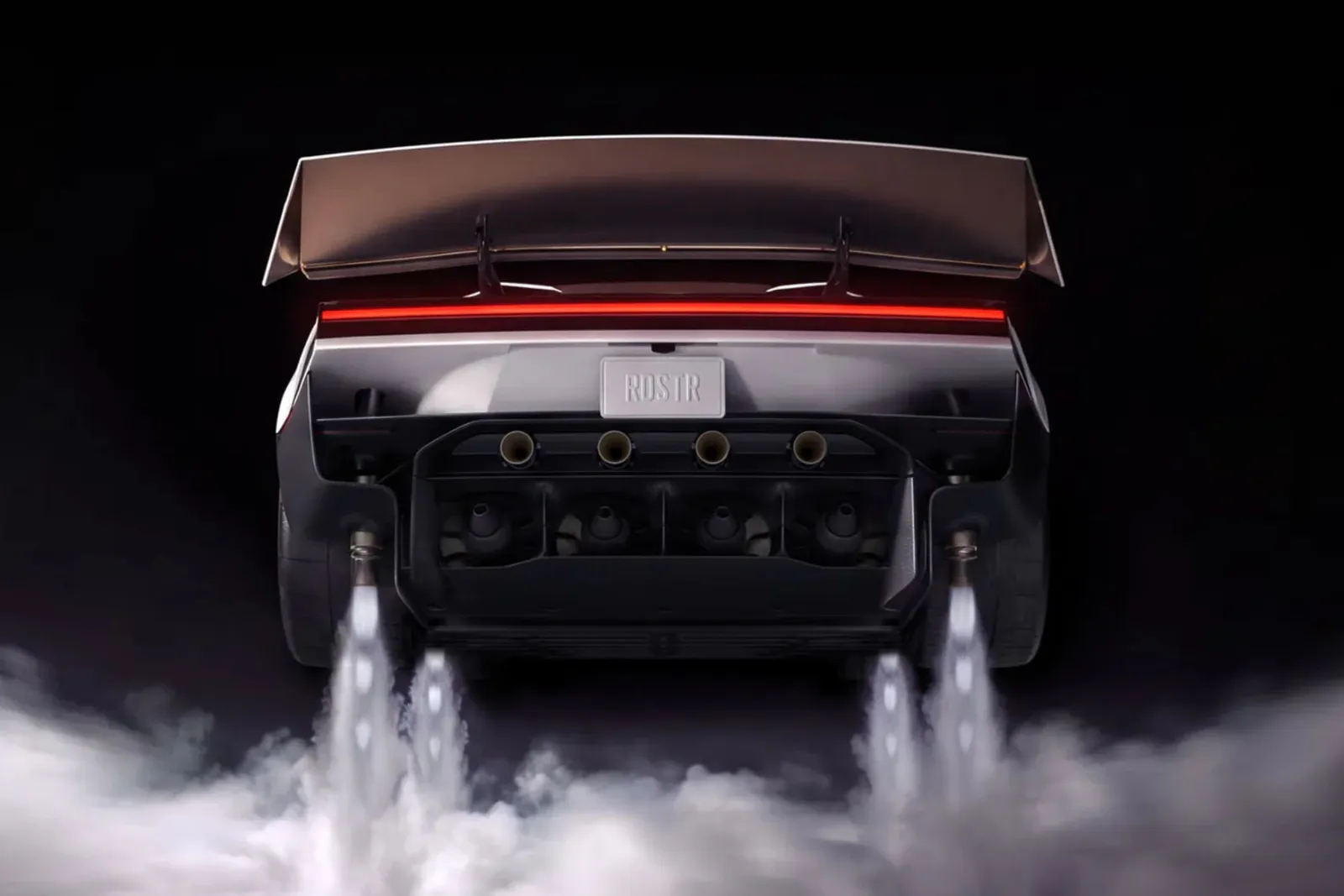
Image: Tesla
- 1/11
- 2/11
- 3/11
- 4/11
- 5/11
- 6/11
- 7/11
- 8/11
- 9/11
- 10/11
- 11/11
Another feature that Elon Musk showed to the audience is suction from under the vehicle. A multi-stage blower combined with a floor seal removes air beneath the car, allowing the Roadster to stick upside down to the ceiling even when stationary.
This makes the Roadster the second vehicle to achieve this. The pioneer in this “downforce trick” is the McMurtry Spéirling, which demonstrated the technology in April 2025. Yet even from that upside-down position, the Tesla activated its nozzles, rotated, and landed on all four wheels. Its “flight” over a row of parked Teslas (Model 3, Model Y, Cybertruck, Cybercab, and Semi) also succeeded without any damage to the vehicles.
If the roadster stays on the ground, it is capable of achieving another sensation: accelerating from 0 to 60 mph (96.5 km/h) in 0.81 seconds, according to Elon Musk who commented on the test on site. With such acceleration, forces of up to 3.3 G act on the person inside the vehicle. Additionally, there are active spoilers and a special track mode that lowers the vehicle significantly.
The technical specifications differ from those listed in 2017
Regarding the actual technical specifications for a road-legal vehicle, there is not only little information available, but what exists also differs drastically from what Tesla announced in 2017 for its new Roadster. Back then, talks were of a massive 200-kWh battery pack offering a range of up to 1,000 kilometers. To reduce weight, the current configuration is said to provide a maximum range of only 480 kilometers.
The originally rounded GT design with 2+2 seating has also been replaced by a Cybertruck-style body with just two seats (and only one seat in the Rocket package). Additionally, the target top speed was slightly revised from over 400 km/h to around 370 km/h.
Musk and design chief Franz von Holzhausen also emphasized that the new design is inspired not only by the Cybertruck but also by stealth fighter jets such as the SR-71 Blackbird and the F-35. This is evident in the hidden headlights, a continuous lighting strip along the rear, the special “Ano White” paint finish, and gold-tinted glass intended to resemble visors on space helmets.
To keep the weight low despite the complex technology, Tesla uses magnesium, titanium, and carbon, along with fixed seats. Inside, passengers encounter a minimalist white-gray microfiber cockpit featuring a central touchscreen and two smaller displays in the driver’s field of view.
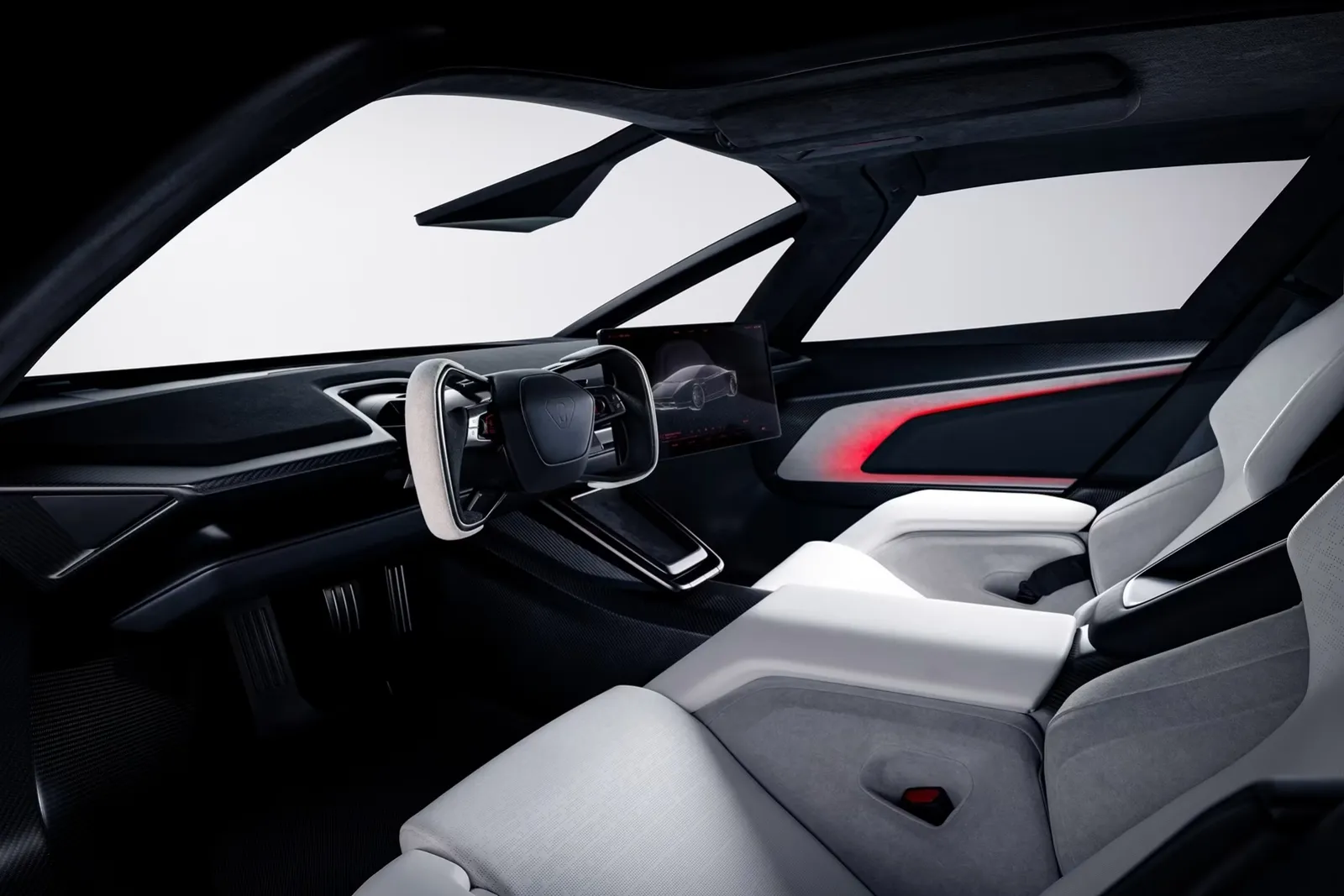
Image: Tesla
- 1/7
- 2/7
- 3/7
- 4/7
- 5/7
- 6/7
- 7/7
Three versions of the Tesla Roadster planned
The new Tesla Roadster is now available in three variants through the configurator. The final price has not been disclosed yet. The road-legal entry model, Performance, featuring two seats and an intake system, can accelerate from 0 to 60 mph in about 1.6 seconds and requires a deposit of 50,000 euros (5,000 euros immediately, 45,000 euros within 10 days).
The track-optimized Thrust variant has rear cold gas nozzles, enabling sub-0.9 second acceleration times, with a total reservation cost of 250,000 euros. Additionally, this variant is limited to one unit per customer.
The most extreme model with the Rocket Package (one seat equipped with 10 cold gas nozzles) is not available for public ordering but is given exclusively to selected customers upon personal invitation from Tesla. It includes the features of the Performance and Thrust models plus what Tesla’s configurator calls the “flight capability system.” The target sprint time is 0.59 seconds.