
How to recycle old car batteries
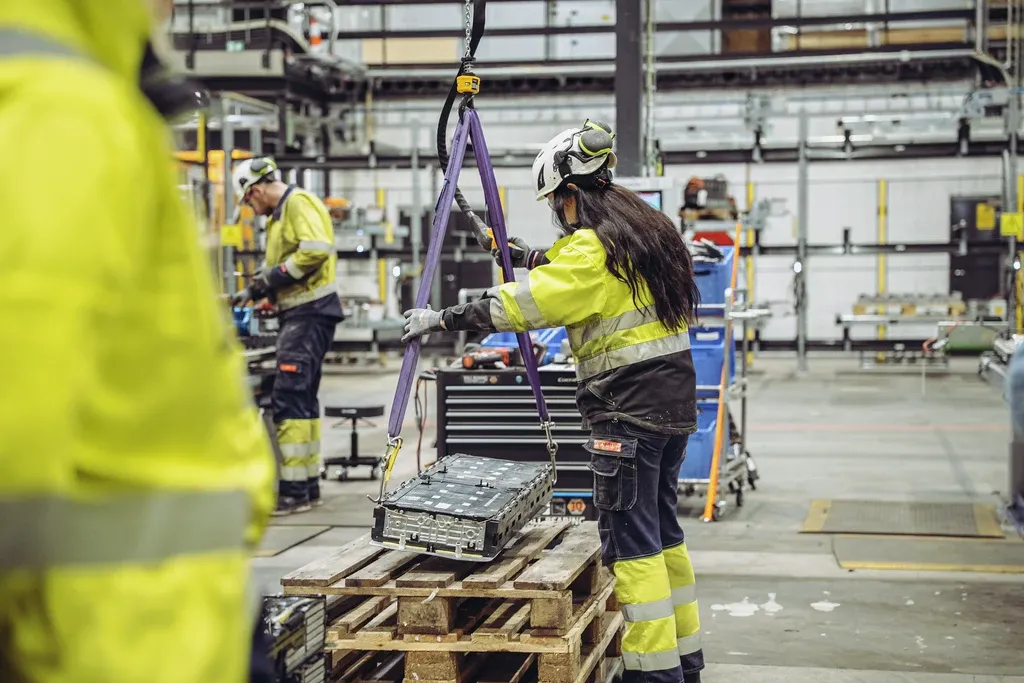
What happens to electric vehicle batteries at the end of their life? We visited Hydrovolt in Fredrikstad – where old batteries become the starting point for new ones...
16.10.2026 12:25 | Updated 13:34
Black mass is the keyword.
And no, we’re not talking about satanic rituals or the 2015 gangster movie starring Johnny Depp.
We’re instead referring to what’s literally left over when recycling batteries.

The black powder is actually the most valuable product obtained from recycling electric vehicle batteries. But even though it resembles espresso, you should avoid tasting it.
At Hydrovolt in Fredrikstad, we saw how old electric vehicle batteries are processed into raw materials for new batteries.
Recycling Process – Step by Step
The facility in Fredrikstad has the capacity to process around 12,000 tons of battery packs per year – equivalent to approximately 25,000 cars.

The batteries are fully discharged. The remaining energy is stored in a battery bank and can either be used to power the Hydrovolt facility or fed back into the grid.
The last kilowatt-hours are recorded, as the battery cells must be completely drained of energy before moving on in the process.
Next, the battery pack is disassembled. Aluminum, copper, and plastic are separated, before the battery modules—which together make up the battery pack—are sent on to crushing and sorting.
One of the end products is what’s known as black mass, which contains important battery materials such as nickel, cobalt, lithium, and graphite.
This black mass is refined later and reused, primarily in the production of new batteries.

Car recyclers are an important source of used batteries, especially in Norway, but Hydrovolt receives batteries from the entire electric vehicle and energy storage ecosystem.
But how does the entire process actually unfold – from a complete battery pack to the materials being neatly sorted upon arrival?
Watch the video at the top of this article, where we follow an electric vehicle battery through Hydrovolts facility, step by step.

Attend an afternoon seminar on battery recycling
Are you interested in learning more about this topic?
The Electric Vehicle Association, Hydrovolt, and the Transport Economic Institute (TØI) are organizing an afterwork event on electric vehicle battery recycling – Tuesday, November 10th at 2:30 PM at Proud Mary in Oslo.
She will meet with other politicians, industry representatives, and officials from the Environment Agency to discuss the following:
What EU battery regulations mean in practice
What happens to batteries that are already being recycled and the increasing amount that will need to be handled in the future
And most importantly: What opportunities do we see for an industry that is still in its early stages?
You can find the registration link for the event here:
Welcome to the afterwork: Norway is a world leader in electric cars, but what about the batteries? – Fill out the form

More like this?
Sign up for our newsletter
– Get electric car news straight to your inbox!
Read also
The post Slik gjenvinnes gamle elbilbatterier appeared first on Norsk elbilforening.