
Second Life for Powertool batteries: Potential exists, but recycling remains the primary approach
About half of the used lithium-ion batteries from power tools are not deeply discharged when returned. However, only a small portion of these can be economically recycled to date. The research project EASLi investigated which recycling pathway is suitable for each type of battery, focusing particularly on earlier and more effective sorting.
Under the leadership of the GRS Foundation, a consortium examined along the battery recycling and disposal chain which approaches are technically and practically feasible for used NMC lithium-ion batteries from power tools. Participants included Robert Bosch Power Tools, Gemeinsame Rücknahmesystem Servicegesellschaft mbH, Battery Damage Service (BDS), Erlos Produktion und Montagen GmbH, and ECOLOGICON GmbH. The German Federal Environment Foundation (DBU) funded the project from January 2025 to February 2026.
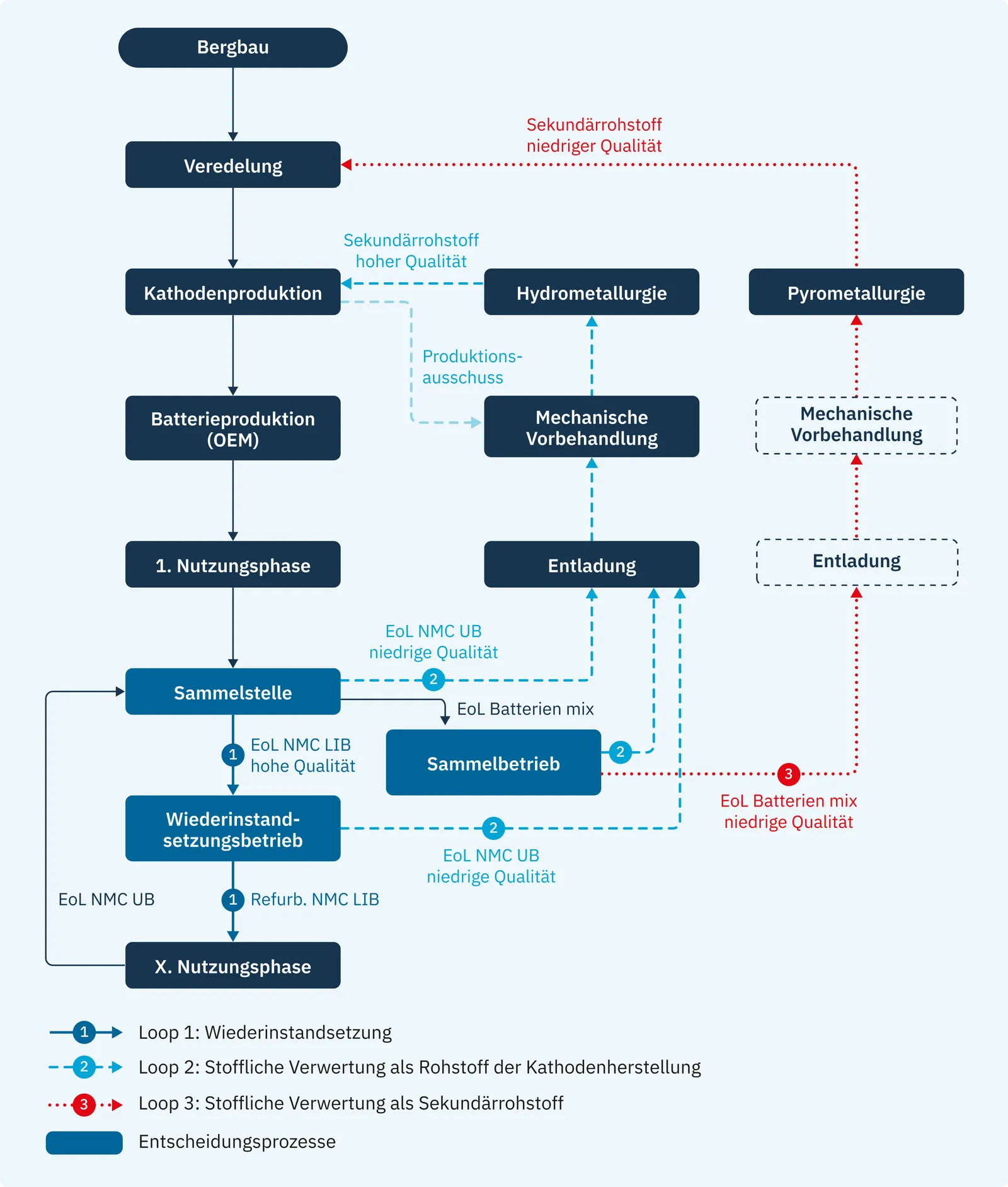
Three cycles were the focus: restoration for a second usage phase (Loop 1), high-quality hydrometallurgical recycling where the raw materials can be reused in cathode production (Loop 2), and pyrometallurgical recycling to produce secondary raw materials of lower quality (Loop 3).
What actually ends up in the recycling loop
In three sorting campaigns, more than four tons of materials from collection points (such as recycling centers or home improvement stores) were analyzed. Among the PowerTool batteries examined, lithium-ion batteries accounted for around 55 percent. Nickel-cadmium batteries still made up 37 percent due to remaining units in use, despite being banned from use in power tools since 2017.
The high proportion of NiCd batteries shows how long PowerTool batteries remain in circulation. For batteries with identifiable production dates—about one quarter of the total—there was an average of around ten years between production and return, with the oldest example dating back to 1989. Batteries from private use were returned after about eight years, while those used commercially were returned after roughly four years.
Technical potential exists
In total, around 70 percent of the sorted Powertool batteries were deeply discharged. Older NiCd batteries are particularly responsible for this situation. In contrast, about half of the lithium-ion batteries were not deeply discharged; newer batteries had an average higher charge level. Therefore, today’s recycling stream includes batteries whose technical lifespan has not yet ended, and for which further condition checking could be useful for potential second-life or reuse applications.
BDS tested 265 used 18-volt batteries to determine how many of them were actually reusable. The testing process included visual inspection, voltage and cell-level measurements, as well as assessment of the State of Health (SoH) over charge and discharge cycles. The results were disheartening: 62 percent of the batteries were deeply discharged, with nearly one-third having voltages below 4 volts—indicating irreversible cell damage. In the subsequent evaluation of health status, two material flow scenarios were examined: one based on data from manufacturers and another from a recycling program. Among the tested sub-samples, 30 percent and 11 percent of the batteries were suitable for reuse respectively. Due to the limited sample sizes of 64 and 19 batteries each, no representative conclusions can be drawn about the overall material flows.
.
Why It Hasn’t Become a Business Model Yet
The low reuse rates represent a key issue for profitability. In the scenario analyzed with German labor costs, the expenses associated with testing and measurement technology are likely to exceed the revenue generated from reusable batteries. According to the final report, economic scaling requires more targeted sorting, automation of certain testing steps, or adjusted procurement conditions.
In addition, there are legal barriers. Batteries handed in for disposal are considered waste due to end-users' intention to get rid of them and can only be given to certified waste disposal companies — certifications that tool manufacturers generally do not possess. Liability and warranty issues remain unresolved, as does the question of under which brand recycled batteries will be sold, and uniform standards for testing and reuse are also lacking.
The product design also poses a barrier: Power tool batteries are designed for durability and operational safety, not for disassembly. Adhesives and a wide variety of materials make recycling difficult. The final report’s conclusion is accordingly cautious: Second-life applications are technically feasible, but significant legal, practical, and economic obstacles stand in the way of widespread implementation at present.
High-quality recycling is likely to account for the largest share
The project team expects that in the future, the majority of used NMC power tool batteries will end up in Loop 2 — provided that the batteries can be adequately identified and sorted. Refurbishment is likely to take up the second-largest share, while pyrometallurgical recycling will account for the smallest.
For Loop 2, experiments with ERLOS provide practical insights. Since battery management systems usually prevent complete discharge, the company tested a wet-discharge method: it reduced Powertool batteries to below 1 volt within 24 hours, with the addition of zinc salt helping to minimize corrosion. It was also found that mixed batches of NMC and NCA batteries can be fed together into the hydrometallurgical recycling process in Loop 2. For process quality, the exact cathode chemistry is less important than the level of contaminants such as plastic and electrolyte residues. Therefore, it is crucial to separate lithium-ion batteries from other battery types at an early stage.
Three decisions instead of one matrix
Originally, EASLi was supposed to develop a multi-criteria evaluation system that would determine the optimal recycling path for each battery. However, it became clear during the project that such a matrix would only be limitedly useful in practice: collection points, sorting facilities, and recyclers have very different levels of information and decision-making authority.
Instead, the project developed decision trees for the three locations where decisions are actually made. At the collection point, simple questions suffice: Is the cell chemistry identifiable? Is the casing damaged or dirty? Are the contacts intact, and is the manufacturer identifiable?
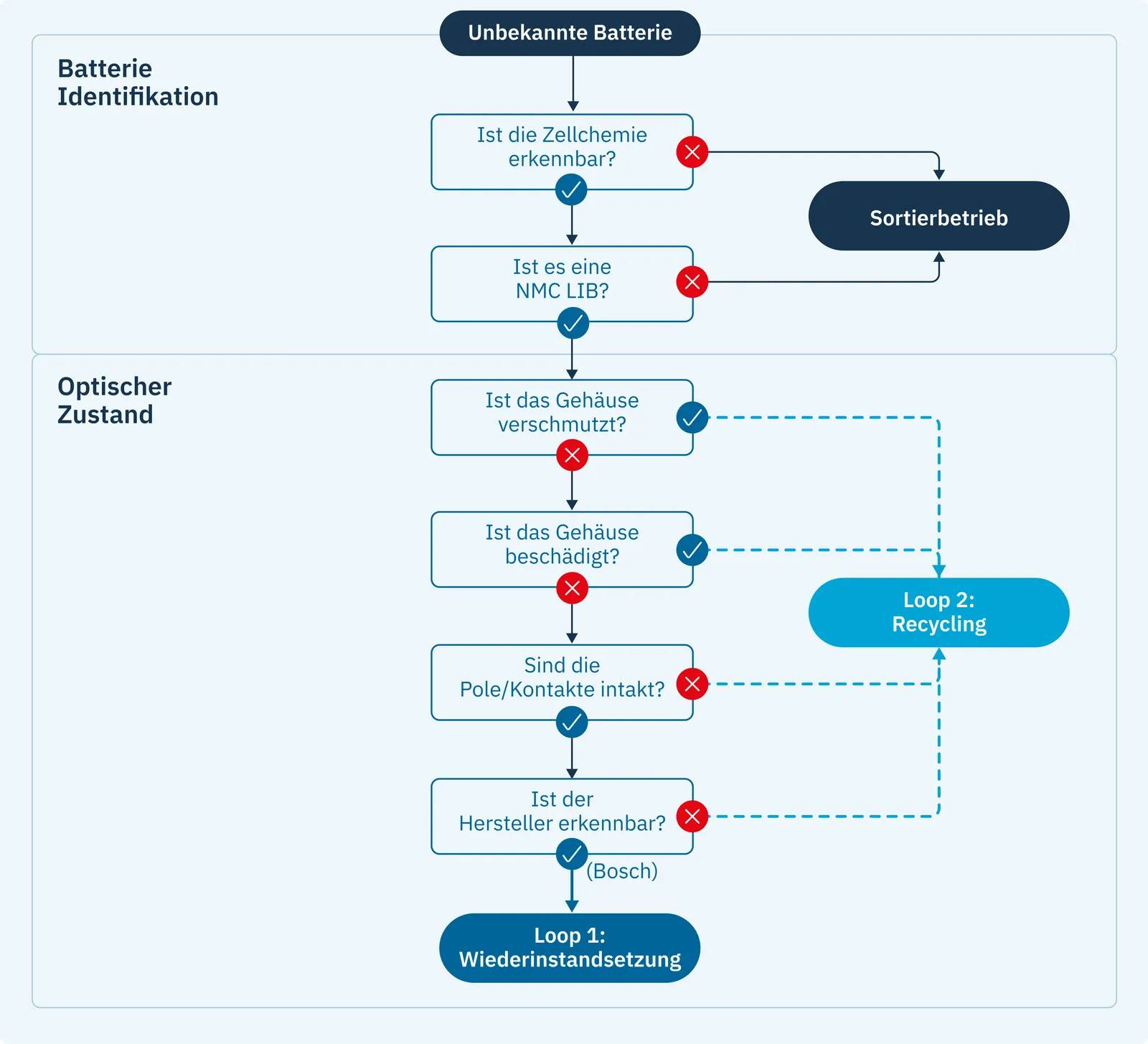
In sorting facilities, separation is based on cell chemistry, while in refurbishment processes, charge level and SoH are also considered. The goal is especially for smaller companies to be able to assign batteries to the appropriate pathway without complex data collection.
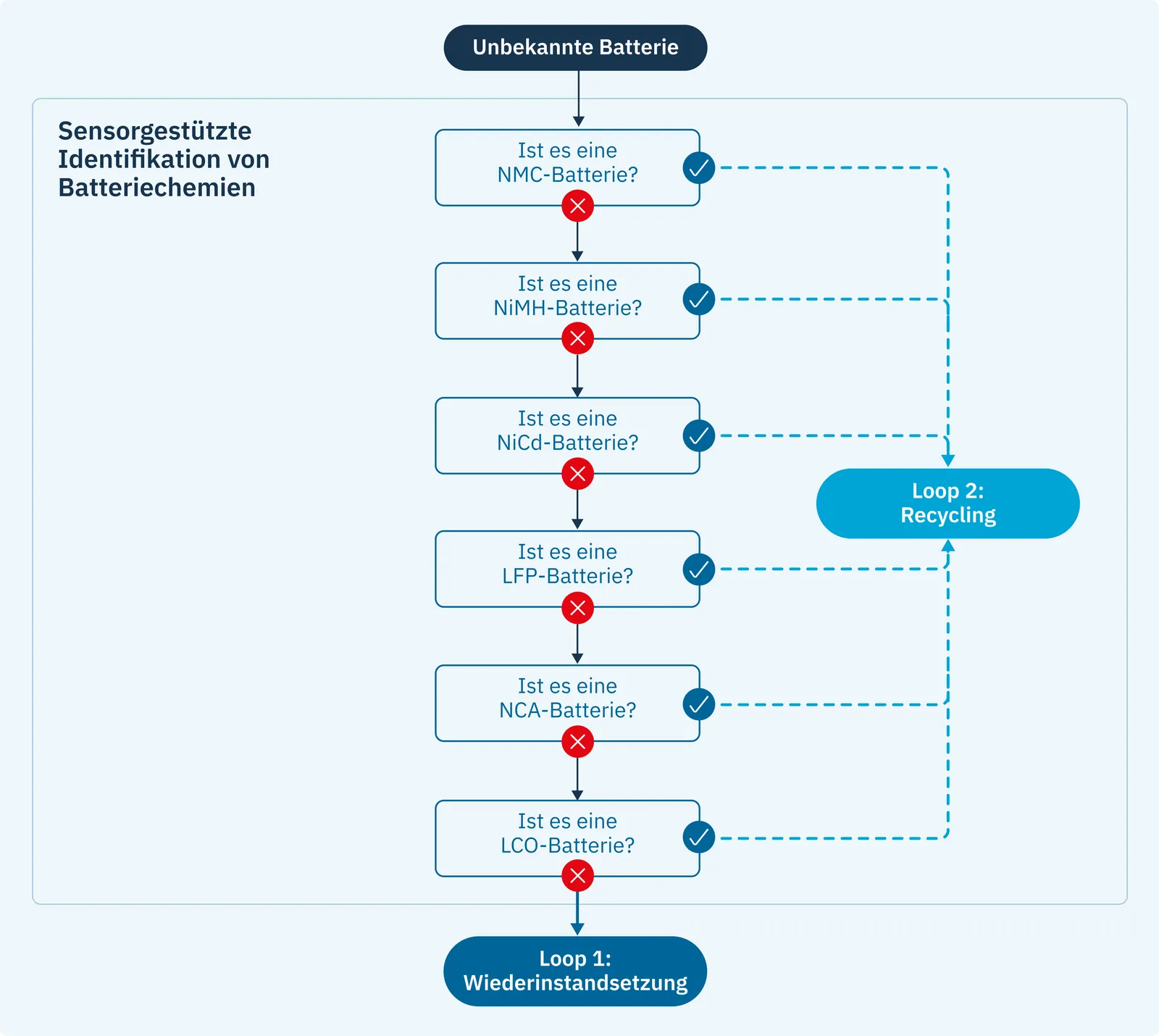
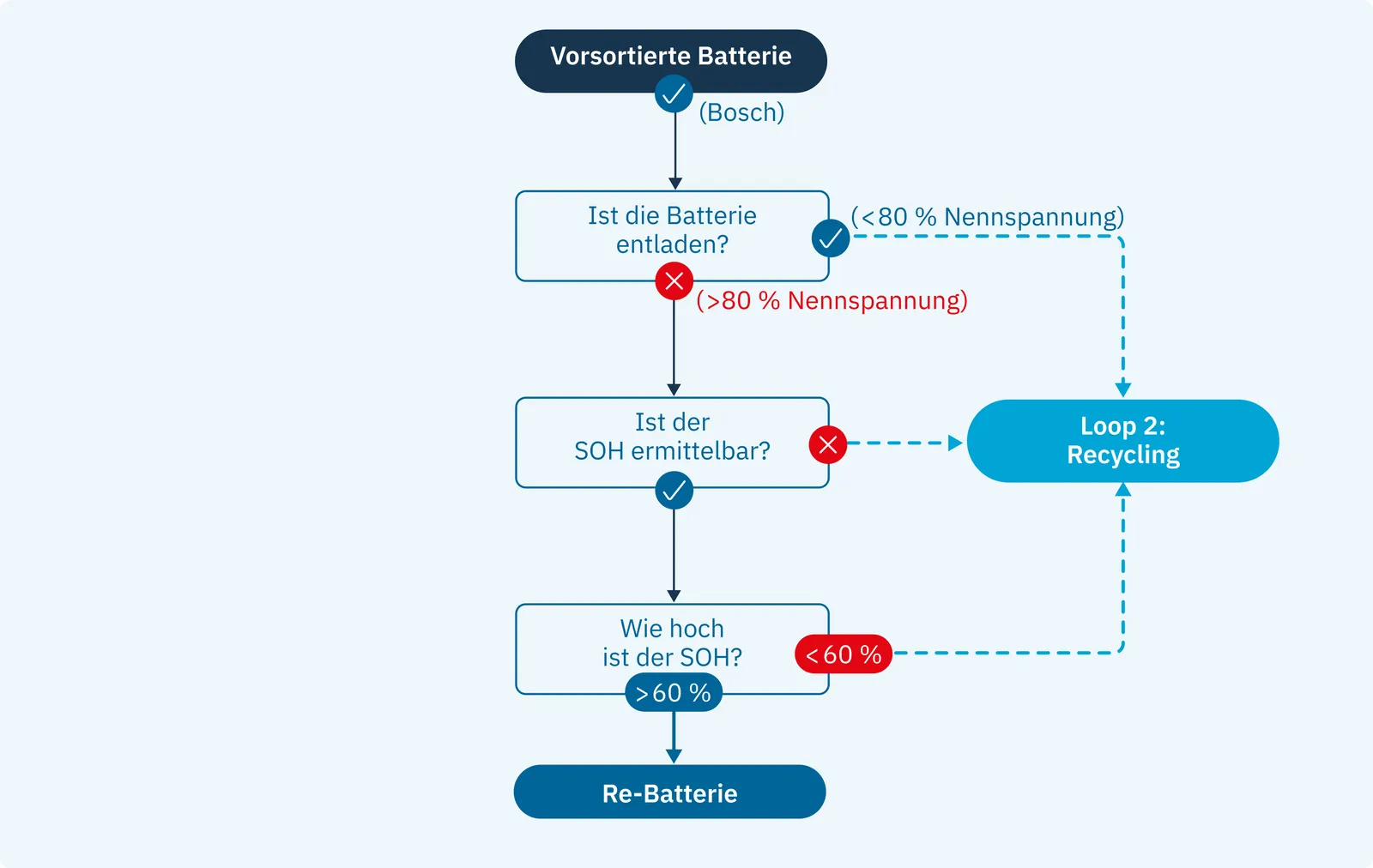
EASLi addresses an aspect that is often overlooked in discussions about battery recycling: it is not only the recycling process itself that determines the quality of the recovered raw materials, but also how the batteries are handled before recycling begins. High-quality circularity starts with determining what information is available about a battery and at what stage the material streams should be separated.
Better Data as the Key
The project sees its potential mainly in better data and automated detection. A digital product passport or QR code could make the manufacturer, battery chemistry, capacity, and production date available. However, this is not mandatory for Powertool batteries: the EU Battery Regulation’s digital battery passport will apply starting in February 2027 only to batteries in electric vehicles and light vehicles, as well as to industrial batteries over 2 kWh, not to device batteries. Additionally, camera-based systems with AI could identify the battery type and external condition. The project outlines an app that helps determine whether to reuse or recycle a battery based on a photo.
EASLi does not envision a scenario where Second Life temporarily replaces the recycling of Powertool batteries. The findings support a more nuanced circular economy: identifying good batteries and using them longer, removing unsuitable ones early, and processing the rest so that high-quality materials can be returned to battery production.