
Renault for almost 700,000 zł. Over half of the production has already been reserved
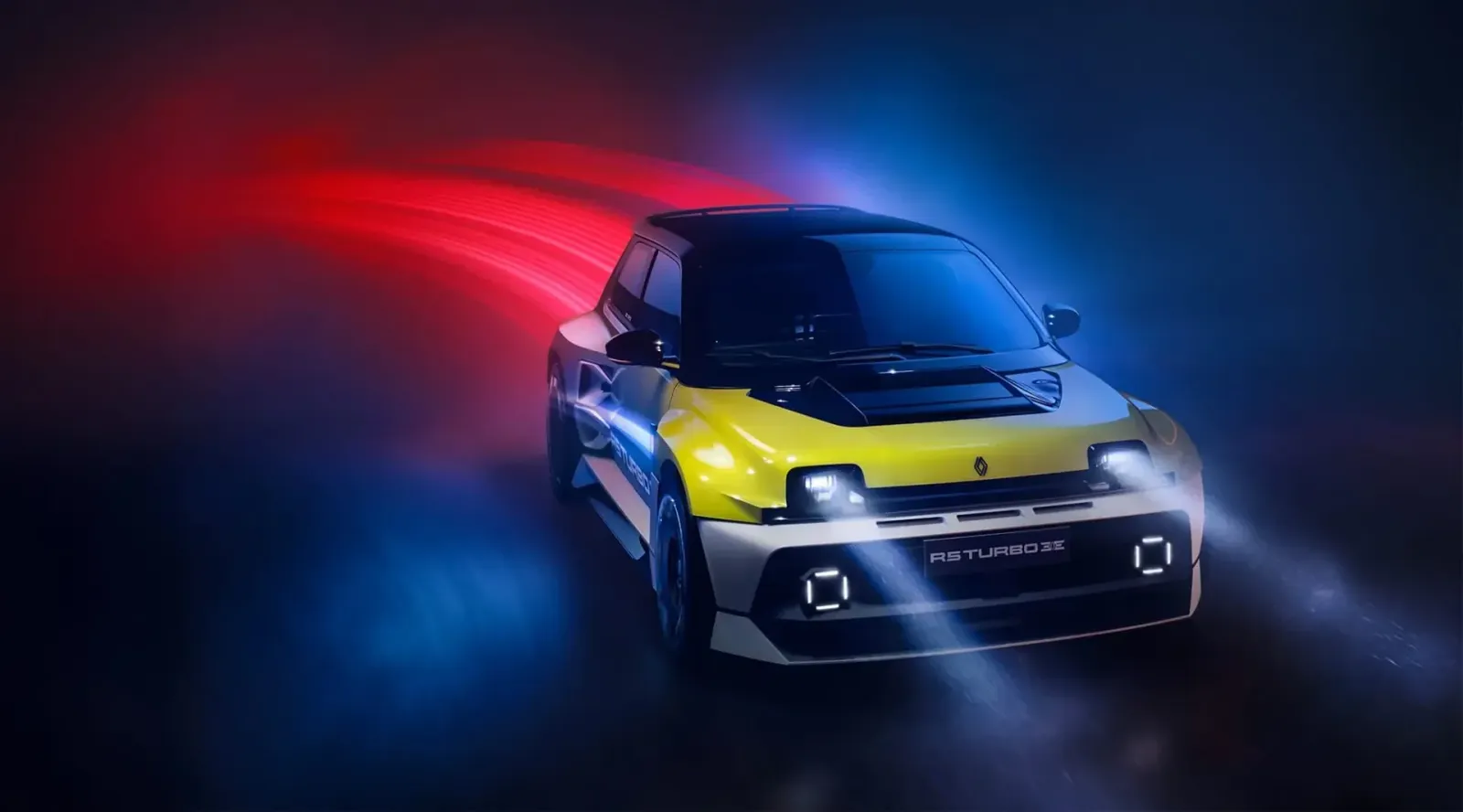
The Renault 5 Turbo 3E can only seem like an extreme variant of the regular Renault 5 E-Tech Electric from a distance. In reality, the French built an entirely different car from scratch: a two-seater, very wide vehicle made largely of carbon fiber and powered by two electric motors located at the rear wheels.
The concept is exactly the same as it was almost half a century ago. The original 1980 Renault 5 Turbo also appeared to be a radically widened version of the popular city car, but it had a completely redesigned structure under its body. The engine was moved behind the seats, power was sent to the rear, and the car was designed primarily for off-road use.
The new Turbo 3E is technically very different. Renault, however, retained the same philosophy: take a small, recognizable city car and use its styling as a base to create something completely…unfit for the rest of the lineup.
555 HP and all-wheel drive
In the 5 Turbo 3E, each rear wheel has its own electric motor. The total power output is 555 HP, and electronic control allows for independent adjustment of the torque delivered to the left and right wheels. Renault also cites a value of 4800 Nm, but this is torque measured at the wheels, so it cannot be directly compared to values for conventional engines.
The car is designed to accelerate from 0 to 100 km/h in less than 3.5 seconds and reach speeds of up to 270 km/h. It should weigh under 1450 kg, which is a relatively low figure considering its electric drive and 70 kWh battery capacity. The carbon fiber construction plays a significant role in this. The car has only two seats, measures about 4.08 meters in length, but as wide as 2.03 meters. Thus, it is as short as a city hatchback yet wider than many supercars.
800 V and charging in about 15 minutes
The 5 Turbo 3E utilizes an 800 V architecture. The maximum DC charging power is expected to be 330 kW. According to Renault, charging from 15% to 80% under optimal conditions will take around 15 minutes. The range is supposed to exceed 400 km WLTP, though achieving results close to the certified value will be difficult when using full performance levels.
The onboard AC charger has a power output of 11 kW. The vehicle is also designed to support two-way energy flow. This shows that the Turbo 3E isn’t just an expensive gadget wrapped in a stylish body. Renault is using this project to test technologies that could be incorporated into other models in the future.

Exactly 1,980 units will be produced
The limited production run is also a tribute to history. Renault will produce 1,980 cars, as that was the year the first Renault 5 Turbo made its debut. Each vehicle will receive a unique serial number. Options include configurations inspired by historical Renault models, including the paint schemes featured on the rally versions of the 5 Turbo and Turbo 2.
The manufacturer does not intend to treat customers as mere buyers of a regular Renault. The Turbo 3E offers an extensive personalization program that allows customers to change not only the body color or interior trim but also create a far more personalized configuration in collaboration with the brand’s designers.
Over half of the production has already been reserved
At the 2026 Paris Motor Show, Renault officials confirmed that over half of the planned production units already have reservations. With a limited series of 1,980 vehicles, this means more than a thousand cars are reserved. This is significant because it’s not just about signing up for a newsletter or clicking a “I’m interested” button. At an earlier stage of the reservation process, customers had to pay 50,000 euros, which is approximately 218,000 Polish zlotys at the current exchange rate. This amount is then applied toward the car’s price. It means that interested parties had to invest a substantial sum of money very early in the project’s development.
A Renault costs nearly 700,000 Polish zlotys today.
When Renault opened reservations for 2025, the price for first customers started at 155,000 euros. Currently, the manufacturer lists 160,000 euros gross. That’s 699,000 złoty. And this is only the starting price, without additional equipment or extensive customization.
For comparison, this amount is already comparable to the prices of full-fledged sports cars from premium brands. However, Renault isn’t trying to compete on traditional metrics like power, performance, or brand prestige. It is primarily selling a highly limited collectible product.

Some units could exceed 1.5 million złoty
This gets even more interesting. Renault President François Provost admitted at the Paris auto show that the most customized versions could cost over 350,000 euros. That’s more than 1.5 million złoty. Such a high price stems from the customization program. Renault wants to give customers the ability to create a car that is far more unique than by simply selecting a few options from a configurator. The brand is also preparing special areas to serve buyers, with the entire purchasing process resembling ordering a supercar or collectible model rather than visiting a typical Renault dealership.
We still have to wait for the car
Originally, Renault mentioned first deliveries in 2027. However, current information suggests that the detailed customization process will be developed in 2027, with the first cars reaching customers in 2028.
This means that some of those who paid at the beginning of reservations will have to wait about three years for their car. Despite this, over half of the entire series has already been sold. It’s a tribute to history... and possibly also a pretty good investment.
Piotr Sobczyk