
Q-Park expands collaboration with software provider Greenflux
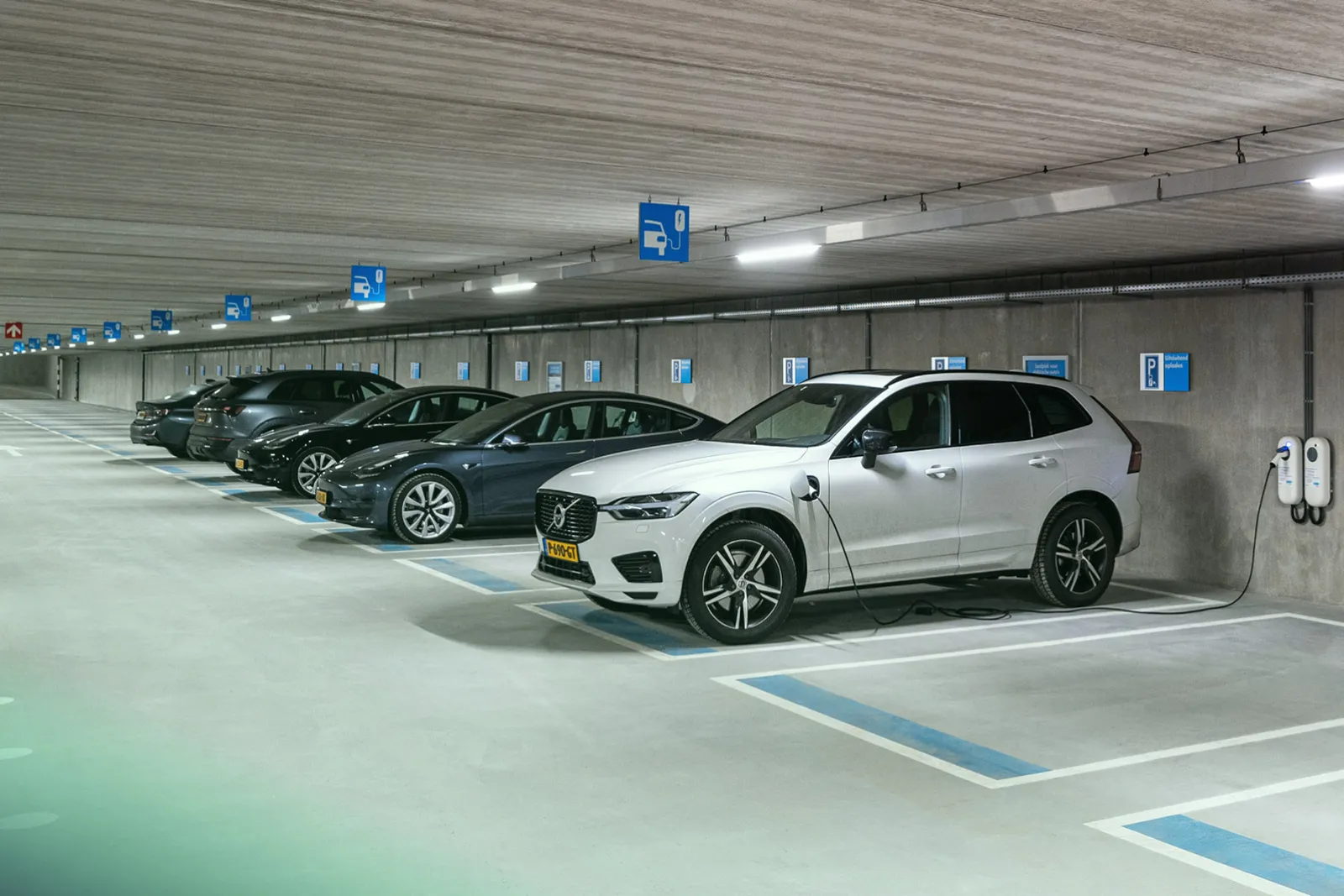
Parking operator Q-Park is expanding its collaboration with Greenflux at its locations in Germany and Ireland. Previously, 1,700 charging stations at Q-Park sites in the Netherlands were successfully migrated to Greenflux's software system. This means Q-Park will now independently operate its parking garage charging stations at additional locations and no longer rely on third-party providers for controlling and billing charging processes.
Image: Greenflux
The European car park operator Q-Park is expanding its collaboration with Dutch software provider Greenflux and redesigning the operation of its charging infrastructure in Germany and Ireland. Over 700 charging stations in Germany and approximately 120 in Ireland are switching to Greenflux’s Charge Point Management System (CPMS) – a central software solution for managing charging and billing processes.
For Q-Park, this marks the end of its previous “CPO-as-a-Service” model: instead of outsourcing the entire operation, including tariffs and value creation, to external service providers, Q-Park is now taking on the operator role itself. Greenflux’s software serves as a technical tool in the background, while Q-Park retains full commercial and operational control over pricing, billing, and energy management.
Key factors in the system change included open interfaces for external payment providers, as well as features for smart charging (dynamic power distribution) and automated refunds. Q-Park has already introduced the platform for around 1,700 charging stations in its home market of the Netherlands. The expansion highlights the efforts of major infrastructure operators to anchor the charging business as a core component of their own parking operations in-house, rather than leaving it to external service providers.
The transition places high demands on technical reliability. Greenflux points to a system availability of 99.8 per cent in previous migrations involving over 35,000 charging points. For EV drivers, the main change is in the background processing: through managed roaming, access via familiar charging cards and apps from common mobility providers – where customers have their charging contracts – remains seamlessly available.