
Paris Auto Show: The Gateway for Chinese Brands
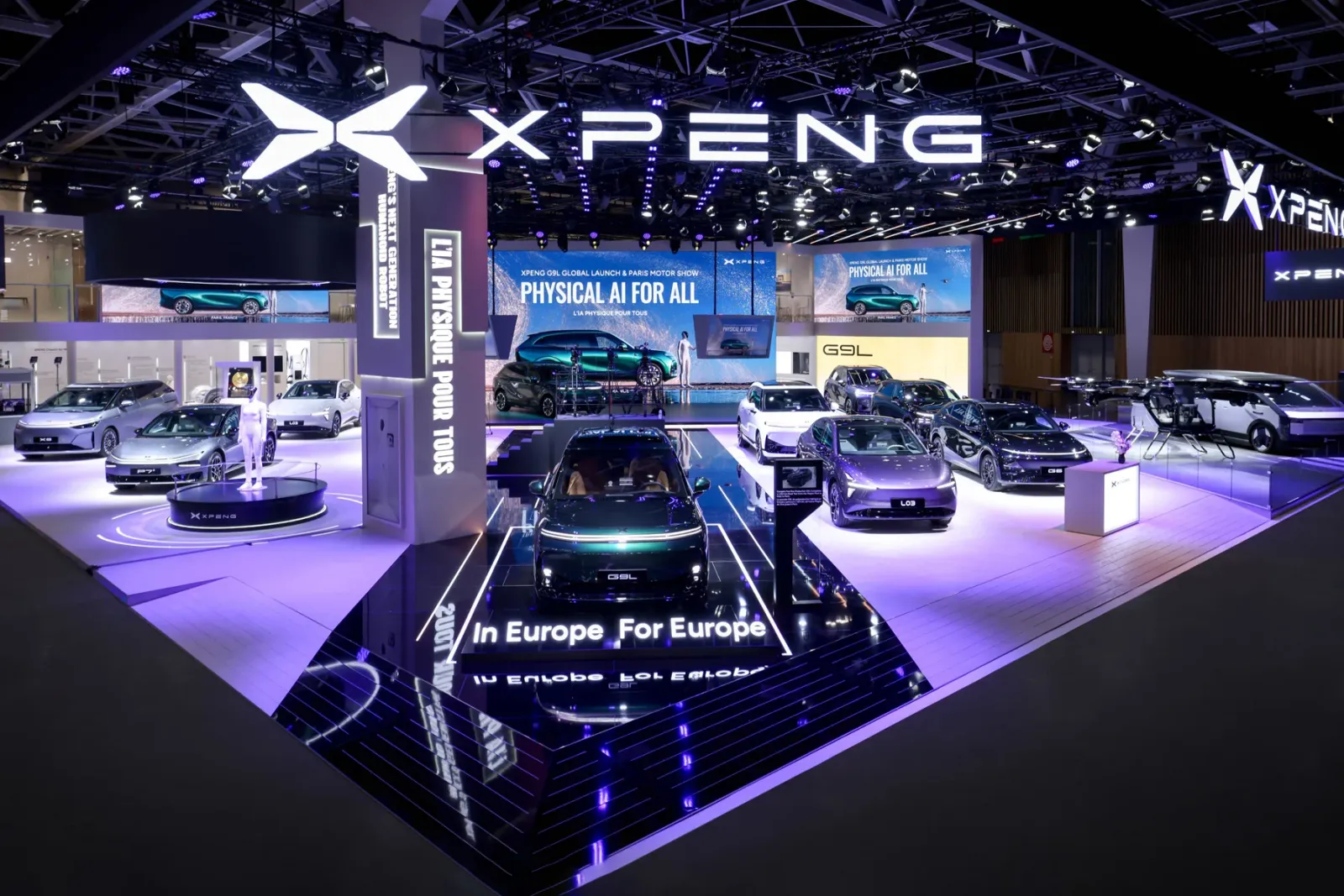
Up front: Despite some withdrawals, the number of Chinese brands at the Paris Auto Show has doubled from ten to 20 exhibitors since last time. Two years ago, we published an article titled “China Everywhere: How Hongqi, GAC, and Others Are Transforming the Paris Auto Show.” With lasting impact? Once again, we took a close look at what China’s automotive industry plans to do in Europe.
An Indispensable Presence
Three Chinese brands make it clear that they are here to stay. For example, Xpeng displays not only large sports cars but also the compact L03, which was developed specifically for Europe and built at Magna in Graz. The vehicle aims to be a true European car, and it has achieved this quite well.
BYD does similar, offering a range of small and compact models. However, with the Shark pickup truck, it also sends a subtle message: “We have the rest of the world in mind.” At over five and a half meters long, this massive vehicle is not really suited for the narrow streets of European cities—let alone Paris twice over. Yet it already enjoys great popularity in emerging markets.
The third player is the Leapmotor brand, which stands out from its competitors thanks to its partnership with Stellantis. It too offers smaller vehicles that are sometimes suitable for European use.
Particularly through their smaller vehicles, BYD, Xpeng, and Leapmotor demonstrate that they are making genuine efforts to localize their products. In contrast, various other Chinese brands attempt, more or less bluntly, to bring models designed for China without major adjustments directly to Germany, France, or Italy. What is failing for the German automotive industry right now will not work either for Chinese brands.
New entrants: Li Auto and Changan
The days when China relied solely on electric powertrains are long gone, which is why we tested two range-extender models. The Li Auto Li L6 drives like a pure electric car, and with a 50 kWh battery capacity, it could indeed be one. Only when forced by a button press does the internal combustion engine start up, ruining what would otherwise be a very high-quality driving experience with its vibrations. Whether this is truly necessary in an era of 800 volts and charging times under 15 minutes is questionable. Whether we really need another giant SUV is also doubtful. Still, it’s remarkable to see the quality and speed at which Chinese startups can develop cars from scratch.
Photo: Gesine Schurig
- 1/3
- 2/3
- 3/3
Changan has a long history behind it, boasting 140 years of existence, with its current form having been in place since 1996. Former VW chief designer Klaus Zyciora has left his mark on the model lineup, and we take a drive in the Deepal S07 with range extender he designed. We don’t manage to activate the internal combustion engine in Parisian traffic, so we enjoy the quiet aboard. Once again, it’s the software that impresses us, as well as the high quality of the hardware construction. Even though Changan is still cautiously entering the European market, China’s sixth-largest automaker should not be underestimated.
Gone again
MG is quite successful in Europe, but it still stays away from the Paris Motor Show. Great Wall Motor (best known locally for its Ora models) was only present in 2022. Hongqi showed up in 2024 with high ambitions but disappeared again this year. Some brands carry out their mandatory appearances so carelessly that it’s reasonable to doubt the seriousness of their ambitions for entering the European market. For example, GAC continued to be represented there but has yet to implement its heavily publicized launch in Germany planned for 2024.
The “Temu Range Rover,” as the SUVs from Jaecoo are now called in Britain, deserve a special mention in the negative rankings. They resemble the original Landrover so strikingly that it once again highlights the fact that there are essentially two Chinese automotive industries: one led by BYD and Xpeng, which drive the rest of the world forward with technological innovations, and another led by Chery (to which Jaecoo belongs) and Hongqi, where the most popular tool seems to be a copier.
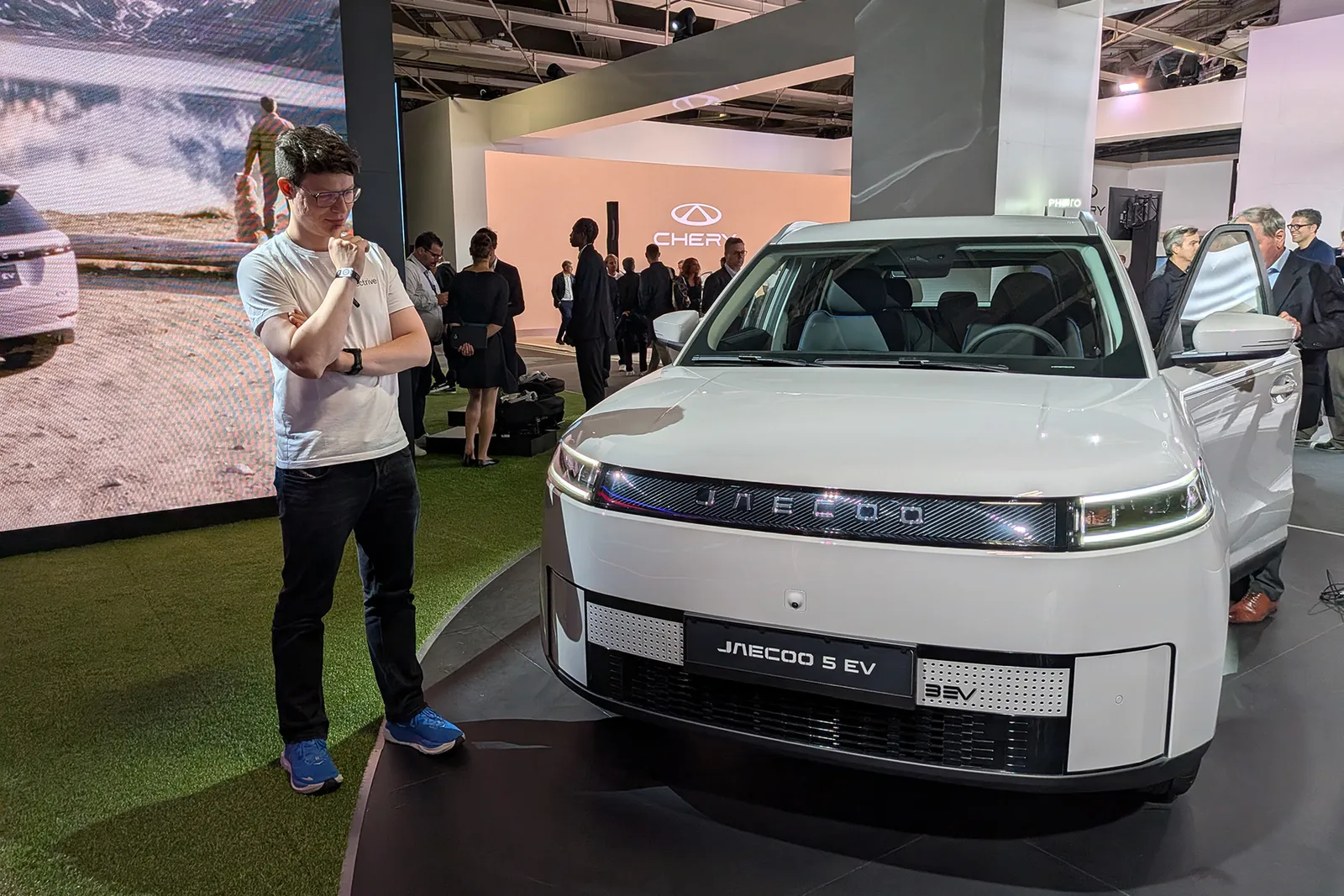
Photo: Gesine Schurig
- 1/3
- 2/3
- 3/3
Generally, given the lack of enthusiasm and interest shown by some Chinese companies, it is doubtful how serious their plans for the European market truly are. Notably, there were also a surprisingly large number of African delegations interested in learning about Chinese models. While Europe focuses mainly on itself, China keeps an eye on the markets that still need to be developed.
The competition remains fierce – for all participants
This year’s Paris Auto Show once again serves as a window into China. It brings to Europe a perspective that is often missing from German discussions: the fierce competition among Chinese automakers. While Western brands can rely on loyal customers, a solid fan base, and strong brand loyalty, every Chinese newcomer starts almost from scratch. It is still too early to determine which strategy will prove effective, as none of the Chinese manufacturers have managed to stay in Europe for more than five or even ten years. One thing is certain: most Chinese automakers will continue to face difficulties in Europe, and many will withdraw. But a handful will remain and keep the European automotive industry highly active in the years to come.
Europe’s Strategic Advantage
While Europe is still debating over propulsion types, China offers everything—internal combustion engines, hybrids, range extenders, and of course pure electric vehicles. Someone will buy some of these. Faced with such competition, focusing on a single propulsion technology might at least help European automakers in their home markets. And policymakers need to ask themselves whom they are actually helping with exceptions for range extenders.
It’s probably not a bad idea for German and French automakers to want to evoke memories of iconic products from the past at such a time. The cultural heritage and loyal fans who have built up European brands over decades are still lacking for companies like BYD. You can read our impressions of the exhibition’s European-themed section here.