
Paris Motor Show: A revolving door of Chinese brands
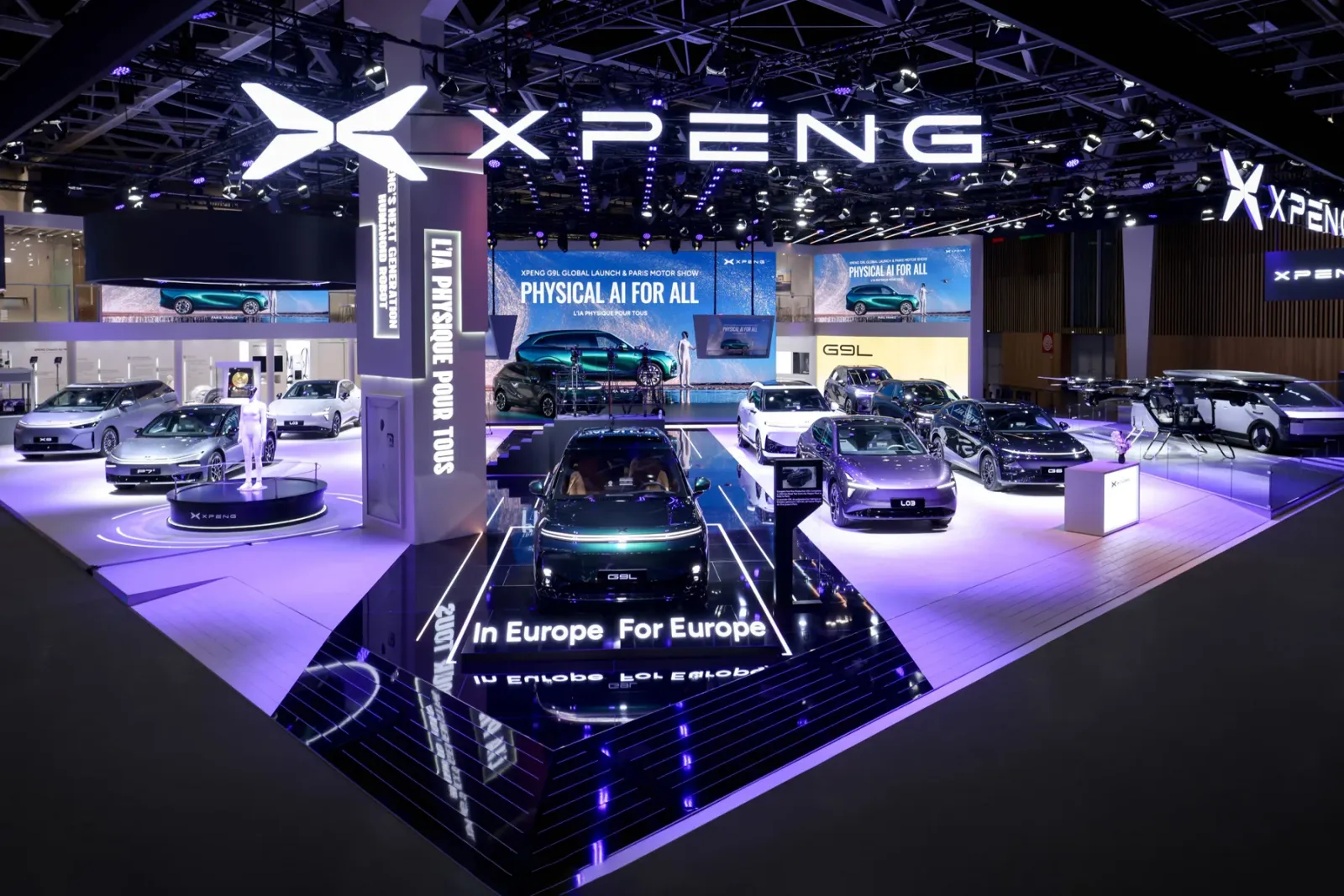
First things first: despite some withdrawals, the number of Chinese brands at the Paris Motor Show has doubled from ten to 20 exhibitors since the last edition. Two years ago, we covered the 2024 trade show in our feature ‘Chinese EVs abound: How Hongqi, GAC and co. are turning the Paris Motor Show upside down‘. This year, we’re once again taking a close look at the Chinese automotive industry’s plans for Europe.
Here to stay?
For three Chinese brands, it’s clear they have no intention of departing Europe any time soon. For example, Xpeng is showcasing not only its larger models but also the compact L03, which was developed for Europe and will also be built by Magna in Graz. The car aims to be a distinctly European vehicle – and it has largely succeeded.
BYD is taking a similar approach, displaying numerous small and compact models. However, with the Shark – a pickup truck – there’s a subtle hint that they have the rest of the world in mind, too. After all, at over 5.5 metres long, this behemoth is hardly suited for the narrow streets of European cities – and certainly not in Paris. Yet it is already hugely popular in emerging markets.
The third in this group is Leapmotor, which stands out from its competitors through its joint appearance with Stellantis. Here, too, the line-up includes smaller vehicles that are suitable for Europe.
Not least through their smaller vehicles, BYD, Xpeng and Leapmotor underscore that they are making genuine efforts to localise. In contrast, various other Chinese brands are more or less clumsily attempting to bring models designed for China to Germany, France or Italy with little to no adaptation. This is where the German automotive industry is going wrong elsewhere – and this approach will not work for the Chinese either.
Newcomers: Li Auto and Changan
The days when China focused exclusively on electric drivetrains are long gone. For this reason, we took a short test drive in two range-extender models. The Li Auto Li L6 drives like a pure electric vehicle, and with its 50 kWh battery capacity, it could be one. Only when forced by pressing a button does the combustion engine start up, marring the otherwise very high-quality driving experience with its vibrations. Whether this is really necessary in an era of 800-volt systems and fast-charging times of under 15 minutes is debatable. Whether we really need yet another giant eSUV is also questionable. Nevertheless, it is remarkable how quickly Chinese start-ups can develop quality cars from scratch.
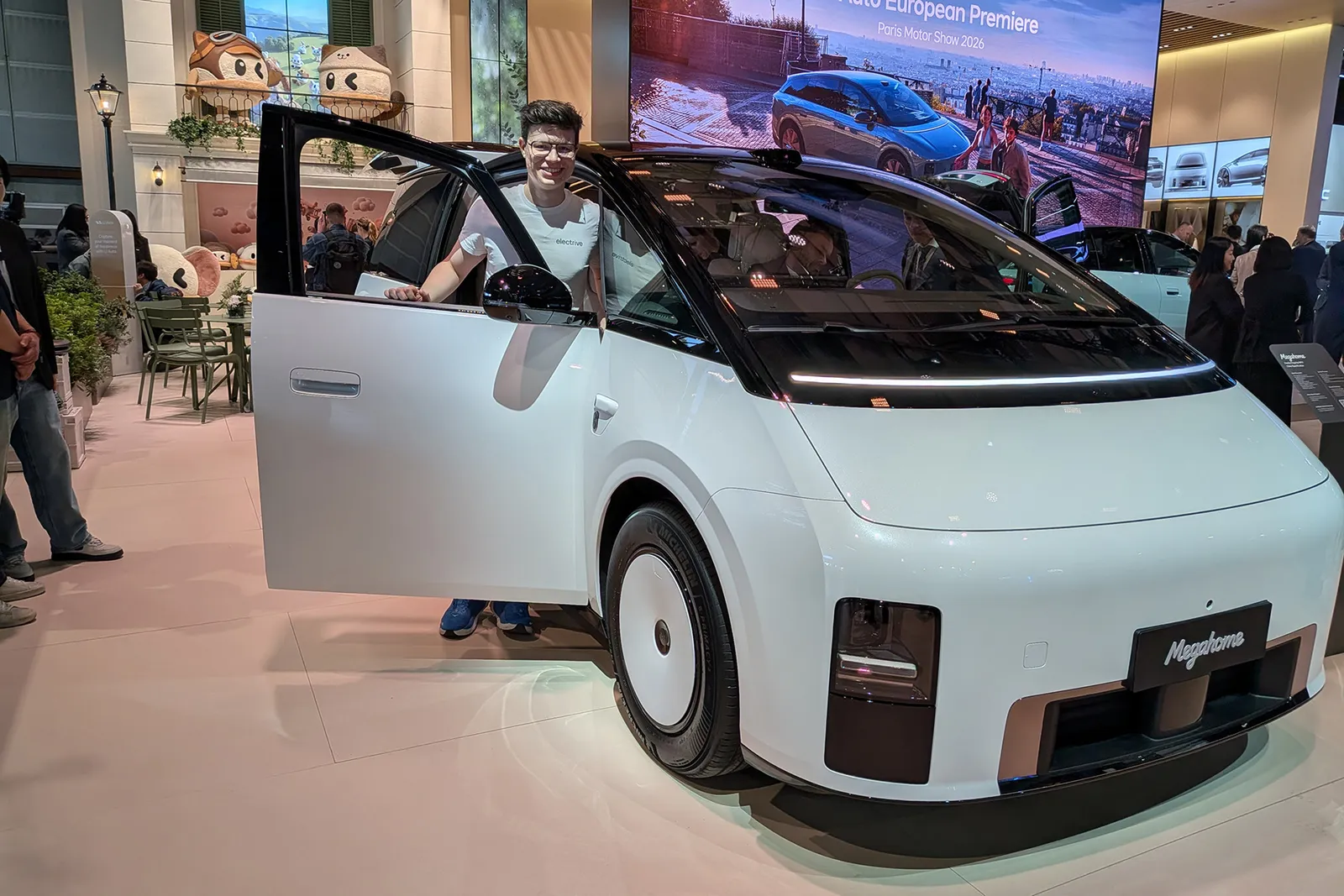
Foto: Gesine Schurig
- 1/3
- 2/3
- 3/3
Changan looks back on a longer history, with the company referencing its 140-year legacy – though in its current form, it has only existed since 1996. Former VW head designer Klaus Zyciora has left his mark on the model range, and we took a spin in his designed Deepal S07 with a range extender. We didn’t manage to activate the combustion engine in Paris’s urban traffic and instead enjoyed the quiet cabin. Once again, we were impressed by the software and the high-quality hardware finish. Even though Changan is still cautiously testing the European market, China’s sixth-largest automaker should not be underestimated.
Some notable absences
MG may be quite successful in Europe but continues to stay away from the Paris Motor Show. Great Wall Motor (known in these parts primarily for its Ora models) only participated in 2022. Hongqi made a grand entrance in 2024 with high ambitions and has since vanished again. And some brands fulfil their obligatory programme with so little enthusiasm that it is reasonable to doubt how serious their ambitions are for entering the European market. For example, GAC was still present but has yet to follow through on its much-announced German market launch from 2024.
A special mention in the negative rankings goes to the so-called “Temu Range Rovers“, as the SUVs from Jaecoo are now being called in the UK. They bear such a striking resemblance to the original Land Rover that it once again highlights that there are essentially two Chinese automotive industries. One, represented by BYD and Xpeng, drives global innovation with technical advancements. The other, including Chery (which owns Jaecoo) and Hongqi, seems to rely heavily on mimicry.
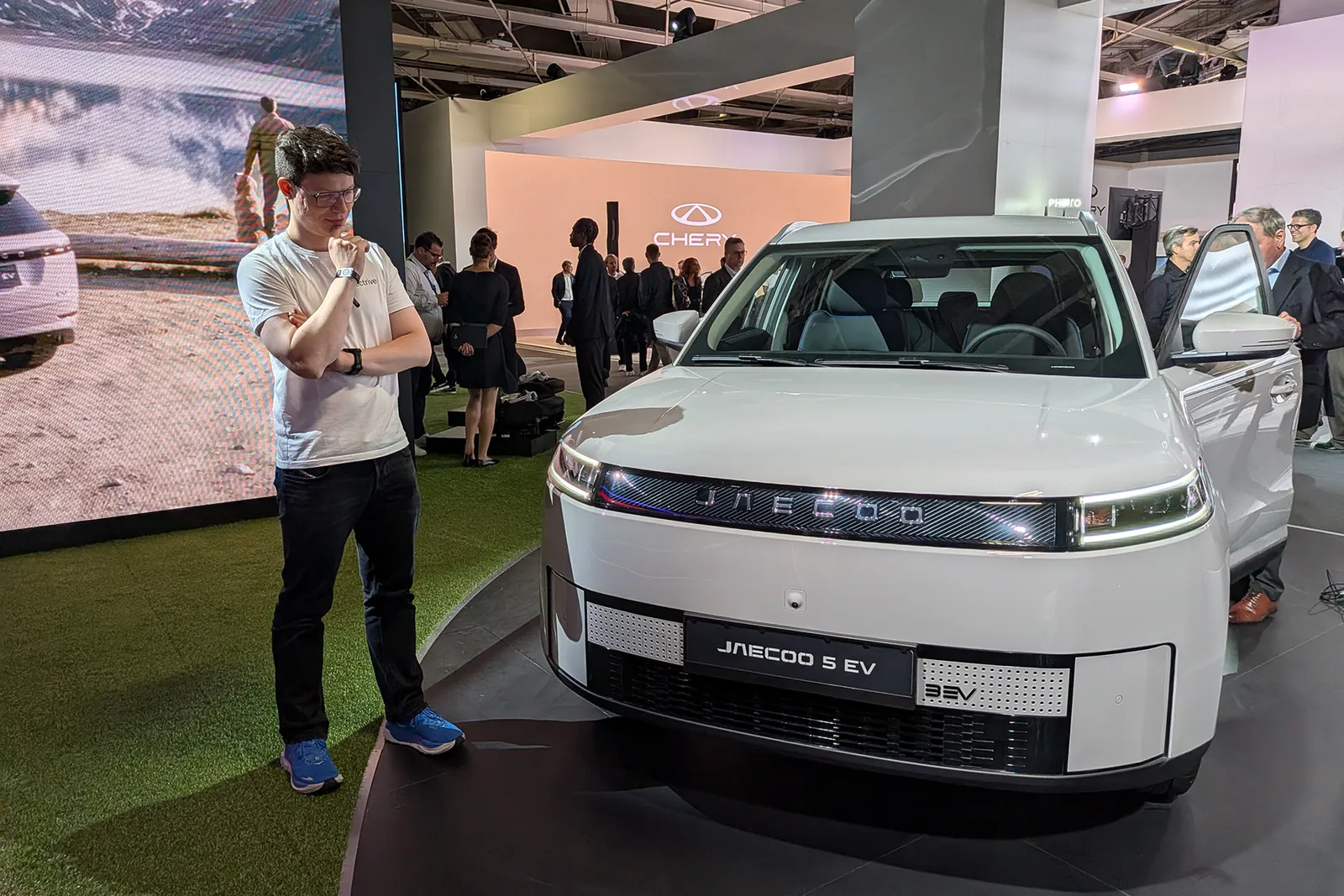
Foto: Gesine Schurig
- 1/3
- 2/3
- 3/3
In general, the lack of enthusiasm evident in some Chinese exhibitors’ stands raises doubts about how serious their plans for the European market really are. Notably, there were also a striking number of African delegations exploring Chinese models. While Europe remains largely focused on itself, China is keeping an eye on emerging markets as well.
Competition remains fierce – for all involved
This year’s Paris Motor Show is once again a window into China. It brings a perspective to Europe that is often missing in the German debate: the fierce competition among Chinese automakers themselves. While Western brands can still rely on loyal customers, a solid fanbase and strong brand loyalty, every Chinese newcomer essentially starts from scratch.
It is still too early to say which strategy will prove successful, as none of the Chinese manufacturers have yet lasted more than five or even ten years in Europe. One thing is certain: most Chinese automakers will continue to struggle in Europe, and many will withdraw again. But a handful will remain and keep the European automotive industry on its toes for the foreseeable future.
Europe’s strategic advantage
While Europe continues to debate drivetrains, China simply offers everything: combustion engines, hybrids, range extenders and, of course, fully electric vehicles. Someone, somewhere, will buy something. In the face of such competition, focusing on a single drivetrain technology might actually help European automakers, at least in their home markets. And politicians must ask themselves: who are they really helping with exemptions for range extenders?
The fact that German and French automakers want to evoke memories of iconic products from the past in these times is probably not a bad idea. The cultural heritage and loyal fanbase that European brands have built up over decades are still lacking for BYD and co. You can read our impressions from the European-focused part of the show here.