
To no one’s surprise, the company that installed a gasoline engine in a Tesla went bankrupt with $32 million in debt.
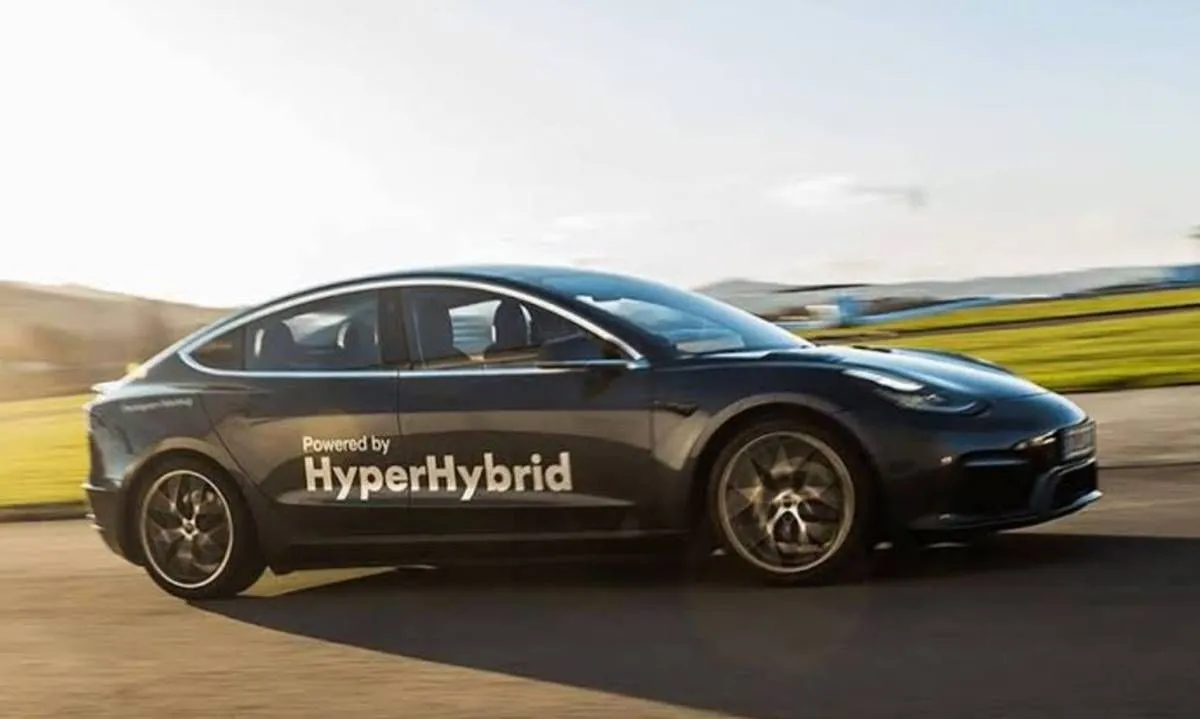
On social media and at Christmas dinners, there’s always that typical brother-in-law who says, “If they put a gasoline engine in it, it would be great.” It doesn’t matter if it’s an electric car. But the Austrian company Obrist took this idea a step further by adding a gasoline engine to the Tesla Model 3.
Obrist’s story is one that’s worth recalling, as it shows that a good idea on paper doesn’t always turn into a commercial product. For over a decade, this Austrian company argued that electric cars with extended range options could be a more economical and practical solution than those powered solely by batteries. Their proposal gained considerable attention, especially when they decided to use a Tesla Model 3 as a test platform.
Now, that business venture has ended in the worst possible way. Three companies within the Obrist group have declared bankruptcy, accumulating joint debts of 31.8 million euros, without ever managing to bring their technology to a mass-produced car. This outcome contrasts sharply with the high expectations that its leaders had generated over the years.
The economic situation reflects how complicated the project had become. Obrist Powertrain, responsible for developing the HyperHybrid propulsion system, owed 18.85 million euros to 34 creditors and had only nine employees left. Obrist Technologies, in charge of patents related to methanol production and CO2 capture, owed 6.08 million euros to ten creditors and no longer had any staff. Adding to these two companies is Obrist DE, the German subsidiary focused on sales and development based in Lindau, which also filed for insolvency with approximately 6.8 million euros in outstanding debts.
The Tesla Model 3 with a gasoline engine that promised 1,000 kilometers
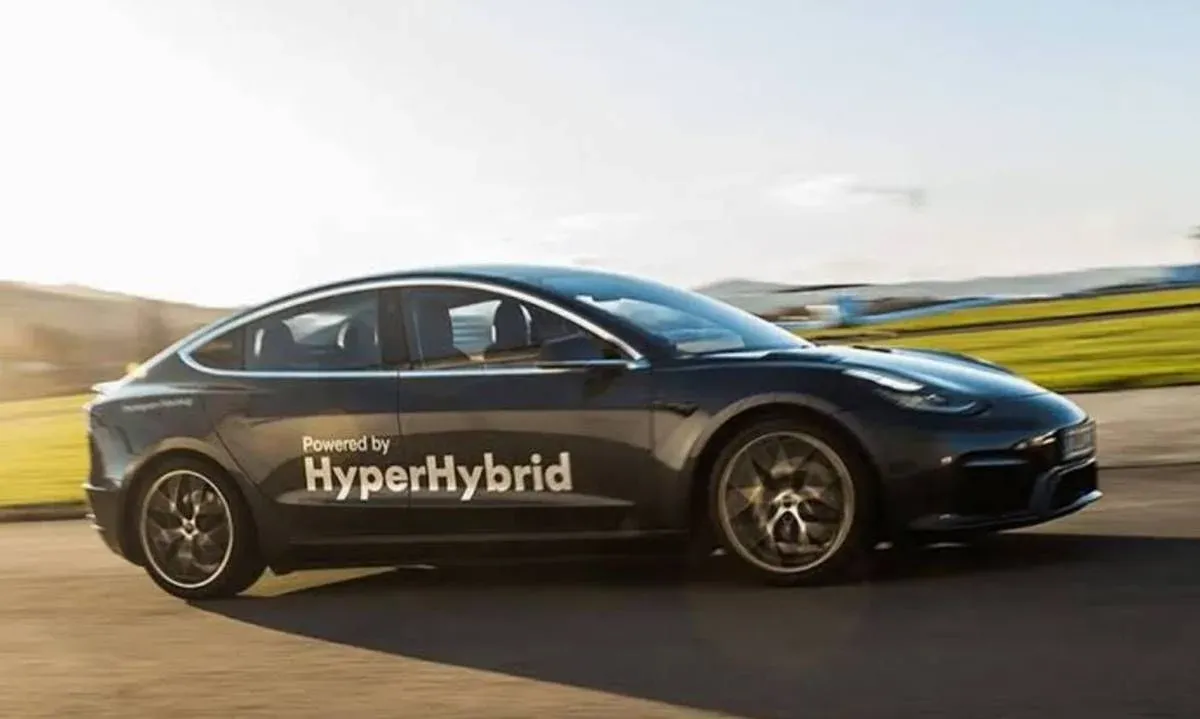
The most interesting part of this story is that we already discussed this technology on Forococheselectricos in January 2020, when Obrist presented a proposal that sparked considerable interest at the time: converting a Tesla Model 3 into an electric vehicle with an extended range (EREV) by significantly reducing the size of its battery and adding a small internal combustion engine.
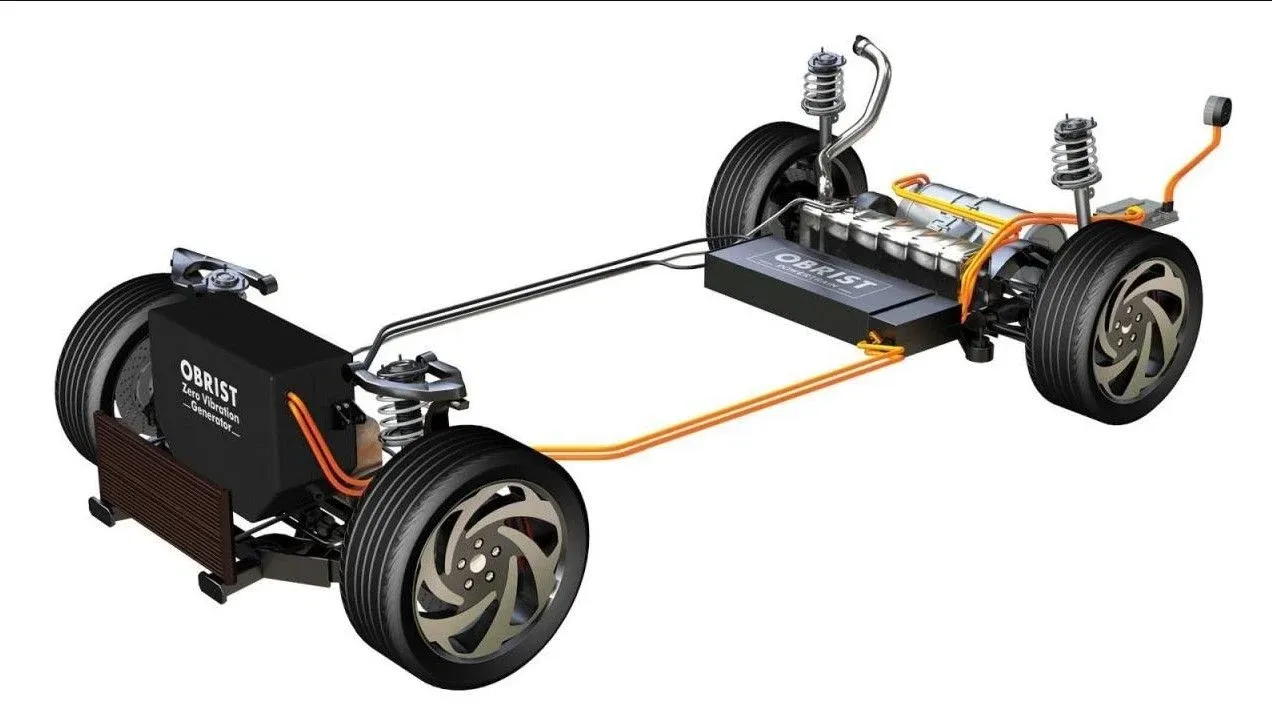
The project, named Mark II, stemmed from a simple idea. Instead of installing a high-capacity battery like Tesla did, Obrist proposed using a pack of just 17.3 kWh, along with a two-cylinder gasoline engine that functioned as an electric generator. This engine produced 40 kW (54 HP) of power, though it wasn’t responsible for directly driving the wheels.
The goal was to take advantage of the benefits of electric propulsion while avoiding the cost of a large battery. According to the company’s calculations, this combination would allow for a total range of up to 1,000 kilometers—a figure particularly impressive in 2020, when charging infrastructure was still much less developed than it is now.
The proposal also had a significant economic component. Obrist claimed that once sufficient production volumes were reached, his propulsion system could be manufactured for around 4,500 euros. He even suggested that a car like the Tesla Model 3 equipped with this technology could have its price reduced by more than half.
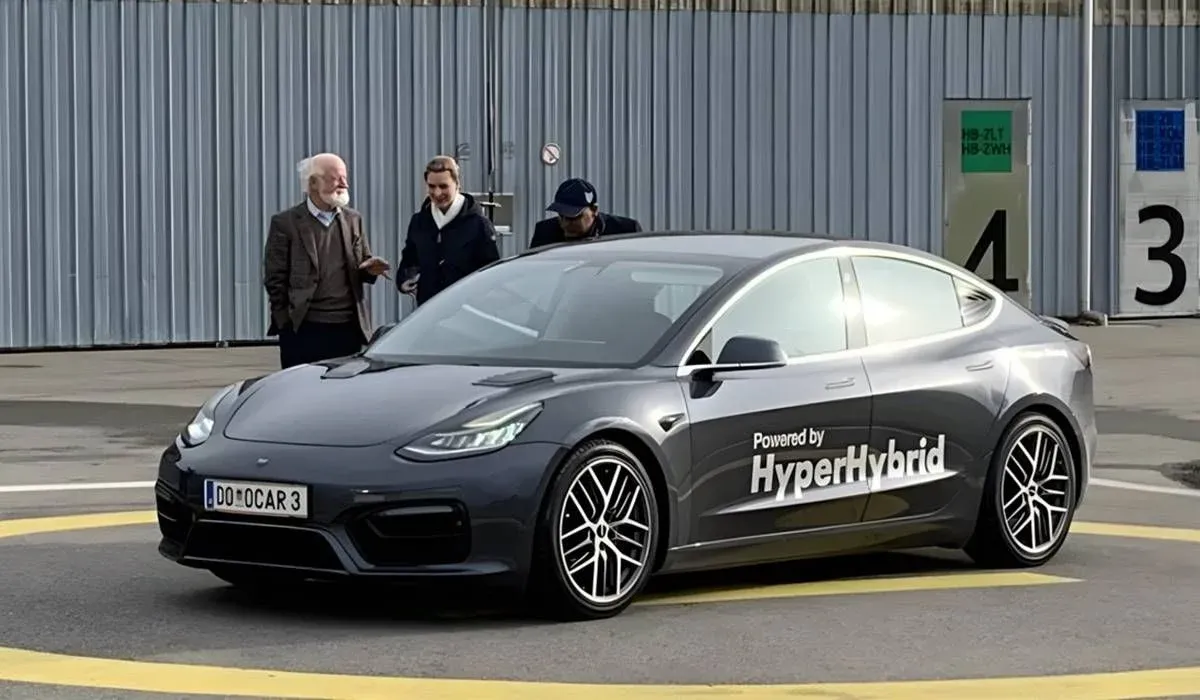
These were very ambitious claims, especially considering that it was still a technology in the development stage. But its proponents seemed convinced they had found an alternative capable of competing with conventional electric cars.
In fact, the company claimed to have signed a licensing agreement with an international partner, whose identity was never made public, and that the first production cars equipped with the HyperHybrid system would hit the market in 2023.
The problem was that those cars never arrived. Obrist continued to showcase its prototypes at various European auto shows, but the announcements never turned into industrial contracts capable of sustaining the business.
In our article from January 6, 2020, we already explained some of the technical details of that transformation. Obrist started with a Model 3 Standard Range Plus, replacing its original battery of about 50 kWh with one of 17.3 kWh made up of 18650 cells and weighing just 98 kilograms. With this new battery, the car could travel about 96 kilometers on electric power alone, while the gasoline generator significantly extended its range.
According to figures provided by the company at the time, the small engine could achieve a thermal efficiency of 40%, with an advertised fuel consumption of only 2 liters per 100 kilometers. To accomplish this, it operated at a relatively constant speed and came online when the car exceeded 65 km/h. The gasoline tank had a capacity of approximately 20 liters.
There was also talk of surprisingly low material costs: 2,000 euros for the battery and another 1,200 euros for the generator, not including labor. These figures were used by Obrist to argue for the economic viability of his proposal, though they were never proven in large-scale industrial production.
We already pointed out at the time that converting a Tesla into a car with a gasoline engine seemed like a complete absurdity, although we also recognized that the technology could have interesting applications, such as restoring range in older electric cars with degraded batteries. Six years later, what appeared to be an extravagant but technically intriguing proposal has remained at the prototype stage.
From gasoline engines to synthetic methanol and multimillion-dollar promises
Far from giving up on his vision, Obrist continued to expand his ambitions. In 2022 he introduced an updated version of his technology, this time using a Tesla Model Y equipped with a system capable of running on synthetic methanol, a fuel the company named aFuel.
The narrative also changed. It was no longer just about producing cheaper cars with greater range, but about offering a solution that, according to its leaders, could achieve a negative carbon emissions balance.
The company claimed that its vehicles could remove 24 grams of CO2 from the atmosphere per kilometer traveled. The explanation lay in the fuel production process, which involved capturing carbon dioxide from the air and storing a portion permanently underground. However, those figures relied on an industrial system that had not yet been developed at the necessary scale.
The ambitions grew even further in 2024, when Obrist announced a partnership with an Abu Dhabi investment fund to advance the construction of large-scale synthetic methanol production facilities in countries such as Namibia, Egypt, Thailand, and the United States.
The company talked about investments in the tens of billions of euros and massive facilities, each costing approximately 16 billion euros. According to their estimates, around 2,700 such plants would be needed to replace fossil fuels on a global scale, requiring an investment of nearly 50 trillion euros.
These are staggering amounts for a company that, despite all its advertisements, has yet to commercialize its propulsion system in even a single production car.
Meanwhile, Obrist made significant efforts to defend its technology before European institutions. The company pressured Brussels to reconsider its emission reduction plans and allow internal combustion engines to continue being used beyond 2035 through the use of synthetic fuels.
By the end of 2024, it claimed that its HyperHybrid system could emit 85% less CO2 than a comparable conventional electric car, a highly questionable assertion that relied on assumptions used to calculate emissions across the entire energy cycle.
Yet neither the European debate over synthetic fuels nor proposals to relax emission targets managed to save the project.
The company’s founder, Frank Obrist, attributed the bankruptcy to years of accumulated high development costs, failed negotiations with potential investors, and the crisis facing Europe’s automotive industry.
The Austrian creditors protection association AKV has also identified the growing preference of European manufacturers for electric cars powered solely by batteries as one of the factors.
In fact, the market situation has changed significantly since 2020. Battery costs have dropped, driving ranges have increased, and charging infrastructure has improved. At the same time, extended-range electric systems have found a niche in certain markets, especially in China, though demand for them has entered a contraction phase, while plug-in hybrids face competition as the market favors pure electric options.