
Used electric motorcycle: is now the right time to get one?
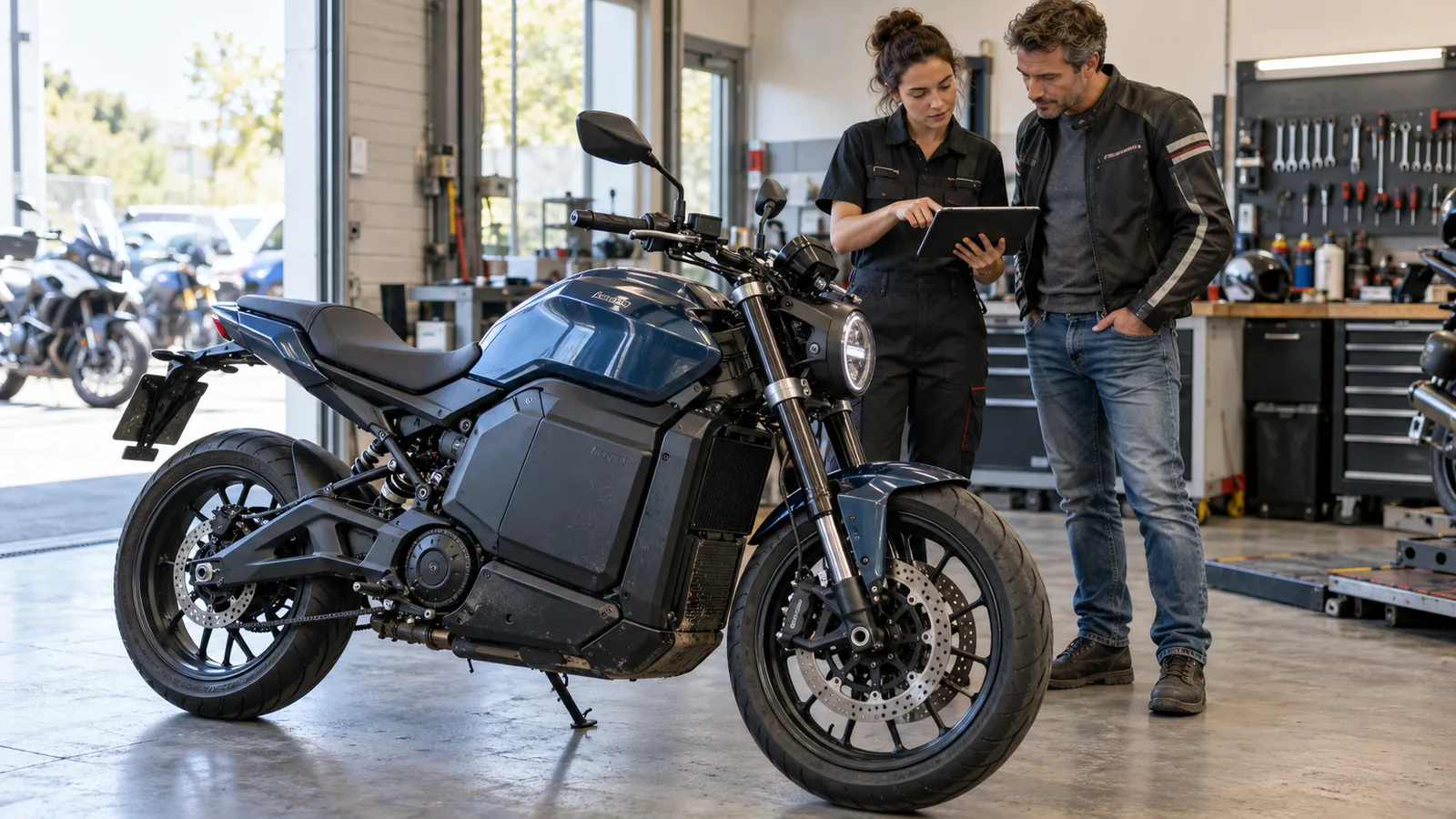
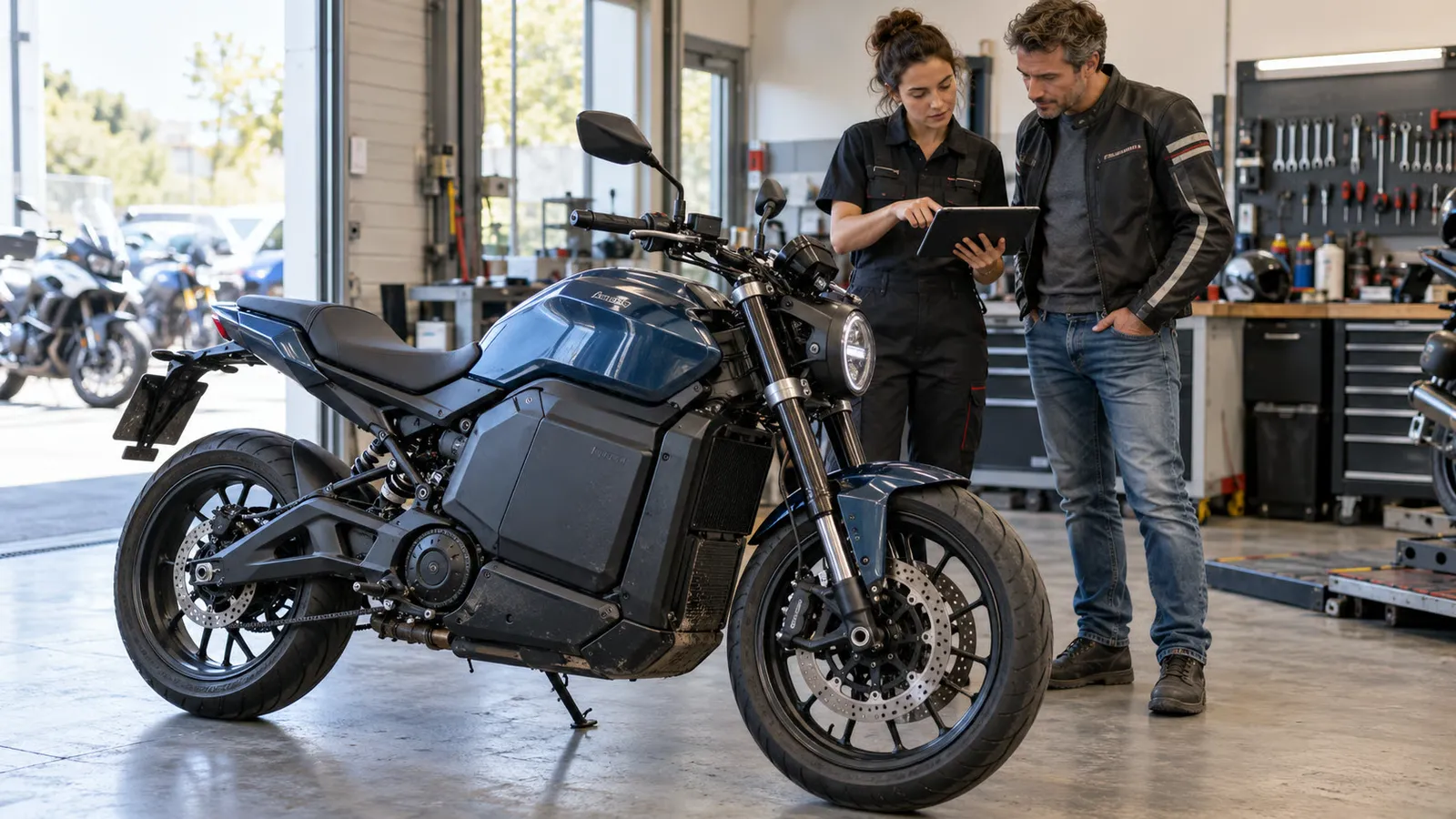
From small 125cc urban bikes to more powerful roadsters, electric motorcycles also have a used market. Prices can become attractive, provided certain factors are checked before making a purchase. Starting with the battery, but not limited to that.
Purchasing an electric motorcycle might make you forget old habits related to traditional engines. Engine displacement no longer matters, prestigious brands may not be available in this category, and new considerations like charging type or battery condition must now be taken into account.
A Zero for less than 9,000 euros, a Super Soco at the price of a well-equipped electric bike, a Harley-Davidson LiveWire that has become much more affordable... A quick browse through classified ads shows that if the price of new models put you off, used options might deserve closer consideration.
That said, buying an electric motorcycle requires reevaluating your criteria. Overall condition, mileage, and receipts remain essential, but other factors gain importance. What is the actual range? How is it charged? And who will be able to repair it if an electronic component fails prematurely?
A market exists, even if you sometimes have to look a bit
In our last consultation, La Centrale listed around 70 electric motorcycle listings, including about twenty Zero models. Offers can also be found on Leboncoin and at dealerships, with two quite different categories: small machines designed for urban commuting and more powerful motorcycles capable of expanding the range of rides slightly.
Be cautious with these listings, however. The used category also includes demo vehicles and almost new motorcycles, sometimes with only a few kilometers on the odometer. For buyers, this means they need to compare options, possibly expand their search area, and consider resale value. In such a specialized market, I wouldn’t expect the same ease in finding a buyer as with a common, widely available engine bike. In that case, it’s better to buy a machine you intend to keep for a while.
In the listings reviewed, the Super Soco TC Max 125 models are priced around 1,500 to 3,500 euros. A 2021 model with 12,000 kilometers was listed at 2,400 euros, while another 2024 model with 3,000 kilometers was priced at 2,800 euros.
At Zero, the examples listed range from a 2018 FXS priced at 4,500 euros with 45,250 kilometers on the odometer, to a 2021 DSR offered at 9,990 euros with 15,000 kilometers. In between, a 2024 S model was listed at 8,290 euros with less than 2,000 kilometers. Among the Harley-Davidson LiveWires, several 2020 and 2021 models were available for around 13,000 to 16,500 euros. Yes, the vehicle was expensive when it first launched, it remains very costly as a used bike, and one truly needs to be passionate about electric bikes to spend such a large sum on a used unit that can only cover barely 200 kilometers and takes one to two hours to charge.
When it comes to pricing, the best benchmark remains the actual price of a new unit available, including any discounts. A used bike might seem very attractive compared to the original catalog price, but much less so when compared to an inventory clearance deal.
Start with your needs before choosing a model
The first rule, simple common sense: define your needs before starting your search. To put it simply, if you’re a beginner, the electric bike market is divided into three categories that have little in common.
Urban: scooters and small motorcycles for city use and short trips (Easy Watts, NIU, VMoto, Super Soco, Silence). These are chosen for their convenience, easy parking, and often a removable battery.
All-terrain and sports: Sur-Ron, Talaria, Stark. These are recreational vehicles designed for off-road or track use, sometimes not approved for road use.
Road bikes: roadsters and sports bikes capable of long distances (Zero, LiveWire, Energica, Ultraviolette), with large batteries and, in some cases, fast charging.
Making the wrong category choice is the most costly mistake. A crossbike won’t take you to the office, and an urban scooter won’t provide any enjoyment on a country road. Therefore, everything that follows stems from this initial decision.
Licenses and approvals: avoiding pitfalls
This is the question everyone who was used to riding a traditional bike with an appropriate license asks: with an electric motorcycle, it’s the power in kilowatts that matters, as engine displacement no longer counts. The thresholds valid in 2026 are as follows:
AM license (formerly BSR), available from 14 years old: equivalent to 50cc bikes, speed limit of 45 km/h, engine power up to 4 kW. An 8-hour training course is required and mandatory for anyone born after January 1, 1988.
A1 license, available from 16 years old: equivalent to 125cc bikes, engine power up to 11 kW.
A2 license, available from 18 years old: engine power up to 35 kW.
A license: no power limit, available after two years of holding an A2 license and completing a 7-hour training course, or directly at age 24.
If you already hold a license for a conventional motorcycle, it remains valid for an electric bike with equivalent power. Meanwhile, a B license, along with a 7-hour training course, grants access to 125cc bikes with engine power up to 11 kW.
Be careful, however, with homologation. Many popular off-road models, with Sur-Ron and Talaria leading the way, are available in two versions: one approved for road use (with registration, lighting, turn signals, rearview mirror, and mandatory insurance), and the other intended for private terrain use only. Driving this second version on public roads is illegal, voids your insurance coverage, and risks confiscation. Check the homologation status on the certificate before making any purchase.
Check the actual range and test recharging
You certainly know this, as it’s a recurring topic regarding electric vehicles: the advertised range is a laboratory figure. Manufacturers usually provide a value measured according to the WMTC (World Motorcycle Test Cycle), the equivalent of the automotive WLTP standard, which is sometimes based on a rather optimistic urban figure. To avoid disappointments in real life, plan for a comfortable safety margin, knowing that three main factors reduce range faster than in cars: speed, since the aerodynamics of two-wheeled vehicles are unfavorable and high speeds drain the battery quickly; cold weather; and, of course, how aggressively you press the throttle. A roadster advertised to have a range of 250 km will often achieve only 170 to 200 km in mixed conditions, and significantly less on the highway. Rely on independent tests and user feedback instead.
age than those of pretty paper brochures or manufacturers’ websites.Charging is often the factor that determines whether an electric motorcycle is suitable for your intended use and your travel philosophy.
The vast majority of scooters and small motorcycles can be charged using a standard household outlet, taking 3 to 8 hours depending on capacity. In many urban models, the battery is removable: you can take it with you to charge it, which makes a big difference for those living in apartments without a garage or storage space. If your employer permits it, you can also charge it during the day at work.
Fast DC charging via the CCS Combo standard remains available only for a few large roadsters, such as certain Zero models, Energica bikes, the LiveWire One, or the new Honda WN7. It allows you to charge most of the battery—typically 20% to 80%—in less than an hour, or two hours for a full charge from 0% to 100%, which is useful only if you plan on long trips. The question for you is whether you can charge your bike where you stay overnight. If so, the availability of public charging stations won’t matter much to you. In a condominium, your right to a power outlet enables you to install a charging station without waiting for a vote by the owners’ assembly.
Also read
This electric motorcycle that’s doing well in France isn’t eco-friendly at all
The battery: the heart of electric vehicles
The first reaction is to ask a workshop familiar with the brand for a diagnosis. Depending on the model and available tools, they can provide information about the battery’s health status (SOH), its remaining capacity, and any recorded defects. Zero mentions access to the health status of modules through its dealer diagnostic tools for the relevant configurations.
A dashboard showing 100% simply means the battery is charged to its maximum level it can still accept. It does not indicate what capacity it retains from when it left the factory.
Mileage is not sufficient either. A bike that has been driven little may have been left idle for a long time in poor conditions. Because, contrary to what an old advertisement claimed, a battery doesn’t wear out only when in use. There’s also calendar aging, or degradation due to age. Ask where it was stored, for how long, and what charging habits were used. Zero’s storage recommendations emphasize the importance of a cool and dry place.
If possible, if you have the chance to test the motorcycle, think about plugging it in to check the charger’s functionality, the condition of the outlet, and whether the specified cables are present.
In summary, I would prefer a motorcycle with a documented history over one described as “almost never used” without any additional information. Low mileage is certainly a reassuring factor, but it’s not the only one to consider.
Find a reliable service provider for maintenance
Before purchasing, I think it’s also useful to call the workshop that services motorcycles. Provide them with the serial number and ask if they can diagnose this model, source its parts, and work on its battery or charger. For an older machine, also ask about the repair options and the cost of replacement. Check the remaining warranty, what it covers, and the steps required to transfer it. For example, Zero provides a form for changing ownership. An oral promise from the seller does not replace these verifications.
This issue of follow-up requires special attention for brands that have faced difficulties. In the case of Energica, after the liquidation in 2024 and the announced revival in 2025, the manufacturer’s situation remains a concern for owners. Before purchasing at an attractive price, it is better to get a concrete answer regarding local support and the availability of parts.
After all, an electric motorcycle is still a motorcycle. Tires, brakes, suspensions, bearings, transmission, and signs of accidents need to be checked, as well as invoices, administrative documents, and any recall notices. For a machine over five years old sold to an individual, a technical inspection within the last six months is usually required.
Also read
Three years and 15,000 km on an electric motorcycle… Claudio has no regrets about buying his Energica Experia
The true cost of ownership
Like with any vehicle, the selling price is only part of the equation. Four factors deserve your attention:
Aids: Don’t expect much in terms of national support. The environmental bonus for two-wheelers was abolished by Decree No. 2024-1084, effective December 2, 2024, along with the conversion subsidy. Only local incentives remain, which vary greatly: some cities offer up to a thousand euros, while others completely exclude two-wheelers. Check with your local municipality and region.
Insurance: usually 20 to 30% cheaper than an equivalent gasoline-powered model for scooters and 125cc bikes, at around 200 to 300 euros per year for a 50cc equivalent. However, be cautious: on a high-powered roadster, the insurance cost can approach or even exceed that of a gasoline sports bike, and batteries are often excluded from basic warranties. Make sure to get them explicitly covered.
Maintenance: this is the advantage of electric bikes. No oil changes, no clutch, a very simple mechanism; routine maintenance is almost non-existent.
Resale value: the used electric bike market is still young, making it difficult to predict depreciation rates. A long-term, transferable warranty, like those offered by Zero, better protects the resale value.
The occasion market seems like a solid option for getting into electric motorcycles without breaking the bank too much, as long as you choose a bike suitable for its intended use, whose condition is known, and which can be properly maintained.