
Over 600,000,000 euros and eight strategic locations: The government is preparing a historic change for electric vehicle travel

The Spanish government has chosen a partnership model with private companies to expand services for electric vehicles on Spain’s main highways. This approach allows new facilities to be developed without the government having to take direct responsibility for their construction, and it includes operation contracts of up to 25 years for the winning companies.
The initiative was approved by the Council of Ministers on October 13th and involves eight new service areas with ultra-fast charging stations, located along five major routes of the national network. The total cost, excluding VAT, amounts to 611.9 million euros and covers the economic scope of the concessions; it should not be confused with the budget specifically allocated for building the facilities.
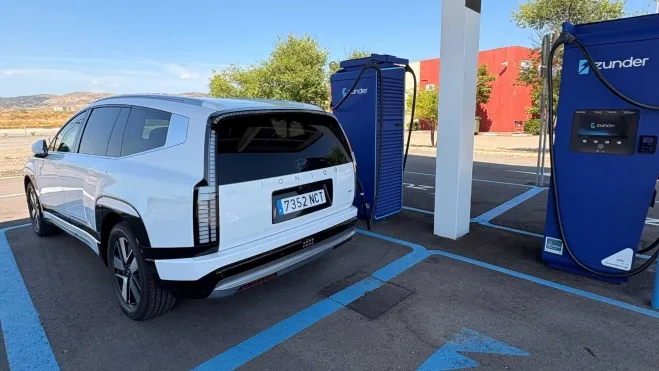
A deal worth over 600 million to be funded by the winning companies
The Ministry of Transport and Sustainable Mobility has structured this project into six lots, allowing for the use of publicly owned land that is currently underutilized. The selected companies will be responsible for developing the technical plans, obtaining approval from the General Directorate of Roads, and covering the construction costs. The initial estimate for these costs is around 78 million euros before VAT, a figure significantly lower than the total value of the contracts.
In exchange for this investment, the winners will receive the right to commercially manage the service areas for a period of 20 to 25 years, though they will have to pay a fee to the government. This approach aims to facilitate the entry of new private operators and increase the availability of charging facilities on highways without relying on direct government funding.
From Madrid to Barcelona: the roads where new chargers will be installed
The events will take place in eight provinces and are spread across the A-2, A-3, A-4, A-8, and AP-7 highways, with locations in Perales de Tajuña (Madrid), Saelices (Cuenca), Calatayud (Zaragoza), Montoro (Córdoba), La Caridad (Asturias), Penagos (Cantabria), Algemesí (Valencia), and La Roca del Vallès (Barcelona). Five of these sites will have facilities on both sides of the road to facilitate use without needing to leave the main highway corridor.
The largest budgeted projects include La Roca del Vallès, located at kilometer 129 of the AP-7 highway, with a budget of 16.40 million euros, and Montoro, at kilometer 353 of the A-4 highway, with another 16.30 million euros. Following these are Algemesí with 15.82 million euros and Saelices with 15.71 million euros. The remaining projects are allocated to Penagos (11.20 million euros), Perales de Tajuña (6.66 million euros), Calatayud (6.52 million euros), and La Caridad (5.84 million euros). All of these construction budgets include VAT.
Europe pushes to expand charging infrastructure on major roads
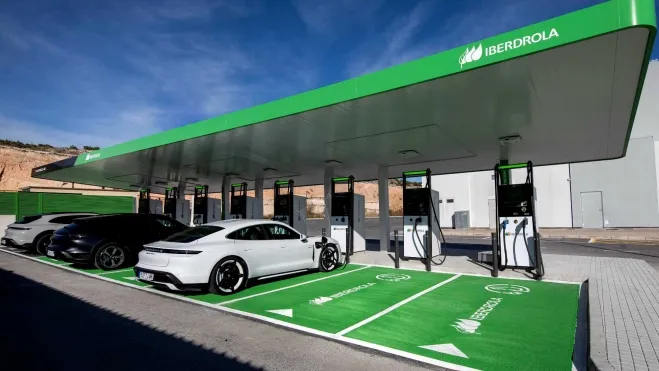
The project also meets the requirements set out by the European Regulation 2023/1804, known as AFIR, which establishes deployment and capacity requirements for charging infrastructure in the trans-European transport network. Therefore, Transportes will use these initial actions as a pilot program to test the functioning of the concession model and assess its potential expansion to other state-owned corridors.
However, the approval does not yet mean that the stations are under construction or that there is a confirmed opening date, as the bidding process, selection of companies, final approval of the projects, and construction work must first be completed. Therefore, their operation will depend on the progress of these procedures and the private sector’s response to the conditions set by the government.