
Plug-in hybrids emit six times more CO₂ than advertised and cost 680 euros more per year.
Plug-in hybrids are once again under scrutiny due to the gap between official figures for fuel consumption and emissions and reality. A new study by Transport & Environment (T&E) warns that this gap continues to widen, despite measures taken by the European Union to address the issue.
This discrepancy affects not only the figures listed in technical specifications. It also has direct consequences for drivers, who may end up spending significantly more on fuel than they expected when purchasing their car. Therefore, the organization urges Brussels to uphold the planned changes in regulations and not back down under pressure from the industry.
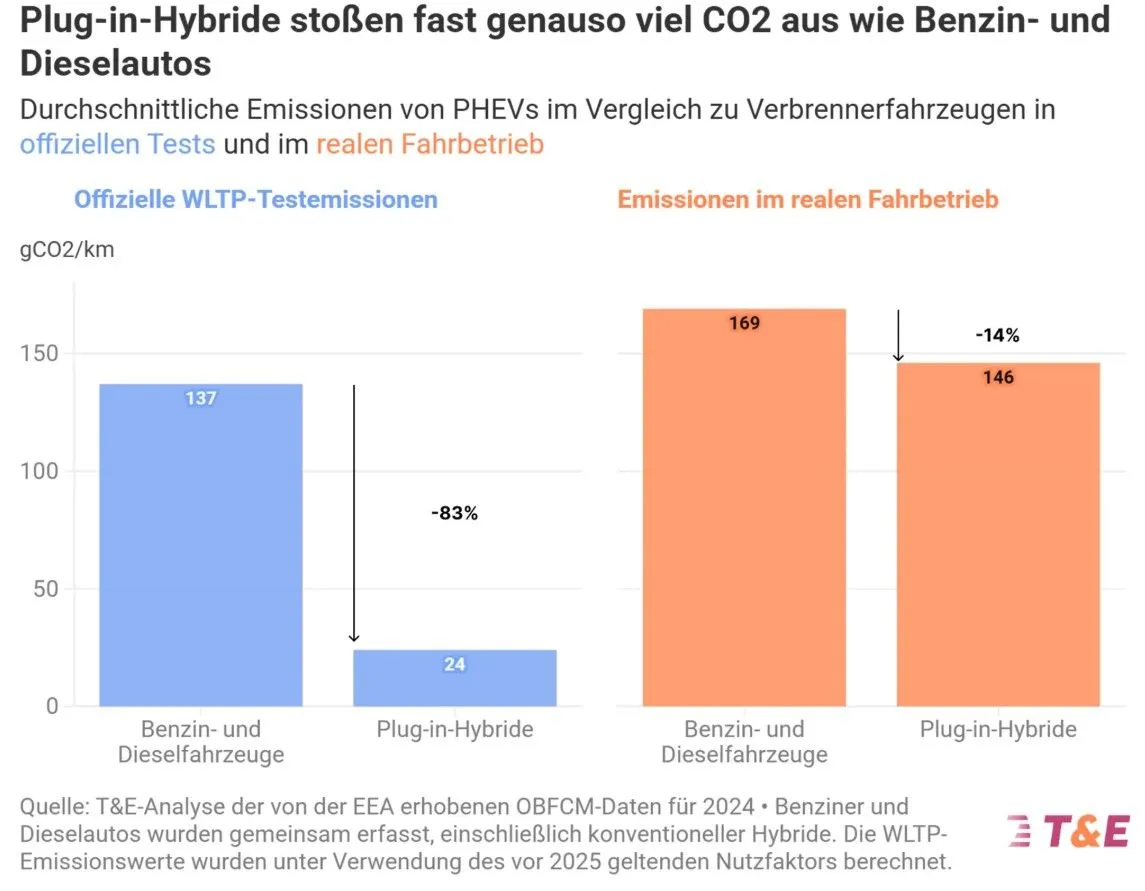
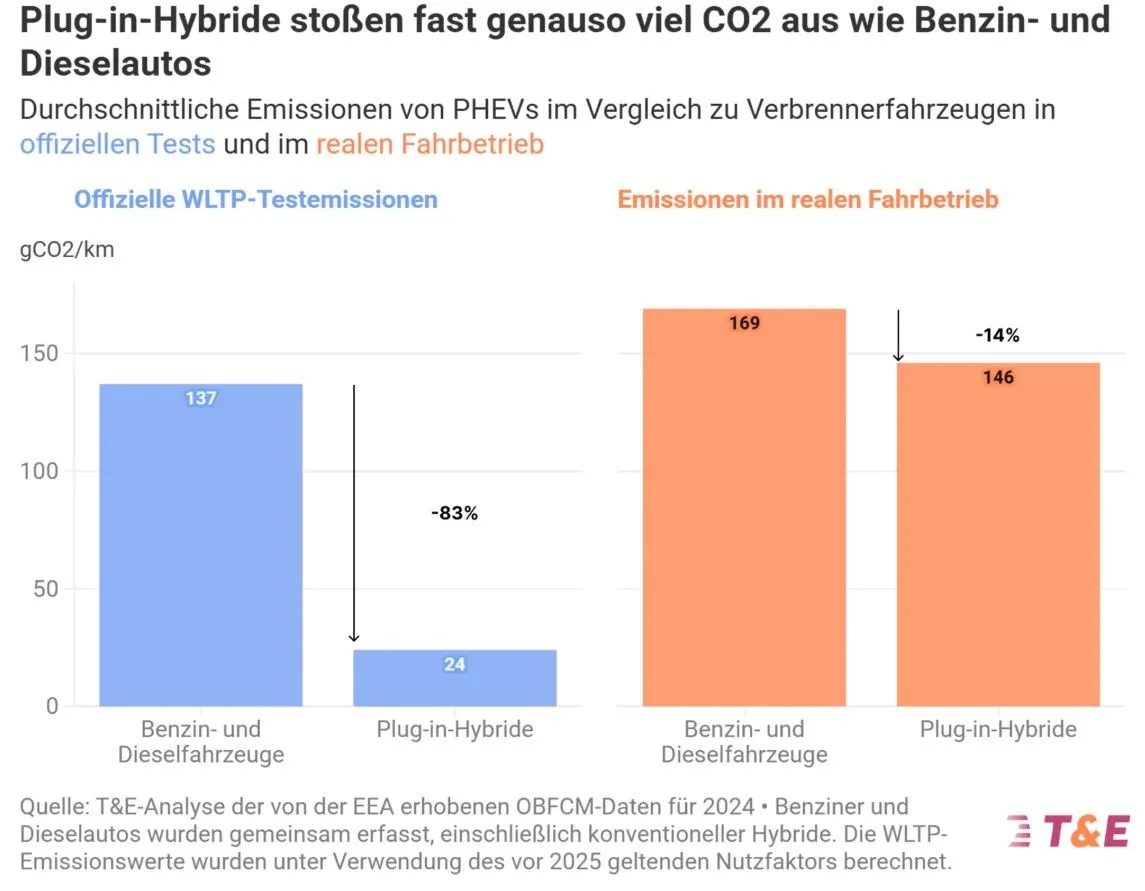
According to T&E’s analysis, plug-in hybrids registered in 2024 emitted about six times more CO₂ under real driving conditions than their official figures indicated. This gap widened compared to 2023, when actual emissions were roughly five times higher than those approved. Additionally, the average extra fuel cost for those who purchased one of these models in 2024 reached 680 euros per year.
The research, based on the latest data available from the European Environment Agency, also questions the emission reductions attributed to them. While official figures show an 83% decrease compared to conventional internal combustion engines, actual data indicates a reduction of only about 14% when compared to traditional gasoline and diesel vehicles as well as conventional hybrids.
Another key point highlighted in the report is that the internal combustion engine can still operate even when the driver is driving in electric mode. According to T&E, this occurs over approximately one-third of the total distance traveled, which limits fuel savings and increases actual emissions compared to those indicated by the certified figures.
The European Union is preparing new changes to bring official figures closer to reality
To address this issue, the European Union is modifying what is known as the efficiency factor, a parameter that estimates what proportion of the distance traveled by a plug-in hybrid is covered using electricity. This calculation directly affects the official CO₂ emissions assigned to each model, and thus influences how manufacturers report their performance relative to European targets.
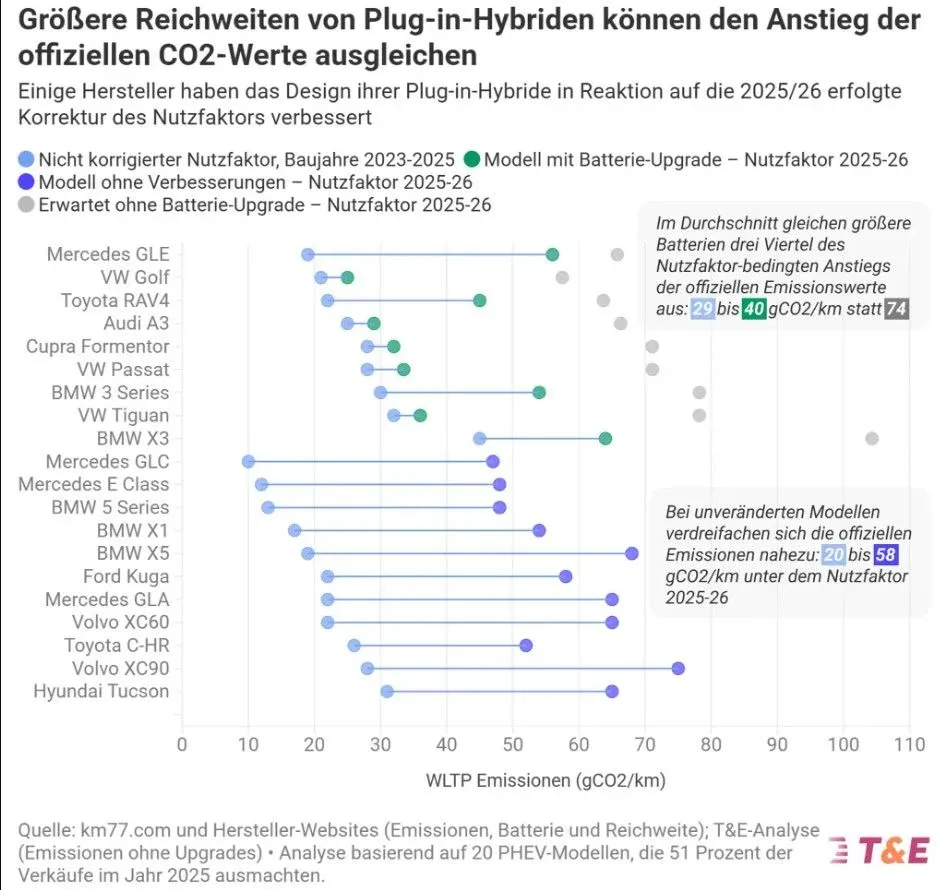
The first correction, applied during 2025 and 2026 according to each vehicle’s homologation schedule, has already had an impact on the market. According to T&E, manufacturers have responded by increasing battery capacity and the electric range of some models. These improvements have helped offset approximately three-quarters of the increase in homologated emissions caused by the change in calculation methods.
The organization believes there is still room to reduce emissions without giving up on plug-in hybrids. Greater electric range, more efficient combustion engines, improved aerodynamics, lighter materials, and more effective energy recovery systems could help keep official emissions below 50 grams of CO₂ per kilometer after the next update to the standards.
The next change is scheduled for November 2026 in the new homologations, with implementation following for new vehicles according to the European calendar. However, T&E warns that Germany is pushing to freeze the review as part of negotiations with France over a broader package of measures for the automotive industry.
Susanne Goetz, head of electric mobility at T&E Germany, believes halting the update would mean maintaining emission figures that do not accurately reflect the actual use of these vehicles. The organization argues that if such a proposal succeeds, manufacturers could continue to claim that their plug-in hybrids use more electricity than drivers actually consume, leading to higher fuel costs and increased European dependence on oil.
Volkswagen stands out for improvements in its plug-in hybrids
The report also analyzes 20 of the best-selling plug-in hybrids, which accounted for 51% of sales in this technology segment during 2025. Among the manufacturers studied, Volkswagen Group made the most significant improvements following the first adjustment to the efficiency factor. According to T&E, changes made to five models enabled compensation for 90% of the increase in official emissions resulting from regulatory modifications.
For T&E, this case shows that adjusting the rules does not have to harm manufacturers who invest in improving their products. On the contrary, more realistic official figures can serve as an incentive to develop models that can travel more kilometers on electric power and consume less gasoline or diesel in everyday use.
The organization also warns that keeping the rules introduced in 2025 and 2026 unchanged would leave the actual emissions of plug-in hybrids 56% higher than what official calculations show, according to their estimates. This would also reduce pressure on manufacturers to sell more electric cars and meet Europe’s CO₂ targets set for 2030.
Goetz recalls that this debate comes a decade after Dieselgate and calls on European institutions to prioritize the interests of drivers. According to T&E, buyers need to know the fuel consumption and emissions they can expect under real conditions, rather than relying on homologation figures that may differ significantly from what actually happens on the road.
The core issue goes beyond a technical discussion about how to calculate emissions. If plug-in hybrids consume more fuel than advertised and their emission advantages are smaller than expected, buyers might end up paying more for a technology whose benefits have been presented in overly optimistic terms. The next European review will determine whether the standards become more aligned with reality or if some of that gap remains.