
Hydrogen? It’s lighter than air but loses altitude
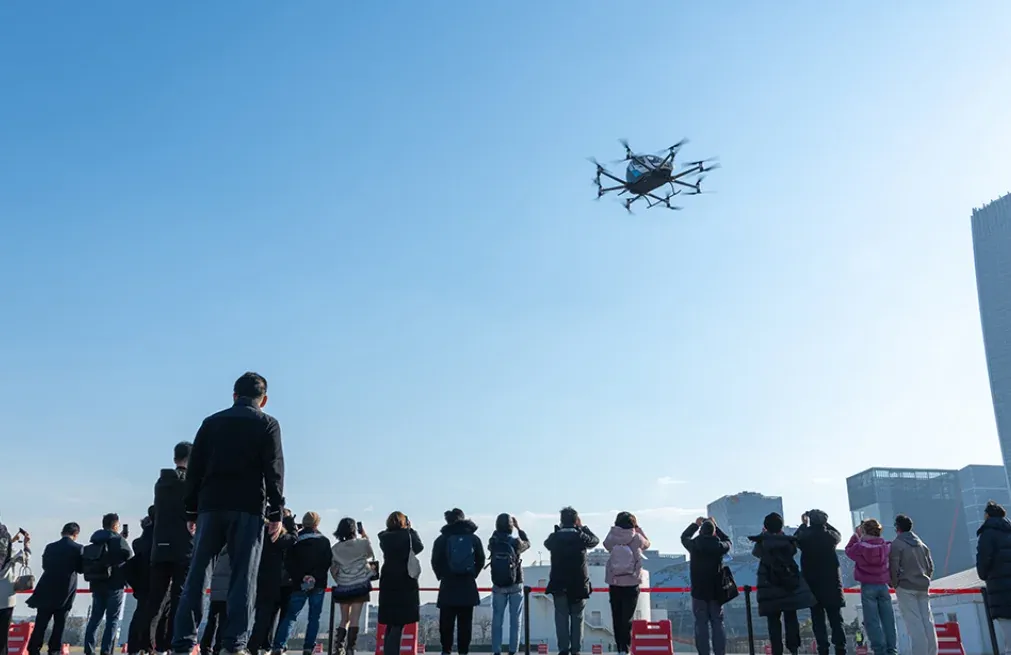
Hydrogen is losing ground even in the sky. Ivone, an engineer and our “correspondent from Shanghai,” sets aside cars and looks up at the heavens: lighter batteries, pilotless flying taxis, and on November 14, the first crewed flight of a fully electric Chinese commercial aircraft. For her, these are signs that hydrogen is losing ground even in aviation, the last stronghold of transportation. She concludes with a message to Airbus and a question for you readers.
BY Ivone Benfatto
Today I want to share and discuss with you some recent news I’ve read here in China. It relates to a topic close to my heart—batteries versus hydrogen—but this time it’s not about roads: it’s about the sky.
Lighter Batteries: Hydrogen Losing Ground
We start with batteries. CATL, the Chinese battery giant, has already flown a 4-ton aircraft using cells with a capacity of 500 Wh/kg and is experimenting with aircraft weighing over 8 tons. Meanwhile, Chinese laboratories are looking further ahead: this year, research on lithium metal cells with capacities of 600 and 700 Wh/kg was published in journals such as Nature and Nature Communications. CATL itself has identified lithium-air as its next frontier, with a prototype reportedly achieving over 1 kWh per kilogram.
As an engineer, I want to set the record straight right away: the Wh/kg figure for a lab cell is not the same as that of a battery pack certified for flight, and it takes years between a published result and an industrial product. But the trend is clear, and I’m convinced that 1 kWh/kg will only be a first milestone—they won’t stop there. In practical terms, this means opening the door to battery-powered air transport. So, let me say it plainly: hydrogen loses another edge in terms of competitiveness for transportation.
When I Believed in Hydrogen
Those who read my work know my stance: hydrogen makes no sense for road transport, not only for cars but also for heavy vehicles like buses and trucks. We discussed this here on Vaielettrico a few weeks ago as well.
No Thanks to Hydrogen Refill Stations: Some Giving Up Millions from PNRR
I must admit, though, that I didn’t always think this way. Between 2000 and 2002, in Munich, I saw the first experiments with hydrogen vehicles and truly believed that would be the path forward for road transportation. Today, reality shows otherwise.
Experts and analysts trying to predict the future, aware of the setbacks on roads, settled on a cautious forecast: hydrogen would remain, aside from industrial applications, for maritime and air transport. Well, it’s precisely in aviation that recent developments make me think this stronghold is starting to waver as well.
Flying taxis and regional planes in trouble
In China, electric flying cars are no longer science fiction. The civil aviation authority has already issued the first commercial licenses for pilotless vertical takeoff and landing taxis that can accommodate two to four passengers and are operated remotely. These vehicles are designed for urban travel or distances comparable to those between provinces in Italy. They could be put into public service as early as next year; I hope to be in China at that time to create a video for Vaielettrico.
The latest news from November 14: In Binzhou, Shandong, the CE-25A made its first crewed flight—the first Chinese commercial aircraft weighing 10 tons and powered entirely by electricity. It was developed by COMAC (the state-owned aircraft manufacturer), CATL for the batteries, and Shanghai Jiao Tong University. The aircraft has ten electric ducted fans on its wings, is designed for 19 passengers, and has a planned range of 400 kilometers at 300 km/h (read more). Before this flight with two pilots and an engineer on board, it had already completed 19 fully autonomous flights, the first one in February. The Chinese authorities have already approved its type certification application.
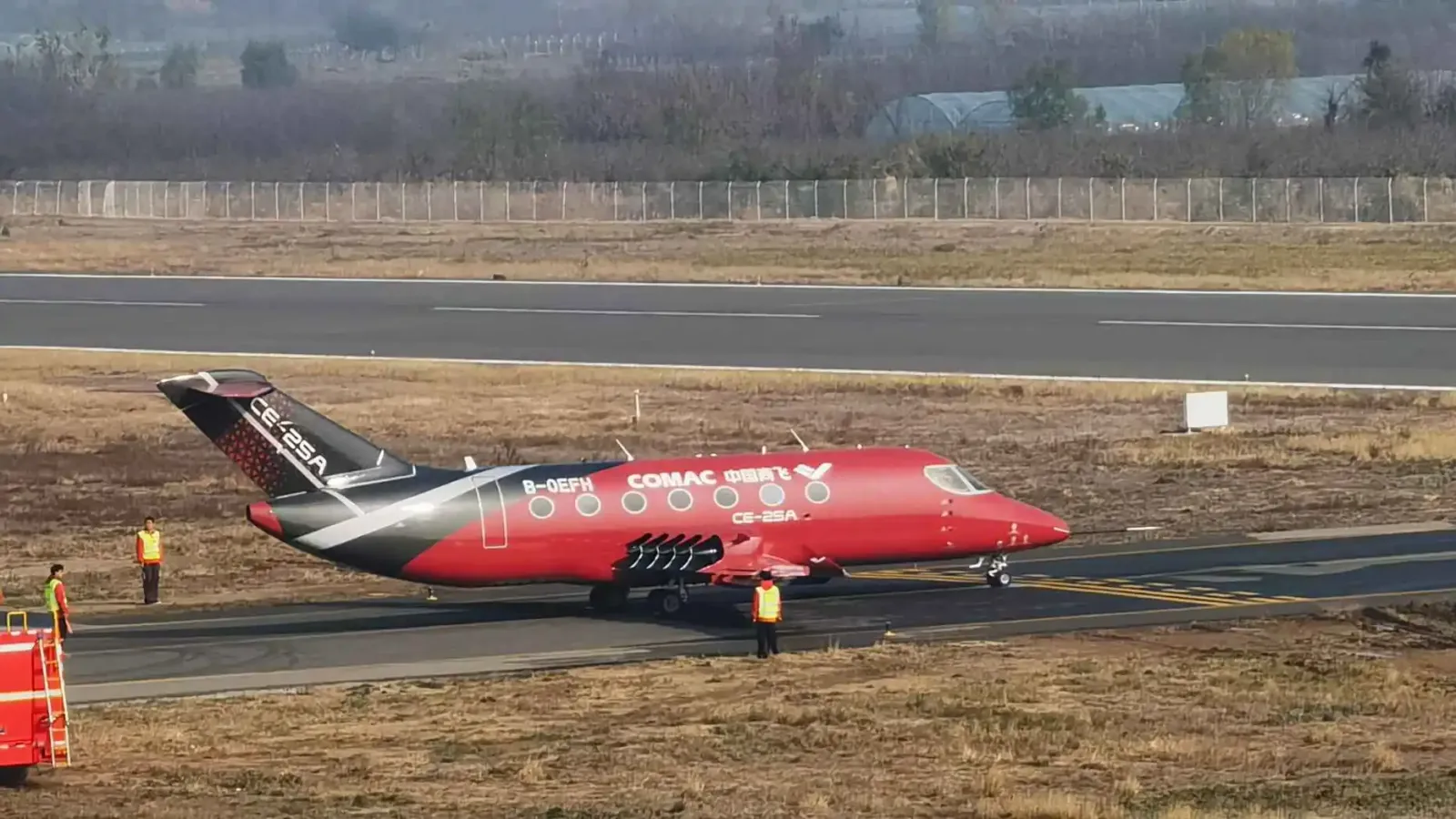
I find another aspect noteworthy as well: first, flights were conducted in fully autonomous mode, with no one on board, and only afterward were there flights with pilots and engineers. In the past, it was the test pilot who would fly a prototype for the first time; today, the software handles the first flight, with humans boarding once the aircraft has already proven it can fly. I consider this an interesting evolution in aircraft testing techniques.
We are dealing with regional flights: to put it in perspective, 400 km is roughly the straight-line distance between Venice and Rome. This is a preliminary application; as always, there will be further development, and I wouldn’t be surprised to see connections like Rome–Munich or Milan–Brussels in the future.
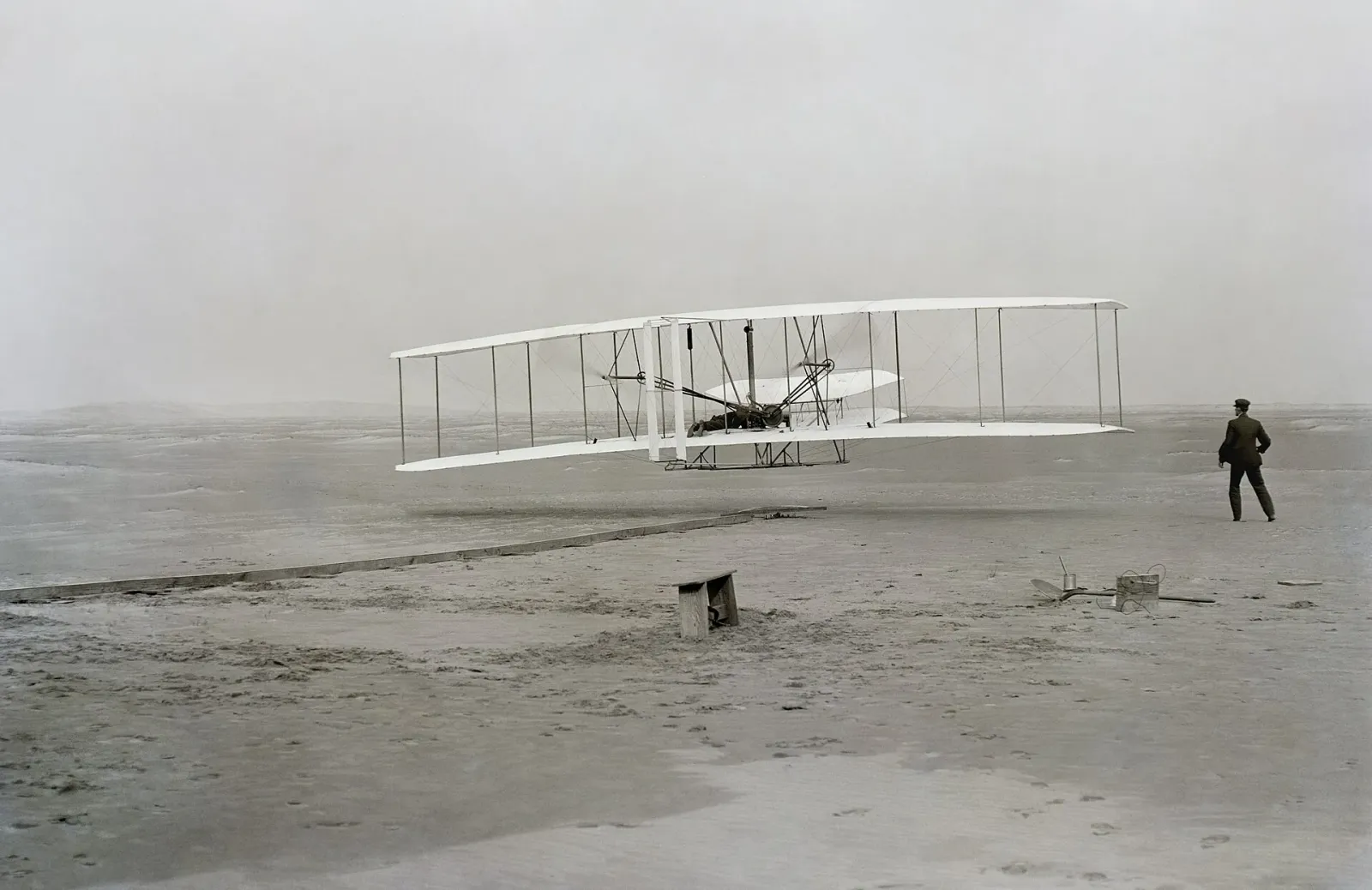
The flight lasted only a few minutes: just over a quarter of an hour in the air. Some might say, “That’s very short.” True. But compare it to the Wright brothers’ first flight on December 17, 1903, in Kitty Hawk: twelve seconds, 37 meters. Sixty-six years later, humans were walking on the Moon.
What about the long range?
As an engineer, I try to keep my feet on the ground, literally in this case. Battery-powered planes have a major disadvantage compared to those using liquid or gaseous fuel, including hydrogen: their mass remains constant during flight. In contrast, a plane powered by kerosene becomes lighter as it burns fuel, and on an intercontinental flight, fuel can account for one-third or more of the takeoff weight. By becoming lighter, it gains range.
It’s a nice handicap. But I’m writing this down here, in case, in ten years, someone goes back to read my articles on Vaielettrico: I wouldn’t rule out solutions for in-flight charging, similar to how military planes are refueled today.
Or we might return to the old days, when traveling from Europe to the United States required a stopover in the Azores. A few extra hours of travel for the sake of the environment is, I think, a price worth paying. And passengers could get off, stretch their legs, and rest a bit.
A message for Toulouse
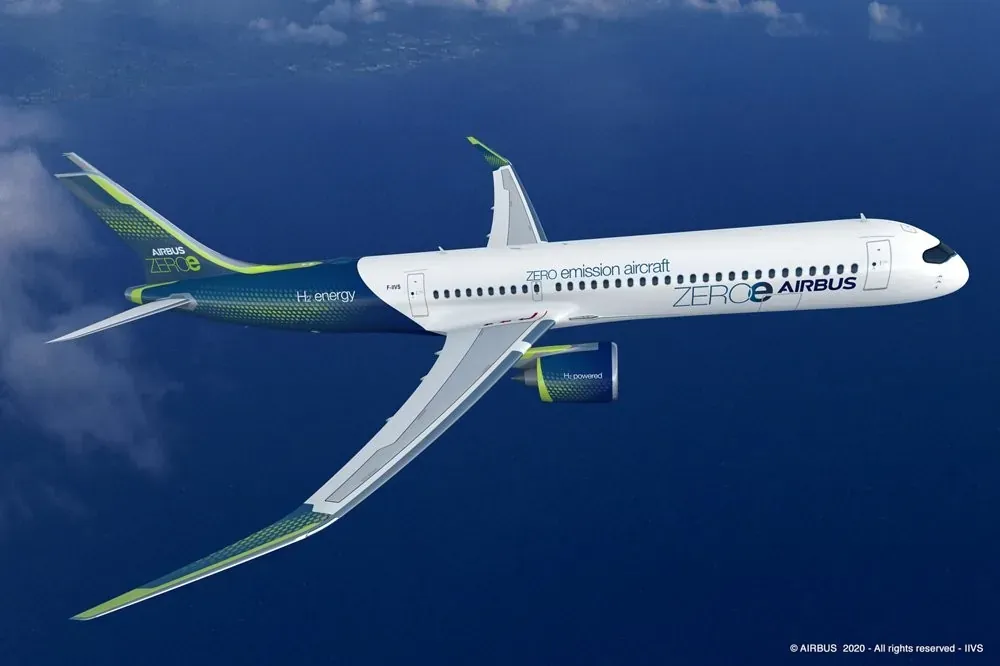
Finally, I hope these news reach Airbus’s executives as well. As far as I know, Airbus has focused on hydrogen for future aviation through the ZEROe project, and problems are emerging one after another. The program, which promised an aircraft in service by 2035, has been delayed and scaled back: according to media reports, it is now expected to be ready in ten to fifteen years, with the budget cut by about a quarter.
The challenges are well known: fuel management and supply, and especially onboard storage. Either liquid hydrogen at −253 °C is used, which requires a cryogenic system on the aircraft, or highly compressed gaseous hydrogen, which still demands enormous volumes. Even in the best case, with liquid hydrogen, hydrogen occupies about four times the volume of kerosene for the same amount of energy. Space must be found for the tanks, leaving the aircraft with a sort of large belly.
I hope it won’t happen like with cars: that the European industry continues to insist on one path without realizing it would be worth changing, or at least seriously considering the battery option. Otherwise, we risk the European aviation sector ending up in the same situation as electric cars.
Your turn
So I ask you: what do you bet on for air transportation—hydrogen or batteries? And also: would you trust Chinese certification systems and board the first commercial flights of pilotless flying taxis?
READ ALSO: “No personal cars in Shanghai: from app-based taxis to robotaxis at your doorstep” and watch the VIDEO