
The DGT identifies a major flaw in one of its latest key measures: municipalities report that it is impossible to implement it in this way.
14/10/2026 19:00
Updated to
14/10/2026 19:00
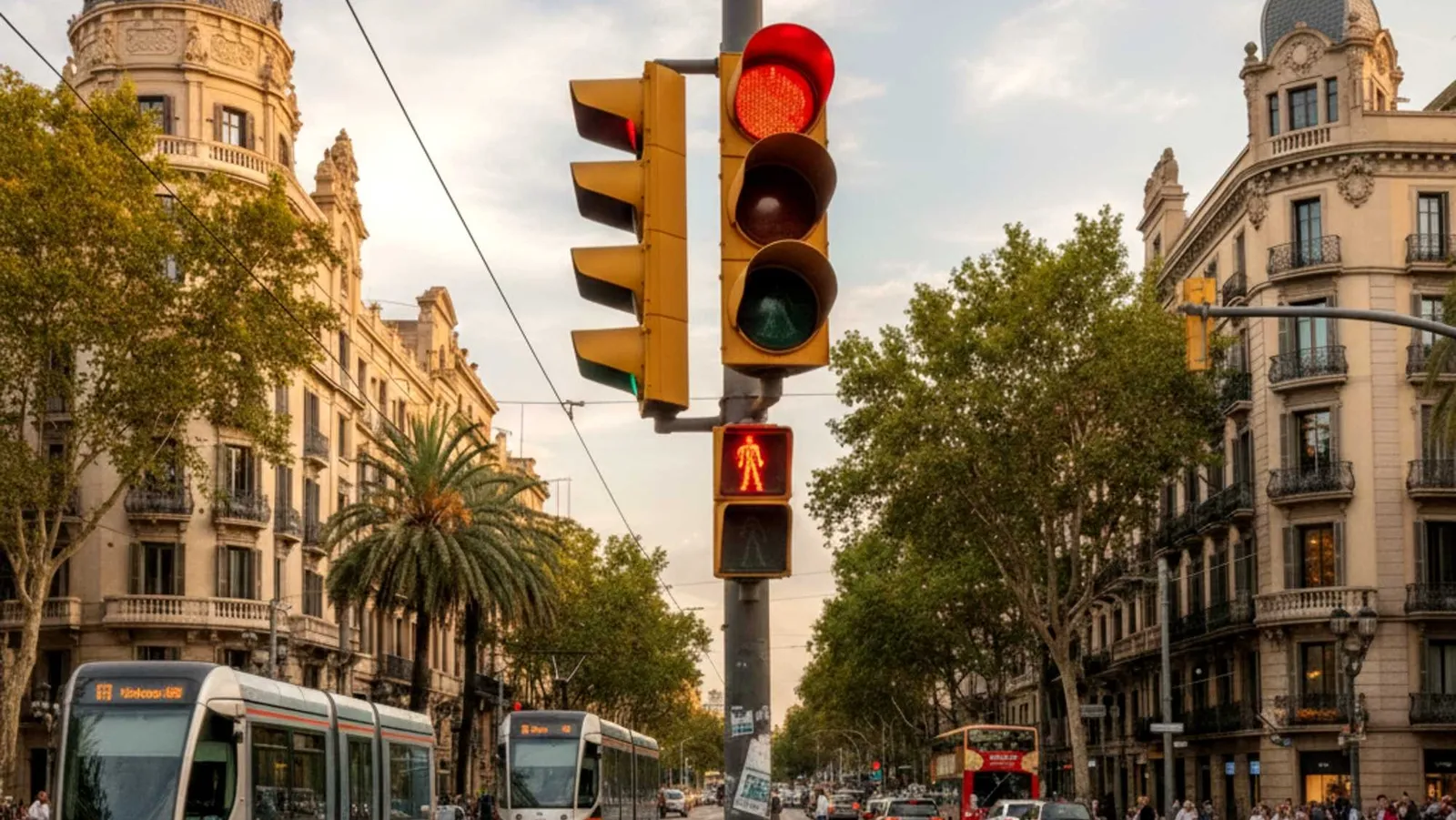
Regulating urban traffic has become one of the main obstacles to implementing the changes introduced by the General Directorate of Traffic (DGT) in the General Regulations on Road Traffic, as several municipalities have found that modifying certain intersections can end up affecting much of the mobility in their cities. The need to coordinate hundreds of traffic signals and prevent congestion is complicating a reform that took effect on October 1st last year.
The issue is particularly significant in Spain, where there is an extensive network of traffic lights whose operation relies on coordinated programming to manage vehicle and pedestrian traffic. Some municipal authorities have warned that they cannot implement changes immediately without first conducting various technical studies, a situation that has forced them to adopt gradual adjustments and even make exceptions in areas where applying the new regulations is not feasible.
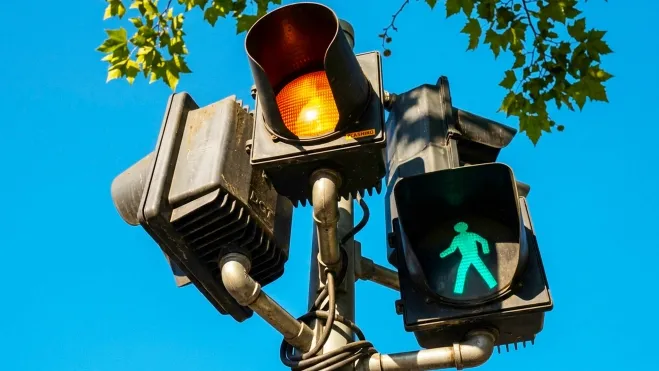
DGT wants to eliminate a traffic light combination that could cause accidents
The origin of this situation lies in Royal Decree 518/2026, dated June 24, which amends the General Traffic Regulations to enhance protection for vulnerable users. It stipulates that, in general, a fixed green light for pedestrians and an intermittent amber light for vehicles cannot operate simultaneously. This setup allows cars to continue moving while pedestrians cross the road, although drivers are required to take extra precautions and yield to them. As such, the new regulation also mandates that an amber light be preceded by a red phase.
However, the main drawback lies in synchronizing intersections, as modifying the timing at one intersection can also affect traffic flow on connected streets and cause congestion in areas where there were no such problems before. Santa Cruz de Tenerife is one of the municipalities that has identified these difficulties and requested additional time to reorganize its traffic systems, while other cities such as Barcelona, L’Hospitalet de Llobregat, León, Sevilla, and Salamanca also face the need to review their traffic control systems.
The differences between municipalities also reflect the complexity of these tasks, as some cities have made progress in adapting their traffic lights while others still need to complete preliminary tests. In Burgos, for example, the city council had already adjusted 372 of its 420 traffic-controlled pedestrian crossings by early October, accounting for approximately 89% of the total, while the remaining 48 were still pending adjustments to both the lighting phases and traffic timing.
The new regulations allow for exceptions when technical difficulties exist

In this context, the regulation approved by the government introduces an important element for municipalities, as the restriction on simultaneous lighting is explicitly framed as a general rule rather than an absolute prohibition. This allows for consideration of specific situations where the characteristics of the intersection make it difficult to implement the new system, although any decision to maintain the previous configuration must be supported by technical reasons that justify its necessity.
Therefore, the measure remains in effect since October 1, 2026, but its full implementation still faces difficulties in various Spanish municipalities, which must balance pedestrian safety with the operation of interconnected traffic networks. The reform aims to reduce risks arising from vehicles and pedestrians intersecting at intersections controlled by traffic lights, though its implementation will depend on the necessary actions in each city and on whether changes can be introduced without severely disrupting urban traffic.