
What Does the Charging Port Look Like in Chinese Electric Vehicles and Four Reasons Why It Matters [video]
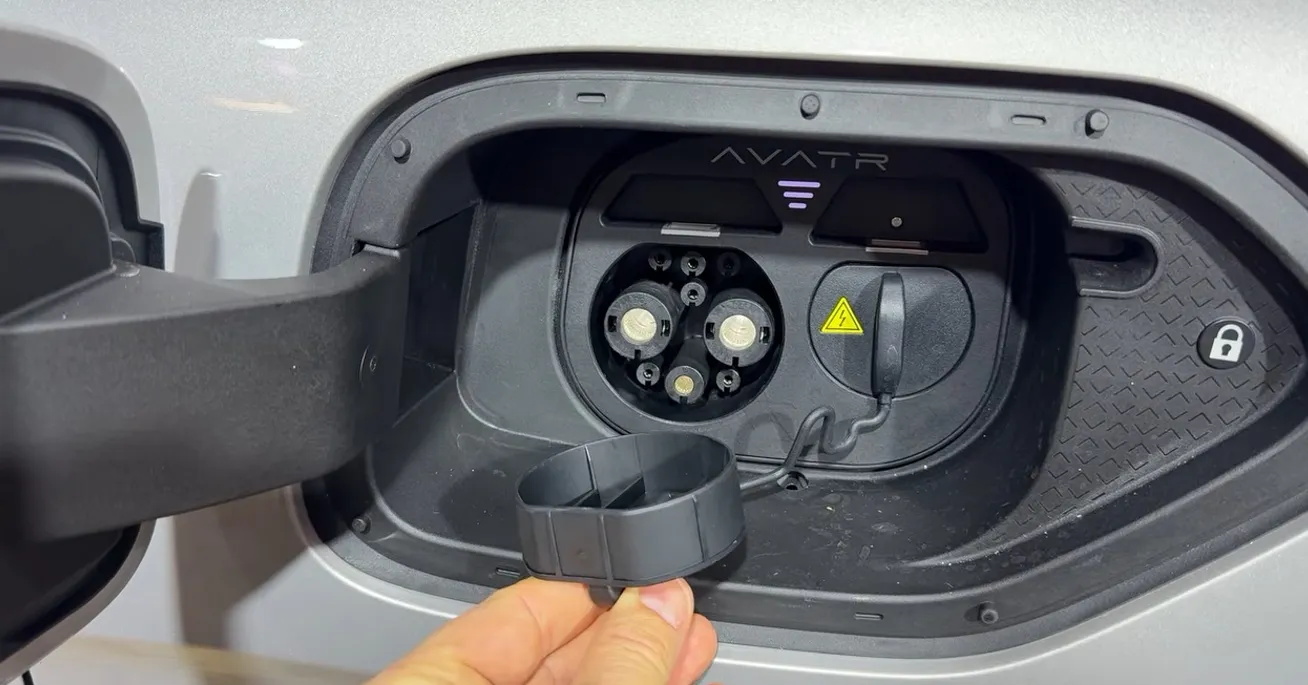
The Chinese conglomerate Changan has the high-end brand Avatr in its portfolio. To showcase it, it brought several models to the 2026 Paris Auto Show, although the cars are expected to reach Europe at the earliest in the second half of 2027, and likely not until 2028. Thanks to these models, we were able to see a typical charging port for Chinese electric vehicles in person and offer some advice to those considering importing a Chinese car directly to Europe, “because it’s much cheaper.”
Chinese vs European charging port
Table of contents
Chinese vs European charging port
Chinese electric vehicles in Europe
The construction of the charging port and a general overview can be viewed in the video, which also references the VW ID. Tiguana, but there are no detailed technical specifications. We will cover those in the article (below the video):
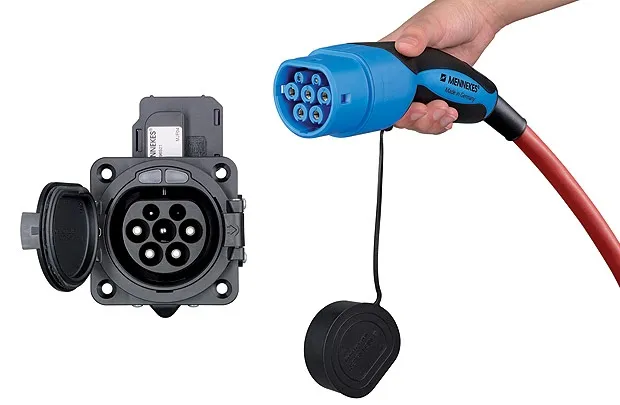
In electric cars sold in China, the charging port consists of two separate sockets: GB/T AC (alternating current, on the right) and GB/T DC (direct current, on the left). The AC socket can be used for charging, in which case the car’s built-in AC-DC charger is activated, as the battery accepts only direct current (DC). The AC port can also be used to supply power. It was copied from the European Type 2 plug. From the plug, not the socket; a careful observer will notice that the port is male, meaning it has protruding ends. In Europe (below), the protruding ends are on the wires, while the sockets have holes and pins:
The second is the GB/T DC port, which originated from a completely different background. The Chinese did not want to copy (or emulate) European products again, so they partnered with the Japanese, more specifically, with the organization overseeing the development of the Chademo standard. The Chademo port was created to handle only high power and direct current (note: thick, spaced pins) and is based on a completely different protocol; therefore, its Chinese implementation is not physically or logically compatible with Type 2.
The drawbacks of this solution are obvious: two ports must be included under the charging lid, and the car’s electronics need to understand both protocols. What are the advantages? GB/T DC can reach 1 MW in recent implementations, while European CCS2 was limited to 0.5 MW until recently.
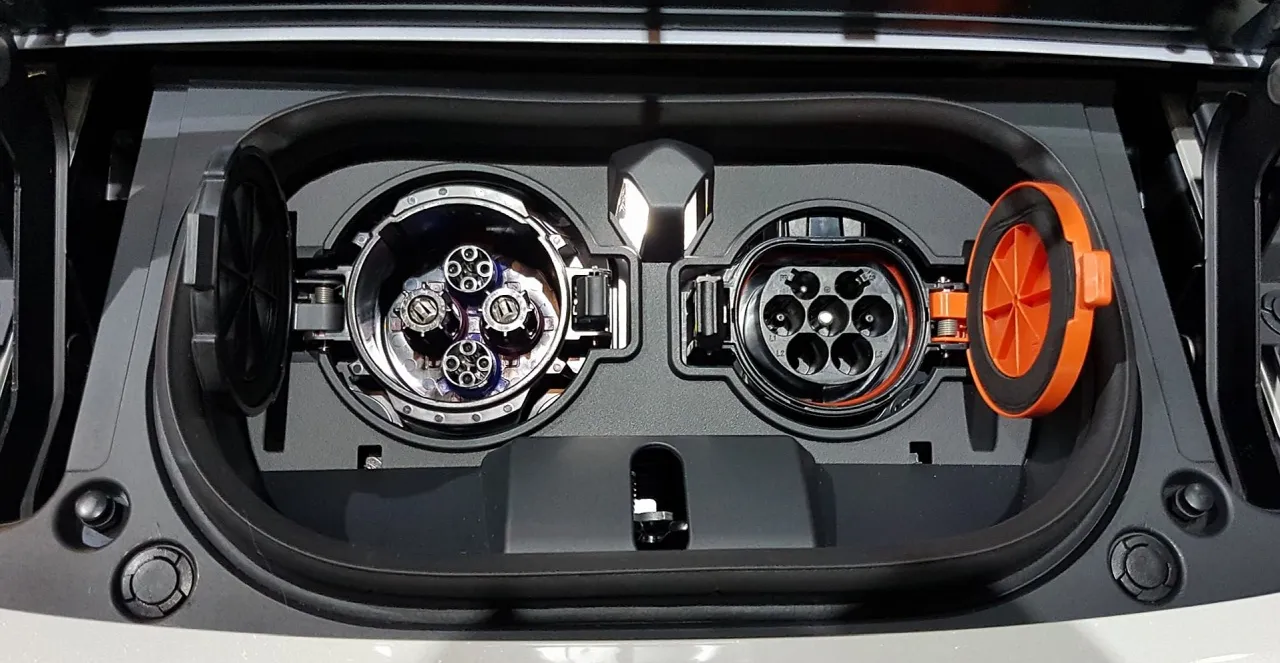
The charging ports of the old Nissan Leaf. Under the cover, it was necessary to fit a Chademo port for fast charging (on the left) and a Type 2 port for slower charging (on the right). Note that in Chinese electric vehicles, the DC charging pins (thicker ones) remain almost unchanged from before, while the number of control connectors has been reduced.
Among all the implementations used worldwide, the European solution (read: German; Type 2 extended with CCS2) is the most compact, well-thought-out, and versatile. This is because a single port can be used for both DC charging and operation in the three-phase charge/discharge system used in Europe. In Japan and China, this would require connecting two cables, while in the American Tesla/NACS system it would be a switching operation: either DC or AC — and even then only on one phase.
Chinese electrician in Europe
This has serious consequences if someone thinks of importing an electric car directly from China just because “it’s expensive here.” They will need to get fast-charging adapters, and they shouldn’t expect those adapters to handle the hundreds of kilowatts promised by cars from official distributors. “Fast” charging will be limited to a maximum of 80-120 kW, with no guarantee that everything won’t overheat and catch fire. There’s no way of achieving the promised 200 kW, let alone 600 or 1,000 kW.
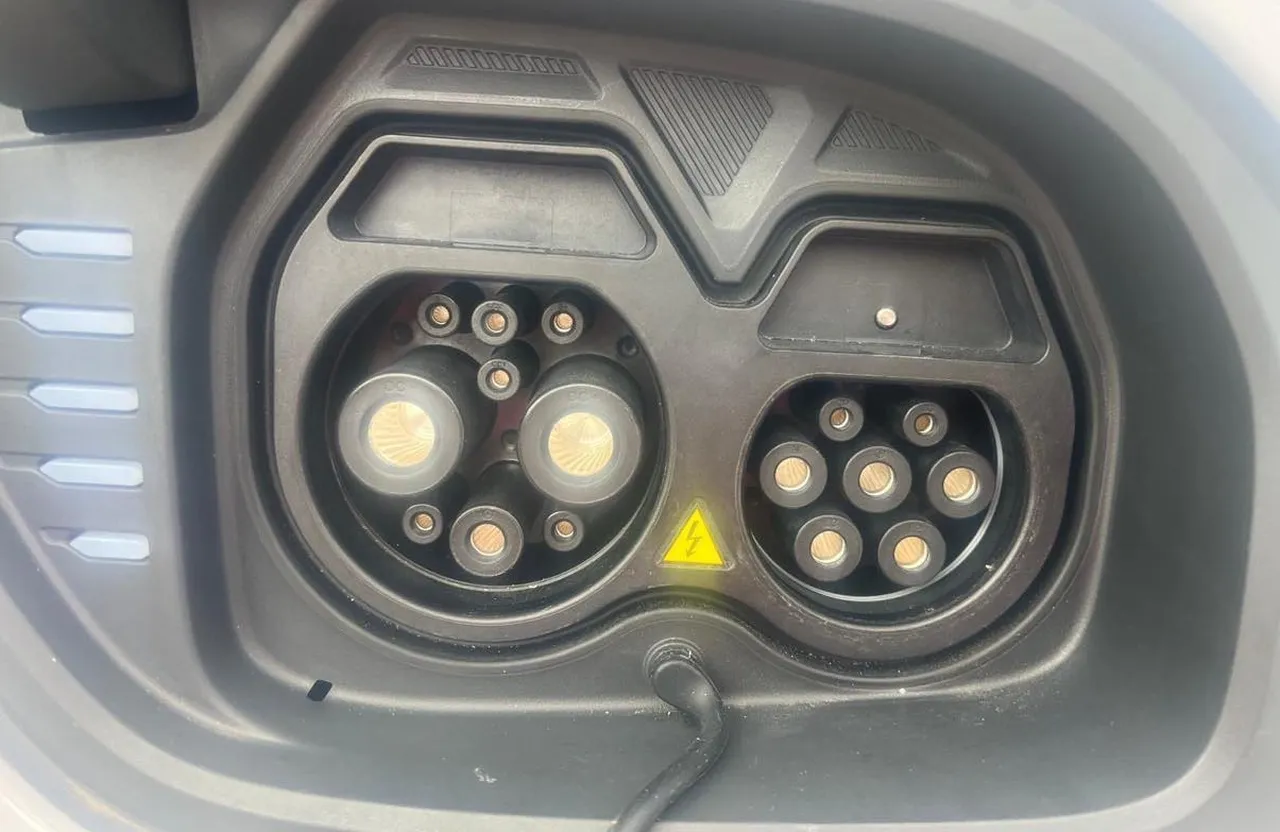
Charging port of a Hiphi Z model imported directly from China (c) Reader
Secondly: no distributor will import and install a European charging port for it, even if the car becomes officially available in Europe. We already have several readers who brought in cars cheaper from China and now face a choice: either use adapters or seek port replacement services at a workshop outside the distributor/manufacturer’s network. ASOs refuse such services, citing a range of formal, technical, and legal issues.
Thirdly, European manufacturers seem to struggle with the spatial requirements of having two charging ports. Therefore, if a Volkswagen or Volvo vehicle has an unnaturally large charging port cover, we can assume it will also be sold primarily in the Chinese market. Paradoxically, the Chinese are better at this—they can incorporate large covers into the vehicle’s design lines, while Europeans seem unable to do so. The aesthetics suffer as a result. Just compare the aforementioned Avatr to the ID. Tiguan (video above):
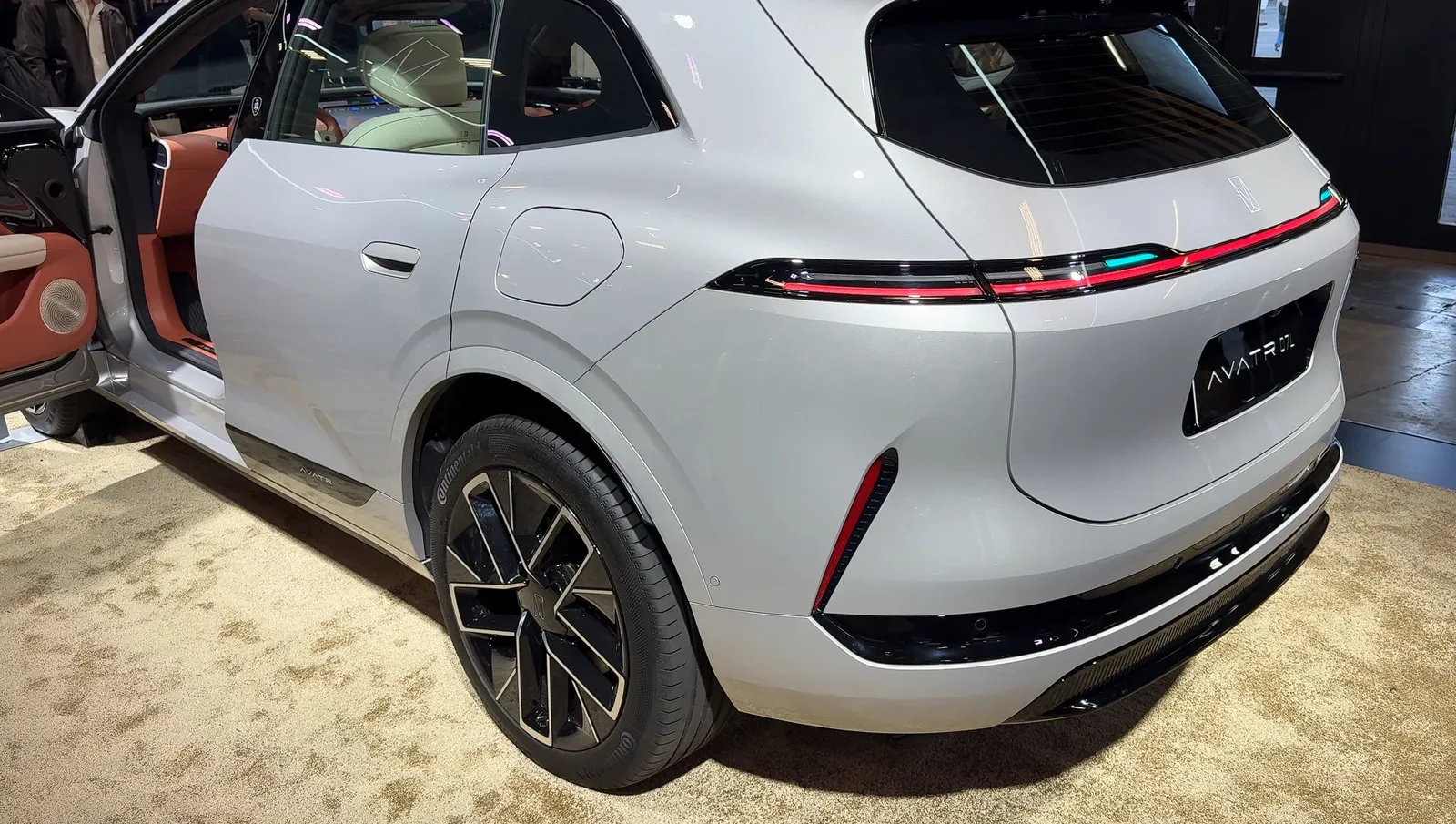
Avatr 07L charging port cover
Fourth and finally, based on our experience: if a Chinese manufacturer threatens to start selling the model in Europe within a year, or might only offer a Chinese version with a Chinese charging port, we can be sure they won’t begin selling it in Europe within that year. The Avatr 07L shown in the video won’t hit European roads until October 2027.
Article Rating
Readers’ Ratings
[Total: 1 vote Average: 5]
Don’t miss new content — CLICK and FOLLOW Elektrowoz.pl on Google News. You might also be interested in the following ads: