
Fraunhofer IIS automates X-ray analysis of electric vehicle batteries
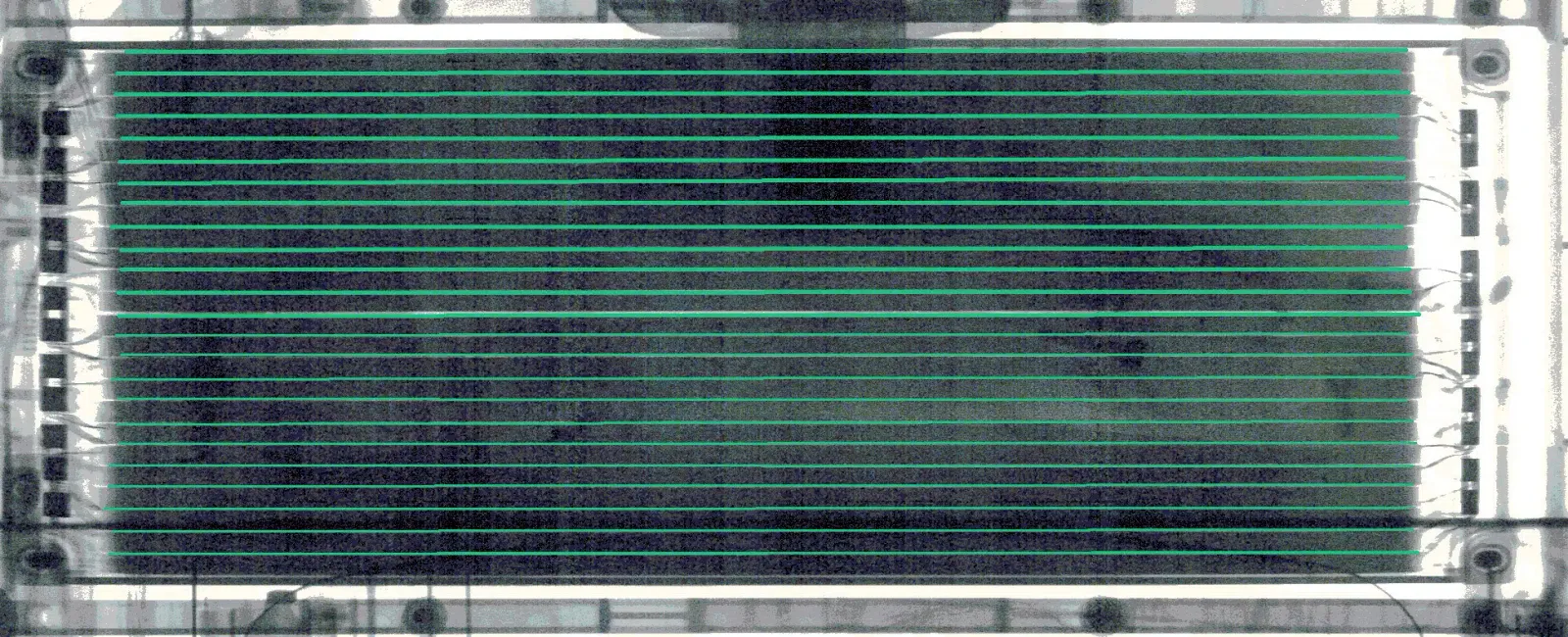
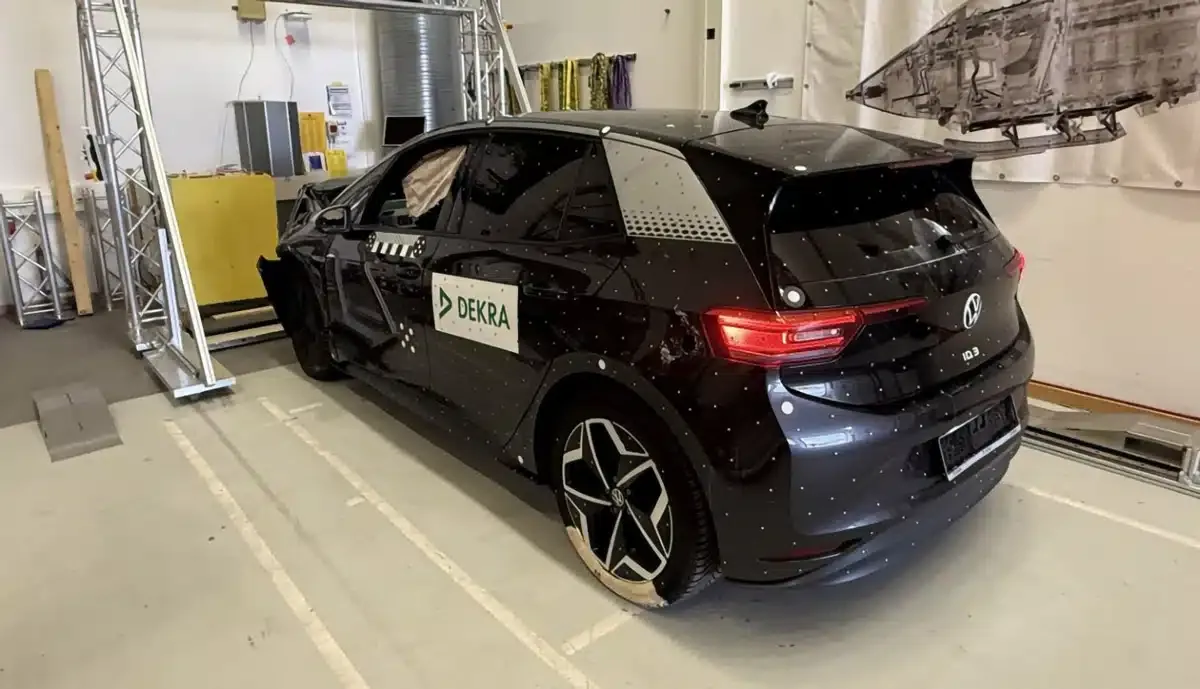
Image: Dekra
The Fraunhofer Institute for Integrated Circuits IIS has developed a software library for the automated analysis of 2D X-ray projections of vehicle batteries as part of the AIR project (Inspection of Power Batteries Using X-ray Technology). Developed at the X-ray Technology Development Center in collaboration with the University of Munich, this method aims to assess the mechanical integrity of used or damaged high-voltage batteries without opening the battery casing or removing components.
In the battery variants examined so far, the system automatically identifies prismatic cells, cylindrical cells, and pouch cells, and detects geometric abnormalities that may indicate shifts, deformations, or cell swelling.
Used power batteries can be reused in stationary second-life applications such as home, backup, or grid storage, provided they have sufficient remaining capacity and are in good safety condition.
In addition to the electrical and electrochemical condition, which is typically assessed based on the State of Health, mechanical integrity is also important for reuse, transportation, or further diagnosis. The X-ray results from the AIR system provide additional information about internal geometries and possible structural abnormalities. However, according to the researchers, they do not replace electrical tests or a case-specific safety assessment.
The AIR system is designed as a through-beam inspection setup, in which either a battery pack or an entire vehicle is guided through the beam path depending on the testing configuration. The developed software automatically analyzes the 2D X-ray projections generated during this process. In the testing environment used, evaluating a battery pack took approximately five minutes, with the actual total inspection time depending on factors such as battery size, testing setup, and the number of projections.
Case Study: VW ID.3 after Frontal Crash
The performance of the AIR system was investigated in a case study using a VW ID.3. This compact electric vehicle had previously been subjected to a frontal collision under laboratory conditions by DEKRA. In the test, the ID.3 collided with the rear of a stationary VW Tiguan at a speed of 79 km/h. Despite significant deformation damage in the front area of the vehicle, X-ray examination of the high-voltage battery installed under the floor revealed no safety-critical structural issues detectable in the analyzed projections.
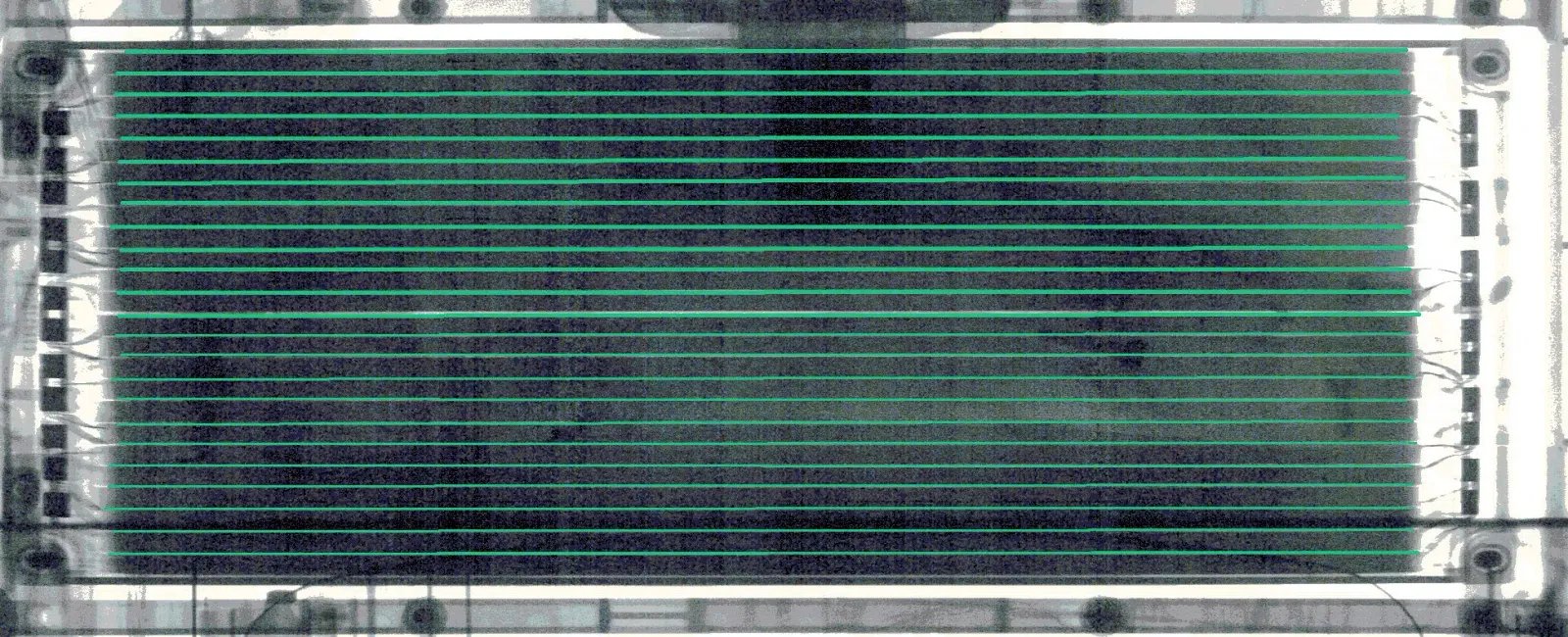
The radiographic analysis of the nine battery modules revealed a uniformly arranged cell geometry. The cell boundaries were parallel in the examined X-ray projections, with no overlaps or bulges detected. Image analysis software automatically located the pouch cells and compared the curvature of selected cell edges, showing no critical deviations indicative of structural damage.
The X-ray inspection was supplemented by a hazard assessment according to DEKRA guidelines, analysis of data from the event data recorder, reading from the battery management system, and additional electrical tests. Based on the overall evaluation, the high-voltage battery was classified as having the lowest EUCAR hazard level of 0 in this case and approved for further use.
Cylindrical Cells: Automated Detection of Significantly Deformed Batteries
The method was also tested after a crash on a traction battery using cylindrical cells. The AIR system analyzed an X-ray top view of the battery pack and automatically determined the positions of each individual cell. The analysis revealed an area that was significantly deformed due to mechanical stress. Compared to a reference, the cells were visibly displaced. The automated position analysis detected these deviations and identified the affected area. No signs of cell swelling were observed in the examined X-ray projections.
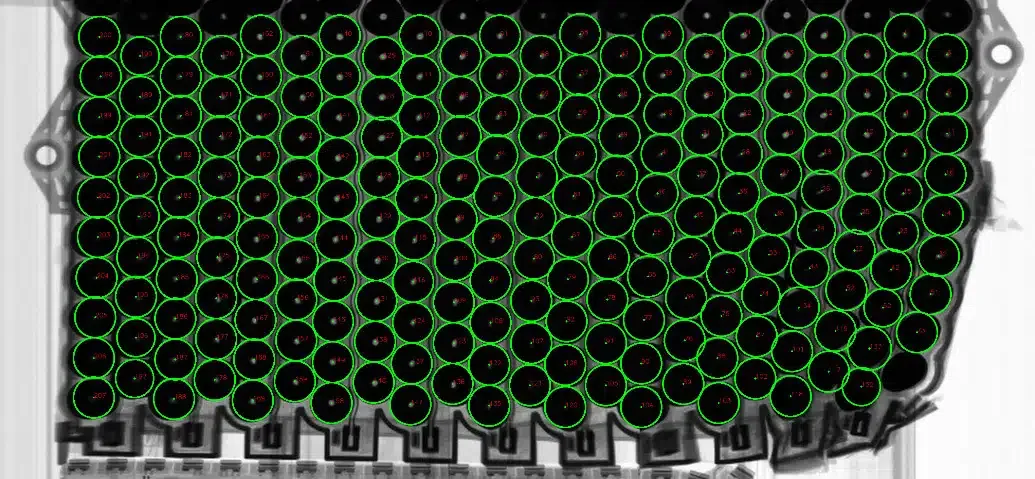
"Despite the lack of signs of swelling, further use of this traction battery is not recommended due to the clearly visible mechanical deformation," explain the experts. "This finding highlights that X-ray analysis can automatically identify damaged areas, thereby assisting in decisions regarding further diagnosis, safe storage, transportation, or disposal."
According to the researchers, the results of the AIR project can help evaluate used vehicle batteries more effectively for second-life applications and support the handling of accident-stricken vehicles and batteries during transportation, storage, or further diagnosis. The technology could also be relevant for future inspection concepts in the context of electric vehicle inspections. In the long term, the planned Giant-Eye-CT system at the Fraunhofer IIS’s X-ray Technology Development Center in Fürth is intended to expand the possibilities for three-dimensional analysis of entire electric vehicles.
Also interesting
About the author
Thomas Langenbucher is an expert in electromobility with professional experience in the automotive industry and finance sector. Since 2011, he has been covering electric vehicles, sustainable technologies, and mobility solutions for ecomento.de. Learn more.
Reader interactions