
Fastned is boosting charging revenue and speeding up network development
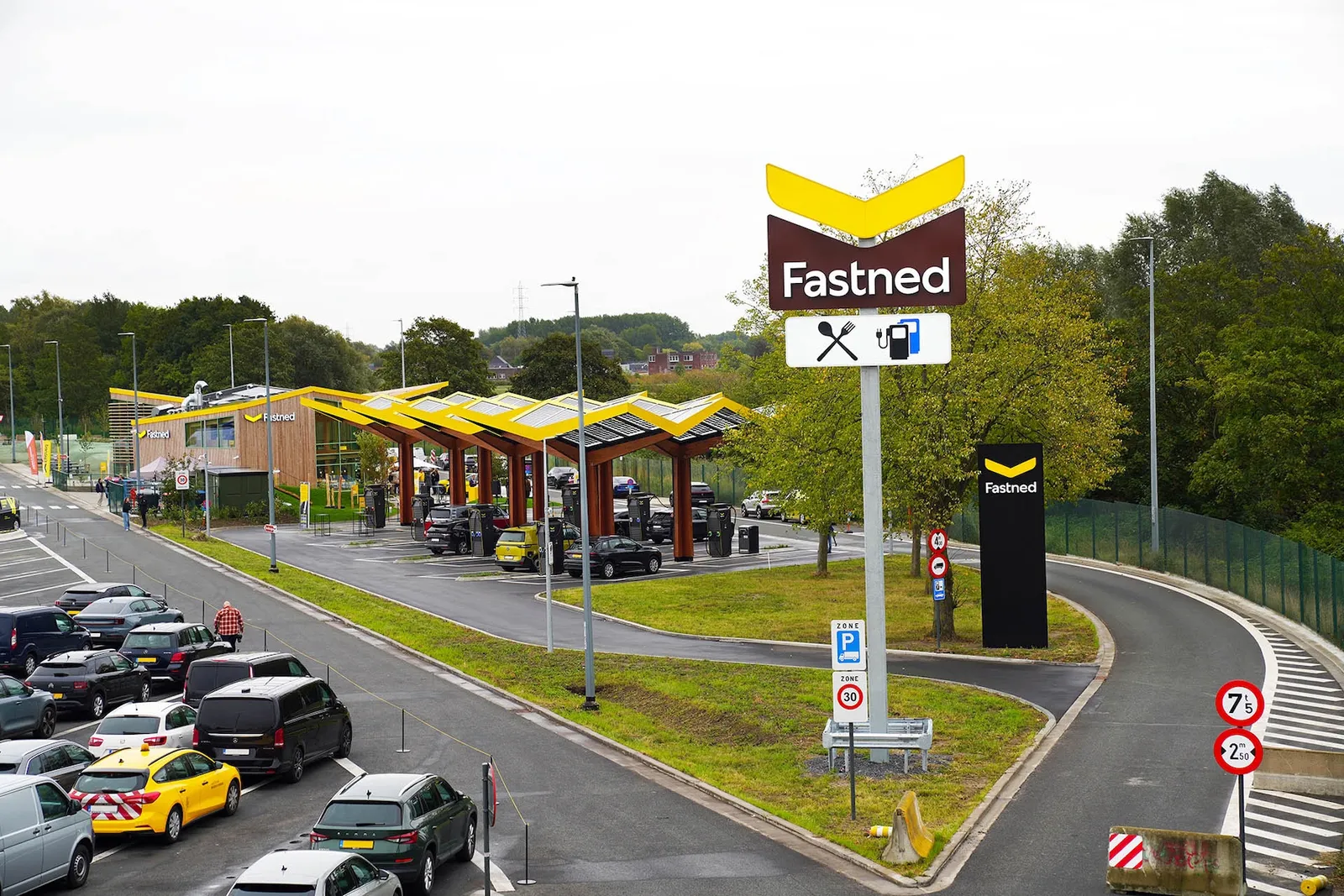
In the third quarter of 2026, Fastned significantly increased its charging revenue while also accelerating its expansion pace. The fast-charging provider put 17 new stations into operation, secured another 26 locations, and currently has 65 stations under construction.

Fastned is advancing the expansion of its network, for example in Gentbrugge.
Image: Fastned
For the third quarter, Fastned reported charging revenue of 51.3 million euros. However, this figure includes 5.1 million euros from Dutch E-Credits, which should have been attributed to the first quarter but were transferred to the third quarter due to a temporary closure of the government portal. After adjusting for this effect, the charging revenue was 46.3 million euros, representing a 47 percent increase compared to the previous year.
According to Fastned, the gross revenue increased by 44 percent year-on-year to 37 million euros. The timing effect of E-Credits had no impact on this growth, the company states. Utilization of existing infrastructure also rose. Organic charging volume increased by 27 percent in the third quarter, nearly matching the growth rate of BEV fleets in Fastned’s markets, which the company reports at 29 percent. The annualized average energy volume per station reached 596 MWh.
Fastned also benefited from holiday traffic in terms of revenue per location. Since the start of the year, the annualized revenue per station has been 395,000 euros, close to the upper end of the annual forecast range of 350,000 to 400,000 euros.
Fastned is building 65 more stations
Meanwhile, Fastned is accelerating its construction pace. Seventeen new stations were put into operation in the third quarter, and agreements were signed for another 26 locations. Currently, 65 stations are under construction, which the company says is nearly double the number from a year earlier.
Fastned remains committed to its annual targets. By the end of 2026, it plans to open 70 to 100 new stations, bringing the total network size to 476 to 506 locations. The company also confirms its goal of achieving an operating EBITDA margin of around 45 percent.

In Germany, Fastned claims to be approaching a total of 70 locations. So far, 17 stations have been built as part of the Germany network along highways. Tenders are important for Fastned not only due to government support but primarily because they provide access to additional sites along heavily trafficked routes and in densely populated areas.
The network is also expanding in other key markets. In Belgium, Fastned now operates 60 stations. Among the new additions is Libin Galaxia in Wallonia, which features twelve charging points with a charging capacity of up to 400 kW. In France, Fastned opened its first own kiosk in Thionville-Yutz, testing a concept for locations where few additional facilities currently exist.
On the customer side, Fastned is also trying to increase usage of its network. In the Netherlands, the company launched a partnership with the mobility association ANWB in September. This allows Fastned to become visible to over 600,000 users of the ANWB Charge Card. Subscribers receive a 10 percent discount at Fastned stations across Europe.
Expansion remains capital-intensive
However, such rapid growth still comes at a cost. By the end of the first half of the year, Fastned’s total liabilities stood at 514.6 million euros, up from 409.8 million euros at the end of 2025. Meanwhile, the company invested 44.7 million euros in expanding its network during the first half of the year and still recorded a net loss of 13 million euros.
The expansion is financed to a significant extent through debt capital. With its second bond issuance in 2026, Fastned raised 36.5 million euros from private investors. By the end of June, the company had already collected around 337 million euros through retail bonds. These bonds carry an interest rate of six percent and are repaid after five years.
The capital intensity of this business model is also evident in the average investment required for each new station. According to Fastned’s previous statements, the costs recently amounted to around 892,000 euros per location, covering expenses such as charging hardware, grid connection, power distribution equipment, and the distinctive canopies. In the third quarter, Fastned launched its third retail bond for 2026. The issuance is still ongoing until October 30 and aims to fund further network expansion.
The interpretation of the current figures could therefore be divided into two aspects. Operationally, Fastned is growing strongly, both in terms of charging volume, revenue, and the number of locations. At the same time, expansion remains costly and continues to be financed to a large extent through debt. Therefore, what will be crucial in the coming years is not only how quickly Fastned builds new charging parks but also how much the utilization of existing stations increases.