
Europe loses almost 1,000,000,000 € per day in trade with China, and Brussels warns: "We need tangible results
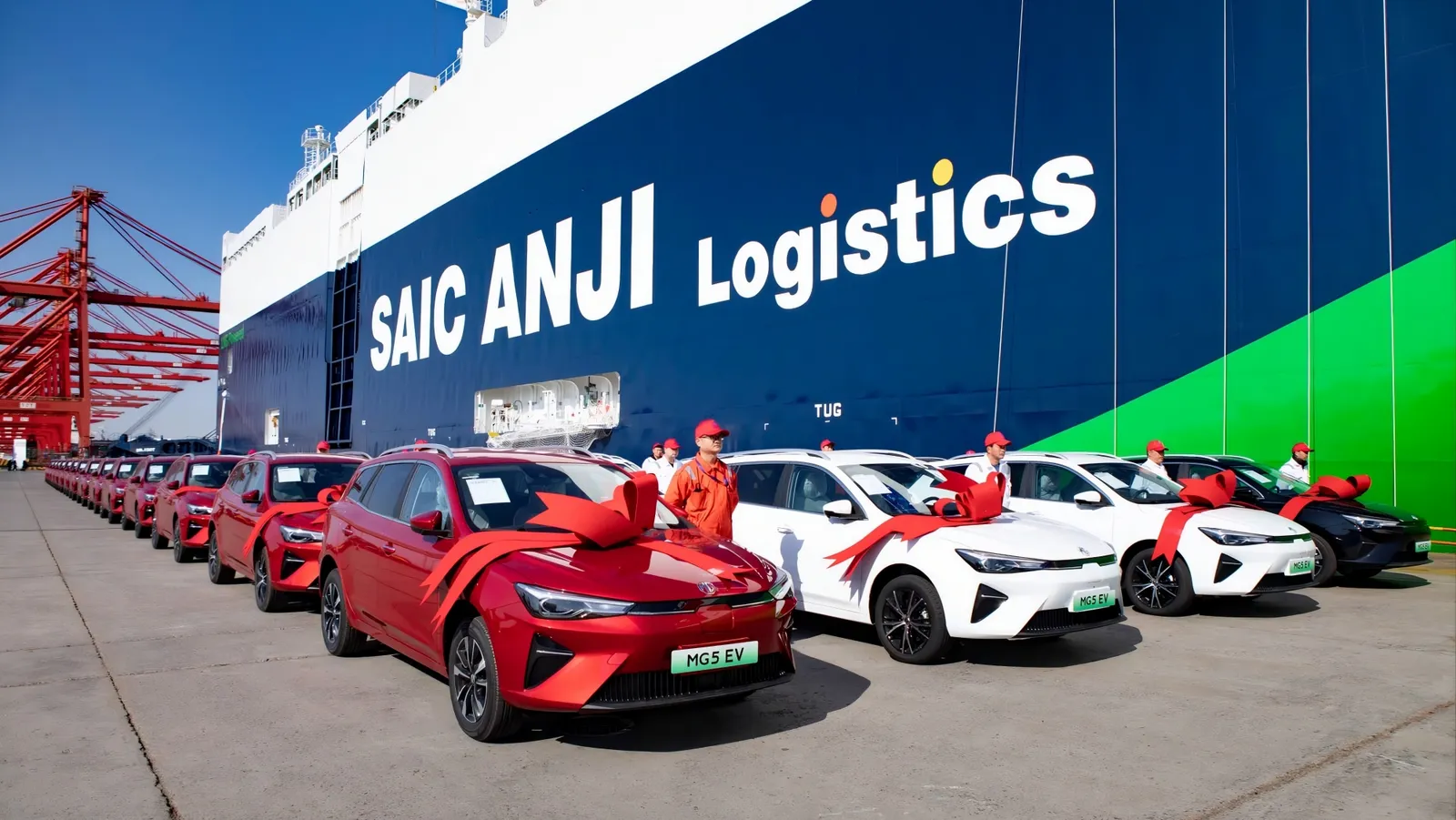
The recent agreement to reduce Chinese exports of hybrid cars to Europe has partially eased tensions between Brussels and Beijing, but it is far from resolving the trade conflict between the two powers. The European Commission views automobiles as just one aspect of a much larger imbalance and has already indicated it expects progress in other strategic sectors as well.
European Commissioner for Economy Valdis Dombrovskis has called for “tangible results” in negotiations with China and warned that the European Union might resort to new trade measures if talks fail to gradually improve the current situation. His remarks come ahead of another meeting of European leaders in Brussels, where economic relations with China will once again be a key focus.
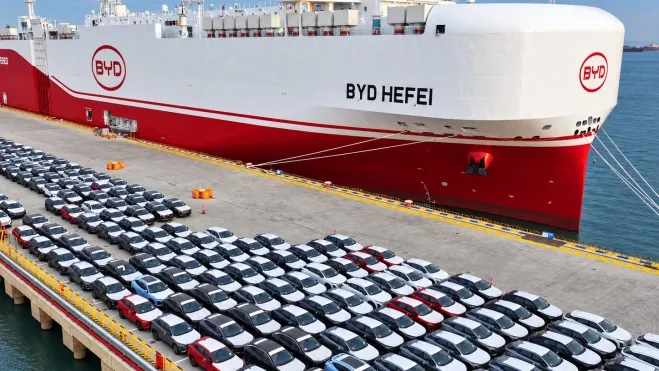
The Commission’s concerns become clearer when looking at the figures. Europe’s trade deficit with China reached around 360 billion euros in 2025, which is approximately equivalent to 1 billion euros per day. Moreover, according to data cited by Reuters, the imbalance increased again in the first half of 2026.
A deficit of almost 1 billion euros per day
The problem, therefore, goes far beyond the automotive sector. Brussels identifies significant trade imbalances in sectors such as chemicals, steel, industrial machinery, furniture, and certain components related to renewable energy, including wind turbines.
The European Commission believes that the growth of Chinese exports to Europe is not being offset by equivalent access for European companies to the Asian market. Therefore, one of Brussels’ main demands is precisely to improve conditions so that European companies can sell, invest, and compete in China on more balanced terms.
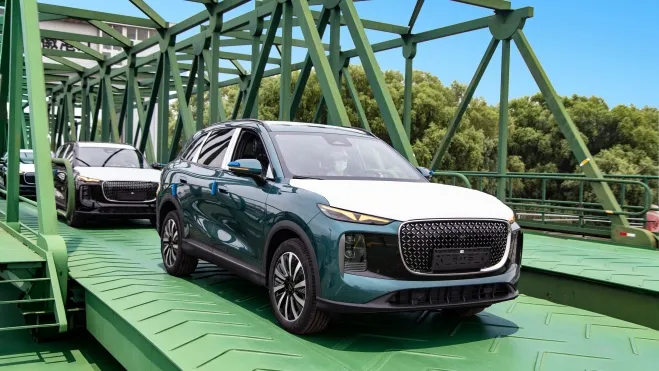
Dombrovskis insists that dialogue remains the first option, but he has also made it clear that Europe expects concrete results. If these are not achieved, the EU is considering strengthening its trade defense tools and developing new instruments to respond more quickly to practices deemed unfair.
The tension does not stem solely from the total volume of imports. Since 2019, European purchases of Chinese products have risen sharply, while European exports to China have declined significantly, a trend that has heightened concerns about the continent’s loss of industrial competitiveness.
Chinese cars become a major focus
The automotive industry has become one of the most visible examples of this imbalance. The rapid growth of manufacturers such as BYD, SAIC, and Chery has increased pressure on European brands, especially in the segments of electric and plug-in hybrid cars.
Chinese manufacturers recently captured around 10.7% of the European market for electric and hybrid cars, with their share in plug-in hybrids exceeding 26%. It was this latter segment that gained importance after Chinese brands began focusing on PHEVs to mitigate the impact of European tariffs imposed on certain electric cars manufactured in China.
In response to this development, the European Union and China reached an agreement on October 9 to reduce Chinese exports of hybrid and plug-in hybrid vehicles to Europe by roughly half. The deal also includes improvements in European companies’ access to the Chinese market and simplifications for licensing the export of certain rare earths and strategic raw materials.
The trend affects an increasingly important sector. China’s exports of hybrids to the EU reached around $7.5 billion, having grown sharply in recent years as a response to both European demand and barriers affecting certain electric vehicles.
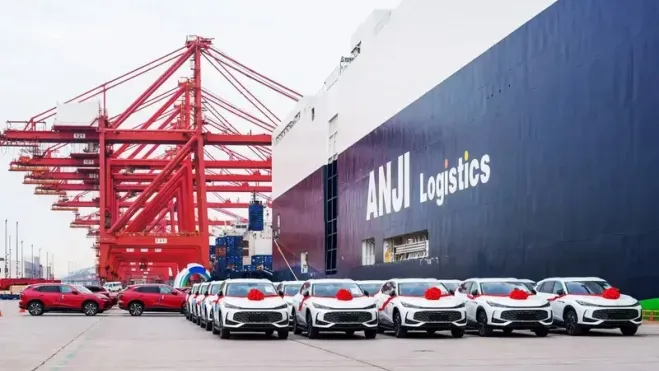
Brussels aims to go beyond cars
However, for the European Commission, restricting Chinese hybrid cars is just a first step. The ultimate goal is to reduce a trade imbalance that already affects numerous industries and which Brussels considers unsustainable in the long term.
European leaders are now discussing new tools to protect strategic sectors and respond more quickly when harmful trade practices are detected. Among the options under consideration are mechanisms inspired by those used by the United States to impose trade countermeasures.
At the same time, Brussels is trying to avoid an open rupture with Beijing. China remains one of the EU’s major trading partners and plays a key role in supply chains related to batteries, raw materials, electronics, and renewable technologies. That is precisely why Dombrovskis’ message combines pressure with negotiation. The Commission wants to keep trade relations open, but believes the current imbalance needs to start being corrected.
The automotive industry has been one of the first sectors to reach a concrete agreement. Now Brussels wants to see if China is willing to make similar concessions in other areas. With a deficit of around 1,000,000,000 euros per day, the pressure to achieve these “tangible results” is unlikely to fade away.