
A Renault 5 with an X-factor
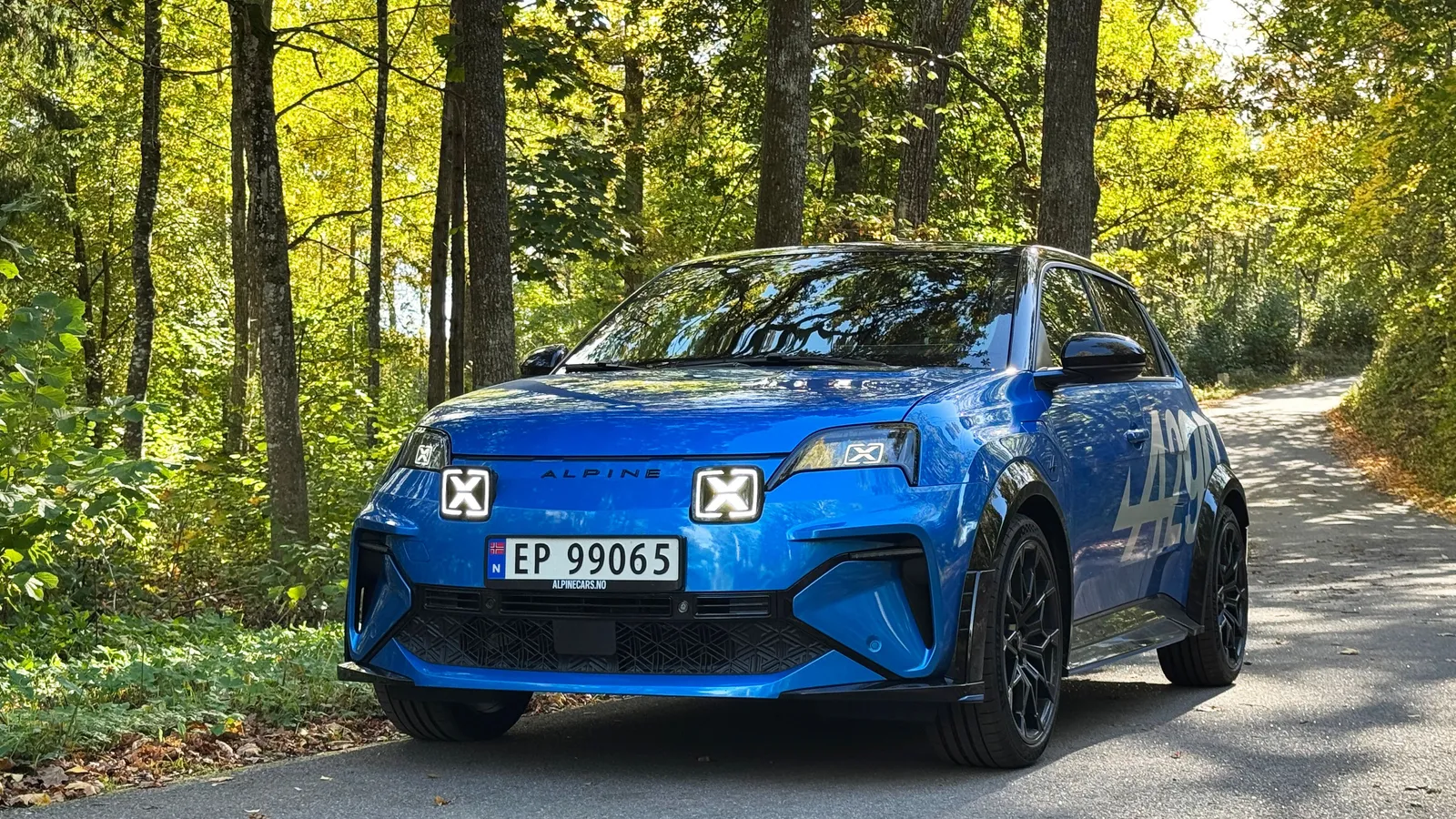
It looks like a Renault 5 on steroids, but the Alpine A290 is supposed to be funnier, faster, and more robust. We’ve tested whether it really delivers.
15.10.2026 10:24 | Updated 12:43
The Europeans have woken up. Now they’re starting to build fun electric cars – and they’re looking back. History is one of their advantages over the still-growing wave of new Chinese competitors.
We take a closer look at:
This is Alpine
Pros and cons
What kind of car is this?
Seats – not quite right for me
Interior – stylish but less practical
Rear seat – still a compact car
Trunk space – the same as in the five-seater version
Driving experience – sporty, but not dangerous
Cruise control – similar to those in other models
Range – too short
Charging – too slow
Price and competitors
Conclusion
Alfa Romeo kicks off the electric “hot-Hatch” trend with the Junior Veloce. Now Opel has the Mokka GSE, Peugeot the E-208 GTi, and VW the ID. Polo GTI. In Europe, Fiat launched the Abarth 600.
And that’s exactly what Fiat did, which Renault is now doing as well:
That is, reviving a brand that had been dormant for a while and launching it as its own car brand.
This is Alpine
Alpine is a new car brand in Norway, but its history is much older. The brand was founded in 1955 with sports cars based on Renault technology, and it performed well in racing and rallying.
Alpine A290 – summary
Pros
Handling
Design
Brakes
Cons
Range
Price
Should have been better
It was acquired by Renault in 1973, which kept the brand alive until 1995.
After many years away, Alpine returned in 2017 with the sports car A110. Alpine replaced RenaultSport as the sporting alternative in the Renault family, including Formula 1 and all motorsports.
What kind of car is this?
It’s essentially a Renault 5 in a sporty package.
Many of the basic elements are shared, but Alpine has made it stronger, more powerful, and worked hard to ensure it also looks great.
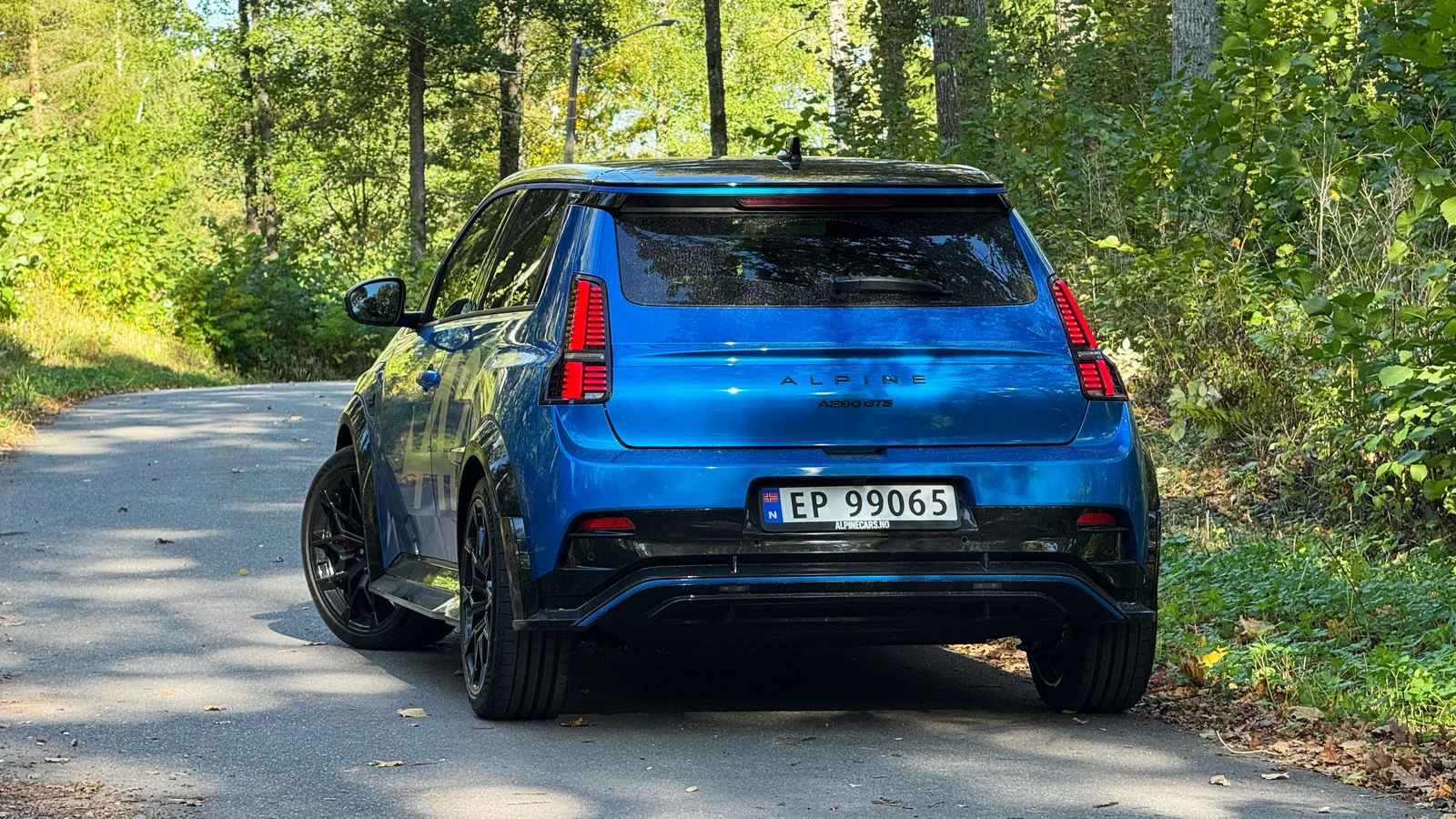
Wider wheels, more powerful screens, and a much more distinctive rear end give it a significantly more powerful appearance compared to the original Renault model.
What are the differences?
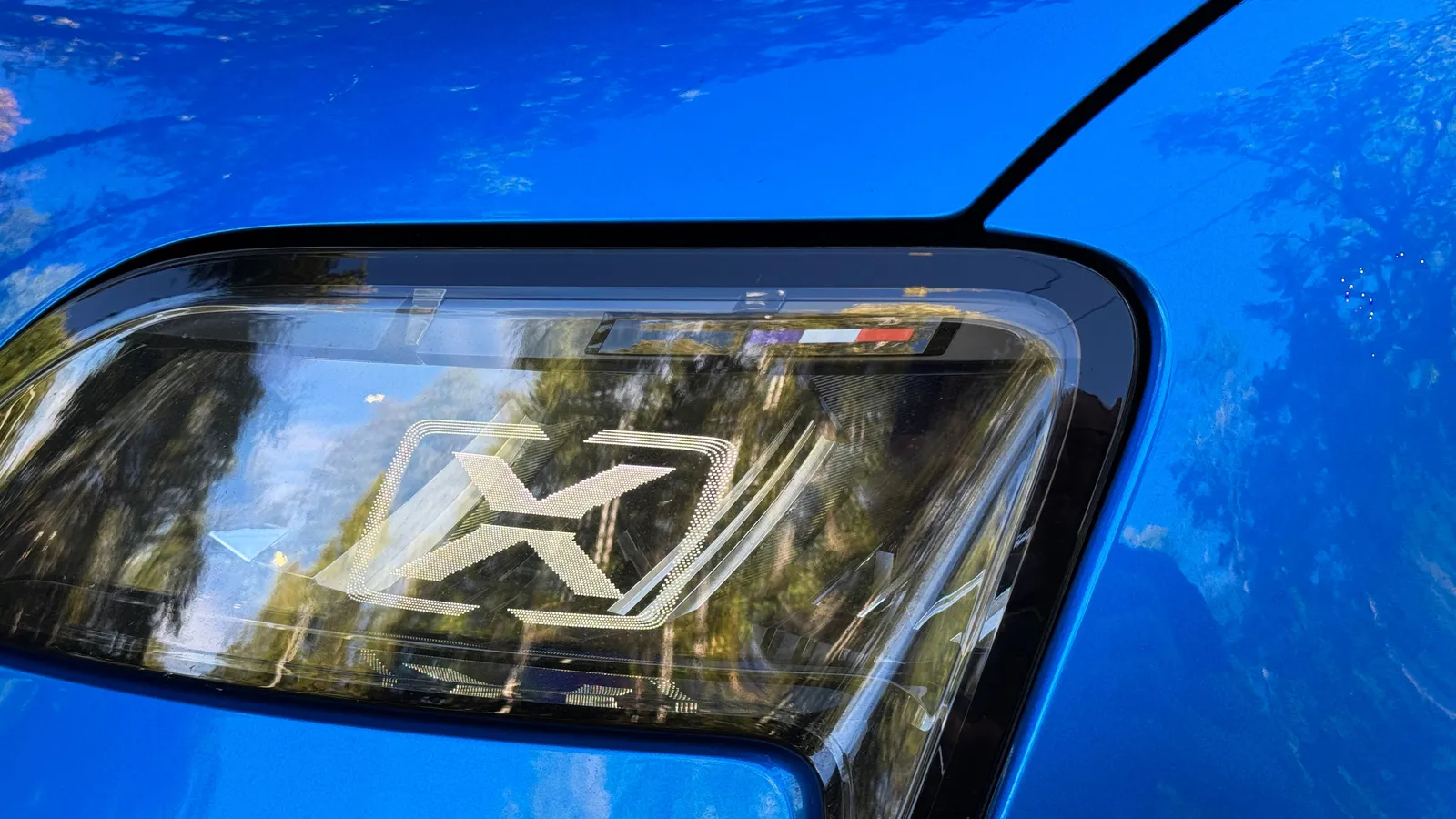
The A290 is wider, slightly longer, and actually a bit taller than the Renault 5. The front end has taken on a much more aggressive look, with the X-shaped headlights being perhaps its most distinctive feature.
The front end is entirely new; the wider headlight bars make the car 5.8 cm broader, the styling adds 6.5 cm in length, and surprisingly, it’s also 1.5 cm taller.
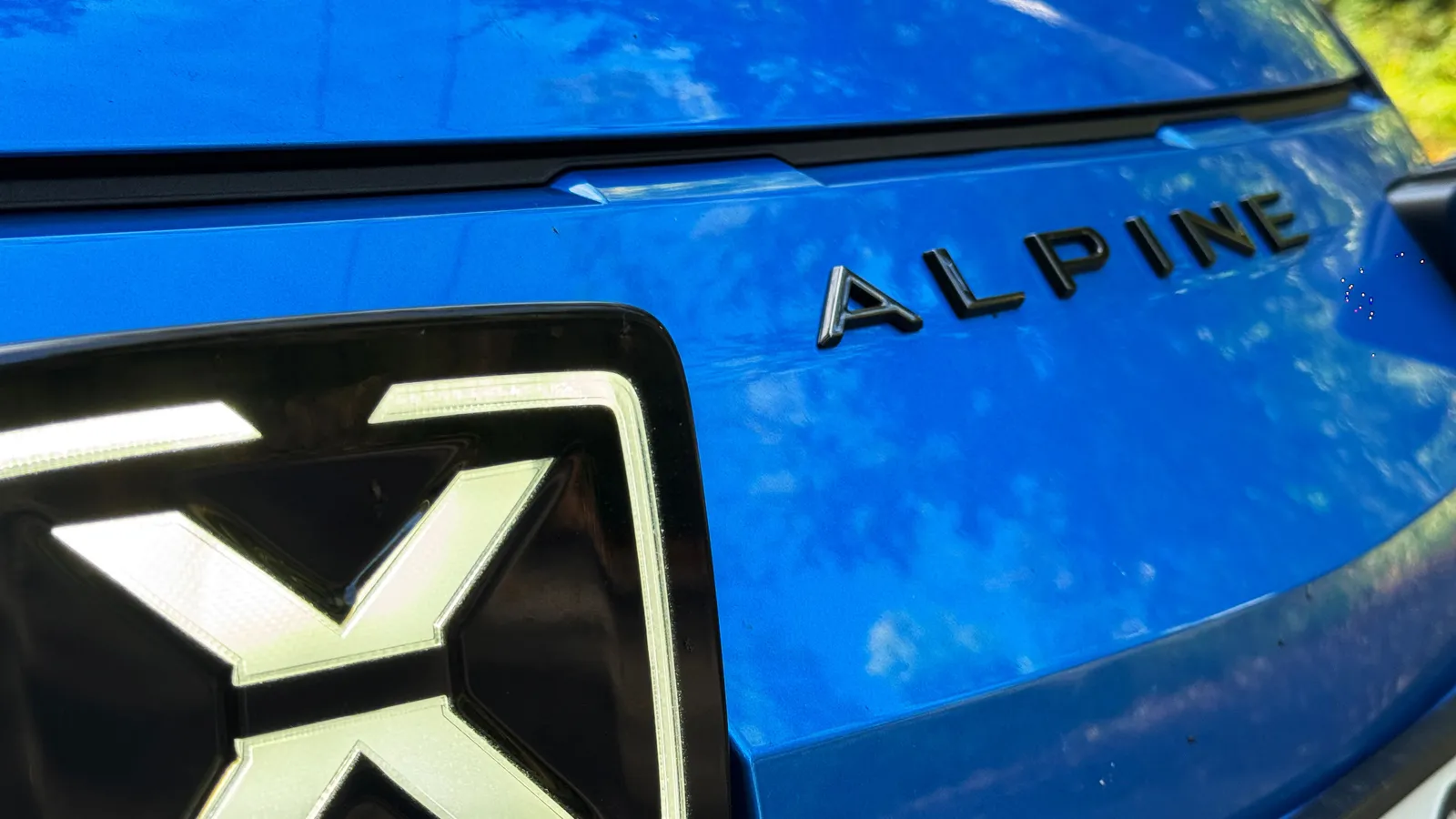
The headlights are brand new and feature the same X patterns engraved on them as the fog lights. Now Alpine appears on both the front and rear, with much more aggressive side skirts.
The rear doors have a different panel profile. The trunk lid has been replaced with a small spoiler, and the rear diffuser is designed differently.
More importantly for the driving dynamics, the wheel size has increased from 18 to 19 inches, and the tire width has risen from 195 to 225 millimeters.
The tires are the sporty Michelin Pilot Sport S5. The wheel design depends on which of the three models you choose.
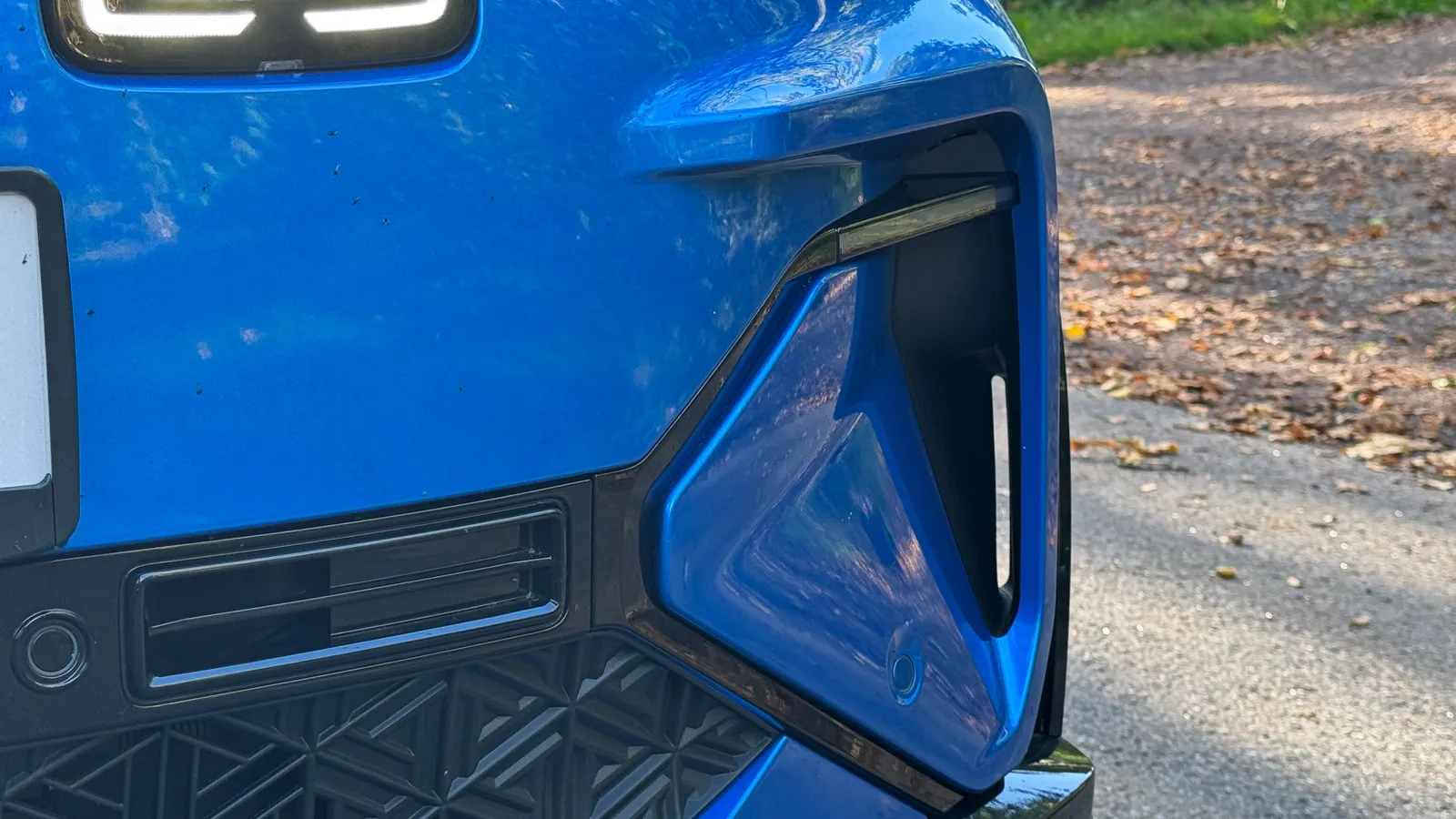
We are driving the top-of-the-line GTS model. It comes with black wheels and blue Brembo monoblock brake calipers that perform excellently during the few times you need them. Alpine has also provided its own shock absorbers and springs to make it more potent on bumpy roads.
The Renault 5 is cool enough on its own, but after this styling session, many more people are taking a keen interest in it. It probably helps that it is bright blue, France’s color for sports cars, and that “A290” is written in bold letters across the entire side.
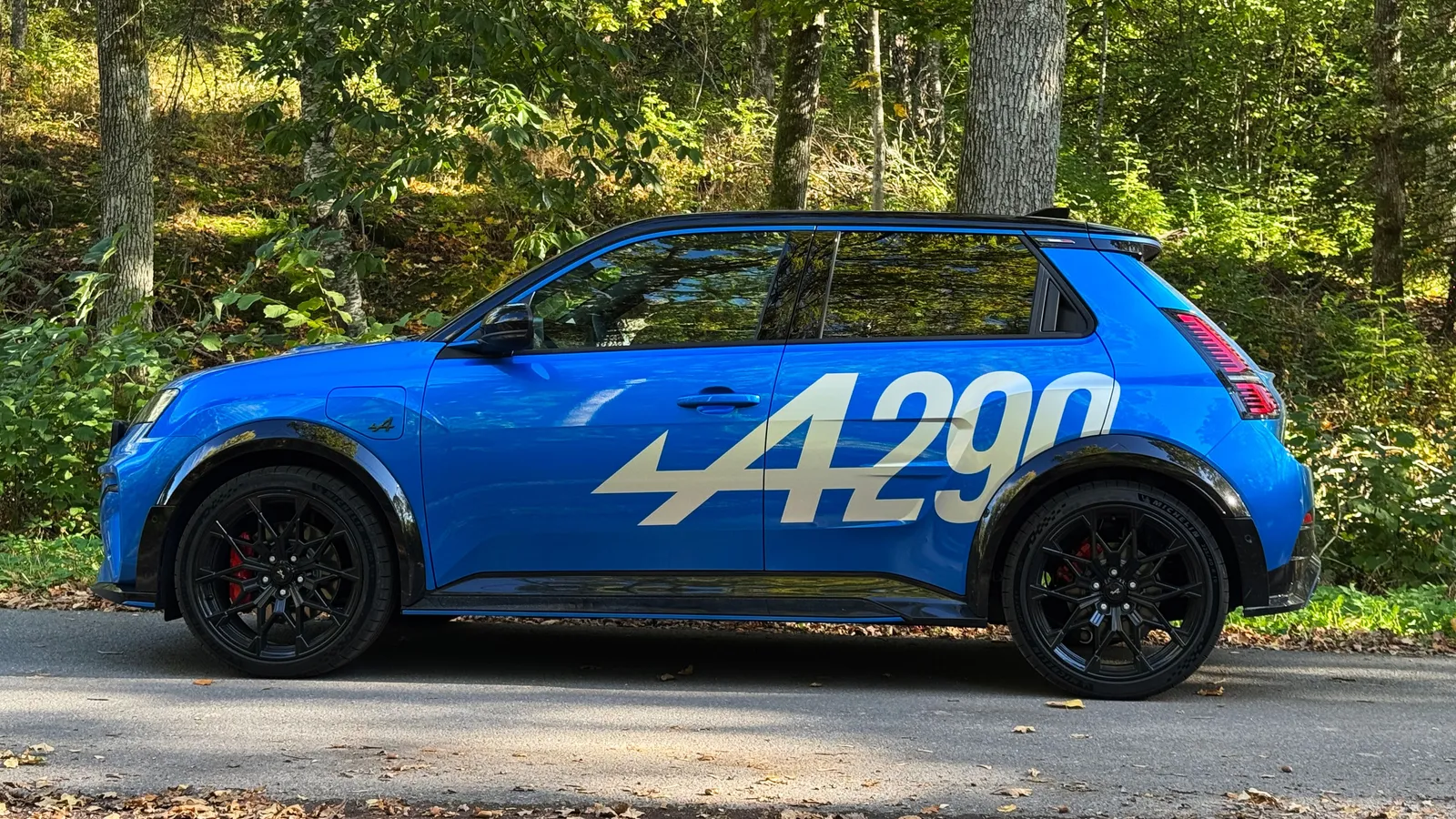
Speaking of the name. The A stands for Alpine, 2 represents the car’s size, and 90 refers to... well, it’s Alpine’s designation for lifestyle-oriented sports cars. The number 10 is still used for the even more sporty models.
You can get it in three versions:
GT, 180 horsepower, 378 km range, 399,900 kroner
GT Performance, 220 horsepower, 361 km range, 424,900 kroner
GTS, 361 km range, 462,900 kroner
Sitting position – not my thing
The GTS comes with nice leather seats in white and blue, featuring contrast stitching, an A290 logo, and the French flag in the center. The more affordable versions have equally nice seats, but they’re made of fabric.
Although the six-way manually adjustable seats with two-way electrically adjustable lumbar supports look great, I can’t find a perfect sitting position.
I’m 189 cm tall and sit a bit high, so I can’t pull the steering wheel close enough to me. I have to choose between straight arms, a straight back, or sitting with my knees at a sharp angle. I go for something in between.
Interior – stylish but less practical
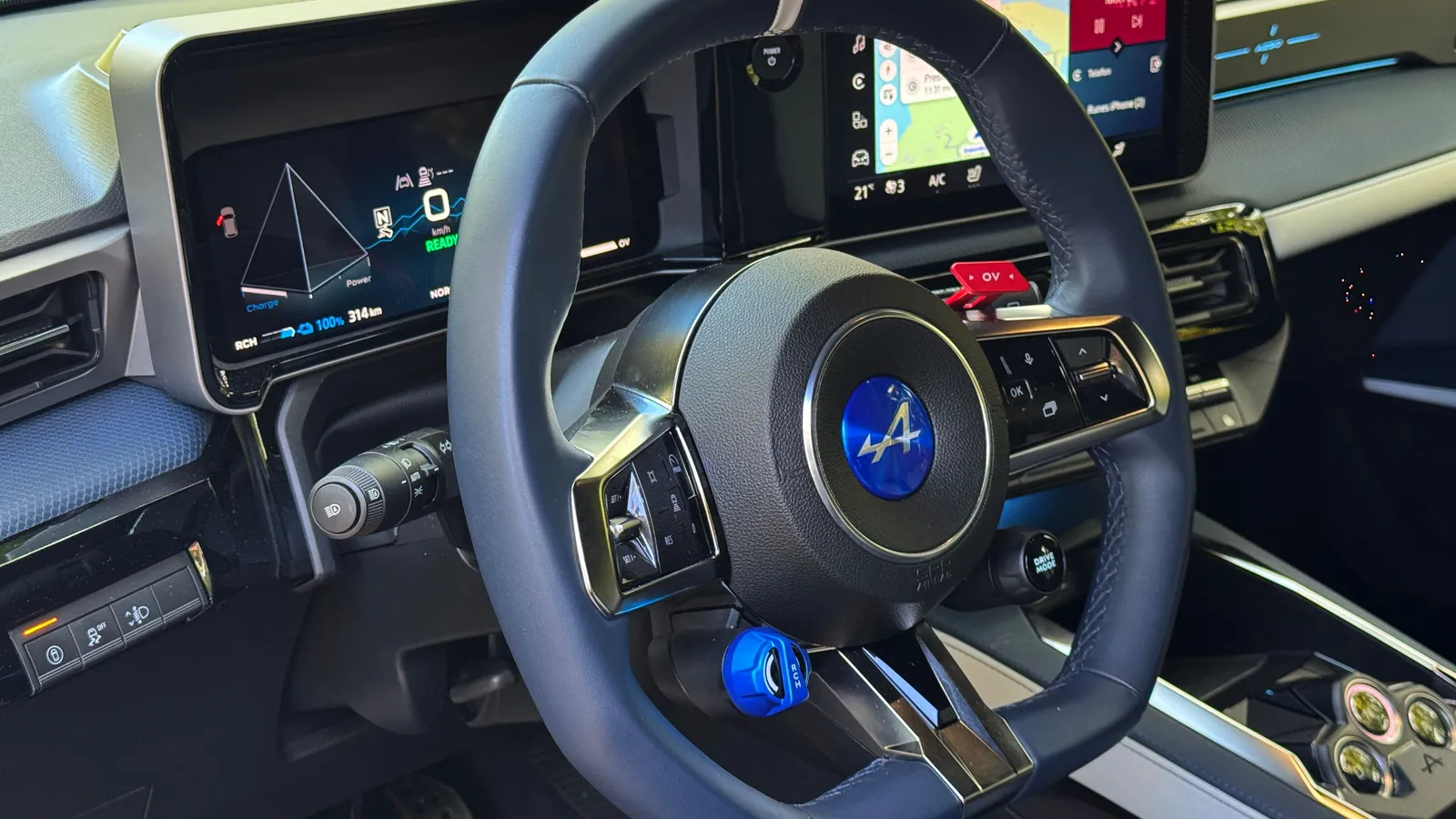
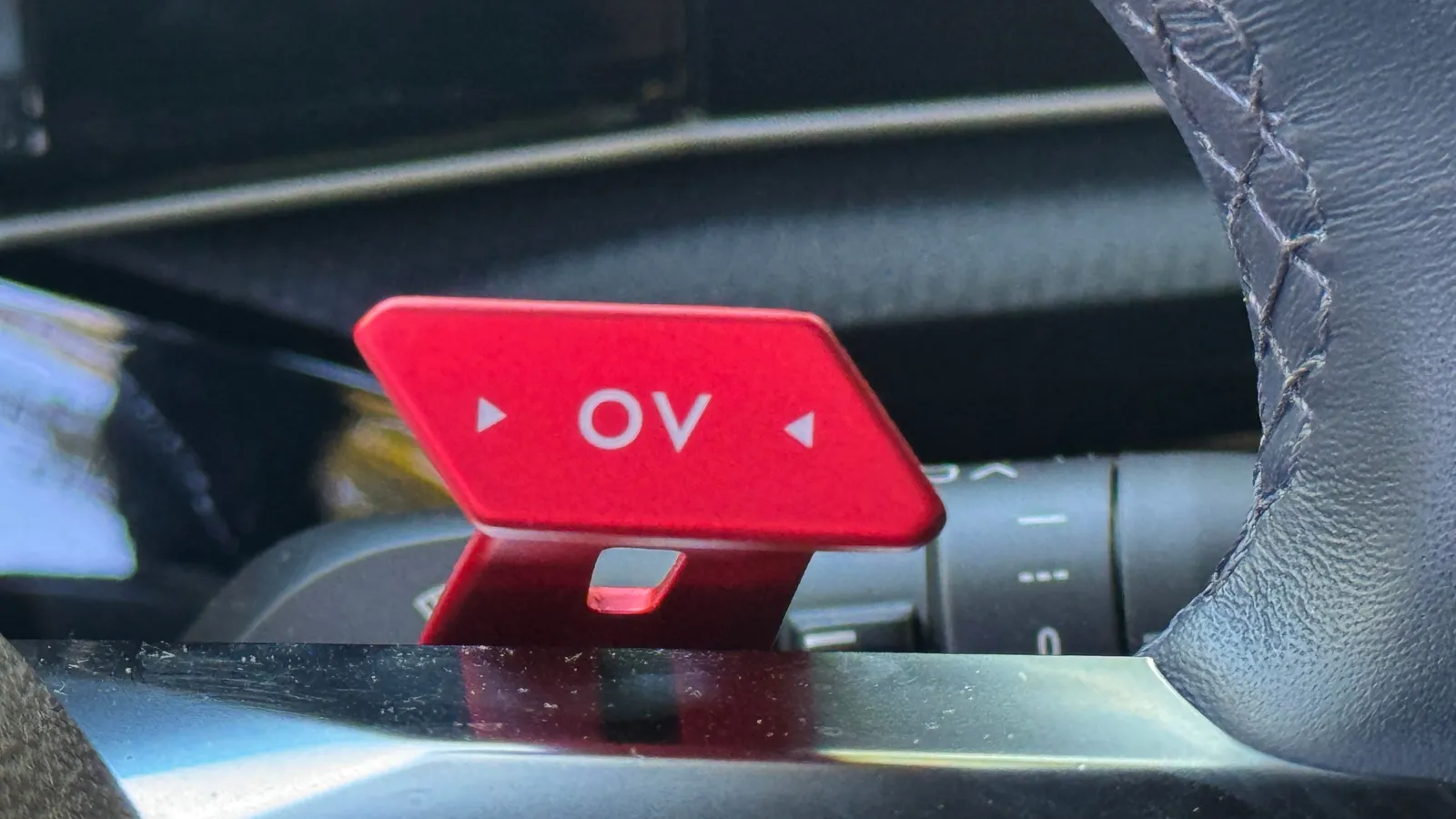
The steering wheel has received some extra additions. These include a center marker on top, a button for driving mode, a nice aluminum vibration damper for three-step regeneration, and a red OV button that stands for overtake.
It’s supposed to deliver full power within 10 seconds when activated. More on that later.
The instrumentation and infotainment are familiar from the Renault 5, but Alpine has naturally given its graphics a distinct style of its own.
The instrument panel is 10.3 inches and the main screen is 10.1 inches. This means, among other things, that the map takes up less space, but Renault also has Google voice control.
A useful feature is the ability to turn off the driver alerts you’ve set in advance with just two presses of a button on the left side of the dashboard. The ESP can also be turned off using the button next to it.
The center console is entirely new. The gear selector has been moved down between the seats with separate buttons for reverse, neutral, and drive, taken from the sports car A110.
This simplifies things around the steering wheel, as the Renault 5 had three levers on the right side. But you also miss out on two cozy headrests, as there are none in this car.
The console features two USB-C ports. Only the GTS comes standard with a wireless charging pad.
The key, a small black box, has its own slot in the hard plastic, but it disappears under the seats with the first movement. Here, Alpine missed an opportunity to create a key compartment similar to Ferrari’s Luce. It could have been a cult feature since you need some kind of key right from the start.
Rear seats – still a compact car
Is there space at the back? The short answer is no, there isn’t much space, but not everyone is as tall as me (still 1.89 m).
As the family’s second car, it can suffice with its three Isofix anchors.
Trunk space – the same as the five-seater
The trunk also doesn’t differ from the Renault 5. It holds 326 liters with the rear seats up and 1,106 liters when they’re folded down.
The rear seat backrest is split 60/40. The load floor is quite high, and the A290 lacks a front trunk area.
The payload is 380 kilograms; you can have zero kilograms on the roof and up to 500 kilograms on a removable tow hitch. But the price of the chassis is high, at 19,000 kroner.
Driving impression – sporty, but not aggressive
It’s in the handling where it shines. The downside is that I’m not sitting in the perfect position.
220 horsepower is roughly what the VW ID. Polo delivers, and 70 more than the Renault 5.
But 60 less than the models from Stellantis (Abarth 600, Alfa Junior Veloce, Opel Mokka GSE, and Peugeot E-208).
The torque has increased from 245 to 300 Nm.
0-100 km/h should take 6.4 seconds (8 seconds for the Renault 5), which is roughly what we measured as well. We might have hoped for more drama from the start.
There’s more than enough power to leave the starting line with two black marks on the asphalt if all the horses were unleashed, but they chose not to do that.
Even when you turn off anti-roll, there’s no hint of body roll, so the 0-100 test is almost a bit tedious.
It becomes much more engaging once it’s moving at speed. The new suspension, with slightly increased track width, is quite stiff but never uncomfortable. You’re pushed almost like a fish out onto the road, and steering demands your full attention.
It drifts a bit left and right as you navigate the corners, but that’s to be expected with slightly quick, compact front suspension struts.
The handling is engaging, and the stiff suspension becomes more pronounced as speed increases.
Weight also helps. The listed weight is 1,495 kilograms, but our test weighed it at 1,490 kilograms. That’s 20 kilograms less than the Renault 5 when we tested it.
Choose from the driving modes: Save, Normal, Sport, and Personal. There isn’t much you can adjust on your own, but you can decide whether to have a digital engine sound or not.
Usually I prefer minimal regen, but I found that pressing the RCH button three times to the left almost provided a single-pedal driving experience on the winding roads where the car performs best.
It’s almost a shame and embarrassing not to use the upgraded brakes at all, but the good news is that you can keep them for longer.
A traditional Tesla-style multiple-pedal driving system isn’t an option here, but the engine brake is quite strong.
Then there’s the OV button. It’s supposed to deliver maximum power within ten seconds, but the function is completely redundant.
With the throttle fully pressed, you get a kick-down effect with maximum power and lots of visual feedback on the dashboard. Thus, the OV button is unnecessary.
However, it acts like an extra gas pedal. Because if you drive at a steady throttle and press the button, it adds more power. Weird stuff.
It shouldn’t surprise anyone that there’s some noise inside the cabin. The car is equipped with Michelin Pilot Sport S5 tires that provide good grip but also generate some noise.
The wind noise naturally gets louder as the speed increases. We measured 66.2 dB at 80 km/h and 76.4 dB on the highway at 100 km/h on our straight roads.
Cruise Control – likes the strips
The most advanced adaptive cruise control is an extra expense. The Driving Pack costs 12,900 and feels a bit unnecessary if you can just keep up with traffic on the road.
For that price, you also get a parking assistant and an emergency forward brake, but it’s poor at keeping the car in its lane.
It prefers to stay on the yellow or white lane. It’s not particularly troublesome, neither for you nor other road users.
If you want a blind spot assistant, warnings, and rear emergency braking for oncoming traffic, as well as alerts if you’ve forgotten your two- or four-color pets in the car, you’ll need to spend an additional 6,900 kroner.
Range – too short
Range can be a drawback for many. Compared to the Renault 5, you lose almost five miles if you choose the 220-horsepower version. We’re left with 361 kilometers.
The listed fuel consumption is 1.67 kWt/mile. That’s quite high for such a small car. Fortunately, in our fixed test drive, we achieved a significantly better result: 1.55 kWt/mile.
In our fixed highway test, the fuel consumption was 1.85 kWt/mile.
So it’s not necessarily a hopeless case in terms of electricity consumption, but we drove conservatively during the test.
Charging – too slow
The car charges quite slowly. The battery is the same as in the Renault 5, with a net capacity of 52 kWt and a gross capacity of 55 kWt.
AC charging is at 11 kW, while the maximum fast charging speed is only 100 kW.
In our testing, it took the car 31 minutes to reach 80 percent charge from 10 percent, and 40 minutes to reach 90 percent. Alpine itself states around 30 minutes to go from 10 percent to 80 percent.
The A290 has a heat pump, but the battery cannot be manually warmed up before fast charging.
As a result, it also lacks an important feature for Norwegian winter conditions. In such cases, you need to warm up the battery through some driving, which is something the car itself prefers to avoid.
Price and Competitors
The Alpine A290 starts at 399,900 kroner with 180 horsepower.
The next version is the Performance model at 424,900 kroner, while the GTS version we tested costs around 463,000 kroner before additional accessories.
Alpine gives the buyer many options to personalize the car with various packages, decorative elements, colors, and details. We’ve already mentioned the hanging kit (18,699), Driving Pack (12,900), and Safety Pack (6,900).
But if you want anything other than pure white, it costs at least 12,900 kroner. With a black roof, you need to pay 18,900.
You can also choose blue or red decorative stripes (10,900), blue brake calipers (7,900), decorative stripes on the fenders and roof (5,900), and Alpine-style blue lettering (1,900).
Even the French flag on the C-pillar and the blue racing center cost 1,900 kroner.
The test car ends up at 517,999 kroner, and that’s without choosing everything. As a result, it’s more expensive than all the other small hatchbacks it’s naturally compared to.
And when looking beyond the compact class, the Alpine’s competition gets even tougher. A Tesla Model 3 with rear-wheel drive, far more space, and around 300 horsepower in the rear wheels starts at 333,000 kroner. And it’s also fun to drive.
Conclusion
The Alpine A290 does what it’s supposed to do. It draws positive attention and makes heads turn. It takes everything we already like about the Renault 5 and makes it even more impressive.
The design definitely has an X-factor, and on winding country roads, you can tell Alpine has really put effort into the suspension.
But I hoped they would go a bit further. 220 horsepower sounds impressive for such a small car, but I miss more drama and better handling. In other words, more performance.
But if you like that look and can settle for slightly narrower wheels, less power, and simpler equipment, the entry-level GT model is still way cooler than the Renault 5.
More like this?
Sign up for our newsletter
– get electric car news straight to your inbox!
Also read
The post A Renault 5 with an X-factor appeared first on Norsk elbilforening.