
The Chinese electric and autonomous tractor that operates without a driver and aims to revolutionize agriculture
The aging rural population and labor shortage are pushing China to seek new solutions to maintain its agricultural production. Automation is gaining ground in a sector where it becomes increasingly difficult to find workers, and autonomous machines are emerging as one of the alternatives to address this issue.
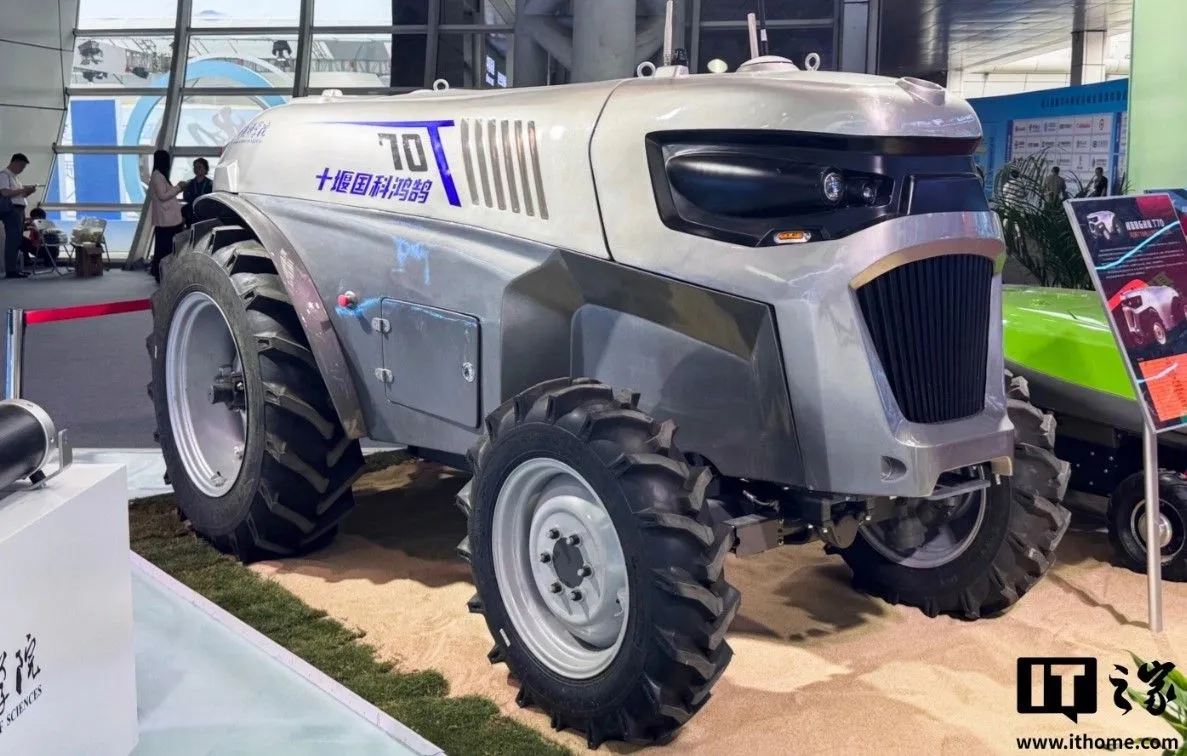
One of the most notable examples is the Honghu T70, a tractor developed in China that combines electric propulsion with autonomous driving. Its purpose goes beyond reducing physical labor: it aims to automate much of the agricultural work and enable a single person to supervise multiple machines working simultaneously.
According to the information released about this model, the tractor is already in use in China’s Hebei province, with its developers considering expanding its deployment to other regions of the country. The goal is to move this technology from field trials to increasingly widespread use in agricultural operations.
One of its main features is its ability to perform various agricultural tasks without a driver on board. These include plowing, seeding, and applying treatments to crops, all within a system designed to cover different stages of field work. It operates for up to six hours on a single charge and has a rapid charging capability that allows it to return to 100% capacity in 90 minutes.
The Honghu T70 can also collect information on soil conditions such as moisture and composition, as well as data related to crop status. This information allows tasks to be adjusted to the needs of each area in the field, aiming to improve accuracy and make better use of available resources.
To navigate across agricultural lands, the tractor uses satellite navigation systems that, according to available information, enable centimeter-level precision under certain conditions. This capability is particularly important when repeating routes, working in rows, or performing operations that require maintaining a very precise trajectory.
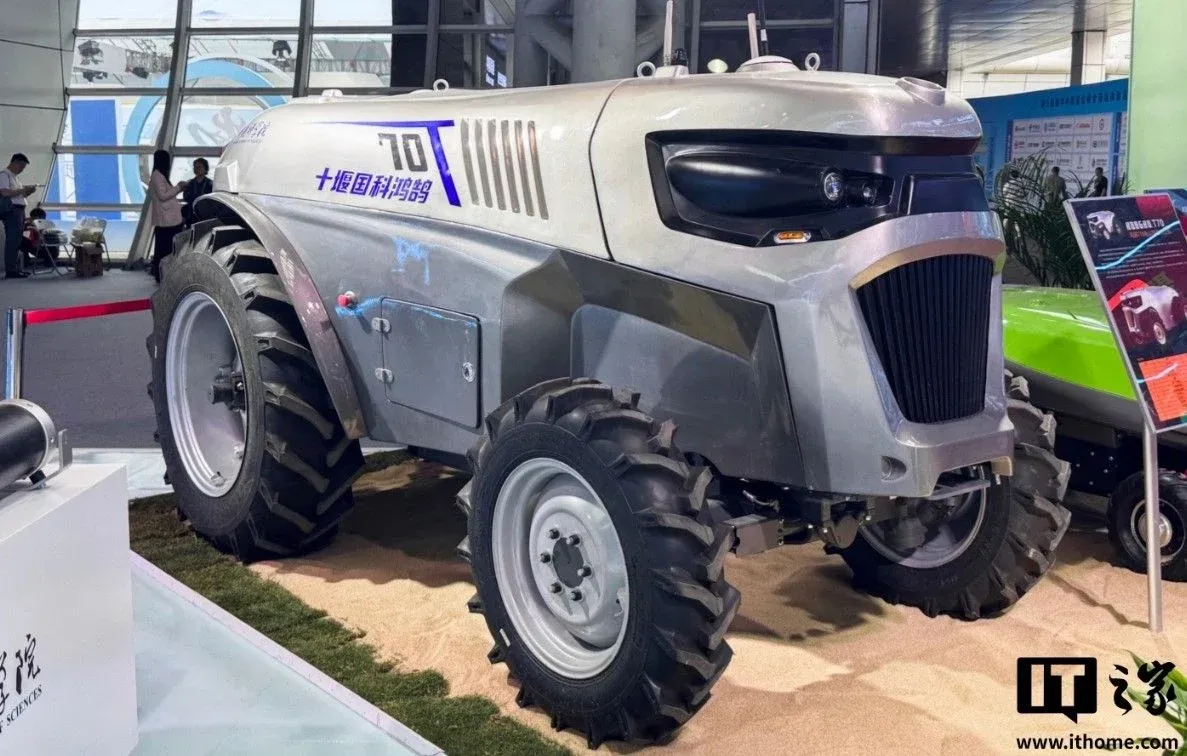
In terms of its technical specifications, the Honghu T70 is a 100% electric tractor with four-wheel drive and a nominal power output of 70 HP. It measures 3.85 meters in length, weighs 2,040 kg empty, and has a maximum working load of 3,000 kg. Regarding performance, it can reach working speeds between 2 and 22 km/h (with a top speed of up to 30 km/h), features a power take-off at 540/720 rpm, and offers a lifting capacity of over 9 kN.
Regarding its power consumption, the manufacturer provides figures of 45 kWh/ha, which means approximately 0.45 kWh per 100 m² of land worked. For purchasing purposes, estimates suggest that a diesel tractor consumes around 15 to 27 liters per hectare, though this varies greatly depending on the depth of plowing, soil type, and attachments used.
So how much would it cost for one day of use? If the Honghu T70 worked, for example, on two hectares, it would consume about 90 kWh. A diesel tractor performing the same task would use roughly 54 liters. At these illustrative prices, the electric tractor would cost around 22 euros in electricity, compared to 81 euros for the diesel model.
Agricultural automation is gaining ground in China
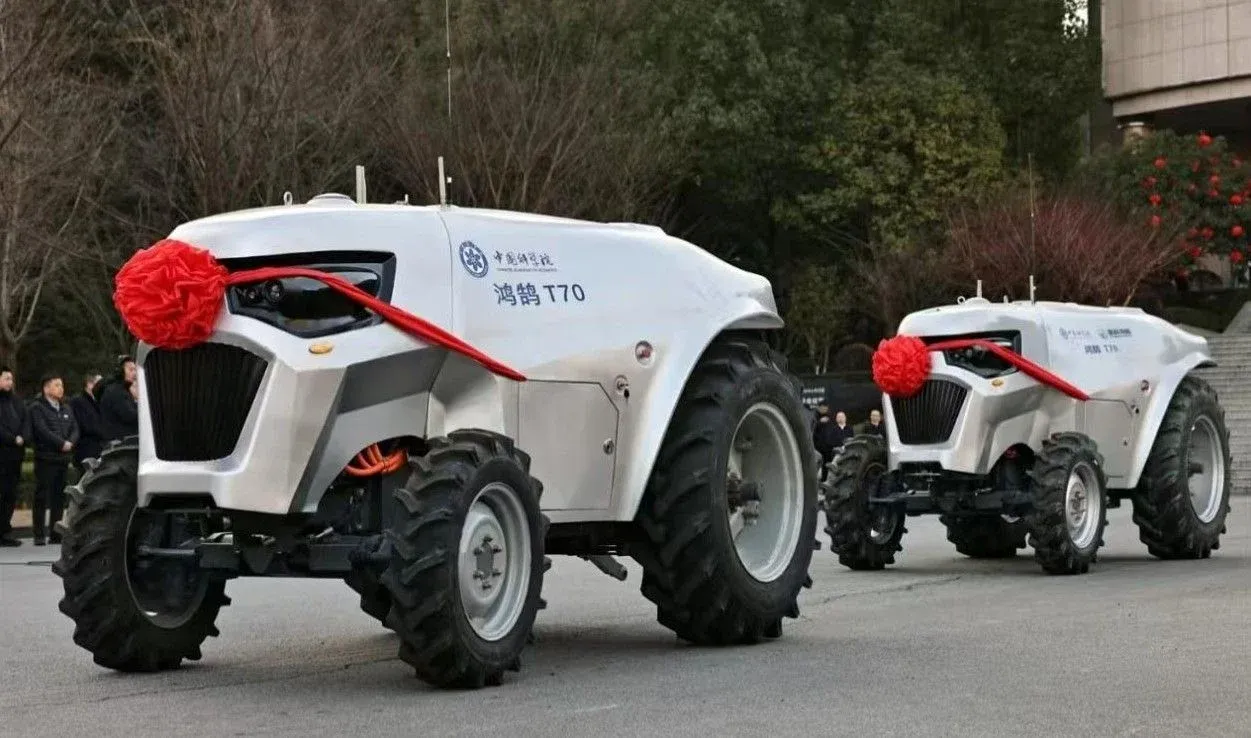
The interest in this type of machinery stems from a problem that goes beyond technology alone. China is facing demographic changes that are transforming its rural areas, while many farms need to increase productivity with fewer workers. In this context, autonomous tractors can help handle certain tasks and reduce reliance on the availability of drivers during agricultural seasons.
The idea is that one worker can supervise multiple machines instead of handling each tractor individually. If the systems prove reliable over long shifts and in changing conditions, this approach could simplify managing farms that struggle to find staff. However, their profitability will also depend on the purchase price, maintenance costs, battery life, and the ability to work with different attachments.
China also has industrial reasons to advance this technology. The development of smart agricultural machinery can reduce reliance on foreign manufacturers and open up business opportunities in other markets, including countries in Southeast Asia and Africa. To achieve this, its manufacturers will need to prove that these devices can operate continuously, adapt to different crops, and offer a competitive cost compared to conventional tractors.
Sources | Hubei.gov | ItHome