
The safest car in Europe is electric, has seven seats, a range of 646 kilometers, and costs 54,550 euros.
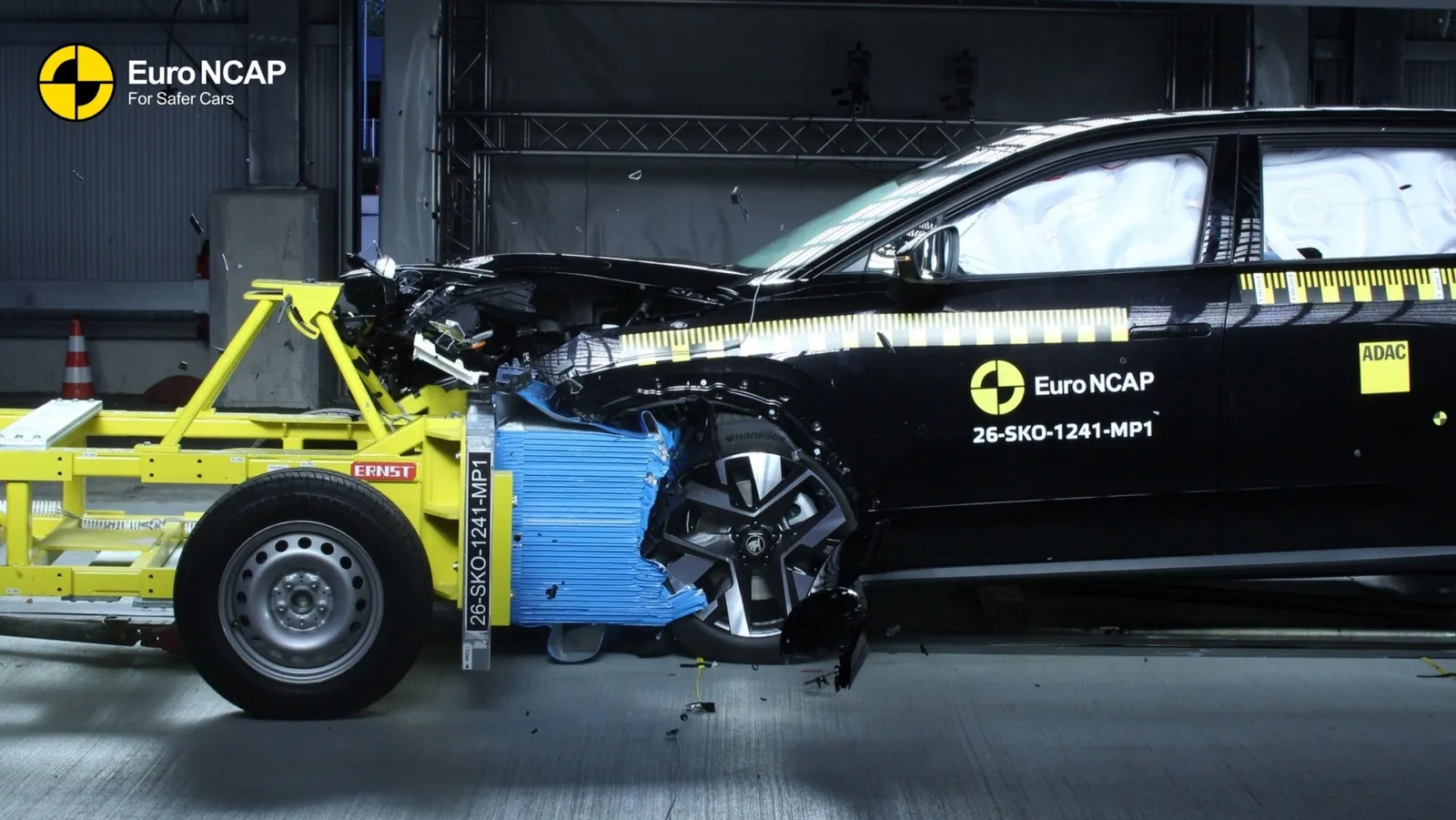
Once again, Euro NCAP has released the results of a new set of tests. Ten new cars were evaluated in this round, and nine of them, all SUVs, achieved the highest possible rating. Euro NCAP changed the rules at the beginning of this year. Under the new system, each model is assessed in four phases: safe driving, accident prevention, crash protection, and post-crash safety.
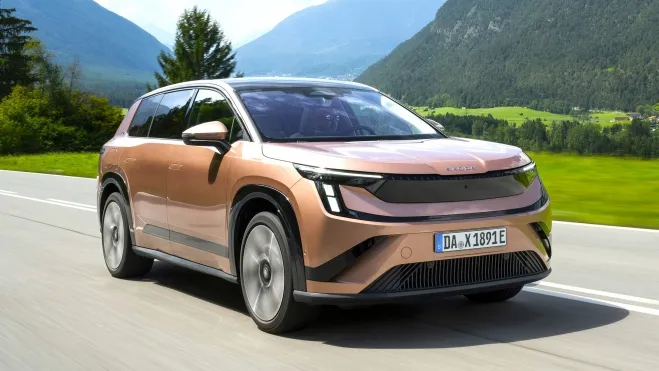
Among the 10 participants in this round, one stood out above the rest. It is a 4.87-meter-long, 100% electric SUV that earned five stars in the latest tests conducted by the European agency, with an overall rating of 94%. We are referring to the new Skoda Peaq. Aside from this Czech vehicle, the overall ratings were very high, with the only exception being the Nissan LEAF, which received four out of five possible stars.
Top score in almost all crash tests
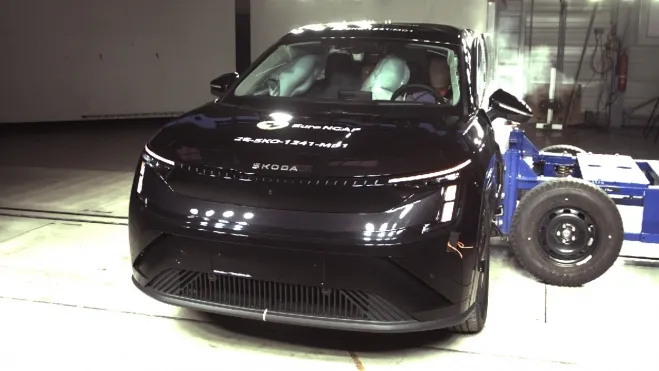
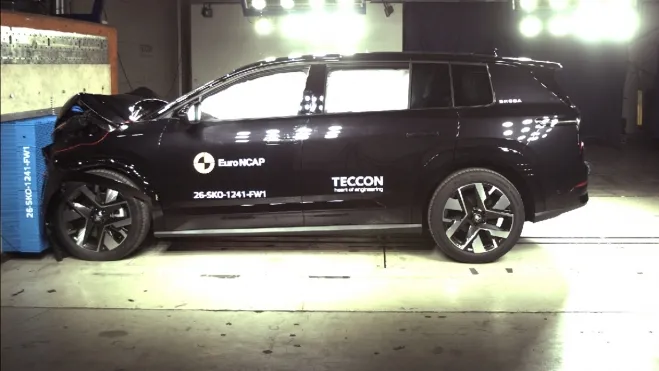
The tested model was a Peaq 90 in the Selection finish, the version available in Spain, equipped with a 286 horsepower rear engine, an 86 kWh net battery, and a minimum price of 54,550 euros. It achieved the highest scores in frontal impacts against a solid and offset barrier, side impacts against a moving barrier, and pole impacts, for both front and rear occupants.
It comes standard with a central airbag between the front seats, which prevents the driver and passenger from hitting each other in a side impact. It also performs well for pedestrians, as protection for the femur, knee, and tibia is good across all measured points, though head protection is only adequate. After a collision, it brakes only to avoid a second impact and scores full points in rescue ease, giving it a 92% safety rating after the crash.
Where it loses points: forgotten children and poor seating positions
It scores 65% in safe driving and 78% in accident prevention—numbers that are decent but far from the best in its class. It lacks a child presence detector, which alerts if a child is left inside the car, nor does it recognize occupants in improper seating positions, such as a passenger with their feet on the dashboard. It does detect improperly fastened seat belts and monitors the driver’s fatigue and distractions, including phone use.
In return, it earns all points for retaining physical controls for driving, climate control, and the multimedia system. Its speed assistant hit the limit in 87% of cases during a journey of about 2,000 kilometers through Germany, Austria, Poland, and Slovakia.
Mercedes and BMW lead in safety features
The highest scores for safe driving (74%) and prevention (87%) go to the Mercedes-Benz GLE diesel model, which already meets the requirements for five stars by 2027. The BMW X5, also diesel, stood out for its speed sign reader, which correctly identified speed limits 91% of the time during tests in Spain, Italy, and France. However, both models fall short of the Peaq in crash protection, with scores of 90% and 87%, respectively.
The other five stars went to Chery’s design brand Lepas’ three models (L4, L6, and L8 PHEV), GWM’s Ora 5 and H7, and the KIA Seltos. The only model left with four stars is the Nissan Leaf, which scored 78% in protection and 58% in prevention, penalized for not having front corner radar as standard and for offering the central airbag only as an option. The Denza Bao 5, BYD’s premium brand, also received five stars, based mainly on 2025 tests conducted in Australia.