
COP31 fiasco: no agreement on fossils, uneven electrification
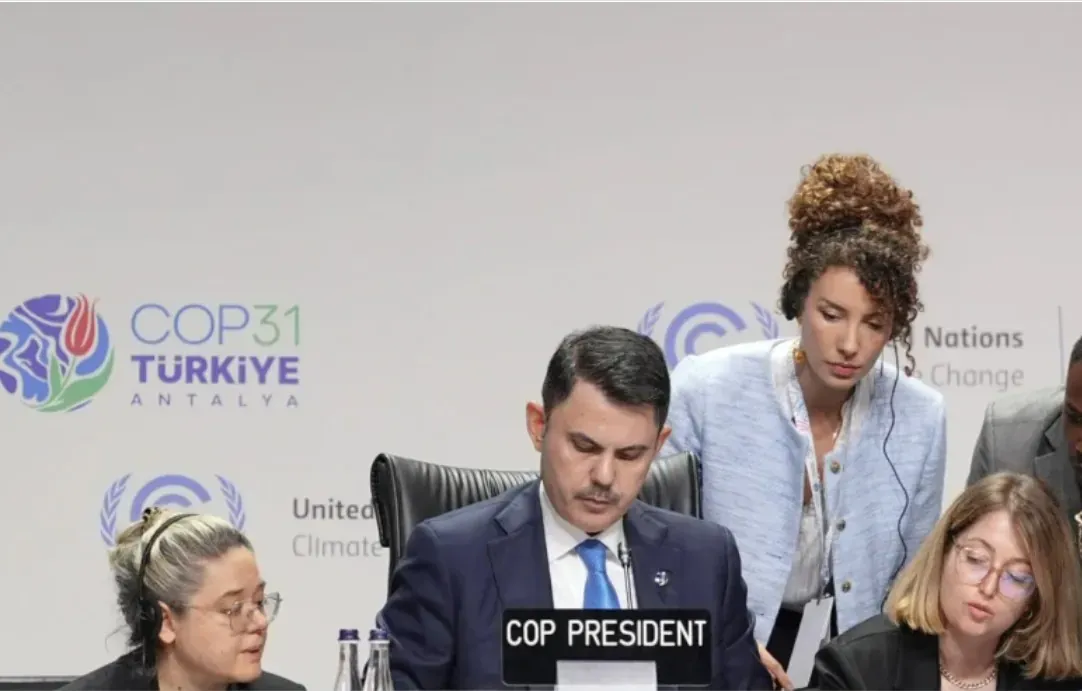
COP31 in Antalya ended in a complete failure. The European Union and a group of more “ambitious” countries refused to sign a weakened final document that didn’t even mention the gradual phase-out of fossil fuels already agreed upon at COP28 in Dubai in 2023. As a result, the entire Antalya Pact fell through, which was supposed to set (modest) commitments regarding mitigation, electrification, and climate finance. Only 80 countries remain in support of accelerating electrification, while 27 have announced or published plans to move away from fossil fuels.
A diplomatic failure that highlights the divisions among countries and the lack of international leadership capable of forging a compromise. The conference presidency, characterized by a dual leadership structure between Turkey and Australia that was not always aligned, focused negotiation efforts during the final 44 hours of the summit, yet failed to achieve the necessary consensus.
Transition lacks leadership
The main factors hindering progress were the absence of the United States, the strengthening of the alliance between Russia and oil producers, and China’s passive stance. Moreover, the European Union failed to fill the diplomatic void or provide satisfactory responses to the demands of developing countries regarding climate finance.
"Unlike Paris in 2015, Antalya highlights the lack of political leadership capable of building consensus," observes Luca Bergamaschi, co-founder and executive director of ECCO, Italy’s climate think tank that has monitored the proceedings daily.
Everything is deferred until the next COP32, scheduled to be held in Addis Ababa next year. Yet a growing divide remains between those advocating for a sustainable and electrified economy and those continuing to defend a model based on fossil fuels, such as Russia and Saudi Arabia, along with the interests of the oil and gas industry.
Electrification: 80 Countries Support the Goal
However, although the climate diplomacy at COP31 failed, the energy transition did not actually stop. This is one of the most evident outcomes from the summit’s assessment. Eighty countries support the goal of accelerating electrification. Twelve have already adopted dedicated national plans, while over 27 have published or announced roadmaps to move away from fossil fuels.
COP31, stalled negotiations: climate finance and fossil fuels divide countries
A path that shares the concerns of 99% of the scientific community, but also has strong economic and industrial motivations. According to the International Energy Agency (IEA), using existing technologies, it would be economically viable to increase the share of electricity in global final consumption from the current 23% to 33% by 2035. This target is close to the “35 by 35” goal that the COP31 presidencies wanted to include in the final agreement.
The message is clear: electrifying consumption, developing renewable sources, and reducing dependence on imported fuels means addressing emissions, supply security, and energy costs simultaneously.
CO2 Capture: The Big Oil Illusion
One of the main obstacles that arose in Antalya was the resistance of oil and gas-producing countries to any explicit reference to pathways to move away from fossil fuels. The workaround proposed is to assign a key role to carbon dioxide capture and storage (CCS). This would achieve decarbonization after the fact, without giving up on fossils as the primary energy source. However, there is no scientific evidence to support this argument.
CCS can play a role in certain industrial sectors that are difficult to decarbonize, such as cement production, where process emissions make it more challenging to eliminate fossil fuel use. However, its feasibility still needs to be proven technically and economically. It cannot be considered a universal alternative to reducing the use of coal, oil, and gas. The risk is that relying on still-unproven technologies could become a way to delay more decisive actions on transforming the energy system.
The outcome of the negotiations is particularly disappointing in a year marked by exceeding the 1.5 °C threshold compared to pre-industrial levels and an energy crisis that has brought supply security and rising energy costs back to the forefront of governments’ concerns.
Climate Finance: Path to Tripling Funds Falls Through
Another major issue without a political solution is funding for climate action, particularly to support the most vulnerable countries in adapting to the effects of global warming.
Only procedural decisions were made in Antalya. Without a political agreement, there is also no path forward to establish a benchmark or methods for achieving the goal of tripling adaptation funding by 2035. The commitments made in Belém risk remaining without the necessary tools to become operational.
What is most concerning is the lack of new multi-year commitments and the particularly low level of contributions to the Adaptation Fund.
Europe has a special responsibility as the world’s leading contributor to climate finance. It is not enough to defend the achievements already made; it is necessary to reassert international leadership by presenting a multi-year plan for public funding up to 2035 and making a concrete contribution to tripling resources for adaptation.
How to rebuild an alliance for transition?
The failure of the political agreement confirms how difficult it is to find a common position among countries with vastly different energy and economic interests. However, the support of dozens of governments for electrification and the progress of national plans indicate that the transformation of energy systems is advancing even outside of international negotiations.
The next COP in Addis Ababa will need to address this contradiction. The energy transition now also involves economic competitiveness and national security. The failure in Antalya does not erase this reality. But it shows that without a political coalition capable of supporting it, progress may be slower than what the climate emergency demands.
READ ALSO: Nicola Armaroli’s COP31: “Electrification is beneficial; fossil fuels are no longer needed” and watch the VIDEO