
The secret to an electric car gaining range without changing the battery lies in China: they control 94% of its production.
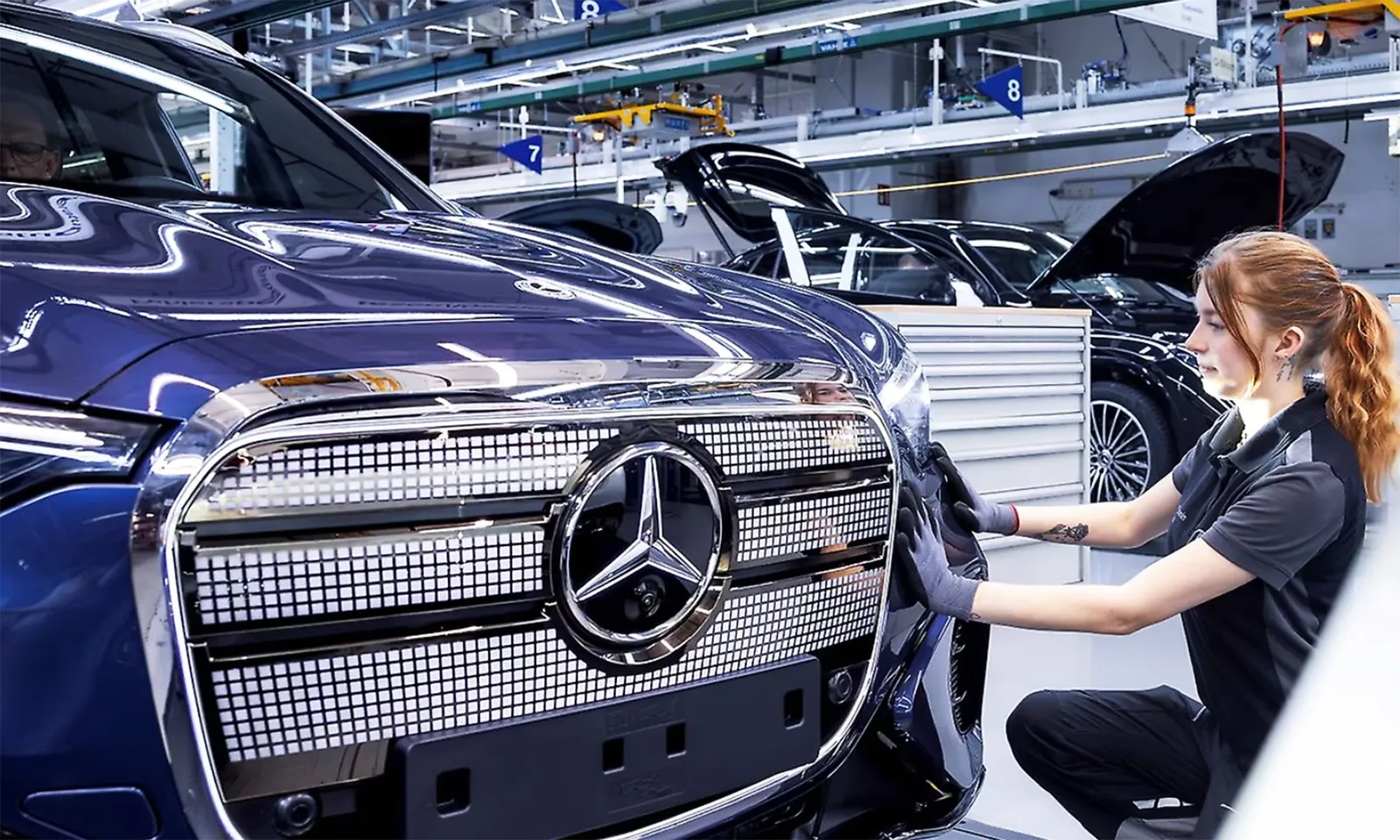
The Mercedes EQA 250 is one of the clearest examples of how the range of an electric car can improve without the need for a larger battery. Between its launch in 2021 and the 2024 update, this German SUV managed to increase its certified range by 102 kilometers, rising from 424 to 526 kilometers, while retaining a 66.5 kWh usable battery.
Behind this improvement are various technical modifications that Mercedes-Benz introduced over those years. The most significant change affected the propulsion system, though elements related to aerodynamic resistance and tire-to-asphalt contact were also revised. The result was a reduction in the certified energy consumption from 17.9 to 14.5 kWh/100 km, approximately a 19% decrease, without altering its 190 horsepower output.
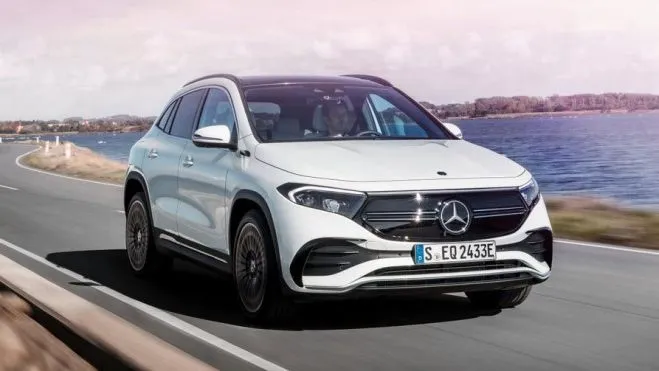
Mercedes increased the EQA’s range by modifying its electric motor
The first major improvement came in May 2022, when Mercedes replaced the original asynchronous motor with a permanent magnet synchronous motor. The latter helps reduce certain energy losses, especially during operation at partial loads. According to technical data collected by ADAC, the EQA 250 Electric Art achieved a range of 492 kilometers with a power consumption of 15.6 kWh/100 km.
That modification resulted in an increase of 68 kilometers compared to the initial figure, accounting for approximately two thirds of the total improvement recorded by 2024. However, this proportion should be viewed as an estimate, as the versions being compared did not have exactly the same equipment. Mercedes has also not released a detailed breakdown to determine what percentage corresponds solely to the engine.
The next evolution came with the restyling launched in 2024. The German brand introduced aerodynamic tweaks and tires with lower rolling resistance, two measures aimed at reducing the energy needed to move. With these changes, the EQA 250 Progressive achieved an official range of 526 kilometers, while the EQA 250+, equipped with a larger 70.5 kWh battery, reached up to 560 kilometers.
However, official figures do not necessarily reflect the consumption levels encountered during actual driving. In an independent test of the first EQA 250, ADAC recorded 21.6 kWh/100 km, including losses during charging, and an approximate range of 350 kilometers. On the highway, the consumption increased to 23.8 kWh/100 km. Since there is no directly comparable test of the updated model, it is not possible to accurately quantify how much of this efficiency improvement translates to real-world driving.
The technology that saves energy also increases dependence on China
The adoption of permanent magnet motors presents a challenge that goes beyond efficiency. To manufacture them, materials such as neodymium, and in certain compositions, dysprosium and terbium—rare earth elements whose supply chain is heavily concentrated in China—are used. According to the International Energy Agency, Asia’s country accounted for 94% of the world’s production of sintered permanent magnets and 91% of the refining of rare earth elements used in them in 2024.
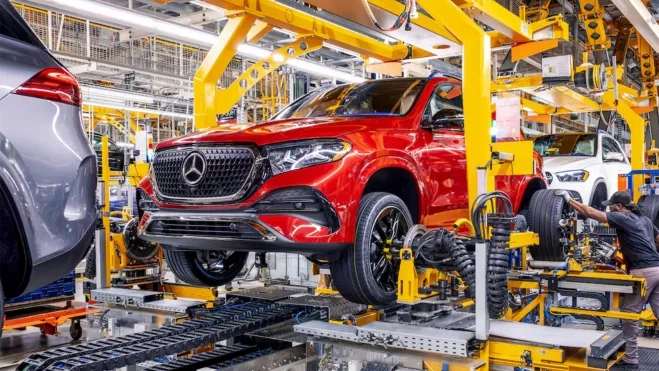
This industrial stance gains special significance due to the trade restrictions imposed by Beijing. Since April 2025, there have been controls on the export of seven rare earth elements, including dysprosium and terbium, although other restrictions were temporarily suspended until January 2027. The pressure on supply has also affected prices: dysprosium oxide rose from $1,200 to $4,100 per kilogram between March and late October 2026, while terbium increased from $4,900 to $8,100.
China's dependence extends to batteries as well. Data from SNE Research for the first eight months of 2026 shows that seven Chinese manufacturers account for 73.3% of the global market, with CATL and BYD together holding 54.5%. Thus, two key components essential for improving electric vehicle performance—motors and batteries—are linked to supply chains where the Chinese industry holds a dominant position.
Economically speaking, the development of the Mercedes EQA also makes it possible to calculate the savings associated with lower energy consumption. For a driver who travels 15,000 kilometers per year and pays 0.20 euros per kWh, the theoretical electricity cost would drop from 537 euros to 435 euros per year, representing a difference of 102 euros. Over a decade, this would amount to 1,020 euros, although the main benefit is the ability to cover more kilometers between charges. These figures are based on approved values and do not include losses during charging or variations in consumption due to daily use.