
Smart Europa’s CEO speaks clearly: “I am not in favor of plug-in hybrids because they are a bridge technology.”
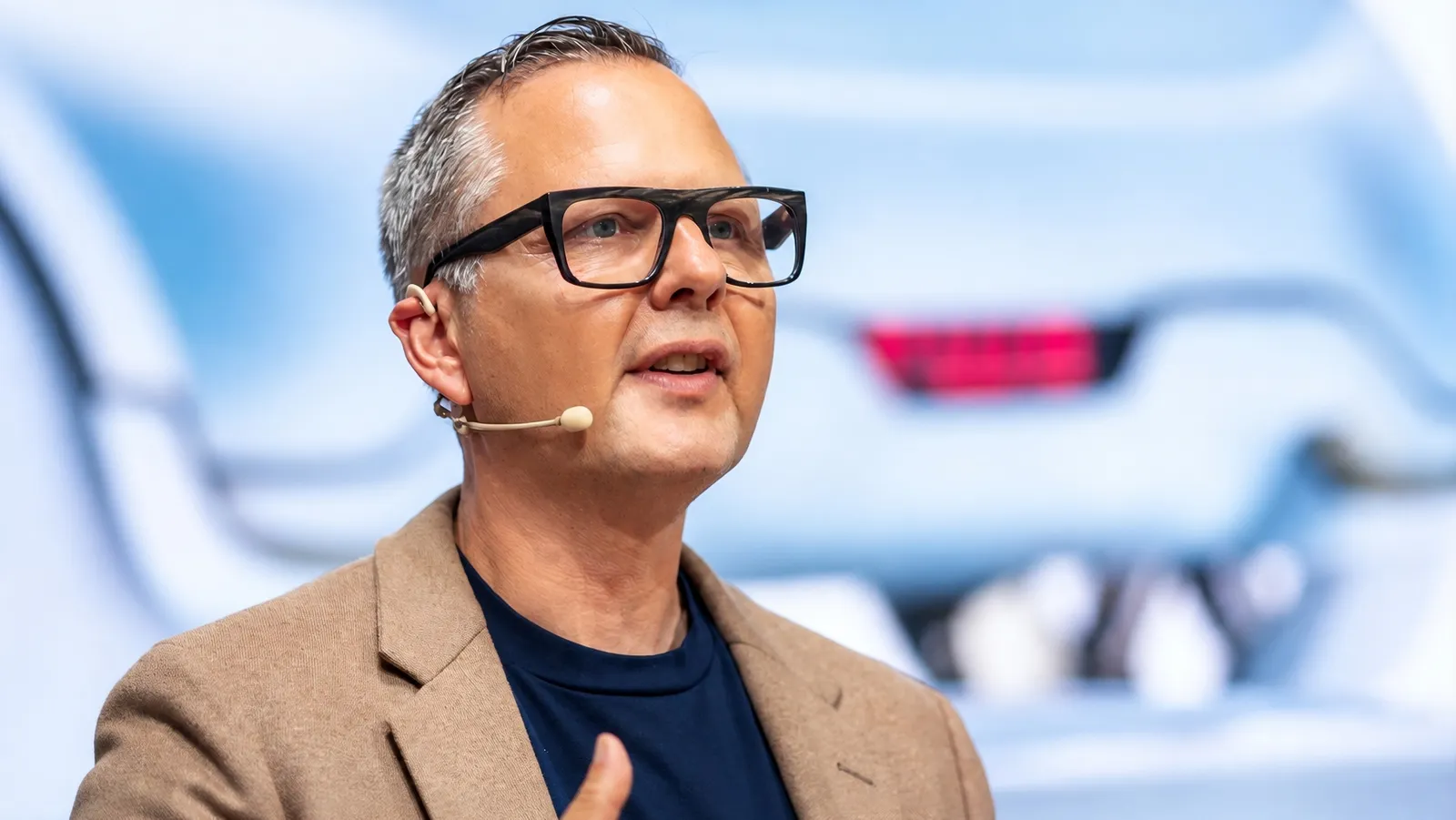
While many European manufacturers have increased their focus on plug-in hybrids to support the transition to electric vehicles, Smart maintains a much more decisive stance. The brand will remain fully electric in Europe and does not plan to introduce PHEV versions or range extenders, a strategy that clearly sets it apart from much of the industry.
This is what Wolfgang Ufer, CEO of Smart Europe, explained in an interview with Electrive. He made it clear that he does not support the strategy of relying on plug-in hybrids in the coming years, summarizing his position with a particularly direct statement: “Personally, I am also not in favor of plug-in hybrids because I believe they can only serve as a bridge technology.”
This statement is particularly significant because much of the European automotive industry is reviewing its electrification timelines and revisiting intermediate technologies to adapt to demand that is progressing more slowly than expected. Smart, however, refuses to go back on track and maintains its all-electric strategy, now further strengthened by the introduction of the new Smart #2.

Smart does not want plug-in hybrids in Europe
When the interviewer asks directly whether Smart is considering range extenders, hybrids, or greater technological openness, Ufer responds unequivocally: “No, we are very clear that we do not see plug-in hybrids in Europe.” According to him, the company believes this type of propulsion makes sense only as a temporary solution before making the full switch to electric vehicles.
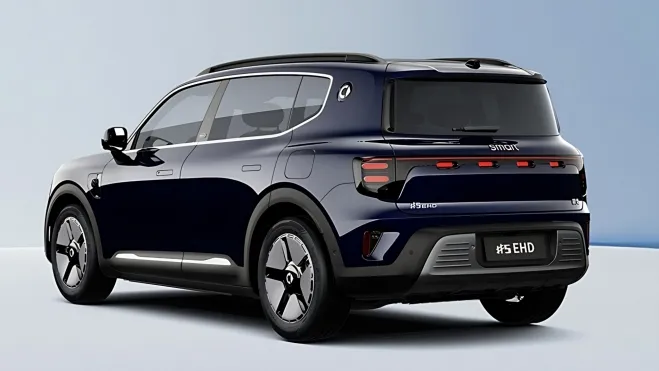
The CEO goes a step further and explains why he thinks it is unnecessary to include a thermal engine in the European lineup. He uses the Smart #5, a model he drives personally, as an example, stating that with the current range and charging speeds, there is no longer a sufficient practical reason to add a combustion system as well.
Ufer claims to have traveled 43,000 kilometers in seven months with the Smart #5, stating that he encountered no charging issues during that time nor felt he was wasting time using an electric car. Based on this experience, he makes one of his most forceful statements: “I wonder why I would need a combustion engine component.”
For this executive, the key argument lies in how technology has evolved over the past few years. As range continues to increase, charging networks keep expanding, and the time needed to recharge decreases, the need for a plug-in hybrid as an intermediate solution gradually loses much of its relevance.
"Those who say otherwise haven’t done their calculations properly."
Ufer also argues that the debate over electric cars remains overly influenced by perceptions that, in his view, no longer accurately reflect current technological realities. Smart’s European head claims that electric vehicles are becoming increasingly user-friendly, charge faster, and enable trips that were much more difficult just a few years ago.
In addition, he introduces another particularly important factor: the cost of use. Ufer believes that electric vehicles can be economically competitive with internal combustion engines when considering not only the purchase price but also energy consumption and associated costs of daily use.
And here he makes another of the most definitive statements in the interview: “That’s simply the truth. Anyone who says otherwise, in my opinion, hasn’t done their calculations properly.” For Ufer, the simultaneous improvements in range, charging speed, and cost of use are reducing some of the main barriers that have traditionally hindered electric vehicles.
Smart aims to leverage this development precisely to pursue a strategy different from that of other European manufacturers, who have chosen to combine electric cars, plug-in hybrids, and internal combustion engines for longer periods. The brand believes its own identity fits better with a direct transition to a fully electric lineup.
A Fully Electric Lineup
Smart began its transition to a fully electric lineup in Europe in 2019 and has since significantly expanded its offerings. Building on the #1, #3, and #5 models, one of the most important new releases to restore the brand’s original identity has emerged: the new Smart #2, unveiled globally at the 2026 Paris Motor Show.
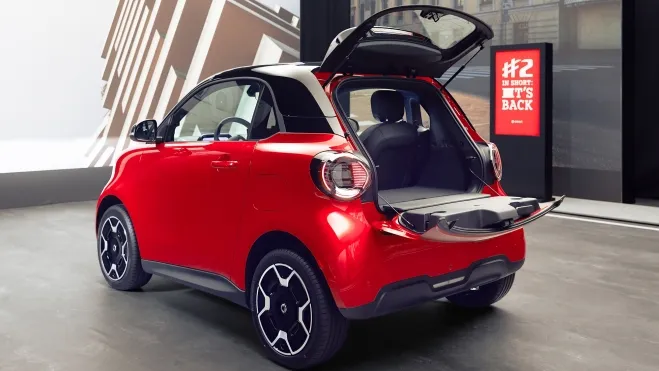
The small electric two-seater revives the urban concept that turned the original Fortwo into one of Smart’s most recognizable cars. The company has developed a specific platform for it called Electric Compact Architecture and retains the brand’s signature features, such as a two-seater layout and extremely compact dimensions.
The new Smart #2 is only 2.75 meters long and uses a rear electric motor with 60 kW of power, equivalent to about 82 horsepower, along with a 35.8 kWh LFP battery. Smart claims a target range of 290 kilometers under WLTP conditions and a maximum fast-charging power of 65 kW, enough to go from 10% to 80% battery charge in approximately 20 minutes under optimal conditions.
The brand has also revived the well-known Tridion safety cell through a new iteration called Tridion Cell Evo. This is complemented by rear-wheel drive, a five-link rear suspension, and a turning radius of just 6.95 meters—features that clearly emphasize the model’s urban focus.
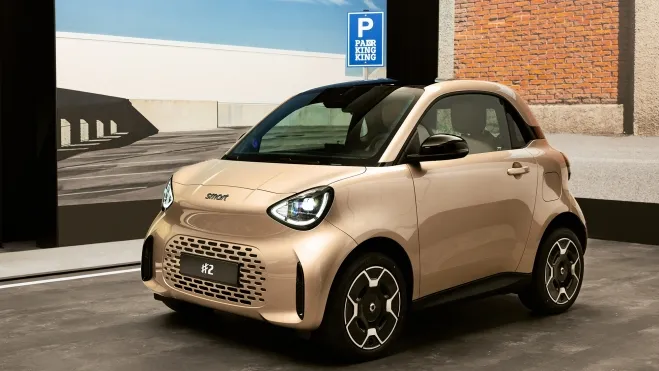
Its launch also holds obvious strategic importance for Smart. In an interview given months before the model’s introduction, Ufer explained that hundreds of thousands of units of the old Fortwo were still on the roads in Germany, and reviving that concept was essential to reconnect with the company’s roots.
That return is now a reality. Following its debut in Paris, Smart has begun the process of launching in Europe, with prices starting at 19,990 euros in markets such as Germany, France, and Italy, though prices and versions may vary by country.
Smart remains committed to electric vehicles
The stance expressed by Ufer in that interview aligns even more with what the brand recently showcased in Paris. While other manufacturers have expanded their range of plug-in hybrids to accommodate a slower transition to electric vehicles than expected, Smart continues to develop its European lineup around purely electric vehicles.
The new #2 is likely the most obvious example of this strategy. The company has chosen to develop from scratch a specific electrical architecture for a car under 2.8 meters long, rather than introducing a hybrid powertrain that would allow keeping a combustion engine as a backup.
That doesn’t mean Smart ignores the challenges that still exist regarding electrification. Ufer acknowledges that progress in electric cars remains uneven across different European markets, and there are still significant differences in infrastructure, demand, energy prices, and ease of access to charging stations.
But its stance on plug-in hybrids remains unchanged. For Smart’s top executive in Europe, increased range and reduced charging times mean this type of propulsion makes sense primarily as a temporary solution, while the brand’s strategy focuses squarely on a fully electric lineup.