
DHL is deploying this 621 kWh electric truck with a real-world range of 500 km on its European routes.
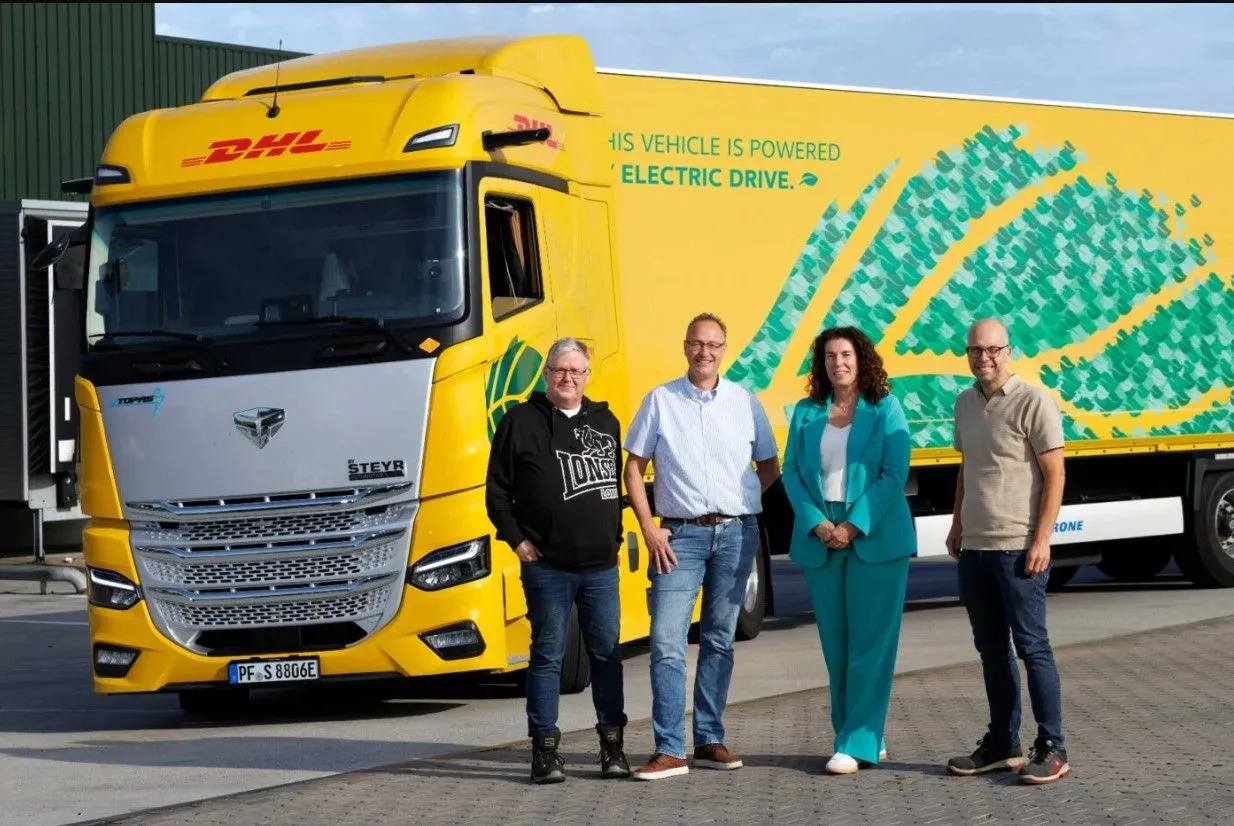
DHL, the logistics giant, has taken another step toward electrifying freight transportation by introducing a heavy-duty electric truck into its regular operations. Following an initial testing phase, the vehicle is now operating in real conditions within the company’s logistics network, making deliveries between various European countries.
This initiative will help determine how well electric trucks can integrate into daily long-distance transportation operations, where delivery times, range, and charging scheduling are crucial factors. The experience will also provide data on usage that can aid in improving future models.
The star of this operation is the SuperPanther eTopas 600, the first unit manufactured in Europe of this Chinese brand that DHL Freight has integrated into its business operations. Since September, this truck has been operating in the Netherlands and Belgium, covering approximately 2,000 kilometers per week on domestic and international routes without being confined to a single path.
An electric truck designed for long-distance transportation
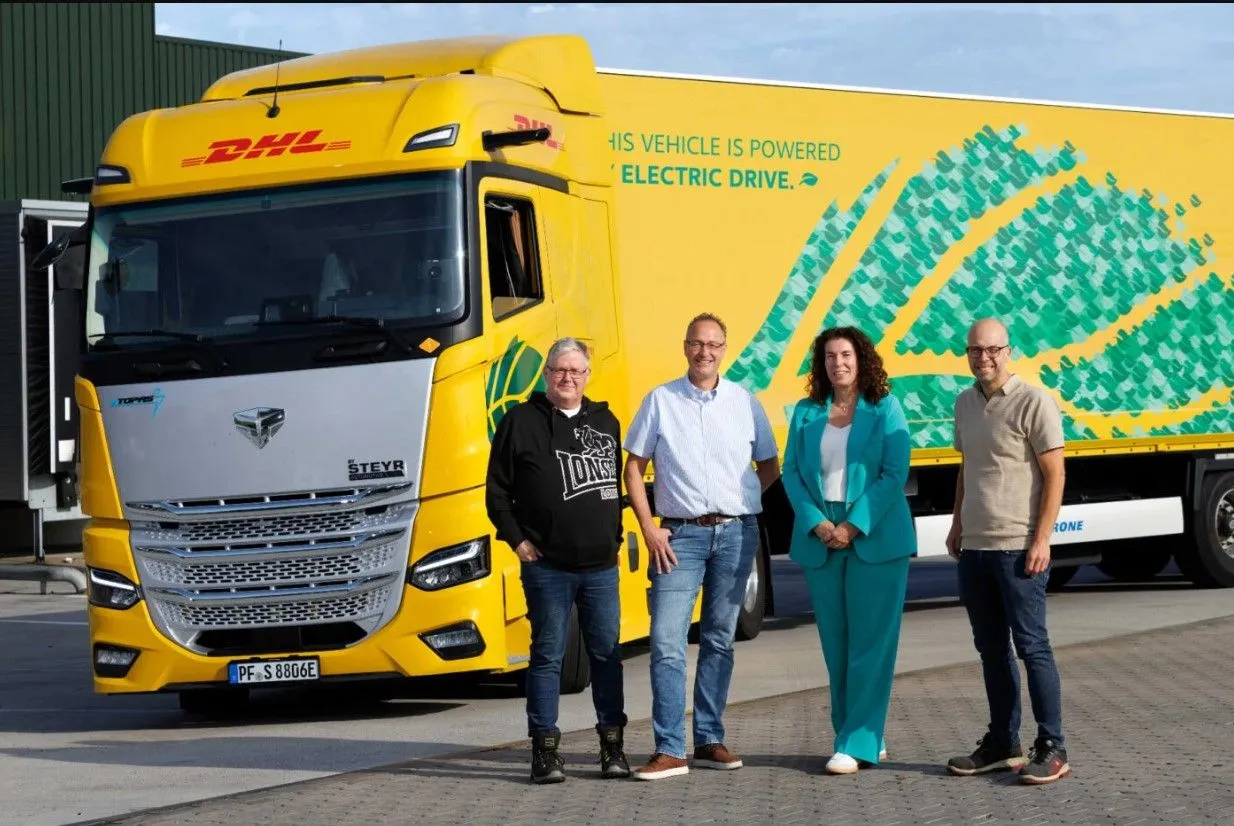
For this service, DHL Freight states a range of up to 500 kilometers per load, although the technical specifications of the SuperPanther eTopas 600 increase this figure to 560 kilometers. The truck is equipped with an LFP battery with a capacity of 621 kWh, supplied by CATL.
The propulsion system delivers a continuous power output of 394 kW (536 HP), while the maximum power reaches 692 kW (941 HP). To recover energy, the eTopas 600 has two CCS2 connectors that allow for a combined charging power of up to 660 kW. Under optimal conditions, the manufacturer estimates it can go from 20% to 80% battery charge in a maximum of 38 minutes.
Before starting these regular operations, DHL subjected the truck to a two-week field test in Austria. During that time, the vehicle traveled approximately 1,900 kilometers, averaging 238 kilometers per day. The company recorded an energy consumption of 102 kWh per 100 kilometers, a figure that provides an initial indication of its performance under real-world transportation conditions.
In this scenario, which has a modest mileage, we can make an estimate. With the electric truck charging at the depot, the cost would be around 50 euros per day. On the other hand, a diesel model with a fuel consumption of about 32 liters per 100 km—same specifications and performing the same tasks—would cost around 110 euros per day. These are costs considering only energy expenses, not operational ones such as brake pads, discs, and general maintenance...
Summary Table of Projections (our estimated figures)
Time horizon
Electric truck
Diesel truck
Savings with electric truck
Per day (500 km)
50,00 €
110,00 €
60,00 € (54,5% less)
Per month (21 days)
1.080,00 €
2.376,00 €
1.296,00 €
Per year (250 days / 125,000 km)
12.500,00 €
27.500,00 €
15,000.00 €
5 Years (1,250 days / 625,000 km)
62,500.00 €
137,500.00 €
75,000.00 €
If we estimate a truck that travels 500 km per day, resulting in 125,000 km per year, using an electric truck with a standard charge yields a net energy savings of 75,000 euros per vehicle after 5 years, considering only the cost difference between electricity and diesel, without factoring in other operational costs.
DHL also calculates that this test resulted in approximately 930 kilograms of CO₂ equivalent saved compared to the comparison scenario used. Although it is a test with limited duration and distance, the data allow us to assess the truck’s performance beyond the range figures announced by the manufacturer.
The partnership between DHL Freight and SuperPanther began in 2024. In July 2026, the first eTopas 600 manufactured in Europe for DHL rolled off the production line, and since September, the vehicle has been part of the company’s regular operations.
DHL’s goal is not only to test the truck’s range but also to explore how to integrate these vehicles into existing logistics networks, especially for international routes. The data collected during daily use will be shared with SuperPanther to help develop future generations of electric trucks.
Source | DHL